
Grain Watch MCP Server
Access silo temperature monitoring via Grain Watch — track grain temperature, humidity, hot spots, and spoilage risk from any AI agent.
Vinkius AI Gateway supports streamable HTTP and SSE.
Works with every AI agent you already use
…and any MCP-compatible client









Grain Watch MCP Server: see your AI Agent in action
Built-in capabilities (12)
get_alerts
Returns alert type, severity (critical, warning, info), affected silo, timestamp, and recommended actions. Essential for comprehensive operational monitoring, issue detection, and management response. AI agents should use this when users ask "show me all active alerts", "what warnings have been triggered for silo 3", or need alert data for operational monitoring. Optional silo_id filters alerts for a specific silo. Get all active alerts for temperature, humidity, and sensor issues
get_current_humidity
Returns relative humidity (%) values from multiple sensor positions. High humidity combined with temperature indicates condensation risk and potential spoilage conditions. Essential for moisture migration detection, condensation risk assessment, and grain quality preservation. AI agents should reference this when users ask "what is the humidity level in silo 3", "show me humidity readings for silo 5", or need current humidity data for storage condition assessment. Get current humidity readings from sensors in a grain silo
get_current_temperature
Returns temperature values (Celsius) from multiple sensor positions throughout the grain mass including top, middle, bottom, and center zones. Essential for real-time grain condition monitoring, hot spot detection, and spoilage prevention. AI agents should use this when users ask "what is the current temperature in silo 2", "show me all temperature readings for silo 4", or need immediate grain temperature data for storage management decisions. Get current temperature readings from all sensors in a grain silo
get_facility_overview
Essential for executive reporting, facility-wide condition assessment, and strategic storage management. AI agents should use this when users ask "give me an overview of all my silos", "what is the overall temperature status across the facility", or need facility-level summaries for management reporting. Get comprehensive overview of all monitored silos and their temperature status
get_hotspot_alerts
Returns alert severity (critical, warning), affected silo, sensor zone location, temperature differential, detection timestamp, and recommended actions. Hot spots are early indicators of grain quality issues that require immediate attention. Essential for proactive grain management, spoilage prevention, and quality preservation. AI agents should use this when users ask "are there any hot spots detected", "show hotspot alerts for silo 3", or need early warning indicators of grain spoilage. Optional silo_id filters alerts for a specific silo. Get active hot spot detection alerts for all silos or a specific silo
get_humidity_history
Humidity patterns over time help identify moisture migration, condensation events, and drying effectiveness. Returns time-series humidity data (%) with timestamps from multiple sensor positions. Essential for moisture migration analysis, condensation detection, and storage safety monitoring. AI agents should reference this when users ask "show me humidity trends for silo 1", "has humidity been stable in silo 2", or need historical humidity data for storage management. Get historical humidity readings to track moisture migration patterns
get_sensor_health
Returns sensor IDs, positions, communication status, last reading time, battery levels (for wireless sensors), and operational status (active, offline, fault, needs calibration). Essential for sensor network maintenance, data continuity assurance, and monitoring system reliability. AI agents should reference this when users ask "are all sensors working in silo 5", "which sensors have gone offline", or need sensor health data for system administration. Get health status of all temperature and humidity sensors in a silo
get_sensor_map
Returns sensor IDs, physical locations (top/middle/bottom, center/perimeter), installation depths, and current operational status. Essential for understanding temperature distribution across the grain mass, identifying which sensor corresponds to which physical location, and troubleshooting sensor issues. AI agents should use this when users ask "show me the sensor layout for silo 4", "where are the sensors positioned in silo 6", or need sensor positioning data for temperature analysis interpretation. Get the layout and positions of all temperature sensors in a silo
get_silo_details
Essential for understanding silo context before analyzing temperature data, planning aeration strategies, or generating storage condition reports. AI agents should reference this when users ask "tell me about silo 3", "what grain is stored in silo 5 and how many sensors does it have", or need detailed silo metadata for informed analysis. Get detailed information about a specific grain silo
get_silos
Returns silo IDs, names, locations, grain types, current temperature status, and monitoring health. Essential for facility overview, silo inventory management, and selecting specific silos for detailed temperature analysis. AI agents should use this when users ask "show me all my monitored silos", "list temperature-monitored storage units", or need to identify available silos before querying temperature readings or alerts. List all grain silos monitored by Grain Watch
get_spoilage_risk
Returns risk level (low, moderate, high, critical), contributing factors, predicted days until spoilage if conditions persist, and recommended preventive actions. Essential for proactive grain management, early intervention planning, and quality preservation. AI agents should use this when users ask "what is the spoilage risk for silo 3", "is silo 5 at risk of spoilage", or need AI-driven risk assessments for storage management decisions. Get AI-powered spoilage risk assessment for a specific silo
get_temperature_history
Temperature trends over time are critical for identifying developing hot spots, spoilage heating, or effective cooling from aeration. Returns time-series temperature data (Celsius) with timestamps from multiple sensor zones. Essential for hot spot detection, spoilage heating identification, aeration effectiveness evaluation, and grain quality preservation. AI agents should use this when users ask "show me temperature trends for silo 3 over the past 30 days", "has silo 5 been heating up", or need historical temperature data for storage condition analysis. Optional days parameter controls lookback period. Get historical temperature readings to detect trends and hot spot development
What this connector unlocks
Connect your Grain Watch Silo Temperature Monitoring API to any AI agent and take full control of real-time temperature tracking, humidity monitoring, hot spot detection, and AI-powered spoilage risk assessment through natural conversation.
What you can do
- Silo Management — List and manage all temperature-monitored silos with grain types and sensor status
- Real-Time Temperature — Get current temperature readings from all sensors throughout the grain mass
- Humidity Monitoring — Track relative humidity levels for condensation risk assessment
- Temperature History — Analyze historical temperature trends to detect developing hot spots
- Humidity History — Monitor humidity patterns for moisture migration and condensation detection
- Sensor Mapping — View complete sensor layout with positions, depths, and zones
- Hot Spot Alerts — Receive automatic alerts when localized heating indicates potential spoilage
- Spoilage Risk — Get AI-powered risk assessments combining temperature, humidity, and grain type
- Alert Management — Monitor all active alerts for temperature, humidity, and sensor issues
- Sensor Health — Track sensor battery levels, communication status, and operational health
- Facility Overview — Get comprehensive facility-wide temperature summaries for executive reporting
How it works
1. Subscribe to this server
2. Enter your Grain Watch API key and base URL (from your Grain Cloud dashboard)
3. Start monitoring silo conditions from Claude, Cursor, or any MCP-compatible client
No more manual temperature cable readings or climbing silos for inspections. Your AI acts as a dedicated grain storage analyst and condition monitoring assistant.
Who is this for?
- Grain Farmers — monitor stored grain temperature conditions and detect hot spots early
- Grain Elevator Operators — manage temperature across hundreds of silos with automated alerts
- Facility Managers — oversee storage facilities with real-time sensor data and spoilage risk assessments
- Agricultural Consultants — provide data-driven storage management recommendations to clients
Frequently asked questions
Give your AI agents the power of Grain Watch
Access Grain Watch and 2,000+ MCP servers — ready for your agents to use, right now. No glue code. No custom integrations. Just plug Vinkius AI Gateway and let your agents work.
More in this category
.jpg)
HyperTrack
10 toolsManage location tracking, trips, and geofences via HyperTrack API.

Composio Smart Home
8 toolsAccess 1000+ smart home tool integrations via Composio API — control devices through structured arguments or natural language commands.
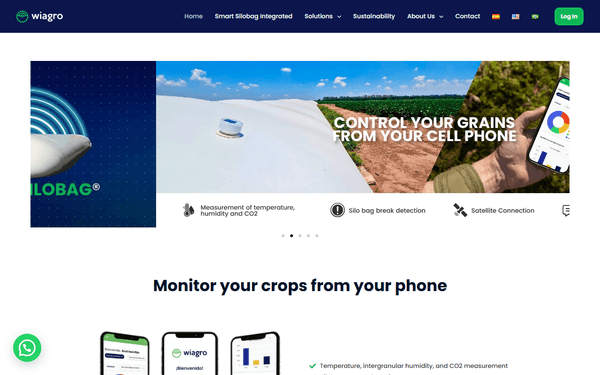
Wiagro
12 toolsAccess smart silobag monitoring via Wiagro — track temperature, humidity, CO2, rupture detection, and grain quality from any AI agent.
You might also like

Cognee
4 toolsBuild knowledge graphs from unstructured data — ingest text, extract entities and relationships, and search with graph-aware AI reasoning.

Zesty.io
8 toolsManage content models, items, and instances via the Zesty.io API.

AppLovin
7 toolsManage your AppLovin and MAX advertising performance — track revenue, impressions, and campaigns via AI.