
Scale SERP MCP. Access real-time search results from Scholar to Shopping.
 Gemini
 Works with every AI agent you already use
…and any MCP-compatible client









Just plug in your AI agents and start using Vinkius.
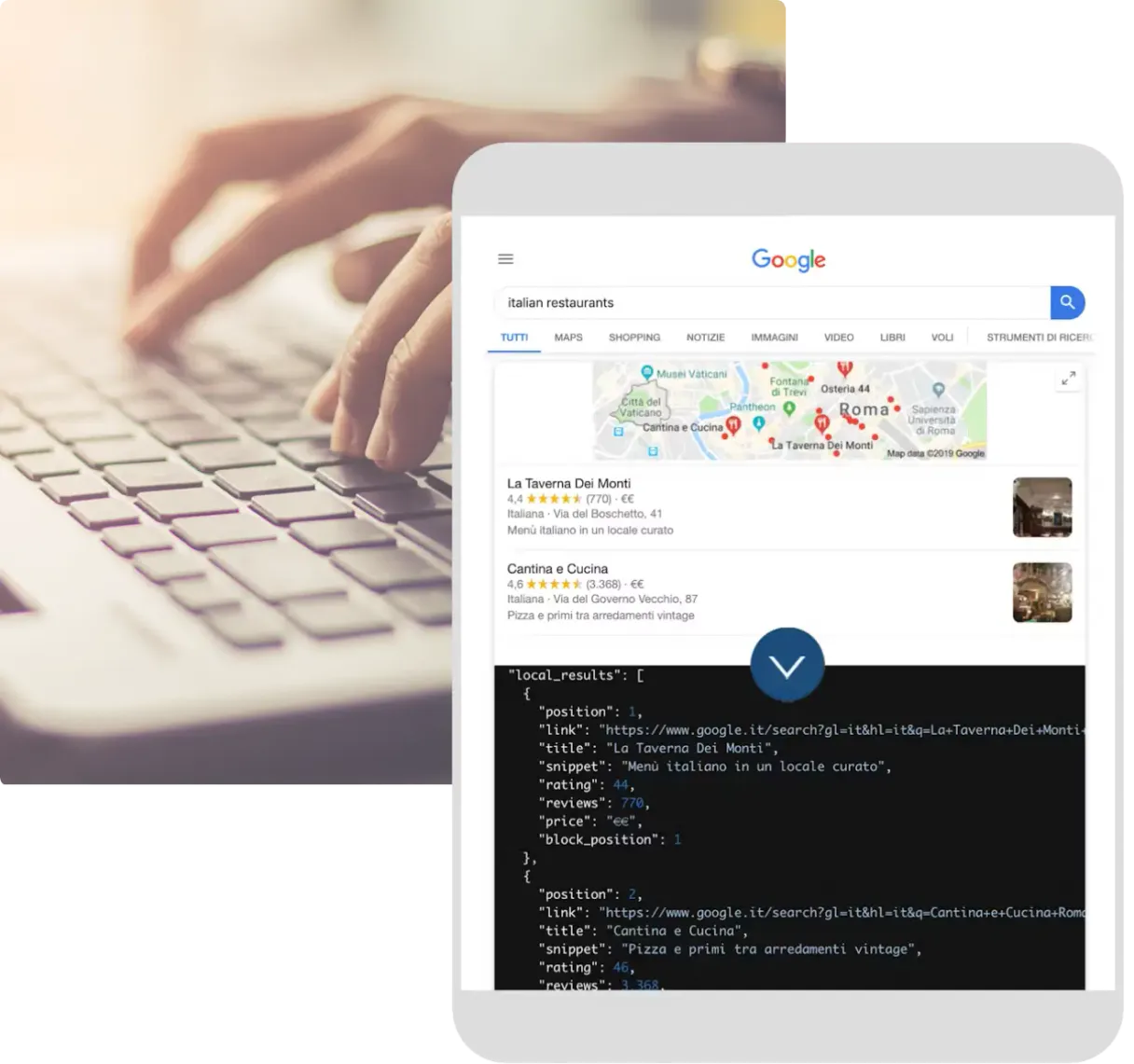
Scale SERP gives your AI agent direct access to real-time Google data. Run structured queries for organic results, local businesses, e-commerce pricing, and academic papers—all from one place.
You get clean JSON outputs instead of messy HTML scraping.
What your AI agents can do
Custom search
Runs a highly customized Google search based on specific parameters.
Google autocomplete
Retrieves common search suggestions that users are actively typing into Google.
Google images
Performs a specialized search for visual content across the Google Image Index.
Find scholarly articles and citation details using google_scholar.
Retrieve ratings, addresses, and info for physical locations with google_places.
Search Google Shopping results to get current product data using google_shopping.
Predict user intent by pulling 'People Also Ask' questions via google_related_questions.
Perform general, real-time organic queries with optional geographic targeting using google_organic.
Search for visual or video content specifically using google_images or google_videos.
Ask AI about this MCP
Supported MCP Clients
Gemini Waiting for input…
Scale SERP MCP Server: 10 Tools for Deep Web Insights
Execute every type of Google query your agent needs—from academic papers to local store reviews. All results are structured, reliable JSON data.
019d7603custom search
Runs a highly customized Google search based on specific parameters.
019d7603google autocomplete
Retrieves common search suggestions that users are actively typing into Google.
019d7603google images
Performs a specialized search for visual content across the Google Image Index.
019d7603google news
Searches and pulls articles from current events using the Google News API.
019d7603google organic
Executes a standard, real-time organic search query with optional geographic filtering.
019d7603google places
Retrieves detailed information and reviews for local businesses on Google Maps.
019d7603google related questions
Pulls the 'People Also Ask' section data to understand user intent related to a query.
019d7603google scholar
Searches and provides structured details on academic papers and research citations from Google Scholar.
019d7603google shopping
Scans product listings across various retailers available on Google Shopping.
019d7603google videos
Performs a search specifically for video content hosted or indexed by Google.
Choose How to Get Started
Build a custom MCP for your own tools, or connect a ready-made integration from our catalog.
Build Your Own
Turn any API into an MCP. Import a spec, define Agent Skills, or deploy with MCPFusion.
- Import from OpenAPI, Swagger, or YAML specs
- Create Agent Skills with progressive disclosure
- Deploy to edge with MCPFusion framework
- Built in DLP, auth, and compliance on every call
- Real time usage dashboard and cost metering
- Publish to catalog or keep private
Make Your AI Do More
Start with Scale SERP, then connect any of our 4,700+ other servers whenever your AI needs more. One click, no limits.
- Use this MCP plus 4,700+ others, all in one place
- Add new capabilities to your AI anytime you want
- Every connection is secured and compliant automatically
- Track usage and costs across all your servers
- Works with Claude, ChatGPT, Cursor, and more
- New servers added to the catalog every week
What you can do with this MCP connector
Listen up. This server gives your agent direct access to real-time Google data—all structured and clean. You won't get messy HTML scraping; you’ll get actionable JSON every time. It handles all the technical garbage, like IP rotation, CAPTCHAs, and parsing diverse result sets, so your AI client just focuses on what it needs to do with the data.
When you use this server, your agent can run structured queries for everything: organic web results, local business details, current product pricing, or deep academic research. You get a single source of truth that skips all the usual scraping headaches.
Running Deep Research & Academic Analysis
You're building an AI tool that needs to do real-world investigation? Your agent can pull structured citations and full paper details using google_scholar. Need general, current web information? Run standard, real-time organic queries with google_organic, and you can even filter those searches by geography. For quick insight into what people are actually asking about a topic—the 'People Also Ask' section—you'll use google_related_questions to predict user intent or spot content gaps.
Competitive Intelligence & E-commerce Tracking
When you need market data, this server has you covered. Your agent can track competitor pricing and product listings by scanning Google Shopping results using google_shopping. If the target is a physical location, use google_places to pull detailed business information, including addresses, ratings, and reviews. For standard e-commerce searches that aren't necessarily products but rather general retail content, you can search for video assets with google_videos or visual content using google_images.
Web & Search Functionality
Your agent needs to know what people are looking up before they even type it? It'll pull common search suggestions using google_autocomplete. For general, deep dives into specific topics that aren’t necessarily commercial or academic, your agent can run a highly customized Google search based on precise parameters with custom_search.
If you need to monitor breaking news coverage, the server pulls current event articles via google_news.
How Scale SERP MCP Works
- 1 Your agent calls a specific tool (e.g.,
google_scholar) and passes the required query parameters. - 2 Scale SERP executes the request, managing IP rotation and anti-bot measures in the background.
- 3 The server returns a clean JSON payload containing structured data points relevant to your search.
The bottom line is that you get reliable, structured API results without ever having to deal with web scraping code or rate limits.
Who Is Scale SERP MCP For?
This tool is for the digital marketing team member who needs context from dozens of sources—local reviews, e-commerce pricing, and academic citations—all at once. It's also for the content strategist drowning in manual research tasks.
Uses google_related_questions to find content gaps and tracks keyword performance using google_organic.
Compares product pricing across different vendors by running multiple queries through google_shopping.
Gathers background context for articles by cross-referencing news (google_news) with scholarly consensus (google_scholar).
What Changes When You Connect
- Track competitor intent gaps. Don't just guess what people need; use
google_related_questionsto extract the exact 'People Also Ask' clusters and build content around them. - Perform deep academic synthesis. Instead of manually finding papers, run a query with
google_scholarand have your agent synthesize key findings from multiple sources instantly. - Analyze local market saturation. Use
google_placesto pull structured data—ratings, hours, categories—for 50 competitor locations in minutes. It’s perfect for franchise analysis. - Monitor product pricing shifts. When a major competitor launches a sale, you don't want to manually check their site. Run targeted queries with
google_shoppingand track price changes across dozens of SKUs. - Gain full media coverage. Need context on an event? Don't just look at the main search results; pull supplementary material from
google_news,google_images, orgoogle_videosin one go.
Real-World Use Cases
Product launch research
You're launching a new smart fridge. First, you run google_shopping to see what similar units are priced at and which brands dominate the market. Next, you use google_related_questions to find out what users actually ask about fridges—is it water filtration or energy efficiency? This combination guides your marketing copy perfectly.
Academic literature review
You need a quick overview of 'AI in agriculture.' Instead of spending hours on JSTOR, you run google_scholar. Your agent pulls the top five papers and provides summaries, giving you a synthesized understanding before committing to reading full journals.
Opening a new service branch
Before setting up shop in a new zip code, you use google_places on specific competitor addresses. You gather data points—star ratings, average review text, and opening hours—to identify underserved areas or poor local service quality.
Content gap analysis for SEO
You've written an article about 'sustainable travel.' To prove its completeness, you run google_organic with key terms and then supplement that data by running google_related_questions. This reveals the common follow-up queries (e.g., 'best eco-resorts in Bali') that your content is missing.
The Tradeoffs
Trying to scrape raw HTML
Your agent tries to parse the entire source code of a search results page, leading to massive JSON objects filled with junk data and breaking when Google changes its layout.
→
Use specialized tools. If you need pricing, call google_shopping. If you need general text context, use google_organic or custom_search. Never try to parse the raw page.
Ignoring intent signals
You only run a basic query like 'best CRM' and get generic results that don't help you decide between HubSpot and Salesforce.
→
Supplement your main search with google_related_questions. This tool shows the specific comparative angles people are asking about (e.g., 'CRM for small teams vs enterprise'), giving you actionable focus areas.
Forgetting local context
You find a great product online but don't know if there's a physical store nearby or what the service quality is like.
→
Always follow up with google_places. Use the location data to get real-world feedback, ratings, and hours that pure web search misses.
When It Fits, When It Doesn't
Use this server if your problem requires external web context. You need structured data from multiple Google endpoints—like comparing a product price (google_shopping) with local business sentiment (google_places), or synthesizing academic knowledge (google_scholar) into marketing copy. It's necessary when the answer lives across different parts of the internet.
Don't use it if your data is already in a structured, internal database (use a database connector instead). Also, don't use it just because you need basic web browsing; for simple text retrieval, google_organic works. But when complexity hits—like tracking trends or cross-referencing sources—this server handles the heavy lifting.
Independent Platform Disclaimer: Vinkius is an independent platform and is not affiliated with, endorsed by, sponsored by, verified by, or otherwise authorized by Scale SERP. All third-party trademarks, logos, and brand names are the property of their respective owners. Their use on this website is strictly for informational purposes to identify service compatibility and interoperability.
VINKIUS INFRASTRUCTURE
Cloud Hosted
Managed infra
V8 Isolated
Sandboxed per request
Zero-Trust Proxy
No stored credentials
DLP Enforced
Policy on every call
GDPR Compliant
EU data residency
Token Compression
~60% cost reduction
Works with Claude, ChatGPT, Cursor, and more
The Model Context Protocol standardizes how applications expose capabilities to LLMs. Instead of operating in isolation, your AI gains direct access to external platforms, live data, and real-world actions through secure, standardized connections.
This server provides 10 capabilities that interface natively with Claude, ChatGPT, Cursor, and any MCP client. No middleware. No custom integration required.
Available Capabilities
Finding all the context you need shouldn't require opening ten tabs.
Today, if you want to build a single piece of research on, say, renewable energy trends, you open one tab for Google News, another for Google Scholar citations, and a third for local government initiatives via Google Maps. Then you copy-paste key data points into your notes or spreadsheet. It takes forever.
With Scale SERP, your agent pulls all of it in one go. You send one command that triggers `google_news` AND `google_scholar`. What you get back is a single, organized JSON object containing the latest headlines and top academic papers. No copy-pasting required.
Scale SERP MCP Server gives you structured data from Google Shopping.
Before this server, tracking product pricing meant manual web scraping—a process that was brittle and broke the moment a retailer changed its site layout. You spent time maintaining proxies just to get basic price points.
Now, you simply call `google_shopping`. Your agent handles the complexity of fetching structured product data across multiple retailers reliably. It’s consistent, clean data every single time.
Common Questions About Scale SERP MCP
How do I use google_scholar to research a topic? +
You pass your specific topic or keyword phrase to google_scholar. The server returns structured data including titles, citation counts, and links to top papers. This helps you quickly build an academic bibliography.
Can google_places help me find local competitors? +
Yes. Use google_places by providing a location and a business type (e.g., 'coffee shop'). You get structured data for multiple businesses, including star ratings, addresses, and hours of operation.
What's the difference between google_organic and custom_search? +
google_organic performs a standard search with options like geographic targeting. custom_search gives you more granular control, letting your agent pass raw JSON parameters to emulate specific device or language settings.
How does google_shopping work for market analysis? +
google_shopping searches across multiple online retailers simultaneously. This lets you track product pricing and availability trends without having to visit dozens of e-commerce sites manually.
How is authentication managed when I use google_organic? +
Authentication relies on a unique API key. You input this key into your Vinkius client settings, which authorizes your AI agent to run the search query. This keeps usage tracked and secure.
If my workflow hits a limit running google_news searches, what happens? +
The server manages rate limiting automatically. If you exceed the current quota, it pauses and retries the request at a later interval, preventing your agent from failing completely.
What data structure does google_related_questions return for my pipeline? +
It returns structured JSON that includes the question text, its associated query context, and source metadata. This clean format makes parsing simple for any AI agent's workflow.
When using custom_search, how do I specify a search for a non-English region? +
You pass raw JSON options to define the exact language and geographic parameters. This lets your agent target searches in countries or states that aren't handled by default settings.
Can the AI generate content ideas by analyzing Google 'Related Questions'? +
Yes. This is a very common SEO workflow. You can prompt the agent: 'Find the related questions for "how to bake sourdough" and write a blog outline covering them'. The agent uses google_related_questions to pull the PAA (People Also Ask) boxes directly from Google and drafts your content.
Is it possible to track market prices in Google Shopping? +
Absolutely. You can run the google_shopping tool with a product query like 'iPhone 15 Pro 256GB'. Scale SERP will return the top structured shopping results, allowing the AI to summarize the lowest, highest, and median prices for you instantly.
How does the agent do location-aware searches? +
When using google_organic or custom_search, you can specify a location (e.g., 'London, UK' or a specific GL country code). Scale SERP ensures the query is routed exactly as if you were physically browsing from that region, avoiding default IP bias.
Use it with your favorite AI tools
Connect this server to Cursor, Claude, VS Code, and more.
More in this category

Wbiztool
Manage your WhatsApp Business account with bulk messaging, contact management, and campaign analytics for marketing teams.
Local Falcon
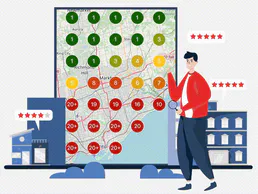
Track your Google Maps rankings across geographic grids and monitor local SEO performance for every business location.

Buttondown
Manage your newsletter via Buttondown — track subscribers, send emails, and monitor analytics directly from any AI agent.
You might also like

CircleCI
Manage CI/CD pipelines and workflows via CircleCI — track jobs, trigger pipelines, and monitor build status directly from any AI agent.

Imgur
Manage Imgur content — upload images, organize albums, and browse the gallery directly from your AI agent.

HERE (Location & Maps)
Build with location data via HERE — geocode addresses, calculate routes, track traffic, and get weather.