
Bring Client Onboarding
to Claude Desktop
Learn how to connect Clustdoc to Claude Desktop and start using 6 AI agent tools in minutes. Fully managed, enterprise secure, and ready to use without writing a single line of code.
What is the Clustdoc MCP Server?
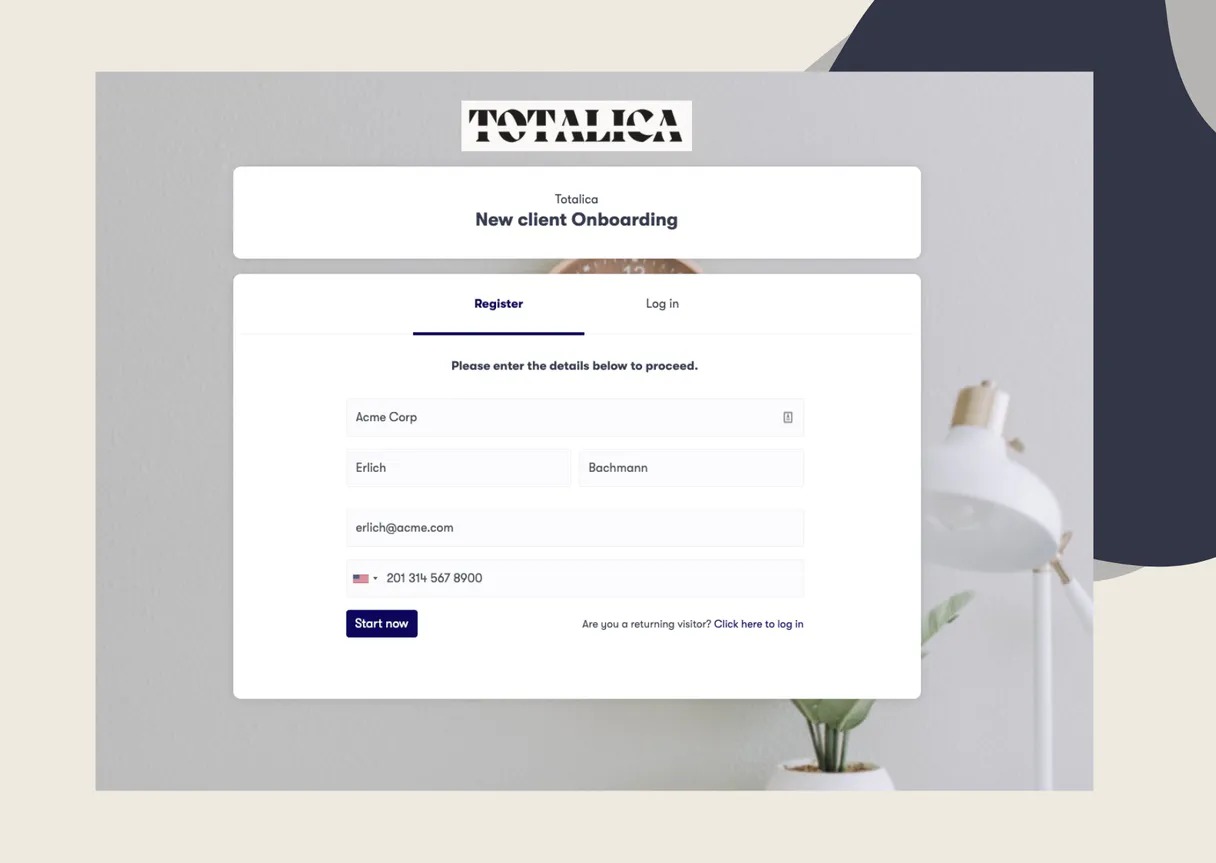
Connect your Clustdoc account to any AI agent and take full control of your professional client onboarding and automated document collection workflows through natural conversation.
What you can do
- Application Orchestration — List and manage all active client applications programmatically, including monitoring completion percentages and real-time status changes
- Document Architecture — Organize and track the collection of critical business documents (KYC, contracts, IDs) by initializing high-fidelity application folders directly from your agent
- Workflow Intelligence — Access your directory of onboarding processes (templates) to ensure every new client follows the perfect perfectly coordinated legal and operational path
- Team Coordination — Retrieve directories of organization users and monitor team activities to oversee high-volume onboarding pipelines efficiently
- Operational Monitoring — Check active webhooks and retrieve specific application metadata directly through your agent for instant auditing and reporting
How it works
1. Subscribe to this server
2. Retrieve your API Token (Bearer) from your Clustdoc dashboard (Settings > API)
3. Start managing your client pipeline from Claude, Cursor, or any MCP client
No more manual following up on missing files or digging through student/client folders in the portal. Your AI acts as your dedicated onboarding specialist and document coordinator.
Who is this for?
- Account Managers & Legal Teams — instantly retrieve application summaries and check document completion using natural language commands
- Operations Specialists — automate the creation of new client files and track progress without leaving your communication tools
- Real Estate & HR Leads — monitor incoming tenant or employee applications and retrieve finalized PDFs through simple AI queries
Built-in capabilities (6)
Pass data as a JSON string. Create a new application
Get specific application details
List all client applications
List all team members
List all configured webhooks
List all onboarding workflow processes
Why Claude Desktop?
Claude Desktop is the definitive way to connect Clustdoc to your AI workflow. Add Vinkius Edge URL to your config, restart the app, and Claude immediately exposes all 6 tools in the chat interface. ask a question, Claude calls the right tool, and you see the answer. Zero code, zero context switching.
- —
Claude Desktop is the reference MCP client. it was designed alongside the protocol itself, ensuring the most complete and stable MCP implementation available
- —
Zero-code configuration: add a server URL to a JSON file and Claude instantly discovers and exposes all available tools in the chat interface
- —
Claude's extended thinking capability lets it reason through multi-step tool usage, chaining multiple API calls to answer complex questions
- —
Enterprise-grade security with local config storage. your tokens never leave your machine, and connections go directly to Vinkius Edge network
Clustdoc in Claude Desktop
Clustdoc and 3,400+ other MCP servers. One platform. One governance layer.
Teams that connect Clustdoc to Claude Desktop through Vinkius don't need to source, host, or maintain individual MCP servers. Every tool call runs inside a hardened runtime with credential isolation, DLP, and a signed audit chain.
Raw MCP | Vinkius | |
|---|---|---|
| Server catalog | Find and host yourself | 3,400+ managed |
| Infrastructure | Self-hosted | Sandboxed V8 isolates |
| Credential handling | Plaintext in config | Vault + runtime injection |
| Data loss prevention | None | Configurable DLP policies |
| Kill switch | None | Global instant shutdown |
| Financial circuit breakers | None | Per-server limits + alerts |
| Audit trail | None | Ed25519 signed logs |
| SIEM log streaming | None | Splunk, Datadog, Webhook |
| Honeytokens | None | Canary alerts on leak |
| Custom domains | Not applicable | DNS challenge verified |
| GDPR compliance | Manual effort | Automated purge + export |
Why teams choose Vinkius for Clustdoc in Claude Desktop
The Clustdoc MCP Server runs on Vinkius-managed infrastructure inside AWS — a purpose-built runtime with per-request V8 isolates, Ed25519 signed audit chains, and sub-40ms cold starts. All 6 tools execute in hardened sandboxes optimized for native MCP execution.
Your AI agents in Claude Desktop only access the data you authorize, with DLP that blocks sensitive information from ever reaching the model, kill switch for instant shutdown, and up to 60% token savings. Enterprise-grade infrastructure, zero maintenance.
* Every MCP server runs on Vinkius-managed infrastructure inside AWS - a purpose-built runtime with per-request V8 isolates, Ed25519 signed audit chains, and sub-40ms cold starts optimized for native MCP execution. See our infrastructure
How Vinkius secures
Clustdoc for Claude Desktop
Every tool call from Claude Desktop to the Clustdoc MCP Server is protected by DLP redaction, cryptographic audit chains, V8 sandbox isolation, kill switch, and financial circuit breakers.
Frequently asked questions
How do I find my Clustdoc API Token?
Log in to your account, navigate to Settings > API, and generate or copy your unique Bearer Token.
Can I start a specific onboarding process via AI?
Yes! The create_application tool allows you to specify a process_id to trigger the exact workflow template you need.
How do I check document completion status?
Use the get_application_details tool with an application ID to retrieve high-fidelity metadata including the current step and completion progress.
How does Claude Desktop discover MCP tools?
When Claude Desktop starts, it reads the claude_desktop_config.json file and connects to each configured MCP server. It calls the tools/list endpoint to fetch the schema for every available tool, then surfaces them as clickable options in the chat interface via the 🔌 icon.
What happens if the MCP server is temporarily unavailable?
Claude Desktop handles disconnections gracefully. if the server is unreachable at startup, the tools simply won't appear. Once the server becomes available again, restarting Claude Desktop will re-establish the connection. There is no timeout penalty or error loop.
Can I connect multiple MCP servers simultaneously?
Yes. You can add as many servers as you need in the mcpServers section of the config file. Each server appears as a separate tool provider, and Claude can use tools from multiple servers in a single conversation turn.
Is there a limit on the number of tools per server?
Claude Desktop can handle hundreds of tools per server. However, for optimal LLM performance, Vinkius servers are designed to expose focused, well-documented tool sets rather than overwhelming the model with too many options.
Does Claude Desktop support Streamable HTTP transport?
Yes. Claude Desktop supports both SSE (Server-Sent Events) and the newer Streamable HTTP transport that Vinkius uses. Simply provide the server URL. Claude auto-negotiates the transport protocol.
Server not appearing after restart
Ensure the JSON is valid (no trailing commas). Check the file path: ~/Library/Application Support/Claude/claude_desktop_config.json (macOS) or %APPDATA%\\Claude\\ (Windows).
Authentication error
Verify your Vinkius token is correct. Go to cloud.vinkius.com to regenerate it if needed.
Tools not showing in chat
Click the 🔌 icon at the bottom of the chat input. If it shows 0 tools, the server may still be connecting. wait a few seconds.