
Centaur Analytics MCP Server for VS Code Copilot 12 tools — connect in under 2 minutes
GitHub Copilot in VS Code is the most widely adopted AI coding assistant, embedded directly into the world's most popular code editor. With MCP support in Agent mode, Copilot can access external data and APIs to generate context-aware code grounded in real-time information.
ASK AI ABOUT THIS MCP SERVER
Vinkius supports streamable HTTP and SSE.
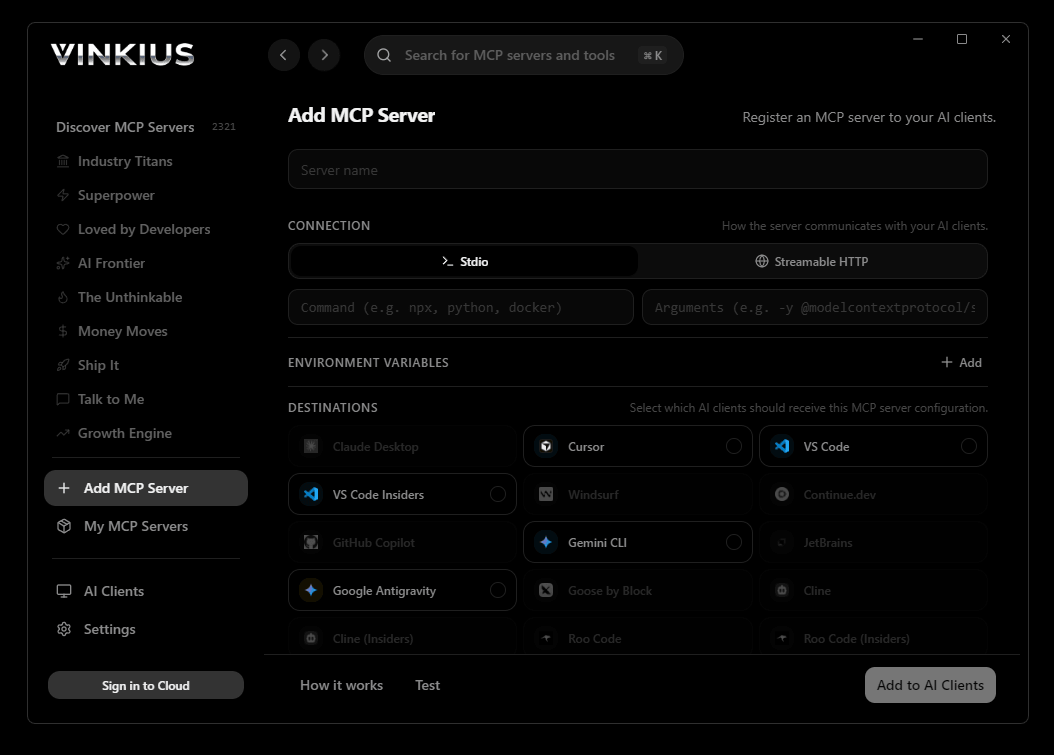
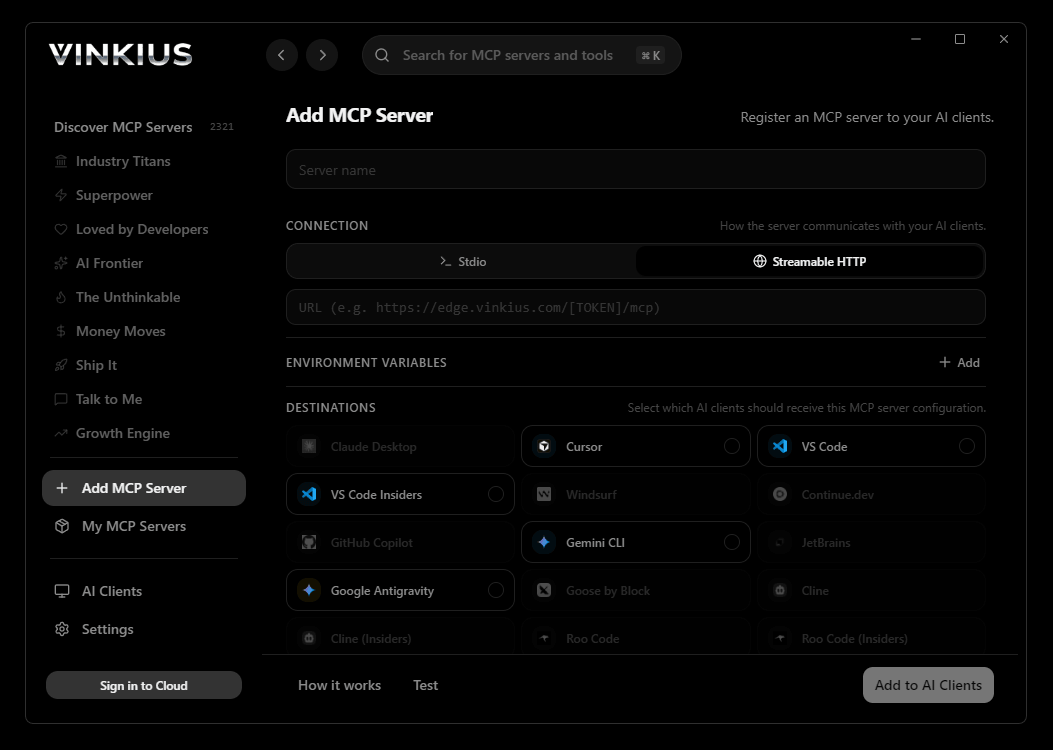
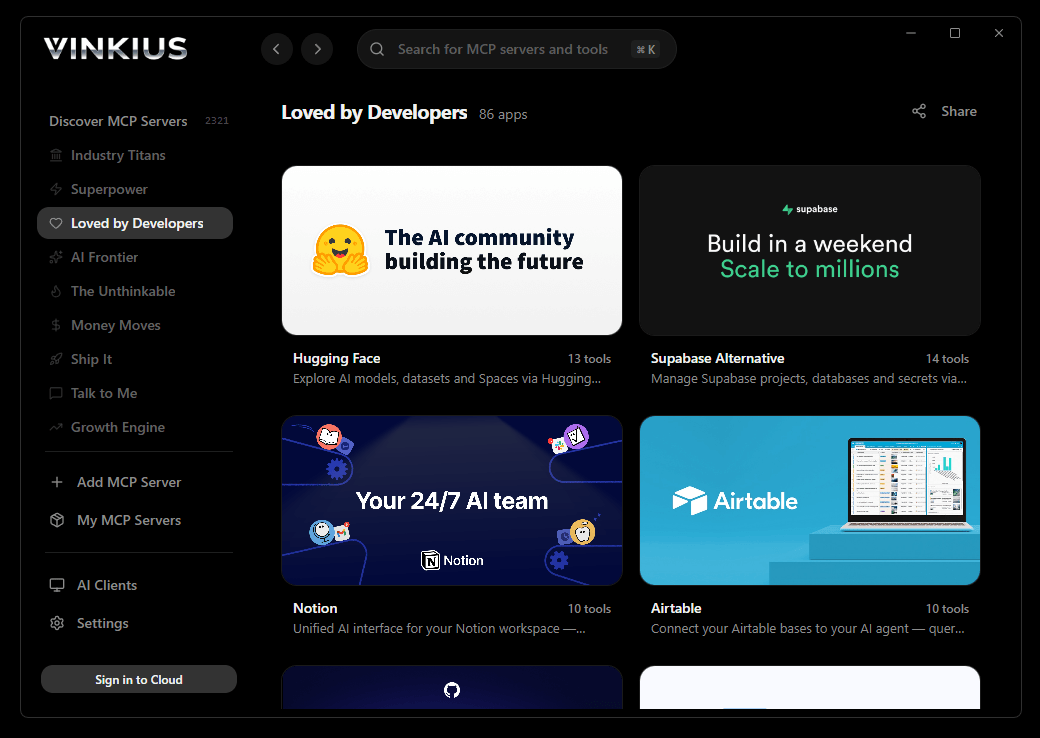
Vinkius Desktop App
The modern way to manage MCP Servers — no config files, no terminal commands. Install Centaur Analytics and 2,500+ MCP Servers from a single visual interface.

{
  "mcpServers": {
    "centaur-analytics": {
      "url": "https://edge.vinkius.com/[YOUR_TOKEN_HERE]/mcp"
    }
  }
}
* Every MCP server runs on Vinkius-managed infrastructure inside AWS - a purpose-built runtime with per-request V8 isolates, Ed25519 signed audit chains, and sub-40ms cold starts optimized for native MCP execution. See our infrastructure
About Centaur Analytics MCP Server
Connect your Centaur Analytics Internet-of-Crops API to any AI agent and take full control of AI-powered grain quality monitoring, predictive spoilage detection, wireless sensor management, and enterprise grain storage intelligence through natural conversation.
GitHub Copilot Agent mode brings Centaur Analytics data directly into your VS Code workflow. With a project-scoped config, the entire team shares access to 12 tools. Copilot queries live data, generates typed code, and writes tests from actual API responses, all without leaving the editor.
What you can do
- Bin Management — List and manage all grain storage bins with fill levels, grain types, and monitoring status
- Real-Time Readings — Get current CO2, moisture, and temperature readings from wireless sensors throughout the grain mass
- CO2 Tracking — Monitor historical CO2 trends as the earliest indicator of biological activity and spoilage
- Moisture Analysis — Track moisture content and migration patterns to detect condensation and quality risks
- Temperature Monitoring — Detect hot spots and spoilage heating with distributed temperature sensor data
- AI Spoilage Predictions — Receive machine learning-powered spoilage risk assessments with days-to-spoilage estimates
- Quality Forecasting — Predict future grain quality metrics using computer simulation models
- Alert Management — Monitor active alerts for high CO2, rising temperature, moisture issues, and sensor failures
- Sensor Health — Track wireless sensor battery levels, signal strength, and operational status
- Facility Overview — Get comprehensive facility-wide summaries for executive reporting and strategic management
- Quality Reports — Generate AI-powered comprehensive quality reports with actionable recommendations
The Centaur Analytics MCP Server exposes 12 tools through the Vinkius. Connect it to VS Code Copilot in under two minutes — no API keys to rotate, no infrastructure to provision, no vendor lock-in. Your configuration, your data, your control.
How to Connect Centaur Analytics to VS Code Copilot via MCP
Follow these steps to integrate the Centaur Analytics MCP Server with VS Code Copilot.
Create MCP config
Create a .vscode/mcp.json file in your project root
Add the server config
Paste the JSON configuration above
Enable Agent mode
Open GitHub Copilot Chat and switch to Agent mode using the dropdown
Start using Centaur Analytics
Ask Copilot: "Using Centaur Analytics, help me...". 12 tools available
Why Use VS Code Copilot with the Centaur Analytics MCP Server
GitHub Copilot for Visual Studio Code provides unique advantages when paired with Centaur Analytics through the Model Context Protocol.
VS Code is used by over 70% of developers. adding MCP tools to Copilot means your team can leverage external data without leaving their primary editor
Project-scoped MCP configs (`.vscode/mcp.json`) let you commit server configurations to your repository, ensuring the entire team shares the same tool access
Copilot's Agent mode integrates MCP tools seamlessly with file editing, terminal commands, and workspace search in a single agentic loop
GitHub's enterprise compliance and audit features extend to MCP tool usage, providing visibility into how AI interacts with external services
Centaur Analytics + VS Code Copilot Use Cases
Practical scenarios where VS Code Copilot combined with the Centaur Analytics MCP Server delivers measurable value.
Live API integration: Copilot can query an MCP server, inspect the response schema, and generate typed API client code in the same step
DevSecOps workflows: security teams can give developers access to domain intelligence tools directly in their editor for real-time vulnerability assessment during code review
Data pipeline development: Copilot fetches sample data via MCP and generates transformation scripts, validators, and test fixtures from actual API responses
Documentation generation: Copilot queries available tools and auto-generates README sections, API reference docs, and usage examples
Centaur Analytics MCP Tools for VS Code Copilot (12)
These 12 tools become available when you connect Centaur Analytics to VS Code Copilot via MCP:
get_alerts
Alerts are triggered by threshold breaches (high CO2, rising temperature, moisture migration, sensor failures) and indicate conditions requiring immediate attention. Returns alert severity (critical, warning, info), alert type, affected bin, timestamp, and recommended actions. Essential for proactive grain management, quality issue detection, and operational response. AI agents should use this when users ask "show me all active alerts", "what warnings have been triggered for bin 3", or need alert data for operational monitoring. Optional bin_id filters alerts for a specific bin. Get active alerts and warnings for grain bins or a specific bin
get_bin_details
Essential for understanding bin context before analyzing sensor data, planning aeration strategies, or generating quality reports. AI agents should reference this when users ask "tell me about bin 5", "what grain is stored in silo 3", or need detailed bin metadata for informed analysis. Get detailed information about a specific grain storage bin
get_bins
Returns bin IDs, names, locations, grain types, fill levels, and current monitoring status. Essential for facility overview, bin inventory management, and selecting specific bins for detailed analysis. AI agents should use this when users ask "show me all my grain bins", "list monitored storage units", or need to identify available bins before querying sensor readings or AI predictions. List all grain storage bins monitored by Centaur Analytics
get_co2_history
CO2 is the earliest indicator of biological activity (mold, insects, grain respiration) that leads to spoilage. Returns time-series CO2 data in ppm with timestamps. Essential for spoilage trend analysis, early warning detection, and validating storage condition stability. AI agents should reference this when users ask "show me CO2 trends for bin 3 over the past 30 days", "has CO2 been rising in silo 5", or need historical CO2 data for grain quality assessment. Optional days parameter controls lookback period. Get historical CO2 readings to track spoilage trends over time
get_current_readings
Returns CO2 levels (ppm), moisture content (%), and temperature (C) from multiple sensor positions throughout the grain mass. Essential for real-time grain quality monitoring, early spoilage detection, and storage condition assessment. AI agents should use this when users ask "what are the current conditions in bin 2", "show me all sensor readings for silo 4", or need immediate grain quality data for storage management decisions. Get current CO2, moisture, and temperature readings from all sensors in a bin
get_facility_overview
Essential for executive reporting, facility-wide quality assessment, and strategic storage management. AI agents should use this when users ask "give me an overview of my entire facility", "what is the overall grain quality status", or need facility-level summaries for management reporting. Get comprehensive overview of the entire grain storage facility
get_moisture_history
Moisture migration and condensation are key drivers of spoilage and quality loss. Returns time-series moisture data (%) with timestamps from multiple sensor positions. Essential for moisture migration analysis, condensation detection, drying effectiveness assessment, and storage safety monitoring. AI agents should use this when users ask "show me moisture trends for bin 1", "has moisture been stable in silo 2", or need historical moisture data for storage management. Get historical moisture content readings for grain storage analysis
get_quality_forecast
Uses computer simulation models combining current sensor data, weather forecasts, and grain characteristics. Essential for marketing timing, quality preservation planning, and storage duration optimization. AI agents should reference this when users ask "what will the grain quality be in bin 2 next month", "forecast quality changes for silo 4", or need predictive quality data for marketing and storage decisions. Get AI-powered grain quality forecast for upcoming weeks
get_quality_report
Combines current sensor readings, historical trends, spoilage predictions, quality forecasts, and actionable recommendations into a single report. Includes test weight estimates, moisture stability analysis, temperature uniformity assessment, and mycotoxin risk evaluation. Essential for quality documentation, marketing decisions, insurance claims, and comprehensive grain condition assessment. AI agents should reference this when users ask "generate a quality report for bin 2", "give me the complete grain condition assessment for silo 4", or need comprehensive quality documentation for a specific bin. Get a comprehensive AI-generated quality report for a specific grain bin
get_sensor_health
Returns sensor IDs, positions (depth/location), battery levels, signal strength, last communication time, and operational status (active, low battery, offline). Essential for sensor network maintenance, data continuity assurance, and monitoring system reliability. AI agents should reference this when users ask "are all sensors working in bin 5", "which sensors need battery replacement", or need sensor network health data for system administration. Get health status and battery levels of wireless sensors in a grain bin
get_spoilage_predictions
Returns spoilage risk level (low, moderate, high, critical), predicted days until spoilage onset, confidence scores, and recommended preventive actions. Essential for proactive grain management, early intervention planning, and quality preservation. AI agents should use this when users ask "what is the spoilage risk for bin 3", "when will grain quality degrade in silo 5", or need AI-driven risk assessments for storage management decisions. Get AI-powered spoilage risk predictions for a specific grain bin
get_temperature_history
Temperature increases often indicate active spoilage, insect activity, or mold growth. Returns time-series temperature data (Celsius) with timestamps from multiple sensor depths and positions. Essential for hot spot detection, spoilage heating identification, aeration effectiveness evaluation, and grain quality preservation. AI agents should reference this when users ask "show me temperature trends for bin 4", "are there any hot spots developing in silo 6", or need historical temperature data for spoilage analysis. Get historical temperature readings to detect hot spots and spoilage heating
Example Prompts for Centaur Analytics in VS Code Copilot
Ready-to-use prompts you can give your VS Code Copilot agent to start working with Centaur Analytics immediately.
"Show me the current CO2, moisture, and temperature readings for bin 5."
"What is the AI spoilage prediction for my soybean bin?"
"Give me a facility-wide overview of all grain bins and any active alerts."
Troubleshooting Centaur Analytics MCP Server with VS Code Copilot
Common issues when connecting Centaur Analytics to VS Code Copilot through the Vinkius, and how to resolve them.
MCP tools not available
Centaur Analytics + VS Code Copilot FAQ
Common questions about integrating Centaur Analytics MCP Server with VS Code Copilot.
Which VS Code version supports MCP?
How do I switch to Agent mode?
Can I restrict which MCP tools Copilot can access?
Does MCP work in VS Code Remote or Codespaces?
.vscode/mcp.json work in Remote SSH, WSL, and GitHub Codespaces environments. The MCP connection is established from the remote host, so ensure the server URL is accessible from that environment.Connect Centaur Analytics with your favorite client
Step-by-step setup guides for every MCP-compatible client and framework:
Anthropic's native desktop app for Claude with built-in MCP support.
AI-first code editor with integrated LLM-powered coding assistance.
GitHub Copilot in VS Code with Agent mode and MCP support.
Purpose-built IDE for agentic AI coding workflows.
Autonomous AI coding agent that runs inside VS Code.
Anthropic's agentic CLI for terminal-first development.
Python SDK for building production-grade OpenAI agent workflows.
Google's framework for building production AI agents.
Type-safe agent development for Python with first-class MCP support.
TypeScript toolkit for building AI-powered web applications.
TypeScript-native agent framework for modern web stacks.
Python framework for orchestrating collaborative AI agent crews.
Leading Python framework for composable LLM applications.
Data-aware AI agent framework for structured and unstructured sources.
Microsoft's framework for multi-agent collaborative conversations.
Connect Centaur Analytics to VS Code Copilot
Get your token, paste the configuration, and start using 12 tools in under 2 minutes. No API key management needed.