Clustdoc MCP. Manage client dossiers and onboarding workflows from your chat.
Works with every AI agent you already use
…and any MCP-compatible client

Just plug in your AI agents and start using Vinkius.
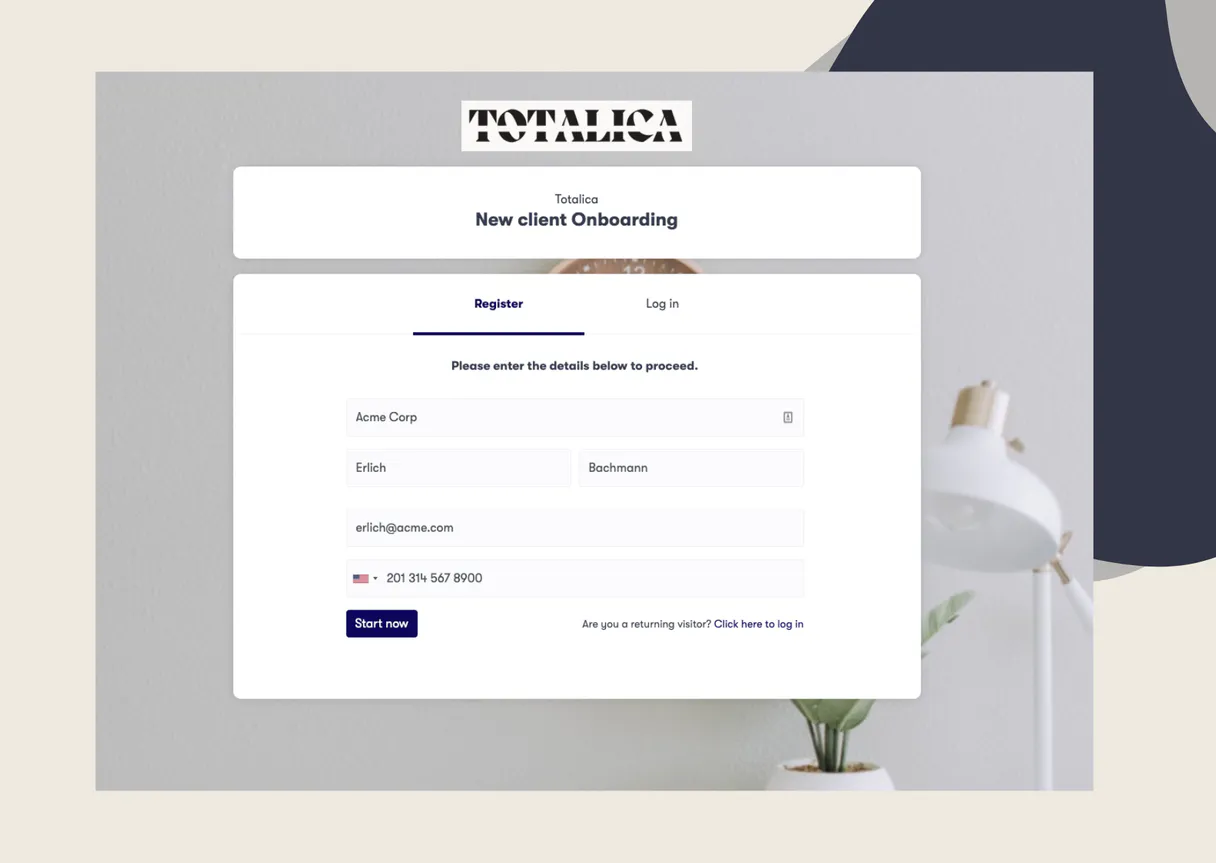
Clustdoc MCP Server manages your entire client onboarding process. Use your AI agent to track application progress, launch new dossiers, and automate invitations directly from chat.
List client dossiers, get status updates, configure templates, and manage team access without opening the dashboard.
What your AI agents can do
Get application status details
Retrieves the detailed status and current progress for one specific client dossier.
Get my clustdoc profile
Gets information about the user who is authenticated to the Clustdoc account.
Get workflow configuration
Retrieves the detailed settings for a specific onboarding workflow template.
Get detailed progress and status for a specific client application (dossier).
Launch an onboarding session for a new client using a pre-defined template.
Send the automated portal invitation email to the client associated with a specific dossier.
Retrieve a list of all active and completed client applications (dossiers).
List all the workflow templates you have set up for client onboarding.
Ask AI about this MCP
Supported MCP Clients
Waiting for input…
Clustdoc MCP Server: 8 Tools for Onboarding & Dossier Management
Use these eight tools to manage the entire client lifecycle—from listing applications to getting detailed status updates—all through your AI agent.
019d7575get application status details
Retrieves the detailed status and current progress for one specific client dossier.
019d7575get my clustdoc profile
Gets information about the user who is authenticated to the Clustdoc account.
019d7575get workflow configuration
Retrieves the detailed settings for a specific onboarding workflow template.
019d7575launch new onboarding
Starts a new client onboarding application using a pre-selected template.
019d7575list client dossiers
Lists all existing client applications, showing whether they are active or complete.
019d7575list clustdoc teams
Lists all teams and individual members within your Clustdoc account.
019d7575list onboarding templates
Lists all the predefined workflow templates available for client onboarding.
019d7575send onboarding invitation
Sends the portal invitation email to a client for a specific dossier.
Choose How to Get Started
Build a custom MCP for your own tools, or connect a ready-made integration from our catalog.
Build Your Own
Turn any API into an MCP. Import a spec, define Agent Skills, or deploy with MCPFusion.
- Import from OpenAPI, Swagger, or YAML specs
- Create Agent Skills with progressive disclosure
- Deploy to edge with MCPFusion framework
- Built in DLP, auth, and compliance on every call
- Real time usage dashboard and cost metering
- Publish to catalog or keep private
Make Your AI Do More
Start with Clustdoc, then connect any of our 4,700+ other servers whenever your AI needs more. One click, no limits.
- Use this MCP plus 4,700+ others, all in one place
- Add new capabilities to your AI anytime you want
- Every connection is secured and compliant automatically
- Track usage and costs across all your servers
- Works with Claude, ChatGPT, Cursor, and more
- New servers added to the catalog every week
What you can do with this MCP connector
Your AI agent lets you handle every part of client onboarding without ever opening the dashboard. You'll manage applications, track progress, and automate invites just by talking to it. You can use your agent to check a client's dossier status using get_application_status_details, which pulls the detailed progress and current status for any specific client application.
You'll see all existing client applications—whether they're active or done—by running list_client_dossiers. Need to start a new client? You'll launch a new onboarding session using a pre-selected template with launch_new_onboarding. You can also view all the workflow templates you've set up for client onboarding with list_onboarding_templates, or check the settings for a specific template using get_workflow_configuration.
When a client is ready, you'll send the automated portal invitation email using send_onboarding_invitation. Beyond applications, you can manage your team structure; list_clustdoc_teams shows you all the teams and individual members in your account. You'll also get info about the person authenticated to the Clustdoc account by calling get_my_clustdoc_profile. You'll get a list of all available onboarding templates by calling list_onboarding_templates.
How Clustdoc MCP Works
- 1 Subscribe to the Clustdoc server and enter your API Token (you get this from Team Settings > Developer > API).
- 2 Connect your AI client (like Claude or Cursor) to the MCP Server.
- 3 Tell your agent what you need—for example, 'List all active client dossiers' or 'Launch a new onboarding for Jane Doe.' The agent runs the tool and gives you the result.
The bottom line is, you manage your entire client onboarding process using natural language prompts, without ever leaving your chat interface.
Who Is Clustdoc MCP For?
This is for Operations, Onboarding Managers, and Compliance teams. If your job involves tracking hundreds of client files or guiding clients through a complex document submission process, this saves you time. You don't have to open the dashboard to check a status or send an invite.
Checks application volumes and monitors completion rates by asking the agent for a list of client dossiers.
Audits document collection progress and checks dossier statuses without needing to open the Clustdoc dashboard.
Quickly looks up client application details and triggers portal invitations straight from the chat interface.
Verifies workflow configurations and monitors team member activity by listing templates and team members.
What Changes When You Connect
- Check status instantly: Instead of navigating dashboards to check document completion, run
get_application_status_detailsto see exactly what documents a client is missing. It’s immediate. - Start fresh: When a new client signs up, use
launch_new_onboardingto create the entire application dossier. The agent handles the setup; you just provide the client name and template. - Automate communication: Use
send_onboarding_invitationto trigger the welcome email. You don't need to manually copy an email address or hit a button in the web UI. - Audit workflows easily: Run
list_onboarding_templatesto see every workflow available. You can confirm if the correct process is set up before starting a client. - Keep track of everything:
list_client_dossiersgives you a full count of active and finished applications, letting you immediately see which clients need attention. - Manage access: Use
list_clustdoc_teamsto quickly verify team members and access rights without needing to open the settings panel.
Real-World Use Cases
A compliance audit is needed for 50 clients.
The compliance officer needs to know the status of 50 client files quickly. Instead of opening 50 different dossiers, they ask their agent to run list_client_dossiers, then loop through the results, calling get_application_status_details for each one. They get a consolidated report of missing documents in minutes.
A new high-value client just signed a contract.
The sales team needs to kick off the onboarding process immediately. They ask their agent to run launch_new_onboarding using the 'Premium Client' template, and then immediately follow up by calling send_onboarding_invitation to get the client started. The whole thing happens in three lines of chat.
The team needs to know who can access the system.
The ops lead needs to confirm team roles. They run list_clustdoc_teams, which shows all active teams and members. If they spot an unauthorized user, they know exactly who needs to be addressed, all from the chat window.
A client's process is stuck and needs manual review.
The customer success agent notices a client hasn't uploaded their ID proof. They ask the agent to run get_application_status_details for that client. The tool immediately pinpoints the missing document, allowing the agent to send a precise follow-up message.
The Tradeoffs
Checking status via multiple dashboards
Logging into the Clustdoc dashboard, clicking the 'Dossiers' tab, finding the client, opening the file, and scrolling down to see the status percentage.
→
Just tell your agent to run get_application_status_details with the client's identifier. The tool provides the progress and missing items directly in the chat, skipping the UI navigation entirely.
Manually triggering invitations
Getting the client's email from one screen, copying it, switching to email software, composing the message, and finally sending it.
→
Use send_onboarding_invitation in your chat. The agent handles the email sending process and confirms it's sent, keeping your workflow in one place.
Guessing the right workflow template
Remembering which of the 10 available onboarding templates is the right one for a specific client, and manually selecting it in the web UI.
→
Run list_onboarding_templates first. Review the list to confirm the template name, then use launch_new_onboarding with the exact name. It minimizes guesswork.
When It Fits, When It Doesn't
Use this if your core job is managing a high volume of complex, multi-stage client applications. You need to repeatedly check progress, launch new files, or send automated communications. You must use it when you need to see a status update without opening a dedicated web dashboard. Don't use this if you just need to generate a simple report on all users (a basic database query tool would suffice). If you only need to list users, list_client_dossiers works. But if you need to act on that data—like launching a new file or sending an invite—you need the full suite of tools here.
Independent Platform Disclaimer: Vinkius is an independent platform and is not affiliated with, endorsed by, sponsored by, verified by, or otherwise authorized by Clustdoc. All third-party trademarks, logos, and brand names are the property of their respective owners. Their use on this website is strictly for informational purposes to identify service compatibility and interoperability.
VINKIUS INFRASTRUCTURE
Cloud Hosted
Managed infra
V8 Isolated
Sandboxed per request
Zero-Trust Proxy
No stored credentials
DLP Enforced
Policy on every call
GDPR Compliant
EU data residency
Token Compression
~60% cost reduction
Works with Claude, ChatGPT, Cursor, and more
The Model Context Protocol standardizes how applications expose capabilities to LLMs. Instead of operating in isolation, your AI gains direct access to external platforms, live data, and real-world actions through secure, standardized connections.
This server provides 8 capabilities that interface natively with Claude, ChatGPT, Cursor, and any MCP client. No middleware. No custom integration required.
Available Capabilities
Client onboarding shouldn't require a dozen clicks.
Today, managing a client application means logging into the dashboard. You navigate to the client's file, then click 'Status,' then you might have to switch tabs to see which documents are missing. You copy the status, paste it into a spreadsheet, and then you open a separate window to send the reminder email.
With the Clustdoc MCP Server, the whole thing runs through your agent. You ask, 'What's wrong with TechFlow Inc?' The agent runs `get_application_status_details` and gives you a clear list of missing documents. You then tell it, 'Send the reminder.' The process is done in your chat.
Clustdoc MCP Server: Automate the entire client lifecycle.
Manually launching a client dossier requires remembering the correct template name, navigating to the 'Start New' section, filling out the required fields, and confirming the launch—a multi-step, error-prone process.
Now, you simply tell your agent to run `launch_new_onboarding` for the client. The agent handles the template selection and file creation. It’s a single prompt, and the dossier is live. It cuts out all the setup friction.
Common Questions About Clustdoc MCP
How do I use the `get_application_status_details` tool? +
You ask your agent to get the status for a specific client. You must provide the client's dossier ID or name. The agent returns the percentage complete and lists exactly which documents are missing.
Can I use `send_onboarding_invitation` if I don't know the client's email? +
No, the tool requires the specific dossier ID or client identifier. Once the agent has that context, it triggers the automated invitation email.
What is the difference between `list_client_dossiers` and `list_onboarding_templates`? +
list_client_dossiers shows the actual files (the clients). list_onboarding_templates shows the blueprints (the workflows) you can use to create new files.
How does the `launch_new_onboarding` tool work? +
You tell your agent to launch a new onboarding for a client, and you must specify the exact template name. The tool creates the dossier and sets up the initial workflow.
How do I use `list_clustdoc_teams` to manage team access? +
This tool lists all teams and members in your account. You use it to audit who has access to the system and confirm team structures before making changes.
What happens if I try to run `get_application_status_details` for a non-existent dossier? +
The tool returns a specific error message indicating the dossier ID wasn't found. This lets your agent know immediately that the client record doesn't exist.
Can I use `get_workflow_configuration` to check template requirements? +
Yes, this tool retrieves the detailed setup for any onboarding template. It shows exactly what data fields and steps are required for that workflow.
Does `list_client_dossiers` show completed applications? +
Yes, this tool lists both active and completed client applications. You can filter the results to see how many dossiers have finished their lifecycle.
Can I see if a client has finished their onboarding dossier? +
Yes! Use the get_application_status_details tool with the dossier ID. The agent will return the current progress percentage and list any pending tasks or documents.
How do I invite a new client to start an application? +
First, use launch_new_onboarding to create the dossier for the client. Then, use the send_onboarding_invitation tool to trigger the welcome email with their portal link.
Where do I find my Clustdoc API Token? +
Log in to Clustdoc, navigate to Team Settings, and select Developer. You can generate and copy your API token from the API section.
Use it with your favorite AI tools
Connect this server to Cursor, Claude, VS Code, and more.
More in this category
CloudConvert
Convert files between 200+ formats including PDF, images, video, and documents with a fast cloud-based processing engine.
Routific
Connect your AI assistant to Routific to solve complex vehicle routing problems, dispatch drivers, and manage global delivery timelines natively through chat.
Ninehire
Hire smarter with a recruitment platform that posts jobs, screens applicants, and moves the best candidates through your pipeline.
You might also like
OpenFGA (Fine-Grained Auth)
Manage fine-grained authorization with OpenFGA — create stores, define authorization models, and manage relationship tuples directly from your AI agent.
kvCORE
Manage real estate leads — search contacts, track listings, and audit agent tasks.
Amplenote
Connect your Amplenote workspace to your AI agent — search notes, manage tasks, and organize ideas via natural language.