
Greenhouse MCP, Ready to Go
Manage your Greenhouse recruiting pipeline with AI agents. Use Claude or Cursor to track candidates, audit jobs, and manage hiring workflows easily.
No credit card required. Experience the power of this integration risk-free.
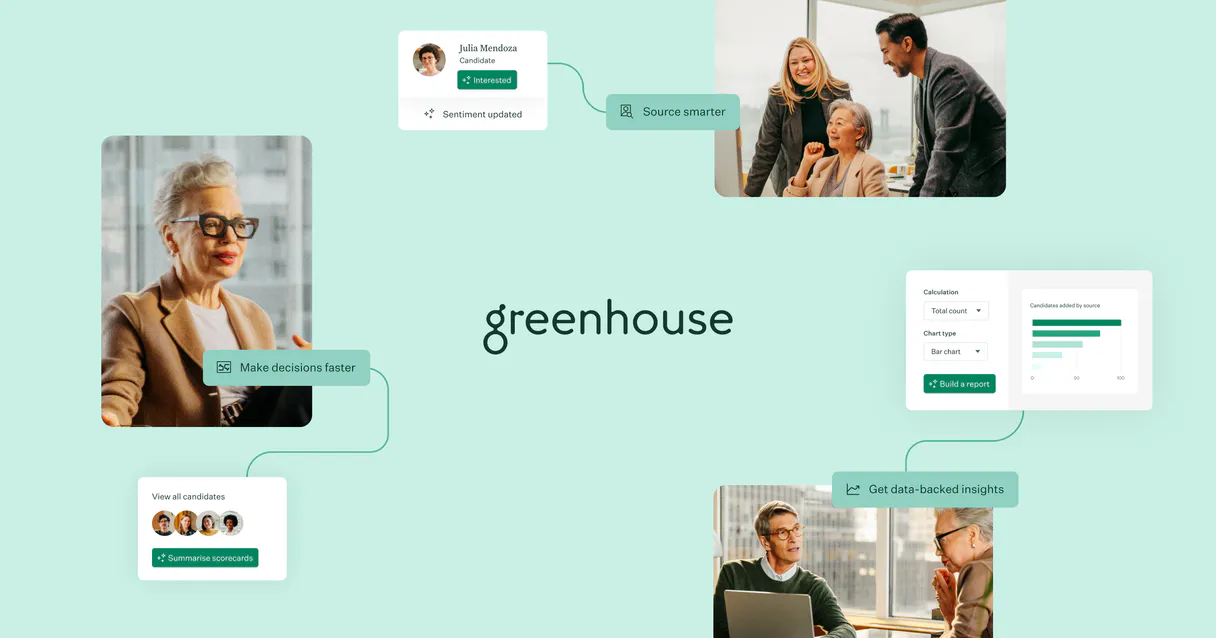
Manage your recruiting pipeline and track candidate applications in real-time.
Works with every AI agent you already use
…and any MCP-compatible client









How fast is the Greenhouse Connector?
Average time for the server to become ready for requests over the last 14 days, measured until the initialize / tools/list handshake completes. Metrics are updated daily between 00:00 and 04:00 UTC. Create a free account, use this Connector on Vinkius Cloud, and connect it to your AI agent in seconds.
Waiting for input…
What AI agents can do with Greenhouse MCP: 12 Tools for Recruiting Management
Use these 12 tools to manage candidates, jobs, and users in Greenhouse through your AI client.
Get candidate
Pulls specific details for a single candidate to help you review their profile quickly. This lets you see their history and status without clicking through multiple pages.
Get job
Fetches the full details of a specific job listing, including its current status and requirements. Use this to see exactly what a role entails and where it stands in the hiring process.
Get user
Retrieves specific details for a Greenhouse user to help with access and role verification. It is useful for auditing who has permission to see sensitive hiring data.
List applications
Pulls a list of all job applications so you can see the volume of incoming talent. This helps you monitor the health of your hiring pipeline at a glance.
List candidates
Shows all candidates currently in your Greenhouse system for a high-level overview of your pipeline. Use this to quickly see who is in the mix for various roles.
List departments
Lists all company departments to help align hiring with your organizational structure. This ensures your job postings are mapped to the correct teams.
List job stages
Shows the specific hiring stages for a job to ensure the process is moving correctly. It helps you verify that every candidate follows the same standardized path.
List jobs
Provides a full list of all active and past jobs in your Greenhouse account. Use this to get a complete picture of your current hiring volume.
List offices
Retrieves a list of all company offices to help coordinate regional hiring. This is helpful for managing decentralized teams across different locations.
List users
Lists all users in your Greenhouse workspace for auditing permissions and team access. It makes it easy to see who is currently active in your system.
Create candidate
Adds a new candidate profile to your system directly through your AI agent. This saves you from manual data entry when onboarding new applicants.
Get application
Fetches the specific details of a single job application to see a candidate's unique progress. Use this to see exactly how far a specific person has moved through the funnel.
A Connector is a URL. Vinkius runs it: hosting, security, governance, observability.
You're looking at one of 5,800+ managed Connectors. The real value isn't the catalog. It's the control plane that secures, governs, audits, and manages every interaction between your agents and the tools they use.
No Shadow AI
Every agent action is visible, approved, and auditable. Nothing runs outside your governance.
Absolute agent control
Fine-grained permissions for every agent, MCP, and tool. Instantly revoke access and audit every execution.
Cost control per token
Spend broken down to the token, tool, and agent. Budgets and hard limits. No surprise invoices.
Managed & monitored infra
We operate the runtime, authentication, scaling, retries, and monitoring. Your team manages AI, not infrastructure.
Data protection, DLP by design
Sensitive data is filtered before reaching the model. Access is governed so agents receive only the information they're allowed to use.
Token optimization, real savings
Lower AI costs by delivering the right context instead of unnecessary tools. Better accuracy, faster responses, and fewer wasted tokens.
Greenhouse MCP for Faster Talent Acquisition
This is for the recruiting teams tired of dashboard fatigue. It's for the coordinators who need to move people through stages fast and the HR ops folks who need to audit access without clicking a hundred times.
Recruiting Coordinator
They use this on Tuesday afternoons to quickly check which candidates are ready for next steps and update statuses without manual searching.
Hiring Manager
They use this to pull candidate profiles and job configurations during team syncs to make fast hiring decisions.
HR Operations Specialist
They use this to audit user roles and ensure department mappings stay consistent across the whole company.
Frequently Asked Questions
Can I use the Greenhouse MCP to see my candidates? +
Yes, you can see every candidate in your system and pull specific details on any profile just by asking.
Does the Greenhouse MCP support job application tracking? +
It does. You can pull lists of all applications or get the specific status of a single application.
How does the Greenhouse MCP help with HR auditing? +
It allows you to quickly list all users, verify their roles, and inspect job configurations across different departments.
Can I add new candidates using the Greenhouse MCP? +
Yes, you can use the tool to create new candidate profiles directly through your AI client.
Does the Greenhouse MCP work with my existing Greenhouse account? +
It connects to your existing Greenhouse Harvest API to pull and manage your current data.
Can I see our office locations with this Connector? +
Yes, you can retrieve a list of all company offices to help coordinate your regional hiring.
Can my agent list all candidates for a specific job in Greenhouse? +
Yes. Use the 'list_candidates' tool with the 'job_id' parameter. The agent will fetch all candidates associated with that specific opening flawlessly.
How do I check the current hiring stage of an applicant via chat? +
You can use the 'get_application' tool. Provide the Application ID, and the agent will return the full details, including the candidate's current stage in the hiring process natively.
Can I search for candidates who were added recently through the agent? +
Absolutely. Use the 'list_candidates' tool with sorting or filtering parameters like 'created_after'. Your agent will retrieve the most recent additions to your Greenhouse database natively.
Your AI, connected to everything.









No credit card required · Free tier available












Other Connectors in this category

Incident Postmortem Prover Connector
Most postmortems fail: vague timelines, symptom-level root causes, and action items with no owner. This tool forces SRE-grade rigor: minute-by-minute timeline reconstruction, systemic 5-Whys analysis, root cause isolation, accountable action items with owners and deadlines, and historical pattern detection.
Divided Dose Scheduler Connector
Precisely split a total daily medication volume into equal time intervals.
WakaTime (Coding Stats) Connector
WakaTime (Coding Stats) lets you pull your coding activity and productivity metrics directly into your AI agent. You can monitor projects, track personal goals, and see exactly how much time you spend in your IDE without switching tabs. It turns your raw WakaTime data into actionable insights for better time management, helping you see where your day goes and which projects are taking priority.
Related Connectors
Multivariate Test Analyzer Connector
Perform 2k factorial analysis to identify optimal element combinations and interaction effects in multivariate experiments.
Force Majeure Impact Calculator Connector
Calculate the legal and operational impact of Force Majeure events on contract obligations.
CallFire Connector
Run voice broadcasts, send bulk text messages, and manage call tracking campaigns for high-volume outreach at scale.