
IBGE Localidades MCP. Query Brazil's official municipal and regional hierarchy.
 Gemini
 Works with every AI agent you already use
…and any MCP-compatible client









Just plug in your AI agents and start using Vinkius.
IBGE Localidades — Cidades do Brasil. Connect your AI agent to the official Brazilian government database for precise geographic data.
Access 5,570 municipalities, 27 states, and the complete administrative hierarchy—Norte, Nordeste, Sudeste, etc.—with zero authentication. Get full Brazilian location intelligence for fintech, logistics, and CRM systems.
What your AI agents can do
Get municipio
Retrieves specific details for a municipality using its 7-digit IBGE code.
Get municipios por uf
Lists every municipality within a Brazilian state using the state's 2-letter UF abbreviation (e.g., SP, RJ).
List estados
Returns a complete list of all 27 Brazilian states (UFs).
Uses a 7-digit IBGE code to retrieve all structured data about a single Brazilian city.
Takes a 2-letter state abbreviation (e.g., SP, RJ) and returns a list of every municipality within that state.
Returns a complete, current list of all 27 Brazilian states (UFs) and their associated codes.
Provides the names and codes for the 5 major macro-regions of Brazil (Norte, Nordeste, etc.).
Retrieves a list of metropolitan areas associated with a specific Brazilian state.
Ask AI about this MCP
Supported MCP Clients
Gemini Waiting for input…
019d75b6get municipio
Retrieves specific details for a municipality using its 7-digit IBGE code.
019d75b6get municipios por uf
Lists every municipality within a Brazilian state using the state's 2-letter UF abbreviation (e.g., SP, RJ).
019d75b6list estados
Returns a complete list of all 27 Brazilian states (UFs).
019d75b6list regioes
Lists the 5 major macro-regions that cover Brazil.
019d75b6list regioes metropolitanas
Retrieves a list of metropolitan regions associated with a specific state.
Choose How to Get Started
Build a custom MCP for your own tools, or connect a ready-made integration from our catalog.
Build Your Own
Turn any API into an MCP. Import a spec, define Agent Skills, or deploy with MCPFusion.
- Import from OpenAPI, Swagger, or YAML specs
- Create Agent Skills with progressive disclosure
- Deploy to edge with MCPFusion framework
- Built in DLP, auth, and compliance on every call
- Real time usage dashboard and cost metering
- Publish to catalog or keep private
Make Your AI Do More
Start with IBGE Localidades — Cidades do Brasil, then connect any of our 4,700+ other servers whenever your AI needs more. One click, no limits.
- Use this MCP plus 4,700+ others, all in one place
- Add new capabilities to your AI anytime you want
- Every connection is secured and compliant automatically
- Track usage and costs across all your servers
- Works with Claude, ChatGPT, Cursor, and more
- New servers added to the catalog every week
What you can do with this MCP connector
Connect your AI agent to the official IBGE geographic database—the authoritative source every major company, fintech, and logistics player uses for Brazil's location data. You'll get direct access to Brazil's complete administrative structure without needing API keys or worrying about credentials.
- Get Municipality Details: Uses a 7-digit IBGE code to pull all structured data for a single Brazilian city.
- List All Municipalities in a State: Takes a 2-letter state abbreviation (like SP or RJ) and gives you a list of every municipality in that state.
- List Brazilian States: Returns a complete, current list of all 27 Brazilian states (UFs) and their codes.
- List Macro-Regions: Provides the names and codes for the 5 major macro-regions of Brazil (Norte, Nordeste, etc.).
- List Metropolitan Regions by State: Pulls a list of metropolitan areas tied to a specific Brazilian state.
How IBGE Localidades MCP Works
- 1 Your agent identifies the required geographical data (e.g., 'I need all cities in São Paulo').
- 2 The agent calls the appropriate tool (e.g.,
get_municipios_por_uf) and passes the required parameter (the 'SP' abbreviation). - 3 The server returns a structured list of municipalities, which your agent uses to complete the task.
The bottom line is that your agent uses the official IBGE data to perform complex lookups—like finding all cities in a state—without you writing any database queries.
Who Is IBGE Localidades MCP For?
This is for data architects and developers building systems that need precise location intelligence within Brazil. If your application handles addresses, logistics, or market segmentation, you need this. It solves the problem of having to cross-reference multiple, outdated, or incomplete location databases.
Uses get_municipio to validate a user's provided address against the official IBGE code before approving a transaction.
Uses get_municipios_por_uf to map out all potential drop-off points within a specific state for route planning.
Uses list_estados and list_regioes to segment a market by administrative region for targeted advertising or sales analysis.
What Changes When You Connect
- Validate addresses against the official record. Need to check if a location is real? Use
get_municipiowith the 7-digit IBGE code to guarantee data integrity. - Map entire states for logistics. Don't manually list every city.
get_municipios_por_uftakes a 2-letter code (like MG) and gives you every single municipality in that state. - Quickly understand the national scope. Need to know the major divisions?
list_estadosgives you the full list of all 27 UFs in one go. - Segment markets by major grouping. The 5 macro-regions (Norte, Sudeste, etc.) are critical for large-scale research. Use
list_regioesto list them all. - Define target areas precisely. If you only care about the mega-cities,
list_regioes_metropolitanashelps you find all the official metro areas tied to a specific state.
Real-World Use Cases
Auditing an entire state's address book
A company needs to verify every single address in Minas Gerais. Instead of running hundreds of manual lookups, the agent calls get_municipios_por_uf (using 'MG'). It gets a list of all municipalities, and the developer can loop through that list to get full details for every location.
Building a state selector dropdown
You're building a form that needs to let users select a state, then a city. First, the agent calls list_estados to get the list of all 27 states. Then, when the user picks 'RJ', the agent calls get_municipios_por_uf to populate the second dropdown with all valid cities for Rio de Janeiro.
Classifying a new market territory
A market analyst is assessing a new operational zone. They use list_regioes to see the 5 macro-regions, then they use list_regioes_metropolitanas to drill down and find which specific metro areas are covered within the target state.
Validating an unknown city code
You receive a potentially fake or old city code. The agent uses get_municipio by inputting the 7-digit code. The tool returns structured data, instantly confirming if the city exists and giving its full administrative context (microregion, mesoregion, etc.).
The Tradeoffs
Trying to guess the full list of states
Writing hardcoded lists of states or relying on a single, outdated CSV file for Brazilian geography.
→
Always start by calling list_estados. This tool gives you the complete, current list of all 27 Brazilian states, ensuring your data is always up to date.
Using a single, monolithic query
Attempting to join all municipal, regional, and state tables in one massive database query.
→
Break the query into steps. First, call list_estados, then use the state code to call get_municipios_por_uf. This modular approach is what the tools are built for.
Ignoring regional hierarchy
Finding a municipality and assuming it belongs to the default macro-region, without checking the official data.
→
Use list_regioes to list the 5 major regions, and then list_regioes_metropolitanas to refine the scope down to the specific metropolitan area for maximum accuracy.
When It Fits, When It Doesn't
Use this server if your application requires precise, legally defined geographic data for Brazil. This includes fintech, tax calculation, logistics routing, or any CRM that needs to validate an address against the official IBGE record. You need the tools because they provide the full administrative hierarchy—State -> Region -> Municipality. Don't use this if you just need general country information (e.g., 'Brazil is large'). For that, a simple text search works. If you need to know which cities exist within a state, use get_municipios_por_uf. If you only need the names of the major regions, use list_regioes. The tools are specialized, but they work together to cover the entire administrative map.
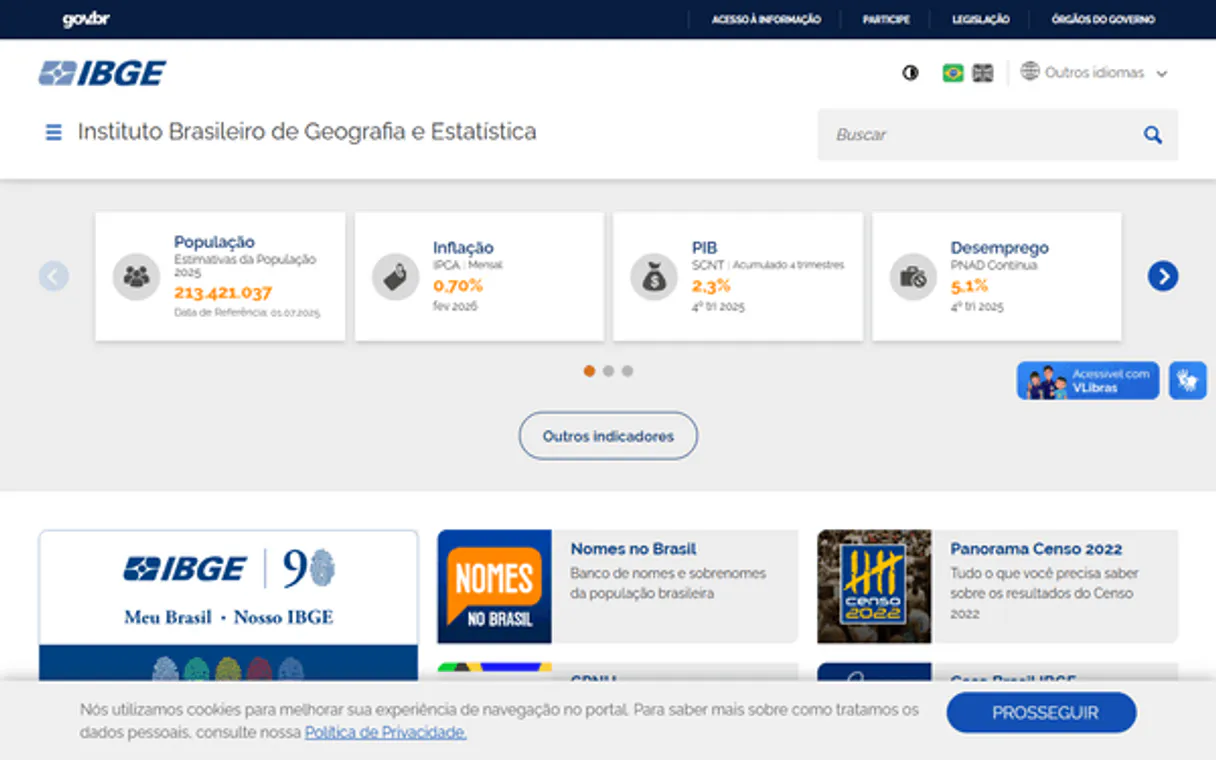
Independent Platform Disclaimer: Vinkius is an independent platform and is not affiliated with, endorsed by, sponsored by, verified by, or otherwise authorized by IBGE. All third-party trademarks, logos, and brand names are the property of their respective owners. Their use on this website is strictly for informational purposes to identify service compatibility and interoperability.
VINKIUS INFRASTRUCTURE
Cloud Hosted
Managed infra
V8 Isolated
Sandboxed per request
Zero-Trust Proxy
No stored credentials
DLP Enforced
Policy on every call
GDPR Compliant
EU data residency
Token Compression
~60% cost reduction
Works with Claude, ChatGPT, Cursor, and more
The Model Context Protocol standardizes how applications expose capabilities to LLMs. Instead of operating in isolation, your AI gains direct access to external platforms, live data, and real-world actions through secure, standardized connections.
This server provides 5 capabilities that interface natively with Claude, ChatGPT, Cursor, and any MCP client. No middleware. No custom integration required.
Available Capabilities
Manually building a Brazilian address database is a nightmare.
Today, if you're building an address validation tool, you spend weeks piecing together data from different government sources, cross-referencing CSVs and outdated APIs. You have to write logic to handle the state codes, then the microregions, then the mesoregions, and pray that the data hasn't changed since the last update. It’s slow, brittle, and expensive.
With the IBGE Localidades MCP Server, your agent does the heavy lifting. You tell it, 'Get me all cities in São Paulo.' The agent runs the tool, and you get a structured list of every municipality, complete with its official IBGE code, ready to process. No manual joins, no data cleanup.
Using the IBGE Localidades MCP Server: 5 Tools for Brazilian Geography
The biggest manual headache is mapping the complex relationships. If you only call a simple city lookup, you might miss the full regional context. You have to manually query the states, then the regions, and then the metro areas just to build a complete picture.
Now, your agent handles the complexity. It runs the specialized tools—like `list_regioes` and `get_municipios_por_uf`—and returns the data already mapped. You get the full context in one go, making your code simpler and far more reliable.
Common Questions About IBGE Localidades MCP
How do I use the `get_municipio` tool? +
You must provide the full 7-digit IBGE code. This tool gives you every detail about a specific city, including its microregion and mesoregion.
What is the best way to get all cities in a state using `get_municipios_por_uf`? +
Simply pass the 2-letter UF abbreviation (like 'SP' for São Paulo). The tool returns a comprehensive list of every single municipality in that state.
Can I list all states and regions using `list_estados` and `list_regioes`? +
Yes. list_estados provides the master list of all 27 Brazilian states. list_regioes gives you the 5 major macro-regions (Norte, Nordeste, etc.).
Is `list_regioes_metropolitanas` useful for urban planning? +
It's essential for defining urban boundaries. This tool lists all the official metropolitan areas tied to a specific state, helping you focus on population centers.
How does `get_municipios_por_uf` handle states with few municipalities? +
It lists every municipality in the specified state, regardless of how small the list is. For example, if you check a state with only a few cities, you'll get a precise list of all of them.
Can I use `get_municipio` if I only know the city name, not the IBGE code? +
No, get_municipio requires the specific 7-digit IBGE code to function. You must use the code for accurate data retrieval.
What happens if I try to list regions that don't exist using `list_regioes`? +
The tool returns an empty list and signals the error. This means the region name you provided isn't part of the official IBGE database.
Are there any rate limits or restrictions when calling `get_municipios_por_uf` repeatedly? +
No, the data is open government data and there are no published rate limits. You can call the tool repeatedly for different states without hitting restrictions.
Do I need an API key? +
No! IBGE data is 100% open government data. This server works instantly with zero configuration — just subscribe and start querying Brazilian geography.
Use it with your favorite AI tools
Connect this server to Cursor, Claude, VS Code, and more.
More in this category

JigsawStack
Access a suite of AI utility APIs for web scraping, translation, OCR, and sentiment analysis in one developer-friendly platform.

Open Food Facts API
Search food products — audit nutrition, barcode, and categories via AI.

ElectricSQL (Sync Engine)
Sync Postgres data to your AI agent in real-time using ElectricSQL's HTTP Sync API — fetch shapes, stream updates, and query subsets.
You might also like

No2Bounce
Validate email addresses in bulk to reduce bounce rates and protect your sender reputation directly from your AI agent.

Beeline
Manage your external workforce via Beeline VMS — list assignments, requisitions, and timesheets directly from any AI agent.

Factored Quality
Manage quality control via Factored Quality — track inspections, audits, and lab tests directly through your AI agent.