Open Food Facts MCP. Get instant nutrition facts from any barcode.
Works with every AI agent you already use
…and any MCP-compatible client

Just plug in your AI agents and start using Vinkius.
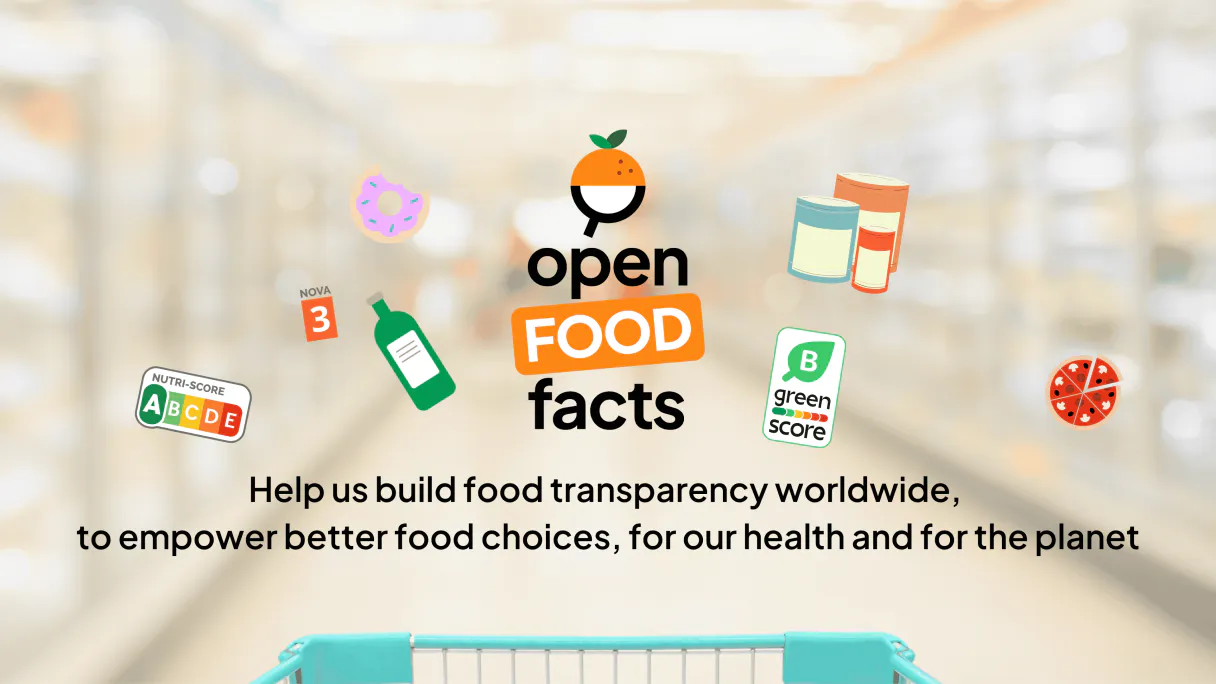
Open Food Facts provides a direct connection to one of the world's largest open food product databases. Use this MCP Server to scan barcodes or search by name to instantly pull detailed nutritional profiles, ingredient lists, and allergen warnings for packaged foods.
It reports scores like Nutri-Score (A-E) and NOVA classification (processing level).
What your AI agents can do
Scan food barcode
Takes a food barcode ID and returns the product's full nutritional profile, allergen warning list, and ingredient details.
Search food products
Searches for packaged foods by name or brand, returning multiple results with their respective Nutri-Score grades and processing levels.
Provide an EAN/UPC barcode number and receive the product's complete nutritional panel, ingredient list, and allergen warnings.
Query the entire database using keywords (like brand or category) to find products and pull their associated scores and data points.
Check a product's ingredient list for specific allergens, like gluten or peanuts, based on established food safety warnings.
Get the NOVA classification (1-4) to tell users how processed a packaged good is—from fresh to ultra-processed.
Ask AI about this MCP
Supported MCP Clients
Waiting for input…
Open Food Facts MCP Server: 2 Tools for Food Data Analysis
Scan barcodes or search product names to retrieve structured data including nutritional profiles, allergen warnings, and food quality scores.
019d75e9scan food barcode
Takes a food barcode ID and returns the product's full nutritional profile, allergen warning list, and ingredient details.
019d75e9search food products
Searches for packaged foods by name or brand, returning multiple results with their respective Nutri-Score grades and processing levels.
Choose How to Get Started
Build a custom MCP for your own tools, or connect a ready-made integration from our catalog.
Build Your Own
Turn any API into an MCP. Import a spec, define Agent Skills, or deploy with MCPFusion.
- Import from OpenAPI, Swagger, or YAML specs
- Create Agent Skills with progressive disclosure
- Deploy to edge with MCPFusion framework
- Built in DLP, auth, and compliance on every call
- Real time usage dashboard and cost metering
- Publish to catalog or keep private
Make Your AI Do More
Start with Open Food Facts, then connect any of our 4,700+ other servers whenever your AI needs more. One click, no limits.
- Use this MCP plus 4,700+ others, all in one place
- Add new capabilities to your AI anytime you want
- Every connection is secured and compliant automatically
- Track usage and costs across all your servers
- Works with Claude, ChatGPT, Cursor, and more
- New servers added to the catalog every week
What you can do with this MCP connector
This MCP Server gives your agent immediate access to one of the world's biggest open food databases. You connect your AI client directly to pull structured data on packaged goods from over two million products across more than 150 countries. It’s built for systems that need rock-solid, reliable metrics about consumer nutrition and ingredients.
The core tool is scan_food_barcode, which takes an EAN or UPC barcode ID. Using this single input, your agent instantly pulls the product's full nutritional profile, a complete list of ingredients, and any specific allergen warnings required by food safety standards. You’re not guessing; you get verifiable data points.
The second tool, search_food_products, lets you query the entire database using keywords—like brand names or general categories. Running this search doesn't just give you a list of matching products; it returns multiple results and pulls associated metrics for each one, including its Nutri-Score grade and processing classification.
Analyzing Nutritional Data
You can get the full macronutrient breakdown for any item. The system calculates fat, carbs, and protein content per 100g serving, giving you precise data points instead of vague estimates. This isn't just a general nutritional panel; it’s actionable math—you know exactly how much sugar or fiber is in that bite-sized piece.
Understanding Processing Levels (NOVA Classification)
A key metric here is the NOVA classification, which tells users how processed a good is. The tool determines this level on a scale of 1 to 4. You use this to differentiate between fresh whole foods—the low end, maybe a '1'—and ultra-processed items at the high end, a '4'.
This metric gives your app immediate context about food quality; it’s way more specific than just calling something 'healthy' or 'unhealthy.'
Checking for Safety and Allergens
The server lets you check a product's ingredient list against established food safety warnings. You can specifically analyze the content for common allergens, such as gluten, peanuts, dairy, soy, or nuts. It doesn’t just say 'contains allergens'; it checks the whole list to confirm which specific warning applies, making your app highly reliable for users with dietary restrictions.
Product Identification and Scoring
When you scan a barcode using scan_food_barcode, you get more than just nutrients. You receive all the ingredient details alongside any mandatory allergen warnings. Simultaneously, when you use search_food_products to find items by name or brand, you pull the Nutri-Score grade for every result. This score helps users at a glance understand the general quality and nutritional balance of what they're looking at.
How It All Connects
It’s simple. You run scan_food_barcode with an EAN/UPC to get immediate, deep-dive data on one specific item—the perfect use case for a quick point-of-sale scanner integration. Or, if you're building a comparison tool, you query the whole database using search_food_products. This lets you gather multiple results and compare their associated scores and processing levels side-by-side.
You don't need to worry about authentication; it’s designed for plug-and-play use. It delivers structured data immediately, letting your agent process the full nutritional panel, ingredient list, allergen warnings, NOVA classification, and Nutri-Score grade all from a single connection point.
How Open Food Facts MCP Works
- 1 Start by giving your agent a specific identifier, either an EAN/UPC barcode number or search terms (brand, product name).
- 2 The MCP Server runs the appropriate tool (
scan_food_barcodeorsearch_food_products) against its database. - 3 You get back structured JSON data containing the full nutritional breakdown, Nutri-Score grade, NOVA classification, and ingredient list.
The bottom line is that you stop guessing about labels; your agent runs a query and gets verified food facts back immediately.
Who Is Open Food Facts MCP For?
Product teams building wellness or dietary apps, consumer goods companies needing label validation, and data analysts tracking nutritional trends. If your job involves interpreting what's on a packaged food label—whether for compliance checks or user education—you need this.
Needs to pull structured macro counts and allergen lists automatically when building patient-facing meal trackers.
Must validate product claims or filter search results based on Nutri-Score grades before launching a new feature set.
Runs comparative searches across hundreds of competitor products to analyze ingredient shifts and processing trends (NOVA).
What Changes When You Connect
- Instant Nutritional Counts: Use
scan_food_barcodeto bypass manual label reading. It pulls full macronutrient data (fat, carbs, protein) per 100g in a single call. - Understand Processing Levels: Get the NOVA classification right away. You can tell users if a product is minimally processed (NOVA 1) or ultra-processed (NOVA 4).
- Cross-Check Allergens Fast: The server provides explicit allergen warnings for gluten, dairy, nuts, and soy using
scan_food_barcode, which prevents dangerous omissions from user input. - Compare Competitors at Scale: Use
search_food_productsto query multiple items by brand or category. This lets you analyze a competitive set of products based on Nutri-Score grades. - Structure Data for APIs: Forget messy text parsing. The tools return clean, structured data (JSON) containing all scores and metrics, ready to feed directly into your application's backend.
Real-World Use Cases
Comparing Snack Bars for a Client
A client needs to choose the best high-protein snack. Instead of manually checking 10 different brand websites, they ask their agent to run search_food_products for 'high protein bar'. The server returns multiple options, allowing them to compare the Nutri-Score and carbohydrate content instantly.
Checking a Mystery Ingredient
You encounter a product with an ingredient you suspect contains dairy. Instead of guessing or calling customer support, your agent runs scan_food_barcode on the package barcode. The tool immediately returns the full allergen list, confirming if milk is present.
Building a Recipe Validator
A user enters ingredients for a meal plan. You use search_food_products to pull data for each component. This allows your agent to calculate total macro counts and flag any components that exceed allergen limits.
Validating Supplement Claims
A supplement company claims their powder is 'cleanly sourced.' You run scan_food_barcode on a sample product. The tool's output, including the ingredient list and NOVA group, proves exactly what is in it—showing if it contains ultra-processed fillers.
The Tradeoffs
Guessing Nutrition
Assuming that because a product has 'oats' listed, it must be gluten-free. This is incorrect; the label might contain cross-contamination warnings.
→
Always use scan_food_barcode. The tool provides explicit allergen detection for gluten and other common triggers directly from the manufacturer's data.
Comparing via Search Only
Searching for 'cereal' only gives a general list. You can't easily compare their macro ratios or scores without manually opening every result.
→
Use search_food_products and ask the agent to specifically filter results by a metric, like 'Nutri-Score A', to narrow down your options efficiently.
Ignoring Processing Levels
Just looking at calories is misleading. A low-calorie snack might still be NOVA Group 4 due to high sugar syrups.
→ Always check the NOVA classification returned by the tools. This tells you how the food was made, not just what it contains.
When It Fits, When It Doesn't
Use this MCP Server when your core requirement is data verification against known standards (macro counts, specific allergen lists, official scores). If you need to know 'Is this product bad for me?', use the tools. If you need to know 'What should I eat today?'—that's a general recommendation that requires interpretation and context, and your AI client can handle that without these servers.
Don't use it if you just need simple keyword search on unstructured text. Use this only when you require specific outputs like the Nutri-Score or the full macronutrient breakdown returned by scan_food_barcode. If you are building a comparison tool, run multiple queries and process the structured data yourself; don't rely on the agent to synthesize the final judgment.
Independent Platform Disclaimer: Vinkius is an independent platform and is not affiliated with, endorsed by, sponsored by, verified by, or otherwise authorized by Open Food Facts. All third-party trademarks, logos, and brand names are the property of their respective owners. Their use on this website is strictly for informational purposes to identify service compatibility and interoperability.
VINKIUS INFRASTRUCTURE
Cloud Hosted
Managed infra
V8 Isolated
Sandboxed per request
Zero-Trust Proxy
No stored credentials
DLP Enforced
Policy on every call
GDPR Compliant
EU data residency
Token Compression
~60% cost reduction
Works with Claude, ChatGPT, Cursor, and more
The Model Context Protocol standardizes how applications expose capabilities to LLMs. Instead of operating in isolation, your AI gains direct access to external platforms, live data, and real-world actions through secure, standardized connections.
This server provides 2 capabilities that interface natively with Claude, ChatGPT, Cursor, and any MCP client. No middleware. No custom integration required.
Available Capabilities
Reading food labels shouldn't feel like decoding an ancient text.
Today, checking a single packaged item means opening multiple tabs: one for the barcode lookup, another for allergen warnings, and maybe a third to figure out if it’s 'ultra-processed.' You copy data from here, paste it into there, and you lose valuable time just assembling the facts.
With this MCP Server, your agent runs one query. It pulls everything—the full nutritional breakdown, the ingredient list, and all allergen warnings—in structured JSON format. You get a single source of truth that feeds directly into your application.
Open Food Facts MCP Server: Structured data for food analysis
Forget the manual step of cross-referencing different databases to check nutritional compliance. The tools handle all that lookup, pulling from a massive global source with just an ID or search term.
The difference is structure. Instead of getting a wall of text you have to parse for the actual protein count, you get a clean field labeled 'Protein (g)' ready for calculation.
Common Questions About Open Food Facts MCP
How do I use `scan_food_barcode` with an EAN/UPC number? +
Pass the 12-digit barcode string directly to scan_food_barcode. It returns a complete object containing macros, allergens, and the ingredient list for that specific product.
Can I compare multiple products using Open Food Facts MCP Server? +
Yes. Use search_food_products with general terms (like 'cereal') to retrieve a list of options, then analyze the structured data for each result to run your comparisons.
What is NOVA Classification in Open Food Facts? +
The NOVA classification tells you how processed the food is. It’s a scale from 1 (unprocessed) to 4 (ultra-processed). The server provides this metric with every result.
Does `search_food_products` only return scores? +
No, it returns the full data set for each matched product. You get nutritional information, Nutri-Score grades, NOVA levels, and allergen details all in one output.
Does `scan_food_barcode` require any authentication or API keys? +
No. The server requires zero authentication to run. It's built on open-source, community-driven data, so you don't need to worry about securing an API key for basic operations.
If I use `scan_food_barcode` with a barcode that isn't in the database, what happens? +
The tool will return a clear error message. You won't get data; instead, you'll receive a structured response indicating the specific EAN or UPC code was not found.
Are there any rate limits when I use `search_food_products` for bulk analysis? +
While the underlying service is designed for high volume, always check Vinkius Marketplace guidelines. For large-scale data processing, implement proper request pacing to ensure reliable execution.
Can I use `search_food_products` to find nutritional data for homemade meals or fresh produce? +
No. This database is specialized for packaged goods and requires either a barcode scan or a product name listed within the open food registry.
What is Nutri-Score? +
Nutri-Score is a front-of-pack nutrition label that rates food products from A (healthiest) to E (least healthy). It's widely used across Europe and helps consumers make informed dietary choices at a glance.
What is the NOVA classification? +
The NOVA classification assigns a score from 1 to 4 depending on how much a food is processed. 1 means unprocessed/minimally processed foods, while 4 indicates ultra-processed food and drink products.
Is the allergen data reliable? +
The allergen data is derived from product labels uploaded by contributors. While extensive, you should always double-check physical packaging for severe allergies as formulations can change.
Use it with your favorite AI tools
Connect this server to Cursor, Claude, VS Code, and more.
More in this category
Dotloop
Manage real estate transactions via Dotloop — list loops, manage participants, and oversee documents.
U.S. Census Full — Complete Demographic & Economic Intelligence
The U.S. Census Mega-Server: 14 tools providing comprehensive access to the ACS and County Business Patterns. Analyze population, age, race, income, poverty, education, home values, rent, and businesses across all 50 states, 3,000+ counties, and cities.
EIA Full Access — U.S. Energy Intelligence
The ultimate U.S. energy data Mega-Server: 34 tools covering petroleum, electricity, natural gas, coal, energy forecasts, state data, and international comparisons — every watt, barrel, and BTU from the federal government's energy agency.
You might also like
Mitto
Automate SMS messaging and 2FA verification via Mitto — send single or bulk messages, verify OTPs, and lookup phone numbers directly from your AI agent.
IBM Quantum
Connect IBM Quantum to any AI agent via MCP.
Codacy
Manage code quality and automated reviews via Codacy — track grades, monitor issues, and audit repository analysis directly from any AI agent.