
Reflect MCP Server for VS Code Copilot 10 tools — connect in under 2 minutes
GitHub Copilot in VS Code is the most widely adopted AI coding assistant, embedded directly into the world's most popular code editor. With MCP support in Agent mode, Copilot can access external data and APIs to generate context-aware code grounded in real-time information.
ASK AI ABOUT THIS MCP SERVER
Vinkius supports streamable HTTP and SSE.
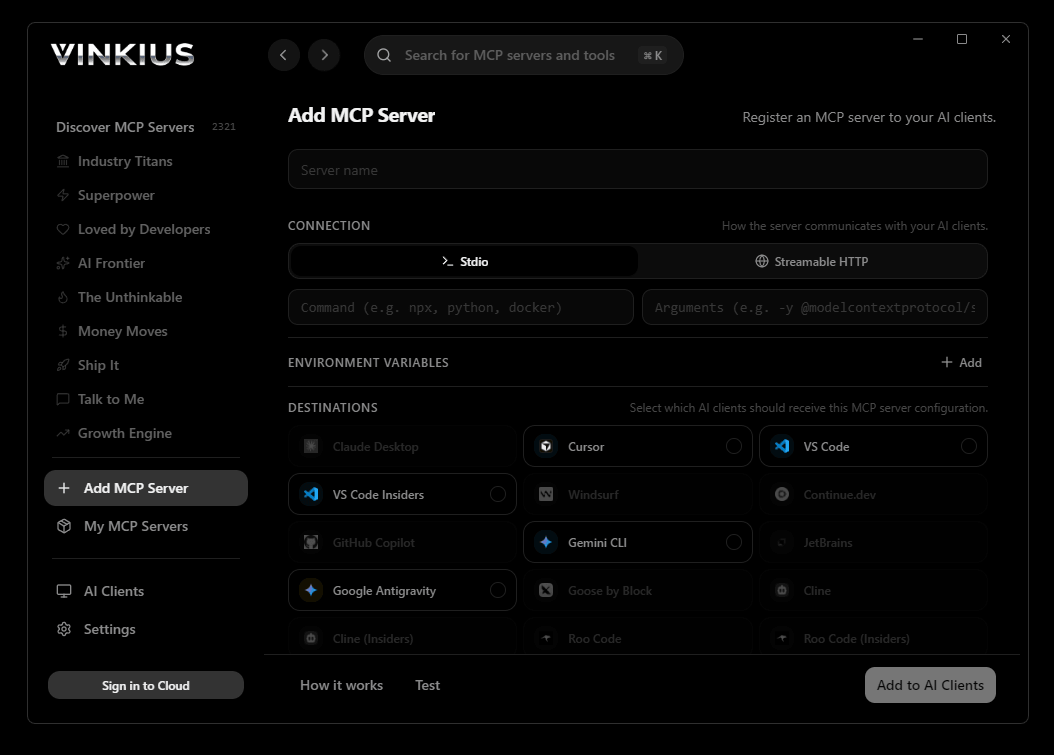
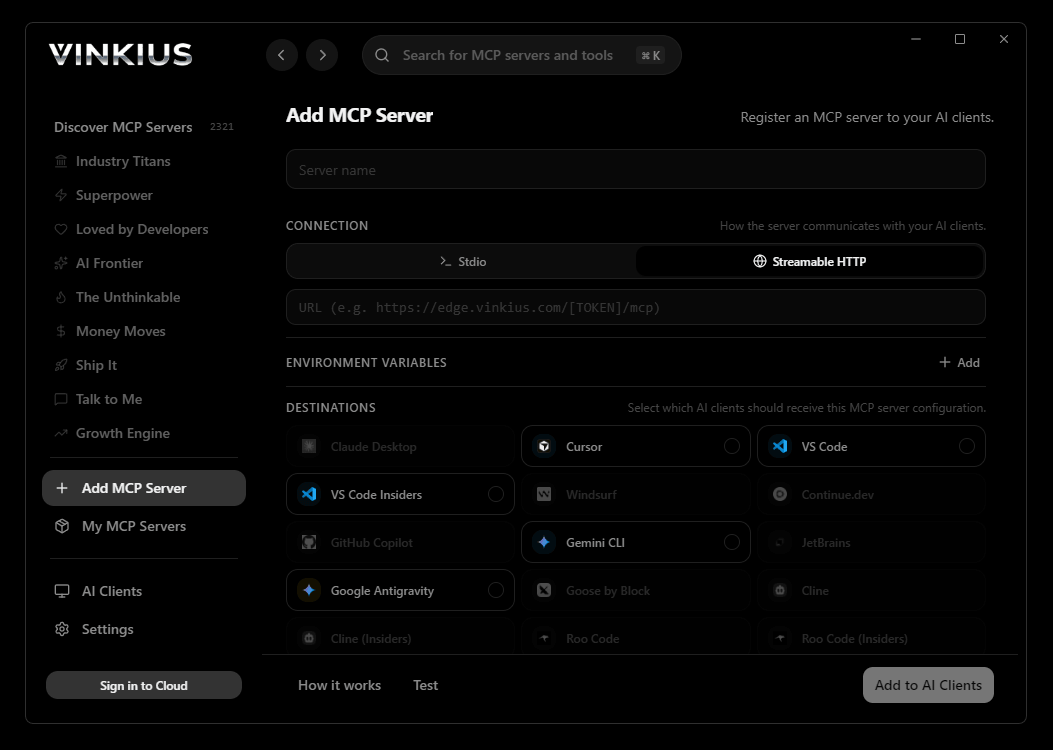
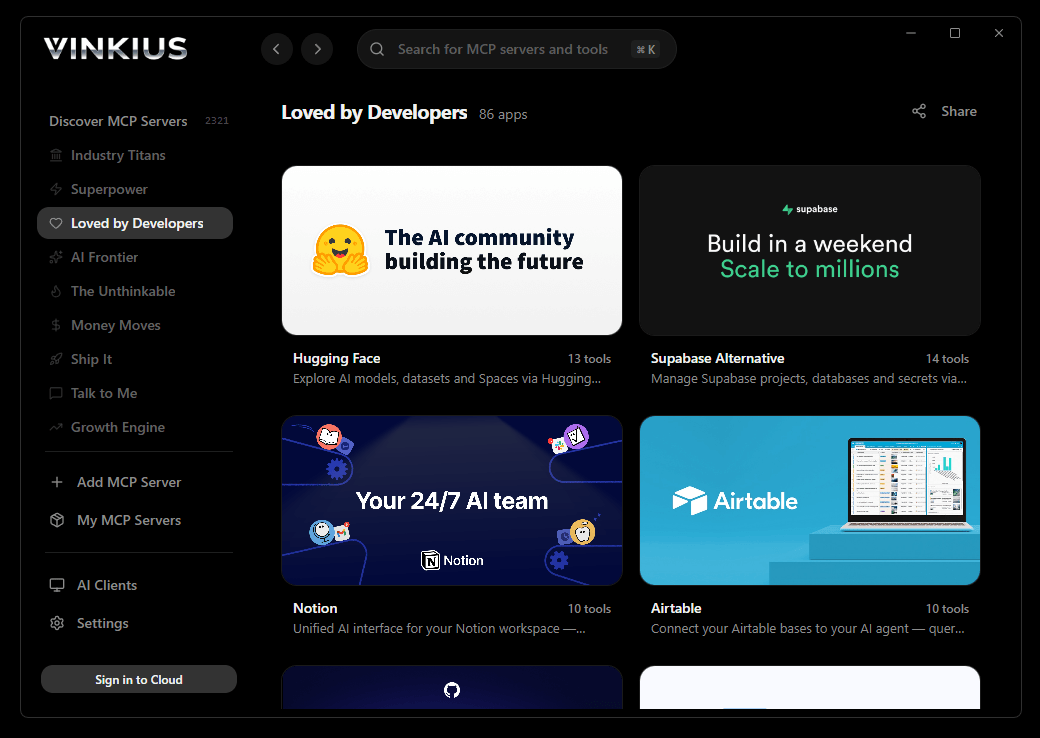
Vinkius Desktop App
The modern way to manage MCP Servers — no config files, no terminal commands. Install Reflect and 2,500+ MCP Servers from a single visual interface.

{
  "mcpServers": {
    "reflect": {
      "url": "https://edge.vinkius.com/[YOUR_TOKEN_HERE]/mcp"
    }
  }
}
* Every MCP server runs on Vinkius-managed infrastructure inside AWS - a purpose-built runtime with per-request V8 isolates, Ed25519 signed audit chains, and sub-40ms cold starts optimized for native MCP execution. See our infrastructure
About Reflect MCP Server
Connect your Reflect account securely to your AI agent via their developer API. This integration grants your AI the ability to directly explore your networked thought graph, lookup personal notes, manage book highlights, and append daily thoughts asynchronously from your conversation interface.
GitHub Copilot Agent mode brings Reflect data directly into your VS Code workflow. With a project-scoped config, the entire team shares access to 10 tools. Copilot queries live data, generates typed code, and writes tests from actual API responses, all without leaving the editor.
What you can do
- Explore Your Graph — Direct your AI to investigate connected insights within your Reflect graphs (
list_graphs). Request lists of your notes (list_notes) or retrieve the specific Markdown content of a single note (get_note). - Capture Ideas Instantly — Ask the agent to establish new permanent notes (
create_note) or quickly dump conversational insights, summaries, and tasks straight into your daily note (append_daily_note). - Analyze Connections — Instruct the AI to map out your thoughts by retrieving all backlinks pointing to a specific subject (
get_backlinks). - Save Links & Books — Let your AI automatically bookmark URLs (
create_link), browse your saved bookmarks (list_links), or explore your imported library of book highlights (list_books).
The Reflect MCP Server exposes 10 tools through the Vinkius. Connect it to VS Code Copilot in under two minutes — no API keys to rotate, no infrastructure to provision, no vendor lock-in. Your configuration, your data, your control.
How to Connect Reflect to VS Code Copilot via MCP
Follow these steps to integrate the Reflect MCP Server with VS Code Copilot.
Create MCP config
Create a .vscode/mcp.json file in your project root
Add the server config
Paste the JSON configuration above
Enable Agent mode
Open GitHub Copilot Chat and switch to Agent mode using the dropdown
Start using Reflect
Ask Copilot: "Using Reflect, help me...". 10 tools available
Why Use VS Code Copilot with the Reflect MCP Server
GitHub Copilot for Visual Studio Code provides unique advantages when paired with Reflect through the Model Context Protocol.
VS Code is used by over 70% of developers. adding MCP tools to Copilot means your team can leverage external data without leaving their primary editor
Project-scoped MCP configs (`.vscode/mcp.json`) let you commit server configurations to your repository, ensuring the entire team shares the same tool access
Copilot's Agent mode integrates MCP tools seamlessly with file editing, terminal commands, and workspace search in a single agentic loop
GitHub's enterprise compliance and audit features extend to MCP tool usage, providing visibility into how AI interacts with external services
Reflect + VS Code Copilot Use Cases
Practical scenarios where VS Code Copilot combined with the Reflect MCP Server delivers measurable value.
Live API integration: Copilot can query an MCP server, inspect the response schema, and generate typed API client code in the same step
DevSecOps workflows: security teams can give developers access to domain intelligence tools directly in their editor for real-time vulnerability assessment during code review
Data pipeline development: Copilot fetches sample data via MCP and generates transformation scripts, validators, and test fixtures from actual API responses
Documentation generation: Copilot queries available tools and auto-generates README sections, API reference docs, and usage examples
Reflect MCP Tools for VS Code Copilot (10)
These 10 tools become available when you connect Reflect to VS Code Copilot via MCP:
append_daily_note
Optionally specify a list/heading name. Appends Markdown text to today's daily note
create_link
Reflect will automatically attempt to extract metadata. Saves a new web link/bookmark to a Reflect graph
create_note
Specify subject and Markdown content. Creates a new note in a Reflect graph
get_backlinks
Retrieves all notes that link to a specific note
get_current_user
Retrieves profile details for the authenticated Reflect user
get_note
Retrieves the full content and metadata of a Reflect note
list_books
Lists all books saved or imported into Reflect
list_graphs
Lists all Reflect graphs (workspaces) accessible by the user
list_links
Lists all saved links (bookmarks) in a graph
list_notes
Lists all notes within a specific Reflect graph
Example Prompts for Reflect in VS Code Copilot
Ready-to-use prompts you can give your VS Code Copilot agent to start working with Reflect immediately.
"List all available graphs in my Reflect account."
"Create a permanent note titled 'Meeting 2024 Strategy' inside my 'Personal Brain' graph with summary bullet points."
"Find notes linked by backlinks that point to my note 'React Learnings'."
Troubleshooting Reflect MCP Server with VS Code Copilot
Common issues when connecting Reflect to VS Code Copilot through the Vinkius, and how to resolve them.
MCP tools not available
Reflect + VS Code Copilot FAQ
Common questions about integrating Reflect MCP Server with VS Code Copilot.
Which VS Code version supports MCP?
How do I switch to Agent mode?
Can I restrict which MCP tools Copilot can access?
Does MCP work in VS Code Remote or Codespaces?
.vscode/mcp.json work in Remote SSH, WSL, and GitHub Codespaces environments. The MCP connection is established from the remote host, so ensure the server URL is accessible from that environment.Connect Reflect with your favorite client
Step-by-step setup guides for every MCP-compatible client and framework:
Anthropic's native desktop app for Claude with built-in MCP support.
AI-first code editor with integrated LLM-powered coding assistance.
GitHub Copilot in VS Code with Agent mode and MCP support.
Purpose-built IDE for agentic AI coding workflows.
Autonomous AI coding agent that runs inside VS Code.
Anthropic's agentic CLI for terminal-first development.
Python SDK for building production-grade OpenAI agent workflows.
Google's framework for building production AI agents.
Type-safe agent development for Python with first-class MCP support.
TypeScript toolkit for building AI-powered web applications.
TypeScript-native agent framework for modern web stacks.
Python framework for orchestrating collaborative AI agent crews.
Leading Python framework for composable LLM applications.
Data-aware AI agent framework for structured and unstructured sources.
Microsoft's framework for multi-agent collaborative conversations.
Connect Reflect to VS Code Copilot
Get your token, paste the configuration, and start using 10 tools in under 2 minutes. No API key management needed.