
AgroLog MCP Server for OpenAI Agents SDK 11 tools — connect in under 2 minutes
The OpenAI Agents SDK enables production-grade agent workflows in Python. Connect AgroLog through Vinkius and your agents gain typed, auto-discovered tools with built-in guardrails. no manual schema definitions required.
ASK AI ABOUT THIS MCP SERVER
Vinkius supports streamable HTTP and SSE.
import asyncio
from agents import Agent, Runner
from agents.mcp import MCPServerStreamableHttp

async def main():
    # Your Vinkius token. get it at cloud.vinkius.com
    async with MCPServerStreamableHttp(
        url="https://edge.vinkius.com/[YOUR_TOKEN_HERE]/mcp"
    ) as mcp_server:

        agent = Agent(
            name="AgroLog Assistant",
            instructions=(
                "You help users interact with AgroLog. "
                "You have access to 11 tools."
            ),
            mcp_servers=[mcp_server],
        )

        result = await Runner.run(
            agent, "List all available tools from AgroLog"
        )
        print(result.final_output)

asyncio.run(main())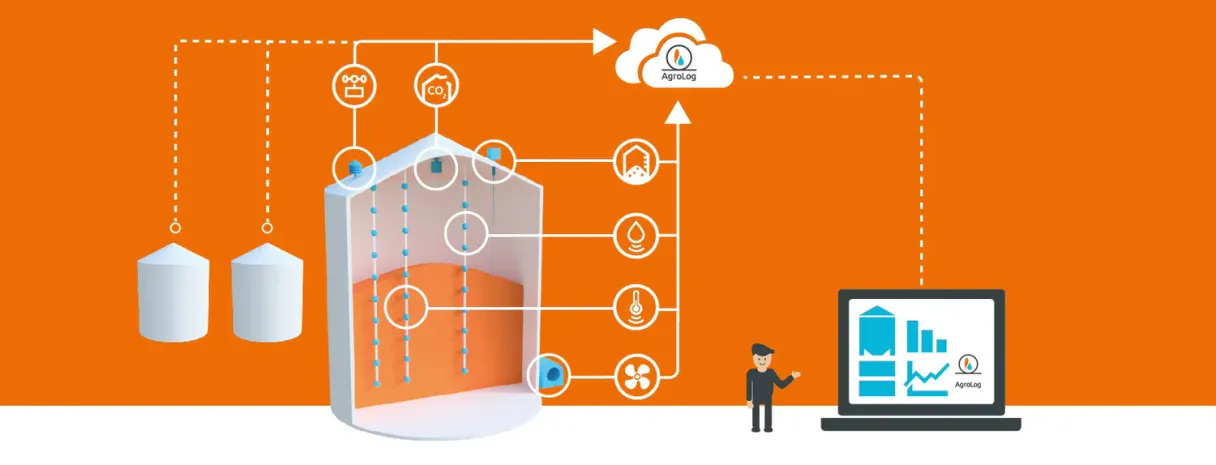
* Every MCP server runs on Vinkius-managed infrastructure inside AWS - a purpose-built runtime with per-request V8 isolates, Ed25519 signed audit chains, and sub-40ms cold starts optimized for native MCP execution. See our infrastructure
About AgroLog MCP Server
Connect your AgroLog Grain Monitoring API to any AI agent and take full control of real-time temperature monitoring, moisture tracking, CO2 spoilage detection, crop level inventory, and automated aeration control through natural conversation.
The OpenAI Agents SDK auto-discovers all 11 tools from AgroLog through native MCP integration. Build agents with built-in guardrails, tracing, and handoff patterns. chain multiple agents where one queries AgroLog, another analyzes results, and a third generates reports, all orchestrated through Vinkius.
What you can do
- Temperature Monitoring — Get real-time grain temperature readings from sensors in silos and bins
- Moisture Tracking — Monitor grain moisture content for safe storage and drying decisions
- CO2 Detection — Detect elevated CO2 levels as early warning signs of spoilage and mold growth
- Crop Level Inventory — Track grain volume and silo fill levels for inventory management
- Weather Station Data — Access outdoor temperature, humidity, wind speed, and rainfall data
- Device Management — List all monitoring devices and view their configuration attributes
- Relay Control — Remotely control fans, aeration systems, and dryers connected to AgroLog devices
- Alarm Monitoring — Track active alarms and alerts for proactive grain management
- Historical Telemetry — Retrieve time-series sensor data for trend analysis and reporting
- Multi-Customer Management — Manage devices across multiple farms or customer organizations
The AgroLog MCP Server exposes 11 tools through the Vinkius. Connect it to OpenAI Agents SDK in under two minutes — no API keys to rotate, no infrastructure to provision, no vendor lock-in. Your configuration, your data, your control.
How to Connect AgroLog to OpenAI Agents SDK via MCP
Follow these steps to integrate the AgroLog MCP Server with OpenAI Agents SDK.
Install the SDK
Run pip install openai-agents in your Python environment
Replace the token
Replace [YOUR_TOKEN_HERE] with your Vinkius token from cloud.vinkius.com
Run the script
Save the code above and run it: python agent.py
Explore tools
The agent will automatically discover 11 tools from AgroLog
Why Use OpenAI Agents SDK with the AgroLog MCP Server
OpenAI Agents SDK provides unique advantages when paired with AgroLog through the Model Context Protocol.
Native MCP integration via `MCPServerSse`, pass the URL and the SDK auto-discovers all tools with full type safety
Built-in guardrails, tracing, and handoff patterns let you build production-grade agents without reinventing safety infrastructure
Lightweight and composable: chain multiple agents and MCP servers in a single pipeline with minimal boilerplate
First-party OpenAI support ensures optimal compatibility with GPT models for tool calling and structured output
AgroLog + OpenAI Agents SDK Use Cases
Practical scenarios where OpenAI Agents SDK combined with the AgroLog MCP Server delivers measurable value.
Automated workflows: build agents that query AgroLog, process the data, and trigger follow-up actions autonomously
Multi-agent orchestration: create specialist agents. one queries AgroLog, another analyzes results, a third generates reports
Data enrichment pipelines: stream data through AgroLog tools and transform it with OpenAI models in a single async loop
Customer support bots: agents query AgroLog to resolve tickets, look up records, and update statuses without human intervention
AgroLog MCP Tools for OpenAI Agents SDK (11)
These 11 tools become available when you connect AgroLog to OpenAI Agents SDK via MCP:
get_alarms
Alarms are triggered by threshold breaches (high temperature, high moisture, elevated CO2, equipment failure) and indicate conditions requiring immediate attention. Returns alarm severity (critical, warning, info), alarm type, affected device, timestamp, and acknowledgment status. Essential for proactive grain management, quality issue detection, and operational response. AI agents should use this when users ask "show me all active alarms", "what alerts have been triggered", or need alarm data for operational monitoring. Optional device_id filters alarms for a specific device. Get active and historical alarms/alerts from the AgroLog monitoring system
get_co2
Elevated CO2 levels indicate biological activity (mold growth, insect respiration, or grain respiration) and are early warning signs of spoilage before temperature changes become apparent. Returns timestamped CO2 value in ppm. Essential for early spoilage detection, grain quality monitoring, and proactive storage management. AI agents should use this when users ask "what is the CO2 level in silo 2", "check headspace gas readings for device X", or need early warning indicators of grain spoilage. Get CO2/headspace gas readings from a specific monitoring device
get_crop_level
Crop level sensors measure the grain volume or height in silos and bins, enabling inventory management and capacity planning. Returns timestamped crop level value (percentage or distance). Essential for grain inventory tracking, bin capacity management, and logistics planning. AI agents should reference this when users ask "how full is silo 4", "check crop level for device X", or need inventory data for storage management and logistics planning. Get grain crop level (volume/quantity) readings from a specific monitoring device
get_customer_devices
Returns device IDs, names, types, and status for the specified customer. Essential for multi-farm management, service provider operations, and organizational device administration. AI agents should use this when users ask "show me all devices for customer X", "list sensors for this farm organization", or need customer-scoped device inventory in multi-tenant deployments. List all monitoring devices for a specific customer/organization in multi-tenant setups
get_device_attributes
Essential for understanding device setup, sensor positioning within silos, and device management. AI agents should reference this when users ask "show me the configuration for this sensor", "what is the calibration data for device X", or need device metadata for system administration. Get configuration attributes and metadata for a specific monitoring device
get_device_telemetry
Supports custom key selection (temperature, moisture, co2, humidity, etc.) and configurable data point limits for historical analysis. Essential for trend analysis, condition monitoring over time, and creating data visualizations. AI agents should reference this when users ask "show me temperature history for device X over the last 48 hours", "get moisture trend for this sensor", or need historical telemetry data for grain management analysis. Get time-series telemetry data from a specific monitoring device with customizable keys and limits
get_devices
Returns device IDs, names, types (temperature sensor, moisture sensor, weather station, crop level monitor, headspace/CO2 sensor), labels, and current status. Essential for device inventory, system overview, and selecting specific sensors for telemetry queries. AI agents should use this when users ask "show me all sensors in my grain silo", "list monitoring devices", or need to identify available devices before querying temperature, moisture, or other telemetry data. List all AgroLog monitoring devices (temperature, moisture, weather sensors) in your system
get_moisture
Moisture content is the most critical factor for safe grain storage — high moisture leads to mold, spoilage, and heating. Returns timestamped moisture value as percentage. Essential for grain quality assessment, drying decisions, and storage safety monitoring. AI agents should reference this when users ask "what is the moisture level in bin 5", "check grain moisture for device X", or need moisture data for storage management and drying planning. Get current grain moisture readings from a specific monitoring device
get_temperature
Temperature is critical for detecting spoilage, mold growth, and insect activity in stored grain. Returns timestamped temperature value in Celsius. Essential for grain quality monitoring, spoilage prevention, and ventilation scheduling. AI agents should use this when users ask "what is the temperature in silo 3", "check grain temperature for device X", or need current temperature data for storage management decisions. Device IDs can be found using get_devices. Get current grain temperature readings from a specific monitoring device
get_weather
Essential for drying decisions (outdoor air conditions for natural air drying), harvest planning (rain forecasts, wind conditions), and understanding environmental impact on stored grain. Returns the latest 10 readings with timestamps. AI agents should use this when users ask "what are the current weather conditions at my facility", "show me wind speed and rainfall data", or need weather context for grain management decisions. Get weather station data (temperature, humidity, wind, rainfall) from a specific device
set_relay_state
Accepts device ID, relay name, and desired state (true=on, false=off). Essential for remote grain management, automated ventilation scheduling, and responding to temperature/moisture alerts. AI agents should use this when users ask "turn on the fan for silo 3", "activate aeration for bin 2", or need to remotely control ventilation equipment based on sensor readings. WARNING: Always verify current conditions before changing relay states. Control relay outputs (fans, aeration, dryers) connected to an AgroLog device
Example Prompts for AgroLog in OpenAI Agents SDK
Ready-to-use prompts you can give your OpenAI Agents SDK agent to start working with AgroLog immediately.
"Check the temperature and moisture in silo 3 and tell me if there is any spoilage risk."
"Show me all active alarms in my grain storage facility."
"What is the current crop level inventory across all my grain bins?"
Troubleshooting AgroLog MCP Server with OpenAI Agents SDK
Common issues when connecting AgroLog to OpenAI Agents SDK through the Vinkius, and how to resolve them.
MCPServerStreamableHttp not found
pip install --upgrade openai-agentsAgent not calling tools
AgroLog + OpenAI Agents SDK FAQ
Common questions about integrating AgroLog MCP Server with OpenAI Agents SDK.
How does the OpenAI Agents SDK connect to MCP?
MCPServerSse(url=...) to create a server connection. The SDK auto-discovers all tools and makes them available to your agent with full type information.Can I use multiple MCP servers in one agent?
MCPServerSse instances to the agent constructor. The agent can use tools from all connected servers within a single run.Does the SDK support streaming responses?
Connect AgroLog with your favorite client
Step-by-step setup guides for every MCP-compatible client and framework:
Anthropic's native desktop app for Claude with built-in MCP support.
AI-first code editor with integrated LLM-powered coding assistance.
GitHub Copilot in VS Code with Agent mode and MCP support.
Purpose-built IDE for agentic AI coding workflows.
Autonomous AI coding agent that runs inside VS Code.
Anthropic's agentic CLI for terminal-first development.
Python SDK for building production-grade OpenAI agent workflows.
Google's framework for building production AI agents.
Type-safe agent development for Python with first-class MCP support.
TypeScript toolkit for building AI-powered web applications.
TypeScript-native agent framework for modern web stacks.
Python framework for orchestrating collaborative AI agent crews.
Leading Python framework for composable LLM applications.
Data-aware AI agent framework for structured and unstructured sources.
Microsoft's framework for multi-agent collaborative conversations.
Connect AgroLog to OpenAI Agents SDK
Get your token, paste the configuration, and start using 11 tools in under 2 minutes. No API key management needed.