
AirLabs MCP Server for Pydantic AI 12 tools — connect in under 2 minutes
Pydantic AI brings type-safe agent development to Python with first-class MCP support. Connect AirLabs through Vinkius and every tool is automatically validated against Pydantic schemas. catch errors at build time, not in production.
ASK AI ABOUT THIS MCP SERVER
Vinkius supports streamable HTTP and SSE.
import asyncio
from pydantic_ai import Agent
from pydantic_ai.mcp import MCPServerHTTP

async def main():
    # Your Vinkius token. get it at cloud.vinkius.com
    server = MCPServerHTTP(url="https://edge.vinkius.com/[YOUR_TOKEN_HERE]/mcp")

    agent = Agent(
        model="openai:gpt-4o",
        mcp_servers=[server],
        system_prompt=(
            "You are an assistant with access to AirLabs "
            "(12 tools)."
        ),
    )

    result = await agent.run(
        "What tools are available in AirLabs?"
    )
    print(result.data)

asyncio.run(main())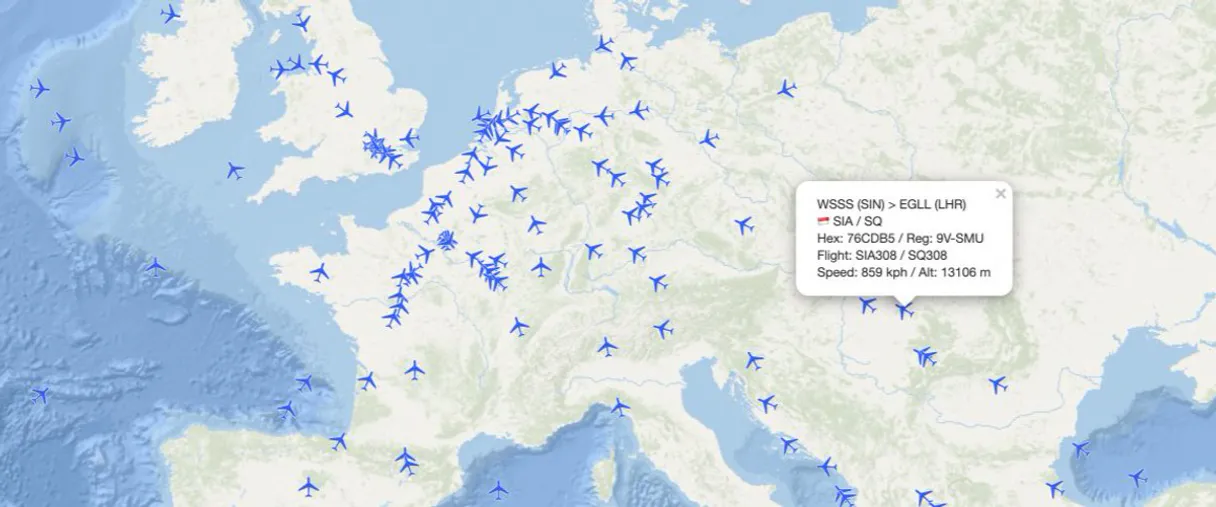
* Every MCP server runs on Vinkius-managed infrastructure inside AWS - a purpose-built runtime with per-request V8 isolates, Ed25519 signed audit chains, and sub-40ms cold starts optimized for native MCP execution. See our infrastructure
About AirLabs MCP Server
Connect your AirLabs Data API aviation platform to any AI agent and take full control of real-time flight tracking, airport intelligence, airline research, and schedule analysis through natural conversation.
Pydantic AI validates every AirLabs tool response against typed schemas, catching data inconsistencies at build time. Connect 12 tools through Vinkius and switch between OpenAI, Anthropic, or Gemini without changing your integration code. full type safety, structured output guarantees, and dependency injection for testable agents.
What you can do
- Real-Time Flight Tracking — Search active flights worldwide by airline, flight number, aircraft registration, or geographic area
- Flight Schedules — Access complete timetables for airlines and airport pairs with frequency and days of operation
- Flight Information — Get detailed status for specific flights including gates, terminals, and timing data
- Airport Database — Search 50,000+ airports worldwide by country, city, IATA/ICAO code, or name
- Airline Database — Research airlines globally with fleet sizes, hub airports, and operational status
- Route Networks — Analyze complete route portfolios for any airline with origin-destination pairs
- Fleet Composition — Examine airline fleets with aircraft types, registrations, ages, and operational status
- Nearby Airports — Find airports near any geographic coordinate with distance calculations
- Airport Delays — Check current delay statistics and on-time performance for any airport
- Aircraft Lookup — Research individual aircraft by hex code with registration and specification details
- Airport Autocomplete — Quick airport search with type-ahead suggestions for user-friendly identification
- Airport Flight Boards — Monitor all arrivals or departures at any airport with complete flight lists
The AirLabs MCP Server exposes 12 tools through the Vinkius. Connect it to Pydantic AI in under two minutes — no API keys to rotate, no infrastructure to provision, no vendor lock-in. Your configuration, your data, your control.
How to Connect AirLabs to Pydantic AI via MCP
Follow these steps to integrate the AirLabs MCP Server with Pydantic AI.
Install Pydantic AI
Run pip install pydantic-ai
Replace the token
Replace [YOUR_TOKEN_HERE] with your Vinkius token
Run the agent
Save to agent.py and run: python agent.py
Explore tools
The agent discovers 12 tools from AirLabs with type-safe schemas
Why Use Pydantic AI with the AirLabs MCP Server
Pydantic AI provides unique advantages when paired with AirLabs through the Model Context Protocol.
Full type safety: every MCP tool response is validated against Pydantic models, catching data inconsistencies before they reach your application
Model-agnostic architecture. switch between OpenAI, Anthropic, or Gemini without changing your AirLabs integration code
Structured output guarantee: Pydantic AI ensures tool results conform to defined schemas, eliminating runtime type errors
Dependency injection system cleanly separates your AirLabs connection logic from agent behavior for testable, maintainable code
AirLabs + Pydantic AI Use Cases
Practical scenarios where Pydantic AI combined with the AirLabs MCP Server delivers measurable value.
Type-safe data pipelines: query AirLabs with guaranteed response schemas, feeding validated data into downstream processing
API orchestration: chain multiple AirLabs tool calls with Pydantic validation at each step to ensure data integrity end-to-end
Production monitoring: build validated alert agents that query AirLabs and output structured, schema-compliant notifications
Testing and QA: use Pydantic AI's dependency injection to mock AirLabs responses and write comprehensive agent tests
AirLabs MCP Tools for Pydantic AI (12)
These 12 tools become available when you connect AirLabs to Pydantic AI via MCP:
autocomplete_airport
Returns matching airports ranked by relevance with IATA/ICAO codes, full names, cities, countries, and airport types. Ideal for building airport search interfaces, type-ahead functionality, and airport identification when the user only knows part of the airport name or code. Essential for travel application development, airport search workflows, and user-friendly airport identification. AI agents should use this when users type partial airport names or codes and need quick suggestions, or when the exact airport code is unknown but a partial name is provided. Search airports by name or code with autocomplete suggestions
get_aircraft
Returns aircraft registration number, ICAO type code, manufacturer and model, owner/operator, registration country, year built, engine type and count, and current operational status. The hex code is a unique identifier assigned to each aircraft transponder and can be found in flight tracking data. Essential for aviation enthusiasts, aircraft tracking, fleet verification, and detailed aircraft research. AI agents use this when users have an aircraft hex code from flight tracking data and need to look up the full aircraft registration and specifications. Get information about a specific aircraft by hex code
get_airline_fleet
Returns all aircraft in the airline fleet with registration numbers, aircraft types (manufacturer and model), ICAO aircraft type codes, age in years, delivery dates, engine types, and current operational status (active, stored, retired). Essential for fleet analysis, aviation industry research, competitor intelligence, aircraft utilization studies, and airline operational profiling. AI agents use this when users ask "show me the Delta fleet", "what aircraft does Emirates operate", or need to analyze fleet composition, average fleet age, and aircraft diversity for a specific airline. Get the complete fleet composition of an airline
get_airline_routes
Returns route pairs (origin-destination airports), frequency of service, days of operation, aircraft types deployed on each route, and whether the route is seasonal or year-round. Essential for route network analysis, airline competitive intelligence, aviation market research, travel itinerary planning, and airline hub/spoke structure analysis. AI agents should reference this when users ask "show me all United routes", "what routes does Ryanair operate", or need to understand an airline route network for competitive analysis or travel planning. Get all routes operated by a specific airline
get_airlines
Supports filtering by country code, IATA code, ICAO code, airline name, or callsign. Returns airline details including IATA/ICAO codes, full name, country of registration, callsign, fleet size, founding year, hub airports, airline type (scheduled, cargo, charter), and operational status (active, inactive). Essential for airline industry research, competitor analysis, travel planning context, aviation market intelligence, and airline profile generation. AI agents should use this when users ask "show me all airlines in the US", "tell me about Lufthansa", "what airlines fly from Dubai", or need airline metadata to contextualize flight and fleet data. Search and retrieve airline database information
get_airport_delays
Returns average departure and arrival delays in minutes, delay trends compared to historical averages, on-time performance percentages, cancellation rates, and weather-related delay indicators. Essential for travel planning, delay prediction, passenger communication, airline operations coordination, and airport performance monitoring. AI agents should reference this when users ask "are there delays at JFK", "how is LAX performing today", or need to assess airport operational conditions that may affect flight schedules. Get current delay statistics for a specific airport
get_airports
Supports filtering by country code, city name, IATA code, ICAO code, airport name, or timezone. Returns airport details including IATA/ICAO codes, full name, location (city, state, country), geographic coordinates (latitude, longitude, elevation), timezone, airport type (large, medium, small), and operational status. Essential for airport identification, travel planning, geographic aviation research, multi-airport city analysis, and flight briefing preparation. AI agents should reference this when users ask "show me all airports in Germany", "find airports in Tokyo", "what is the ICAO code for Heathrow", or need airport metadata to contextualize flight queries. Search and retrieve airport database information
get_flight_info
g., "UA123" for United 123). Returns complete flight details including airline information, aircraft type and registration, departure and arrival airports with terminals and gates, scheduled and estimated/actual times, current flight status, delay indicators, and baggage claim information. Critical for passenger travel updates, detailed flight status queries, airline operations coordination, and travel itinerary verification. AI agents should use this when users ask "tell me about flight UA123", "what is the status of BA178", or need detailed information for a specific flight number. Get detailed information for a specific flight
get_flights
Supports filtering by airline IATA code (e.g., "UA" for United), flight number, aircraft registration (hex code), altitude range, speed, or geographic bounding box (lat/lng coordinates). Returns flight identification (flight IATA/ICAO codes), airline details, aircraft hex code and registration, departure and arrival airports with IATA/ICAO codes, scheduled and estimated/actual times, current position (latitude, longitude), altitude in meters, ground speed in km/h, heading direction, vertical speed, squawk code, and flight status (en-route, landed, scheduled, cancelled). Essential for real-time flight tracking, passenger pickup coordination, aviation operations monitoring, and live flight dashboards. AI agents should use this when users ask "show me all United flights", "track flights in this area", or need to search flights by airline, registration, or geographic area. Search for real-time active flights worldwide
get_flights_by_airport
Returns comprehensive flight lists with airline, flight number, aircraft type, origin/destination airport, scheduled and estimated/actual times, terminal and gate information, baggage claim (for arrivals), and current flight status (en-route, landed, scheduled, delayed, cancelled, diverted). Supports type parameter to filter by "departure" or "arrival" flights. Essential for airport operations management, passenger pickup coordination, ground handling planning, flight activity monitoring, and arrival/departure board displays. AI agents should reference this when users ask "what flights are departing from JFK", "show me all arrivals at LHR", or need to monitor airport traffic for a specific airport. Get all arriving or departing flights at a specific airport
get_nearby_airports
Returns all airports (large international, regional, and general aviation) within the search radius with distances from the coordinate, IATA/ICAO codes, names, locations, and airport types. Essential for travel planning, alternate airport identification, geographic aviation research, emergency diversion planning, and multi-airport city analysis. AI agents should use this when users ask "what airports are near these coordinates", "find airports within 100km of this location", or need to identify the nearest airports to a specific point for travel or logistics purposes. Find airports near a specific geographic location
get_schedules
Returns scheduled flights with airline, flight number, aircraft type, departure and arrival airports, scheduled times, frequency of service, days of operation, and aircraft registration if assigned. Supports filtering by airline IATA code, departure airport IATA, arrival airport IATA, date range, and flight number. Essential for travel planning, route analysis, schedule reliability studies, airline timetable research, and flight itinerary preparation. AI agents should reference this when users ask "what is the schedule from JFK to LAX", "show me all Delta flights from ATL", or need to analyze flight schedules between airports. Get flight schedules and timetables for airlines and airports
Example Prompts for AirLabs in Pydantic AI
Ready-to-use prompts you can give your Pydantic AI agent to start working with AirLabs immediately.
"Show me all active United Airlines flights right now with their current positions and destinations."
"What is the flight schedule from New York JFK to London Heathrow, and which airlines operate this route?"
"Are there any delays at Chicago O'Hare (ORD) right now, and what flights are currently departing?"
Troubleshooting AirLabs MCP Server with Pydantic AI
Common issues when connecting AirLabs to Pydantic AI through the Vinkius, and how to resolve them.
MCPServerHTTP not found
pip install --upgrade pydantic-aiAirLabs + Pydantic AI FAQ
Common questions about integrating AirLabs MCP Server with Pydantic AI.
How does Pydantic AI discover MCP tools?
MCPServerHTTP instance with the server URL. Pydantic AI connects, discovers all tools, and generates typed Python interfaces automatically.Does Pydantic AI validate MCP tool responses?
Can I switch LLM providers without changing MCP code?
Connect AirLabs with your favorite client
Step-by-step setup guides for every MCP-compatible client and framework:
Anthropic's native desktop app for Claude with built-in MCP support.
AI-first code editor with integrated LLM-powered coding assistance.
GitHub Copilot in VS Code with Agent mode and MCP support.
Purpose-built IDE for agentic AI coding workflows.
Autonomous AI coding agent that runs inside VS Code.
Anthropic's agentic CLI for terminal-first development.
Python SDK for building production-grade OpenAI agent workflows.
Google's framework for building production AI agents.
Type-safe agent development for Python with first-class MCP support.
TypeScript toolkit for building AI-powered web applications.
TypeScript-native agent framework for modern web stacks.
Python framework for orchestrating collaborative AI agent crews.
Leading Python framework for composable LLM applications.
Data-aware AI agent framework for structured and unstructured sources.
Microsoft's framework for multi-agent collaborative conversations.
Connect AirLabs to Pydantic AI
Get your token, paste the configuration, and start using 12 tools in under 2 minutes. No API key management needed.