
Deep Analyst Prover MCP. Forces AI to think like a skeptical board of experts.
 Gemini
 Works with every AI agent you already use
…and any MCP-compatible client









Just plug in your AI agents and start using Vinkius.
The `validate_deep_analysis` tool forces your AI client to perform multi-model intellectual analysis on any complex problem. It goes way beyond surface-level answers by systematically decomposing questions, listing core assumptions, stacking multiple mental models (First Principles, Second-Order, Inversion), steelmanning the opposition, mapping three levels of consequences, and running a pre-mortem risk assessment.
Stop getting generic summaries; start getting deep, actionable insight.
What your AI agents can do
Validate deep analysis
Runs a multi-model, seven-step audit on a problem, decomposing it into fundamental parts and mapping all potential failure paths.
The tool breaks a large, vague problem into 3-5 specific, fundamental sub-problems, stripping away conventional thinking.
It surfaces 3-5 load-bearing beliefs and details the entire system collapse if each assumption proves wrong.
The tool runs the problem through three or more mental models, such as First Principles, Second-Order effects, and Inversion.
It constructs the absolute strongest possible case against your conclusion, testing your argument against an ideological opponent.
The tool traces a consequence through three levels, revealing the long-term effects that immediate analysis misses.
It performs a pre-mortem exercise, generating 3 or more specific, plausible failure scenarios for a given plan.
Ask AI about this MCP
Supported MCP Clients
Gemini Waiting for input…
Deep Analyst Prover: 1 Tool for Deep Analysis
This server hosts the `validate_deep_analysis` tool, which performs a rigorous, multi-step audit on your complex problem, ensuring the insights are fully stress-tested.
019e58c9validate deep analysis
Runs a multi-model, seven-step audit on a problem, decomposing it into fundamental parts and mapping all potential failure paths.
Choose How to Get Started
Build a custom MCP for your own tools, or connect a ready-made integration from our catalog.
Build Your Own
Turn any API into an MCP. Import a spec, define Agent Skills, or deploy with MCPFusion.
- Import from OpenAPI, Swagger, or YAML specs
- Create Agent Skills with progressive disclosure
- Deploy to edge with MCPFusion framework
- Built in DLP, auth, and compliance on every call
- Real time usage dashboard and cost metering
- Publish to catalog or keep private
Make Your AI Do More
Start with Deep Analyst Prover, then connect any of our 4,700+ other servers whenever your AI needs more. One click, no limits.
- Use this MCP plus 4,700+ others, all in one place
- Add new capabilities to your AI anytime you want
- Every connection is secured and compliant automatically
- Track usage and costs across all your servers
- Works with Claude, ChatGPT, Cursor, and more
- New servers added to the catalog every week
What you can do with this MCP connector
You're tired of your AI client giving you fluff? The validate_deep_analysis tool forces your agent to run a seven-step audit on any complex problem, taking it way past surface-level answers. It doesn't just summarize; it forces a deep, actionable breakdown of what you're dealing with.
When you use validate_deep_analysis, it's like having a squad of brilliant, skeptical analysts in your corner. It systematically deconstructs the problem and maps out every potential failure path.
First, it decomposes problems into atomic parts: Instead of tackling one vague, massive problem, the tool breaks it down into 3 to 5 specific, fundamental sub-problems, stripping away any conventional thinking or accepted industry dogma. Then, it identifies core assumptions and risks by surfacing 3 to 5 load-bearing beliefs and detailing the entire system collapse if any single assumption proves wrong.
It applies multiple critical thinking models by running the problem through three or more mental frameworks, including First Principles, Second-Order effects, and Inversion, so you don't get stuck thinking with a single lens. Next, it builds a counter-argument (Steelmanning), constructing the absolute strongest possible case against your conclusion, testing your argument against the most formidable ideological opponent.
The process then maps multi-level consequences by tracing any consequence through three distinct levels, revealing the long-term effects that any immediate analysis would miss. You'll also get a simulated project failure path through a pre-mortem exercise, generating 3 or more specific, plausible failure scenarios for your plan. Finally, the tool synthesizes all these findings into novel, actionable insight, giving you something new, not just a summary of what was said.
How Deep Analyst Prover MCP Works
- 1 You submit a complex problem or strategic question to the agent.
- 2 The agent runs
validate_deep_analysis, forcing the AI to execute the 7-step deep dive (Decomposition $ o$ Assumptions $ o$ Multi-Model $ o$ Opposition $ o$ Cascades $ o$ Premortem $ o$ Synthesis). - 3 Your agent receives a structured verdict detailing the deep analysis, providing novel, stress-tested, and multi-faceted insights.
The bottom line is that the tool forces the AI to perform a full intellectual audit, turning a simple question into a fully stress-tested strategic document.
Who Is Deep Analyst Prover MCP For?
The Product Manager stuck in endless meetings, the Strategy Consultant facing a complex market entry problem, or the CTO needing to stress-test a massive architectural pivot. You use this when a standard AI answer feels too easy or too generic. It's for people who know the difference between a good answer and an undeniable, defensible one.
Uses validate_deep_analysis to stress-test market hypotheses before presenting them to clients, ensuring every assumption is exposed and every risk is mapped.
Runs validate_deep_analysis on feature roadmaps to ensure the proposed changes withstand competitive steelmanning and second-order market effects.
Feeds validate_deep_analysis architectural designs to find hidden resource bottlenecks or non-linear scaling failure points.
What Changes When You Connect
- Stop getting generic summaries. The
validate_deep_analysistool forces synthesis—it combines multiple models into a novel insight, not just a summary of what was said. - Eliminate single-lens thinking. By stacking models like First Principles, Second-Order cascades, and Inversion, you get a view that no single expert could provide.
- Stress-test your ideas. The
validate_deep_analysistool performs a mandatory pre-mortem, showing 3+ specific failure paths so you can fix them before they happen. - See the opposition's view. It doesn't just mention potential risks; it runs a Steelman, constructing the absolute strongest argument against your conclusion.
- Map long-term impact. By tracing consequences three levels deep (L1 $ o$ L2 $ o$ L3), the tool ensures you don't miss the systemic fallout of your immediate decision.
- Validate every assumption. The tool forces you to list the 3-5 load-bearing assumptions and what happens if they fail. This is crucial for high-stakes planning.
Real-World Use Cases
Deciding on a new market segment
The PM asks the agent: 'Should we target the SMB market?' The agent runs validate_deep_analysis. The output forces decomposition into cost, distribution, and support requirements. The PM then uses the Pre-mortem results to avoid critical failure paths, like underestimating the compliance overhead.
Evaluating a major architectural pivot
The CTO inputs the proposed microservice architecture. The agent runs validate_deep_analysis. The Multi-Model step exposes a failure path (Inversion) where the new service increases database connection load, negating the architectural benefits. The CTO fixes the connection pool before deployment.
Crafting a high-stakes investment thesis
The Strategy Consultant inputs a market thesis. The agent runs validate_deep_analysis. The Opposition Steelman forces the consultant to acknowledge the strongest counter-argument (e.g., regulatory changes), making the final thesis airtight.
Reviewing a company's internal policy change
The team submits a draft policy change. The agent runs validate_deep_analysis. The Assumptions step forces the team to list which operational beliefs are critical. They realize that a hidden assumption about staffing levels would invalidate the entire policy.
The Tradeoffs
Asking a simple question
Prompting the agent with, 'What are the benefits of moving to the cloud?' and accepting the first bulleted list of 5 common benefits.
→
Don't accept the first answer. Use validate_deep_analysis and ask it to decompose the question into cost, compliance, and operational complexity. This forces a multi-model, deep answer.
Only reviewing the summary
Reading the first page of an AI report and assuming the summary conclusion is the final word, ignoring the underlying assumptions.
→
Always run validate_deep_analysis on the report's core premise. This forces the tool to list the underlying assumptions and map the consequences if any of those assumptions fail.
Ignoring the opposition
Presenting a plan and only addressing the risks that are obvious to you, leaving out the 'what if' scenarios.
→
Use validate_deep_analysis and ensure the agent runs the Steelman function. This requires the AI to actively build the most compelling argument against your proposal.
When It Fits, When It Doesn't
Use this if your decision depends on certainty, mitigating high-consequence risks, or building a truly defensible strategy. You need to know what breaks first. Don't use it if you just need a quick list of facts or a simple comparison (e.g., 'A vs B'). For simple tasks, use a standard Q&A tool. If you're dealing with strategic pivots, architecture, or market entry, validate_deep_analysis is mandatory. It's built for deep intellectual work, not general knowledge retrieval.

Independent Platform Disclaimer: Vinkius is an independent platform and is not affiliated with, endorsed by, sponsored by, verified by, or otherwise authorized by Deep Analyst Prover. All third-party trademarks, logos, and brand names are the property of their respective owners. Their use on this website is strictly for informational purposes to identify service compatibility and interoperability.
VINKIUS INFRASTRUCTURE
Cloud Hosted
Managed infra
V8 Isolated
Sandboxed per request
Zero-Trust Proxy
No stored credentials
DLP Enforced
Policy on every call
GDPR Compliant
EU data residency
Token Compression
~60% cost reduction
Works with Claude, ChatGPT, Cursor, and more
The Model Context Protocol standardizes how applications expose capabilities to LLMs. Instead of operating in isolation, your AI gains direct access to external platforms, live data, and real-world actions through secure, standardized connections.
This server provides 1 capabilities that interface natively with Claude, ChatGPT, Cursor, and any MCP client. No middleware. No custom integration required.
Available Capabilities
Stop accepting generic analysis.
Most AI outputs are safe. They rephrase your question, give you a few bullet points, and end with a summary that sounds conclusive. It's low-effort, low-risk, and rarely useful for actual decision-making. You end up with a nice-looking document that tells you nothing new.
With the `validate_deep_analysis` tool, you force the AI to do the hard work. It doesn't just summarize; it decomposes the problem into its core components, forces you to confront hidden assumptions, and builds a novel insight that withstands intense scrutiny.
Deep Analyst Prover: `validate_deep_analysis`
The tool eliminates the need for manual, multi-expert review cycles. You never have to wait for a team of senior strategists to read a document and manually point out the flaws. The `validate_deep_analysis` tool runs that entire process, instantly.
It's not just better analysis; it's a fundamentally different kind of intellectual output. You get a stress-tested, multi-layered verdict, period.
Common Questions About Deep Analyst Prover MCP
How does the `validate_deep_analysis` tool improve on basic AI analysis? +
The tool forces multi-model thinking. Basic AI just restates the prompt; validate_deep_analysis forces decomposition, identifies hidden assumptions, and maps consequences across multiple mental models.
Can `validate_deep_analysis` analyze code or just strategy? +
While primarily for strategy, it can analyze technical proposals. It forces the decomposition of technical problems into atomic sub-components and maps potential failure paths, making it useful for architecture reviews.
What is the difference between Synthesis and Summary in `validate_deep_analysis`? +
A summary just repeats what was said. Synthesis, as required by the tool, combines the outputs of the different models into a completely novel insight that wasn't explicitly stated before.
Does `validate_deep_analysis` run only one type of risk analysis? +
No. It runs three types: a Premortem (failure simulation), Assumptions (what breaks if X is wrong), and Steelmanning (the opponent's best shot). You get three different risk angles.
How does `validate_deep_analysis` handle complex, multi-domain inputs? +
The tool accepts any complex text input, regardless of the domain. It processes the raw data by applying structured frameworks (like First Principles or Premortem) to identify underlying assumptions and risks across different subjects.
Does `validate_deep_analysis` require specific data formats or setups? +
No. You simply provide the problem description or preliminary analysis in plain text. The tool manages the necessary decomposition and model application internally, so no special data formatting is needed.
What happens if `validate_deep_analysis` finds a major flaw in the input analysis? +
It doesn't just point out flaws; it mandates a structural correction. The output forces you to explicitly list the failed assumptions and map the necessary multi-level consequences (L2/L3) to resolve the gaps.
Is there a limit to the complexity or length of the problem input for `validate_deep_analysis`? +
The tool is designed for high complexity. While extremely long inputs might be truncated by the underlying AI client, it handles comprehensive strategic and technical problem statements efficiently.
What types of problems is this for? +
ANY complex problem where you need depth beyond surface-level AI output: writing professional reports, making strategic decisions, evaluating business opportunities, synthesizing multi-document research, brainstorming solutions to hard problems, stress-testing proposals, analyzing competitive threats, planning career moves. If the AI's answer to your question could apply to any company or any person, you need this tool.
What is the Ideological Turing Test? +
When you steelman the opposing view, the test is: could someone who actually holds that opposing view read your steelman and say 'Yes, that's my actual argument'? If they would say 'No, that's a caricature of my position,' you've strawmanned, not steelmanned. True steelmanning requires you to present the opposition's case SO well that you genuinely feel the pull of their argument. This forces intellectual honesty and prevents confirmation bias.
Why premortem instead of risk analysis? +
Gary Klein's 2007 research showed that prospective hindsight — imagining a future failure and working backward — makes people 30% better at identifying risks compared to traditional forward-looking risk analysis. Traditional risk analysis asks 'what could go wrong?' which triggers defensive thinking. Premortem says 'it already failed — why?' which bypasses ego defenses and unlocks honest assessment of vulnerabilities that people otherwise suppress.
Multi-server workflows that include Deep Analyst Prover MCP
MCP Recipe for Board-Ready Marketing Reports
Monthly marketing reports transformed from dashboard screenshots to strategic intelligence , vanity metrics eliminated, causal insights surfaced, executive action driven
MCP Recipe for Thought Leadership Content
First-principles analysis meets psychological persuasion , create strategy content that reframes the audience's mental model and drives action
MCP Recipe to Find Top Revenue Channels
Attribution models stress-tested with first principles, statistical methodology audited for false confidence , make budget decisions on truth, not dashboards
Validate Go-to-Market Strategy Using MCP
GTM hypothesis stress-tested with behavioral evidence and first-principles analysis , launch into markets you have validated, not markets you hope exist
Use it with your favorite AI tools
Connect this server to Cursor, Claude, VS Code, and more.
More in this category

The Botforge
Deploy custom AI chatbots for enterprise customer support with multilingual capability and deep integration into your tech stack.

ClubPlanner
Manage fitness club memberships, class bookings, and member check-ins with tools designed for health and wellness businesses.
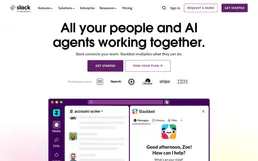
Slack Webhook Notifier
This MCP does exactly one thing: it sends messages to your Slack channels. That's its only function, and nothing else. Zero bloat, incredible for giving your AI agents a voice.
You might also like

Guerrilla Marketing
Real guerrilla costs nothing — only sweat equity. Most AI-generated tactics quietly sneak in paid spend and call it creative. This tool makes the agent prove zero cost, pinpoint the exact ambush moment, design a sharing trigger, assess risk, and trace every play back to revenue.

Journalistic Reasoning Prover
A report cited three sources. None of them existed. That is not an error � that is fabrication. Journalistic Reasoning Prover forces independent verification, source tracing, and false balance detection grounded in the SPJ Code of Ethics.

Tailwind Excellence Prover
AI agents build bloated styling layers containing arbitrary values, div-only layouts, inaccessible contrast, and legacy configurations. This prover enforces strict design token structures (@theme), utility-first compliance, semantic HTML, mobile-first layouts, and interactive focus states.
