
Documint MCP. Automate PDF creation and template management.
 Gemini
 Works with every AI agent you already use
…and any MCP-compatible client









Just plug in your AI agents and start using Vinkius.
Documint equips your AI agent to manage document templates, generate professional PDFs, and track generation history. Your agent can list templates, audit required variables, create new files from JSON data, and monitor status using natural language prompts.
It handles the entire document lifecycle, from schema definition to final download.
What your AI agents can do
Create new generation
Generates a new document file using a specific template and a data object you provide.
Get documint account metadata
Retrieves usage limits and metadata for your Documint account.
Get generation details
Checks the status and gets the download URL for a document that has already been generated.
List, search, and get the field schemas for all available document templates.
Creates a new PDF file by applying a specific template to a provided data object.
Identifies exactly which data keys are needed to populate a template correctly.
Retrieves the current status and the download URL for a specific document generation.
Lists all generated documents or identifies the most recent ones, including failed attempts.
Ask AI about this MCP
Supported MCP Clients
Gemini Waiting for input…
Documint MCP Server: 10 Tools for Document Ops
These tools let your agent manage the entire document workflow: listing templates, auditing variables, generating PDFs, and checking history.
019d7587create new generation
Generates a new document file using a specific template and a data object you provide.
019d7587get documint account metadata
Retrieves usage limits and metadata for your Documint account.
019d7587get generation details
Checks the status and gets the download URL for a document that has already been generated.
019d7587get template configuration
Retrieves detailed information and field schemas for a specific document template.
019d7587get template variable audit
Identifies exactly which data keys are required to populate a specific template.
019d7587list documint generations
Lists all documents that have been generated in your Documint account.
019d7587list documint templates
Lists every available document template in your account.
019d7587list failed doc generations
Identifies documents that failed to generate due to specific errors.
019d7587list latest doc generations
Shows the most recently created documents in your account.
019d7587search documint templates
Searches for a document template using a specific keyword or name.
Choose How to Get Started
Build a custom MCP for your own tools, or connect a ready-made integration from our catalog.
Build Your Own
Turn any API into an MCP. Import a spec, define Agent Skills, or deploy with MCPFusion.
- Import from OpenAPI, Swagger, or YAML specs
- Create Agent Skills with progressive disclosure
- Deploy to edge with MCPFusion framework
- Built in DLP, auth, and compliance on every call
- Real time usage dashboard and cost metering
- Publish to catalog or keep private
Make Your AI Do More
Start with Documint, then connect any of our 4,700+ other servers whenever your AI needs more. One click, no limits.
- Use this MCP plus 4,700+ others, all in one place
- Add new capabilities to your AI anytime you want
- Every connection is secured and compliant automatically
- Track usage and costs across all your servers
- Works with Claude, ChatGPT, Cursor, and more
- New servers added to the catalog every week
What you can do with this MCP connector
Documint lets your agent handle every part of the document lifecycle. You can list all available templates and search for specific ones by keyword. You'll also get detailed field schemas for any template you point to. To make sure you have all the right info, you can audit a template to see exactly which data keys it requires.
You can then generate a new document using a specific template and a data object you provide. You'll also get a rundown of the most recent documents created and can list every single generation that ever happened. If a document fails, you can check the list of failed generations to see what went wrong.
For any document already generated, you can check its current status and grab the download URL. You can also check your Documint account metadata to see your usage limits. Your agent can use these tools to manage templates, create PDFs from data, and keep a full record of every document you generate.
How Documint MCP Works
- 1 Connect the Documint integration to your AI client and authorize it with your API Key.
- 2 Tell your agent the goal (e.g., 'I need an invoice for Client X'). The agent uses tools like
get_template_variable_auditto confirm data requirements. - 3 The agent then calls
create_new_generation, providing the necessary data variables, and finally usesget_generation_detailsto confirm the download link.
The bottom line is, your agent handles the whole flow: checking the template, running the generation, and giving you the final file link, all in one conversation.
Who Is Documint MCP For?
Anyone who regularly creates structured documents from raw data. This is for the operations manager who needs to generate client proposals or invoices on the fly. It's for the accountant who needs to audit billing documents and the developer who needs to test template logic without manual effort.
Generates invoices or proposals by feeding CRM data into templates, reducing the manual steps between data capture and final output.
Monitors the status of batch document generations and retrieves finalized PDF files for billing records directly from the chat interface.
Audits document variable schemas and tests generation logic against various datasets to ensure the templates work before deployment.
What Changes When You Connect
- You stop guessing what data a template needs. Use
get_template_variable_auditto instantly see the exact data keys required for any template, guaranteeing your input data is complete before you run the generation. - You never lose track of a file. Use
list_documint_generationsto see every document ever created, orlist_latest_doc_generationsto quickly pull up the most recent drafts for review. - You get immediate feedback on failures. If a generation fails,
list_failed_doc_generationstells you why it failed, allowing you to fix the source data without digging through logs. - You can manage the whole lifecycle. Use
get_template_configurationto understand the schema of a template, and then usecreate_new_generationto run it, all within the same conversation. - You don't waste time searching. Use
search_documint_templatesto quickly find a specific template by name, instead of having to scroll through a massive list fromlist_documint_templates.
Real-World Use Cases
Creating a Client Proposal
A sales rep needs a proposal for a new client. They ask their agent to 'Generate a proposal for Acme Corp.' The agent uses get_template_variable_audit to confirm the 'Client Name' variable is needed. Then, it calls create_new_generation with the correct data, and finally, the user uses get_generation_details to download the finished PDF.
Auditing Billing Documents
The accountant needs to verify all invoices from last month. They ask the agent to 'Show me the last 10 invoices.' The agent runs list_latest_doc_generations, confirms the status of each one, and provides the necessary download links for review.
Debugging Template Failures
A developer suspects a template variable is missing. They ask the agent to 'List failed generations for the onboarding pack.' The agent runs list_failed_doc_generations, identifies the error, and the developer knows exactly which variable needs fixing.
Building a Document Library Index
The ops manager wants to know what templates exist. They simply ask the agent to 'List all document templates.' The agent runs list_documint_templates, giving the full inventory, and the manager can then use get_template_configuration to get the details on any specific one.
The Tradeoffs
Listing everything first
Asking the agent to run list_documint_templates just to find one template. This returns a massive list, forcing you to read through many irrelevant names to find the one you need.
→
Use search_documint_templates instead. Just give it a keyword like 'proposal' or 'invoice'. It finds the template directly without showing you the whole catalog.
Relying on memory for status
Running create_new_generation and then forgetting the document ID, leaving you stuck wondering if it worked or where to find it.
→
Immediately use get_generation_details with the returned document ID. This confirms the status (processing, complete, failed) and gives you the download URL in one step.
Assuming data completeness
Running create_new_generation with partial data, assuming the template will fill in the blanks and generate a usable document.
→
Before generating, run get_template_variable_audit on the target template. This shows you the exact list of variables you must provide to prevent the generation from failing or missing key data.
When It Fits, When It Doesn't
Use Documint if your core job involves taking structured data (JSON, database records) and turning it into formal, branded documents like proposals, invoices, or reports. You're focused on the output file. Don't use it if your primary task is simple data storage or retrieval (use a database client instead). If you need to know what templates exist, use list_documint_templates. If you know the name and want to narrow the search, use search_documint_templates. If you need to know what data is required for a specific template, run get_template_variable_audit before running create_new_generation.

Independent Platform Disclaimer: Vinkius is an independent platform and is not affiliated with, endorsed by, sponsored by, verified by, or otherwise authorized by Documint. All third-party trademarks, logos, and brand names are the property of their respective owners. Their use on this website is strictly for informational purposes to identify service compatibility and interoperability.
VINKIUS INFRASTRUCTURE
Cloud Hosted
Managed infra
V8 Isolated
Sandboxed per request
Zero-Trust Proxy
No stored credentials
DLP Enforced
Policy on every call
GDPR Compliant
EU data residency
Token Compression
~60% cost reduction
Works with Claude, ChatGPT, Cursor, and more
The Model Context Protocol standardizes how applications expose capabilities to LLMs. Instead of operating in isolation, your AI gains direct access to external platforms, live data, and real-world actions through secure, standardized connections.
This server provides 10 capabilities that interface natively with Claude, ChatGPT, Cursor, and any MCP client. No middleware. No custom integration required.
Available Capabilities
Manually creating documents from templates is a total headache.
Today, if you need an invoice, you pull the client data from CRM. You open the template document, copy the client name, copy the invoice number, and paste everything into the required fields. Then, you have to export it, reformat it in Word, and save it as a PDF. It's a multi-step, copy-paste nightmare.
With the Documint MCP Server, you just tell your agent, 'Make an invoice for Acme Corp.' The agent runs the necessary steps, handles the template variable mapping, and delivers a finalized, branded PDF directly to your chat window. The manual copy-paste steps vanish.
Use Documint MCP Server to track and manage documents.
Instead of opening three different tabs—one for the template library, one for the generation status, and one for the final download—you only talk to your agent. You ask about the document history, and the agent uses tools like `list_documint_generations` and `get_generation_details` to give you the status and the link in one go.
The system knows the document's full history. It tracks success, failure, and the exact variables used. You don't just get a file; you get the auditable record of how that file was created.
Common Questions About Documint MCP
How do I find all the templates available in Documint? +
Run list_documint_templates. This tool lists every document template in your account, giving you a full inventory. If you know part of the name, use search_documint_templates instead.
What is the difference between `list_documint_generations` and `list_latest_doc_generations`? +
list_documint_generations shows every document created. list_latest_doc_generations filters that list to show only the most recent ones, saving you time when you just need the last few drafts.
How do I know what data I need to run `create_new_generation`? +
You must first run get_template_variable_audit on the template ID. This tool shows the precise list of data keys and variables required to populate the template successfully.
Can I check if a document generation failed? +
Yes. Use list_failed_doc_generations to identify failed jobs. If you know the document ID, you can also check the status with get_generation_details.
What if I want to see the full details of a template? Should I use `get_template_configuration` or `search_documint_templates`? +
search_documint_templates only finds the template by name. Use get_template_configuration to pull the full details, including the field schema, once you know the template ID.
How do I check my usage limits or account status using `get_documint_account_metadata`? +
You use get_documint_account_metadata to see your account's limits and usage details. This tool provides necessary information about your API quota and current consumption so you don't run into unexpected paywalls.
What is the difference between `list_documint_templates` and `search_documint_templates`? +
Use list_documint_templates to get a complete catalog of every template you own. If you only know a keyword or part of a name, search_documint_templates narrows down the list to matching results.
How do I find out which generations failed using `list_failed_doc_generations`? +
You call list_failed_doc_generations to identify specific generation attempts that failed. The output gives you the error details, letting you know exactly what data or template variable caused the failure.
How do I get a Documint API Key? +
Log in to your Documint account, navigate to the API section in your account settings, and you can generate or retrieve your unique API Key from there.
Can the agent show me the variables for a template? +
Yes, you can use the get_template_variable_audit tool to retrieve exactly which data keys are needed to populate a specific template.
What format are the documents generated in? +
Documint specializes in generating high-quality PDF files from your dynamic HTML or designed templates.
Use it with your favorite AI tools
Connect this server to Cursor, Claude, VS Code, and more.
More in this category
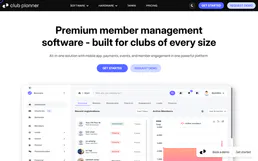
ClubPlanner
Manage fitness club memberships, class bookings, and member check-ins with tools designed for health and wellness businesses.
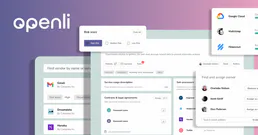
Openli
Generate privacy policies, cookie consent banners, and legal compliance documents for your website with automated updates.

airfocus
Prioritize your product roadmap, score features by impact, and align your team on what to build next with strategic clarity.
You might also like

Random User Generator
Generate high-quality random user data for testing and prototyping — names, emails, and profile photos directly via AI.
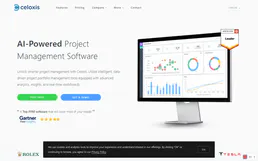
Celoxis
Empower your AI agents to manage complex portfolios, track project milestones, and analyze resource timesheets on Celoxis.

EPA Computational Toxicology
Access the US EPA's CompTox Chemicals Dashboard data — search for chemicals, properties, hazard summaries, and exposure data.