
Electricity Maps MCP. Get real-time carbon intensity and power mix for any zone.
 Gemini
 Works with every AI agent you already use
…and any MCP-compatible client









Just plug in your AI agents and start using Vinkius.
Electricity Maps Carbon Intelligence provides real-time global energy data. Your AI agent gets instant access to a specific zone's carbon intensity (gCO2eq/kWh) and the detailed power mix (solar, wind, coal, etc.) for over 100 countries.
Use it to audit corporate emissions, optimize data center loads, or research global energy shifts via natural conversation.
What your AI agents can do
Get carbon intensity
Gets the current carbon intensity (gCO2eq/kWh) for a specified energy zone.
Get power production breakdown
Gets a detailed breakdown of all energy sources currently powering a specific zone.
List energy zones
Lists every available energy zone you can query for carbon and power data.
The agent returns the specific carbon intensity of electricity (gCO2eq/kWh) for any zone you specify.
The agent lists exactly what energy sources (solar, wind, coal, etc.) are currently powering a specific geographic zone.
The agent provides a full list of all available energy zones you can query for data.
Ask AI about this MCP
Supported MCP Clients
Gemini Waiting for input…
019d8433get carbon intensity
Gets the current carbon intensity (gCO2eq/kWh) for a specified energy zone.
019d8433get power production breakdown
Gets a detailed breakdown of all energy sources currently powering a specific zone.
019d8433list energy zones
Lists every available energy zone you can query for carbon and power data.
Choose How to Get Started
Build a custom MCP for your own tools, or connect a ready-made integration from our catalog.
Build Your Own
Turn any API into an MCP. Import a spec, define Agent Skills, or deploy with MCPFusion.
- Import from OpenAPI, Swagger, or YAML specs
- Create Agent Skills with progressive disclosure
- Deploy to edge with MCPFusion framework
- Built in DLP, auth, and compliance on every call
- Real time usage dashboard and cost metering
- Publish to catalog or keep private
Make Your AI Do More
Start with Electricity Maps Carbon Intelligence, then connect any of our 4,700+ other servers whenever your AI needs more. One click, no limits.
- Use this MCP plus 4,700+ others, all in one place
- Add new capabilities to your AI anytime you want
- Every connection is secured and compliant automatically
- Track usage and costs across all your servers
- Works with Claude, ChatGPT, Cursor, and more
- New servers added to the catalog every week
What you can do with this MCP connector
This Carbon Intelligence MCP server gives your AI agent real-time global energy data. It lets your agent access a specific zone's carbon intensity (gCO2eq/kWh) and the full power mix (solar, wind, coal, etc.) for over 100 countries. Your agent uses this data to audit corporate emissions, optimize data center loads, or research global energy shifts just by talking to it.
Your agent uses the get_carbon_intensity tool to grab the current carbon intensity (gCO2eq/kWh) for any zone you name. It uses get_power_production_breakdown to list exactly what energy sources (solar, wind, coal, etc.) are powering a specific zone. It uses list_energy_zones to provide a full list of all available energy zones you can query for data.
How Electricity Maps MCP Works
- 1 First, run the
list_energy_zonestool to get a list of all valid energy zones (e.g., France, US-CA). - 2 Next, use the zone name or ID in
get_carbon_intensityto find the current carbon footprint per kWh. - 3 Finally, call
get_power_production_breakdownwith the same zone to see the exact mix of energy sources powering it.
The bottom line is, your AI client pulls granular energy data from multiple sources and combines it into a single, actionable analysis.
Who Is Electricity Maps MCP For?
Sustainability Managers need this to audit corporate carbon footprints across different global operations. Cloud Engineers use it to run workloads based on real-time grid cleanliness. Policy Researchers need it to track national energy transitions. Anyone dealing with large-scale energy consumption needs it.
Checks the carbon intensity of electricity in different regions to create mandatory ESG reports and compare sites.
Determines if running a data center workload in Zone A (low carbon intensity) is better than Zone B, based on real-time grid data.
Tracks the percentage of renewable energy mix over time for various countries to assess national policy effectiveness.
What Changes When You Connect
- Audit a site’s carbon footprint. Instead of guessing, you get the exact gCO2eq/kWh for any location using
get_carbon_intensity. This lets you compare the environmental impact of running services across continents. - Optimize data center workloads. Use
get_power_production_breakdownto see if a zone is running primarily on coal or if it's mostly wind and solar. You can route compute jobs to the cleanest grid available. - Track green energy shifts. By checking the renewable percentage and the detailed breakdown, you can compare the grid mix of two zones side-by-side to see which one is undergoing a faster energy transition.
- Know your options. Before running a query, run
list_energy_zones. This gives you a definitive list of zones, so you don't waste time guessing valid location inputs. - Report with accuracy. You can compare the environmental impact across different zones to build audit reports that use precise, real-time numbers, not generalized estimates.
Real-World Use Cases
Comparing two data center locations.
A tech company needs to decide between two cloud regions. They ask their agent: 'Compare the carbon intensity of Zone A and Zone B.' The agent runs get_carbon_intensity for both, instantly showing which location has the lower carbon footprint, allowing the team to save money and meet ESG goals.
Assessing a new market's power reliability.
A policy researcher is vetting a country for investment. They ask the agent to list the power mix for the zone. The agent runs get_power_production_breakdown, revealing the grid is dominated by nuclear and hydro. This signals stable, predictable energy sourcing.
Checking the best time to run a batch job.
An operations team runs a massive, compute-heavy batch job. They first use list_energy_zones to find the target zone. Then, they use the agent to check the carbon intensity, deciding to delay the job until the carbon intensity drops due to high wind generation.
Auditing a global supply chain.
A sustainability manager needs to report on the emissions from their manufacturing sites. They ask the agent to run get_carbon_intensity for every site's zone. The agent gathers the data points and generates a consolidated report for executive review.
The Tradeoffs
Assuming all zones are available.
The engineer tries to check the carbon intensity for a zone ID they found on an old map. The agent fails because the input zone ID is invalid or deprecated.
→
First, always run list_energy_zones to get the current, valid list of zones. Then, use get_carbon_intensity with the confirmed zone ID. This prevents failed calls and keeps the workflow moving.
Only checking one metric.
The user only checks the carbon intensity and thinks the zone is 'clean.' But the zone is actually powered by an old, inefficient mix of sources.
→
Never stop at carbon intensity. Always follow up by running get_power_production_breakdown for that zone. This shows the actual energy sources, giving a complete picture of the grid.
Overlooking regional variations.
A user compares two major cities and assumes they have the same energy source profile, ignoring local grid differences.
→
Use get_carbon_intensity and get_power_production_breakdown for both cities' specific zones. These tools handle the granular, localized data needed for accurate comparisons.
When It Fits, When It Doesn't
Use this if you need to make decisions based on real-time, localized energy impact. You need to know why the electricity is green or dirty. Specifically, if your goal is to compare carbon footprints across multiple zones or to understand the mix of power sources (e.g., 'is this grid running on wind or coal?'), this server is necessary. Don't use it if you just need a general global average; the tools are specific to defined zones. If your goal is simply to monitor general market trends, look for a high-level energy forecasting tool instead.

Independent Platform Disclaimer: Vinkius is an independent platform and is not affiliated with, endorsed by, sponsored by, verified by, or otherwise authorized by Electricity Maps. All third-party trademarks, logos, and brand names are the property of their respective owners. Their use on this website is strictly for informational purposes to identify service compatibility and interoperability.
VINKIUS INFRASTRUCTURE
Cloud Hosted
Managed infra
V8 Isolated
Sandboxed per request
Zero-Trust Proxy
No stored credentials
DLP Enforced
Policy on every call
GDPR Compliant
EU data residency
Token Compression
~60% cost reduction
Works with Claude, ChatGPT, Cursor, and more
The Model Context Protocol standardizes how applications expose capabilities to LLMs. Instead of operating in isolation, your AI gains direct access to external platforms, live data, and real-world actions through secure, standardized connections.
This server provides 3 capabilities that interface natively with Claude, ChatGPT, Cursor, and any MCP client. No middleware. No custom integration required.
Available Capabilities
Trying to manually audit a global supply chain's energy usage is a nightmare.
Right now, auditing a global supply chain means downloading dozens of spreadsheets. You track down each facility's location, then manually search for that zone's energy data on different government or utility websites. You spend hours copying zone names and pasting them into a spreadsheet, hoping the data sources are even up-to-date.
With the Electricity Maps MCP Server, you ask your agent to audit the sites. The agent automatically runs `get_carbon_intensity` for every location and compiles the results. You get a single, actionable report detailing the carbon footprint for all sites, instantly.
Electricity Maps Carbon Intelligence MCP Server: Real-time grid analysis.
You eliminate the need to visit separate utility websites or run multiple, disconnected searches for carbon data. The agent handles the zone lookup, the carbon calculation, and the power mix analysis in one flow.
It’s a data layer that knows where the power comes from and how dirty it is. This means your decision-making is based on verifiable, real-time data, not last quarter's reports.
Common Questions About Electricity Maps MCP
How accurate is the `get_carbon_intensity` tool? +
The data provided is real-time global energy intelligence. It gives the gCO2eq/kWh for the specific zone you query. Always use list_energy_zones first to confirm the zone ID.
Can I use `get_power_production_breakdown` for a zone that isn't listed? +
No. You must first use list_energy_zones to confirm the zone is available. The tools require a valid, defined zone for accurate data retrieval.
Does the server handle historical data? +
No. This MCP server provides current, real-time data. It shows the energy mix and carbon intensity right now, not historical trends.
What kind of data is returned by `get_carbon_intensity`? +
It returns the carbon intensity value in gCO2eq/kWh for the specific zone and time queried.
How do I use `list_energy_zones` to find valid inputs for `get_carbon_intensity`? +
You run list_energy_zones first to get a comprehensive list of supported geographical zones. This list ensures you pass a valid zone identifier to get_carbon_intensity or get_power_production_breakdown.
What happens if I provide an invalid zone name to `get_carbon_intensity`? +
The server returns a specific error message indicating the invalid zone ID or format. This prevents the AI client from attempting to retrieve non-existent data.
Are there any rate limits when I use `get_power_production_breakdown`? +
The service adheres to standard API rate limits. Exceeding these limits will return a 429 HTTP error code, requiring you to implement an exponential backoff strategy in your agent code.
Does the `get_carbon_intensity` tool handle different currency units? +
No, the get_carbon_intensity tool provides carbon intensity exclusively in gCO2eq/kWh. It reports environmental metrics, not monetary values.
Can I check the carbon intensity in Brazil? +
Yes! Use the get_carbon_intensity tool with the zone code 'BR'. It will return the latest gCO2eq/kWh for the Brazilian grid.
Use it with your favorite AI tools
Connect this server to Cursor, Claude, VS Code, and more.
More in this category

Brightcove
Manage your video library via Brightcove Video Cloud — list videos, manage playlists, and monitor performance directly from any AI agent.

Everflow Partner Marketing
Equip your AI agent to manage marketing offers, track affiliates, and monitor network performance via the Everflow API.

Data.gov Catalog
Access the official US Government open data catalog. Search thousands of datasets, organizations, and spatial data directly from your AI agent.
You might also like

Zillow Alternative
Access real estate data, Zestimates, and property details directly from Zillow — search addresses, get valuations, and analyze market trends.
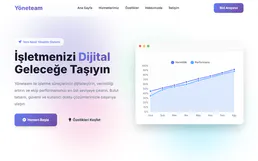
YoneTeam
Manage your Turkish business operations with project tracking, task management, and team collaboration designed for local teams.

ElectricSQL (Sync Engine)
Sync Postgres data to your AI agent in real-time using ElectricSQL's HTTP Sync API — fetch shapes, stream updates, and query subsets.