
Estimote MCP Server for VS Code Copilot 10 tools — connect in under 2 minutes
GitHub Copilot in VS Code is the most widely adopted AI coding assistant, embedded directly into the world's most popular code editor. With MCP support in Agent mode, Copilot can access external data and APIs to generate context-aware code grounded in real-time information.
ASK AI ABOUT THIS MCP SERVER
Vinkius supports streamable HTTP and SSE.
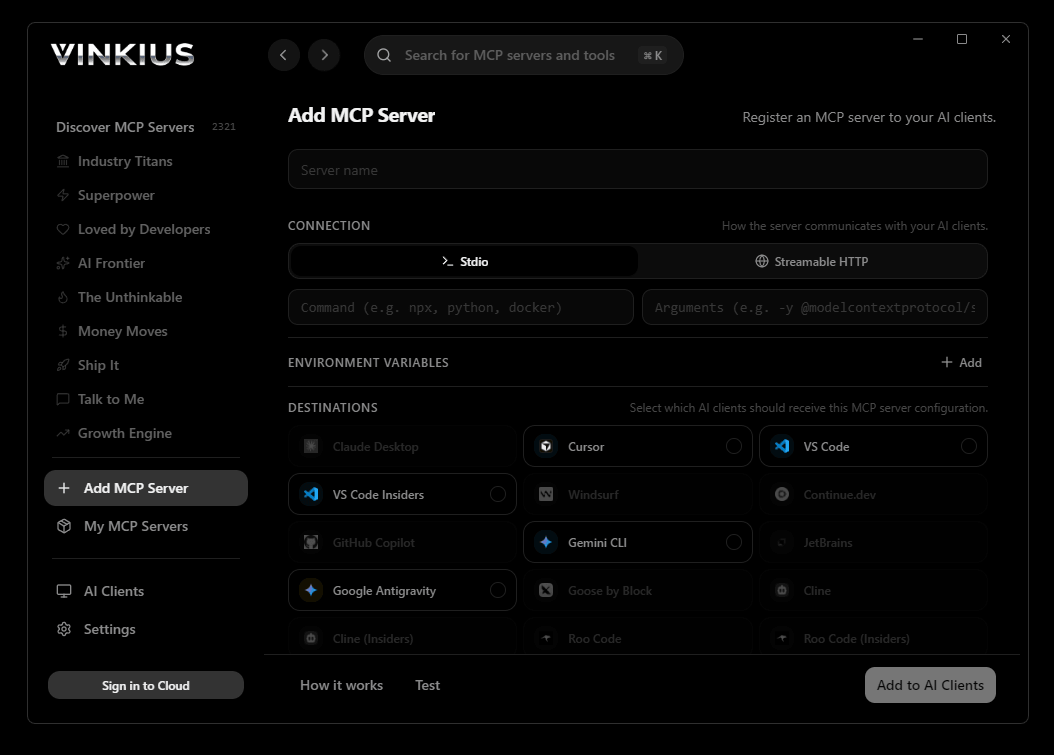
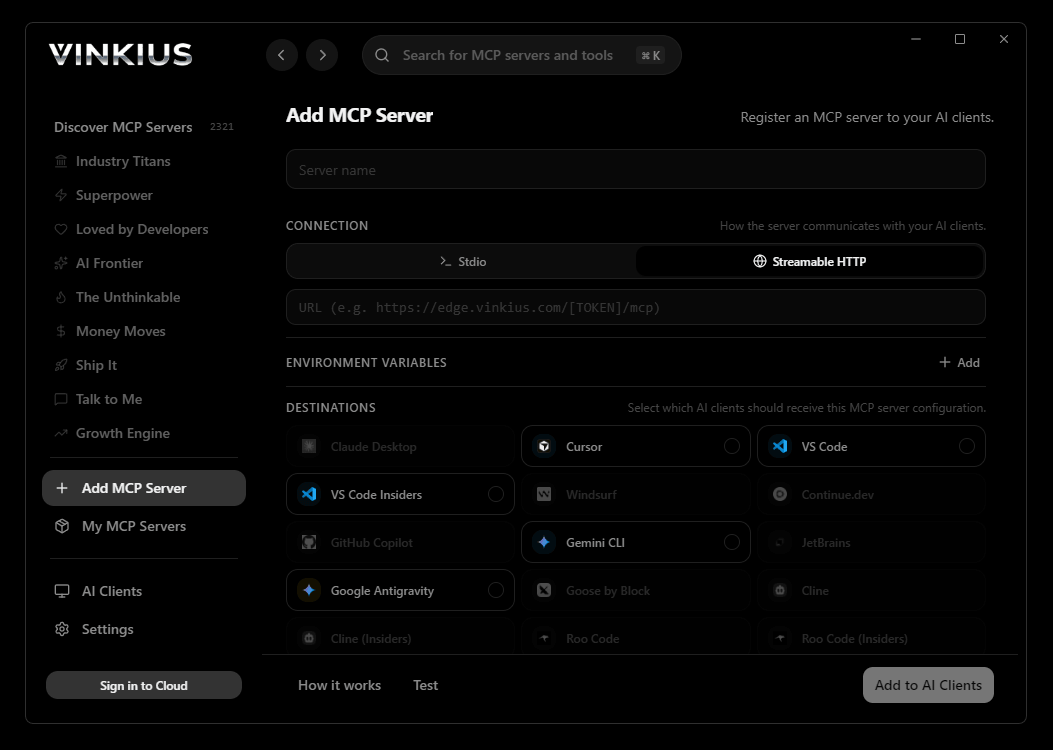
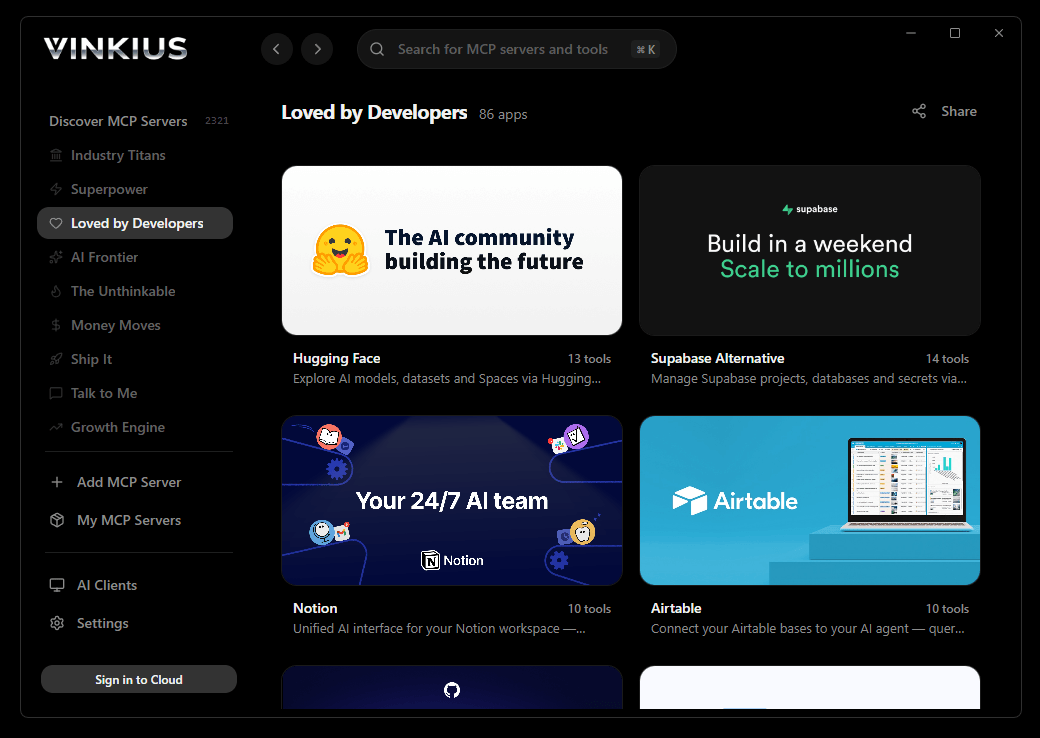
Vinkius Desktop App
The modern way to manage MCP Servers — no config files, no terminal commands. Install Estimote and 2,500+ MCP Servers from a single visual interface.

{
  "mcpServers": {
    "estimote": {
      "url": "https://edge.vinkius.com/[YOUR_TOKEN_HERE]/mcp"
    }
  }
}
* Every MCP server runs on Vinkius-managed infrastructure inside AWS - a purpose-built runtime with per-request V8 isolates, Ed25519 signed audit chains, and sub-40ms cold starts optimized for native MCP execution. See our infrastructure
About Estimote MCP Server
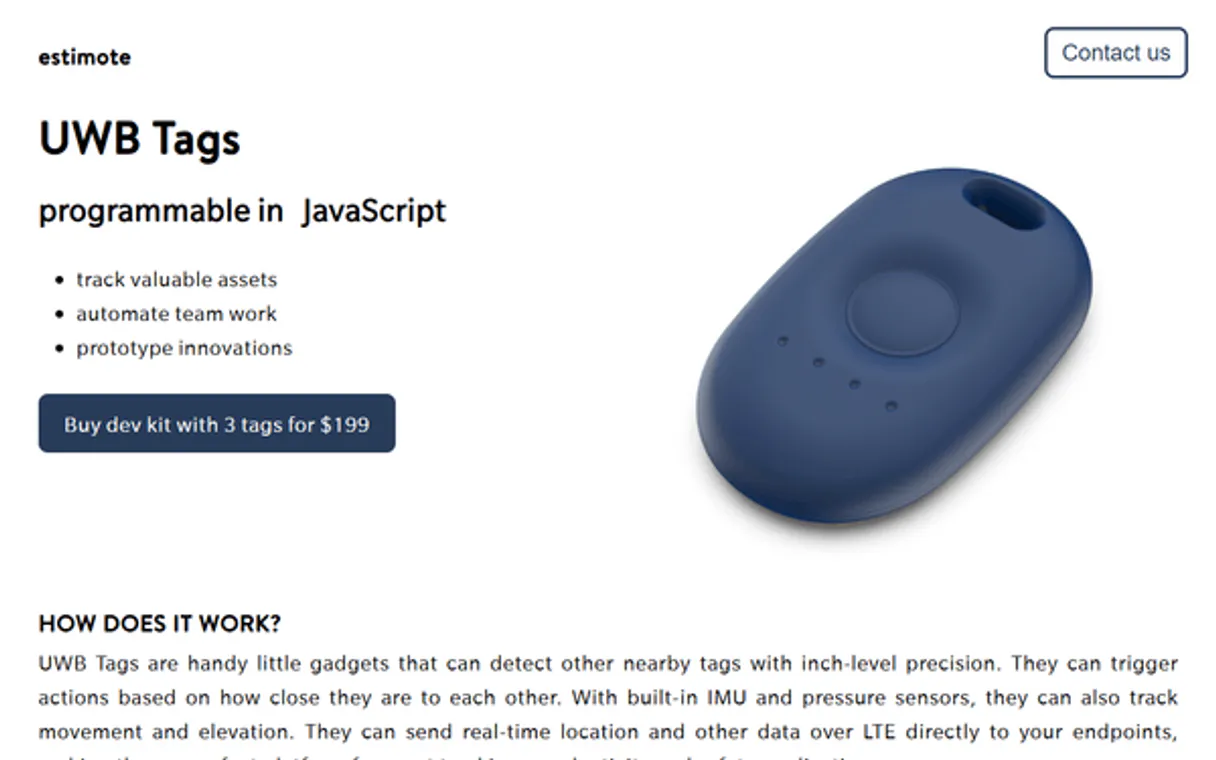
Connect your Estimote Cloud account to any AI agent and take full control of your beacon fleet management and proximity data workflows through natural conversation.
GitHub Copilot Agent mode brings Estimote data directly into your VS Code workflow. With a project-scoped config, the entire team shares access to 10 tools. Copilot queries live data, generates typed code, and writes tests from actual API responses, all without leaving the editor.
What you can do
- Fleet Orchestration — List all Estimote beacons including Proximity, Location, and Stickers, returning identifiers, hardware types, and current battery levels natively
- Device Shadow Management — Retrieve detailed configurations and status for specific beacons and update broadcasting parameters or transmission power through the shadow system
- Proximity Analytics — Pull detection counts, unique visitor estimates, and dwell time distributions over specified periods to measure real-world engagement
- Real-time Telemetry — Access live sensor data including temperature readings, ambient light levels, motion detection, and barometric pressure from supported hardware
- Physical Location Auditing — Register and manage venues, buildings, or stores, providing geographic coordinates for beacon organization and analytics grouping
- Taxonomy & Tagging — List fleet tags and assign organizational labels to devices for logical grouping and proximity campaign targeting
- Decommissioning Oversight — Permanently remove beacon devices from your cloud account while maintaining physical broadcasting for legacy integrations
The Estimote MCP Server exposes 10 tools through the Vinkius. Connect it to VS Code Copilot in under two minutes — no API keys to rotate, no infrastructure to provision, no vendor lock-in. Your configuration, your data, your control.
How to Connect Estimote to VS Code Copilot via MCP
Follow these steps to integrate the Estimote MCP Server with VS Code Copilot.
Create MCP config
Create a .vscode/mcp.json file in your project root
Add the server config
Paste the JSON configuration above
Enable Agent mode
Open GitHub Copilot Chat and switch to Agent mode using the dropdown
Start using Estimote
Ask Copilot: "Using Estimote, help me...". 10 tools available
Why Use VS Code Copilot with the Estimote MCP Server
GitHub Copilot for Visual Studio Code provides unique advantages when paired with Estimote through the Model Context Protocol.
VS Code is used by over 70% of developers. adding MCP tools to Copilot means your team can leverage external data without leaving their primary editor
Project-scoped MCP configs (`.vscode/mcp.json`) let you commit server configurations to your repository, ensuring the entire team shares the same tool access
Copilot's Agent mode integrates MCP tools seamlessly with file editing, terminal commands, and workspace search in a single agentic loop
GitHub's enterprise compliance and audit features extend to MCP tool usage, providing visibility into how AI interacts with external services
Estimote + VS Code Copilot Use Cases
Practical scenarios where VS Code Copilot combined with the Estimote MCP Server delivers measurable value.
Live API integration: Copilot can query an MCP server, inspect the response schema, and generate typed API client code in the same step
DevSecOps workflows: security teams can give developers access to domain intelligence tools directly in their editor for real-time vulnerability assessment during code review
Data pipeline development: Copilot fetches sample data via MCP and generates transformation scripts, validators, and test fixtures from actual API responses
Documentation generation: Copilot queries available tools and auto-generates README sections, API reference docs, and usage examples
Estimote MCP Tools for VS Code Copilot (10)
These 10 tools become available when you connect Estimote to VS Code Copilot via MCP:
assign_tag_to_beacon
If the tag does not exist, it is created automatically. A device can have multiple tags. Use to organize beacons by floor, zone, store section, or campaign. Tags persist in the cloud and do not require physical beacon access. Assign an organizational tag to a specific Estimote beacon device, adding it to a logical group for fleet management, analytics filtering, and proximity campaign targeting
create_physical_location
After creating a location, assign beacon devices to it for organized fleet management and location-scoped analytics. Use when deploying beacons at a new site. Register a new physical location (store, office, venue) in Estimote Cloud, providing the site name, street address, and geographic coordinates for beacon fleet organization and analytics grouping
get_beacon_details
The identifier is the beacon MAC address or Estimote Cloud ID. Returns the full device shadow including pending settings changes. Use to diagnose beacon configuration issues or verify firmware update status. Retrieve detailed configuration and status for a specific Estimote beacon device, including its current broadcasting power, advertising interval, sensor readings, firmware version, and physical location assignment
get_beacon_telemetry
Returns the most recent sensor readings from the beacon. Not all sensors are available on all hardware models. Estimote Proximity Beacons support temperature and motion; Location Beacons add light and pressure sensors. Use for environmental monitoring and occupancy detection. Retrieve real-time sensor telemetry data from a specific Estimote beacon, including temperature readings, ambient light levels, accelerometer motion detection, magnetometer orientation, and barometric pressure where supported by hardware
get_device_analytics
Supports query parameters for date range (from, to), device identifier, and tag filtering. Returns aggregated metrics showing how many mobile devices detected each beacon. Use for foot traffic analysis, retail engagement measurement, and space utilization studies. Retrieve proximity analytics data for Estimote beacon devices, including detection counts, unique visitor estimates, dwell time distributions, and engagement metrics over a specified time period
list_beacon_devices
estimote.com. Returns a paginated array of beacon objects. Each beacon includes its MAC address (the most reliable identifier), iBeacon UUID/Major/Minor, Eddystone namespace/instance, and shadow settings. Use to inventory your deployed beacon fleet. List all Estimote beacon devices registered in your Estimote Cloud account, returning device identifiers, hardware types (Proximity/Location/Sticker), battery levels, firmware versions, and current configuration status
list_fleet_tags
Returns an array of tag objects with names and associated device counts. Tags are the primary organizational mechanism in Estimote Cloud. Use to understand your current fleet taxonomy before assigning or filtering devices. List all organizational tags defined in your Estimote Cloud account, which are used to group and categorize beacon devices by location, use case, department, or any custom classification scheme
list_physical_locations
Returns an array of location objects. Locations serve as containers for organizing beacons by physical site. Each location can have multiple beacon devices assigned to it. Use to audit your deployment footprint across multiple sites. List all physical locations (venues/buildings/stores) registered in your Estimote Cloud account, returning location names, addresses, geographic coordinates, and the number of beacons deployed at each site
remove_beacon_device
WARNING: This permanently removes the device from your fleet. The beacon will continue broadcasting but will no longer be managed by Estimote Cloud. Only use when decommissioning hardware. The device can be re-added later via the Estimote app. Permanently remove an Estimote beacon device from your Cloud account, deleting all associated configuration, analytics history, and location assignments. This action is irreversible
update_beacon_settings
Changes are queued in the cloud shadow and synchronized to the physical beacon when a device running the Estimote SDK connects to it. Common updates include name, tags, broadcasting power (dBm), and advertising interval (ms). Update the configuration of a specific Estimote beacon device by modifying its broadcasting parameters, advertising interval, transmission power, or attached metadata tags through the Estimote Cloud shadow system
Example Prompts for Estimote in VS Code Copilot
Ready-to-use prompts you can give your VS Code Copilot agent to start working with Estimote immediately.
"List all my beacons and their current battery status"
"What is the current temperature at 'Beacon-XYZ'?"
"Show me visitor analytics for the 'Main Store' tag from last month"
Troubleshooting Estimote MCP Server with VS Code Copilot
Common issues when connecting Estimote to VS Code Copilot through the Vinkius, and how to resolve them.
MCP tools not available
Estimote + VS Code Copilot FAQ
Common questions about integrating Estimote MCP Server with VS Code Copilot.
Which VS Code version supports MCP?
How do I switch to Agent mode?
Can I restrict which MCP tools Copilot can access?
Does MCP work in VS Code Remote or Codespaces?
.vscode/mcp.json work in Remote SSH, WSL, and GitHub Codespaces environments. The MCP connection is established from the remote host, so ensure the server URL is accessible from that environment.Connect Estimote with your favorite client
Step-by-step setup guides for every MCP-compatible client and framework:
Anthropic's native desktop app for Claude with built-in MCP support.
AI-first code editor with integrated LLM-powered coding assistance.
GitHub Copilot in VS Code with Agent mode and MCP support.
Purpose-built IDE for agentic AI coding workflows.
Autonomous AI coding agent that runs inside VS Code.
Anthropic's agentic CLI for terminal-first development.
Python SDK for building production-grade OpenAI agent workflows.
Google's framework for building production AI agents.
Type-safe agent development for Python with first-class MCP support.
TypeScript toolkit for building AI-powered web applications.
TypeScript-native agent framework for modern web stacks.
Python framework for orchestrating collaborative AI agent crews.
Leading Python framework for composable LLM applications.
Data-aware AI agent framework for structured and unstructured sources.
Microsoft's framework for multi-agent collaborative conversations.
Connect Estimote to VS Code Copilot
Get your token, paste the configuration, and start using 10 tools in under 2 minutes. No API key management needed.