
IBGE Nomes MCP. Analyze Brazilian name trends and demographics.
 Gemini
 Works with every AI agent you already use
…and any MCP-compatible client









Just plug in your AI agents and start using Vinkius.
IBGE Nomes — Nomes do Brasil. Get historical Brazilian name data. This server lets you check a name's birth frequency by decade, see regional popularity, and find national rankings.
Track name trends across Brazil's states and decades using data from the IBGE API.
What your AI agents can do
Get nome frequencia
Gets the birth frequency for a Brazilian name across different decades.
Get nome por localidade
Gets name frequency data, filtered by a specific Brazilian state code (IBGE UF code).
Get ranking nomes
Gets the national ranking of the most popular names in Brazil, allowing filters by decade and sex.
Determine the total number of births for one or more names across specific decades in Brazilian history.
Measure name popularity and frequency, filtering the results by specific Brazilian states using their IBGE codes.
Retrieve a list of the most popular names in Brazil, allowing filtering by sex (M/F) and specific decades.
Run the frequency check for several names in a single call, separated by a pipe character (e.g., 'NameA|NameB').
Use the get_nome_por_localidade tool to directly compare name usage between two or more states.
Ask AI about this MCP
Supported MCP Clients
Gemini Waiting for input…
019d75b6get nome frequencia
Gets the birth frequency for a Brazilian name across different decades.
019d75b6get nome por localidade
Gets name frequency data, filtered by a specific Brazilian state code (IBGE UF code).
019d75b6get ranking nomes
Gets the national ranking of the most popular names in Brazil, allowing filters by decade and sex.
Choose How to Get Started
Build a custom MCP for your own tools, or connect a ready-made integration from our catalog.
Build Your Own
Turn any API into an MCP. Import a spec, define Agent Skills, or deploy with MCPFusion.
- Import from OpenAPI, Swagger, or YAML specs
- Create Agent Skills with progressive disclosure
- Deploy to edge with MCPFusion framework
- Built in DLP, auth, and compliance on every call
- Real time usage dashboard and cost metering
- Publish to catalog or keep private
Make Your AI Do More
Start with IBGE Nomes — Nomes do Brasil, then connect any of our 4,700+ other servers whenever your AI needs more. One click, no limits.
- Use this MCP plus 4,700+ others, all in one place
- Add new capabilities to your AI anytime you want
- Every connection is secured and compliant automatically
- Track usage and costs across all your servers
- Works with Claude, ChatGPT, Cursor, and more
- New servers added to the catalog every week
What you can do with this MCP connector
This server gives your AI client access to historical Brazilian naming data from the IBGE. You can track how often names were given birth across decades, see where they were popular regionally, and check national rankings.
get_nome_frequencia lets you check a name's birth frequency across different decades. You can run this check for several names at once, separating them with a pipe character.
get_nome_por_localidade measures name popularity and frequency, letting you filter the results by specific Brazilian states using their IBGE codes. You can use this tool to directly compare name usage between two or more states.
get_ranking_nomes pulls the national list of the most popular names in Brazil. You can filter these rankings by sex (M/F) and specific decades.
Your agent can combine these tools. For example, you can first check the national ranking of the top names for males in the 1950s, then use get_nome_por_localidade to see which states used those names the most, and finally use get_nome_frequencia to track how that name's popularity shifted in the 2000s.
It's all targeted analysis. You'll get the data you need, period.
How IBGE Nomes MCP Works
- 1 You specify the desired parameters (e.g., name(s), decade, state codes, or sex) in a single prompt.
- 2 Your AI client maps that request to the correct underlying tool (e.g.,
get_nome_por_localidade). - 3 The server executes the tool, returning structured data that shows the requested name metrics (frequency, rank, or comparison).
The bottom line is, you feed the system a question about name data, and it returns structured, historical metrics from the IBGE API.
Who Is IBGE Nomes MCP For?
Genealogy platform developers and data researchers need this. If you build apps that need to analyze cultural trends or demographic shifts in Brazil, you need this data. It's for anyone who needs to prove a pattern exists in historical records.
Uses get_nome_frequencia to plot how a specific family name's popularity changed across different decades.
Runs get_ranking_nomes to see what names were trending in a specific region or decade to guide product naming.
Compares name usage across states using get_nome_por_localidade to document regional cultural differences.
What Changes When You Connect
- Track a name's full life cycle. Use
get_nome_frequenciato see how a name's popularity changed from the 1930s to the 2010s. You get a clear chart of its rise and fall. - Compare regions instantly. Run
get_nome_por_localidadeto see if 'José' is more popular in Bahia than in São Paulo. It quantifies regional cultural differences. - Identify historical trends. Use
get_ranking_nomesto find the top 20 names for any given decade and sex. This gives you a structured look at past demographics. - Handle multiple names at once. The
get_nome_frequenciatool accepts multiple names separated by a pipe (e.g., 'NameA|NameB'), letting you compare them efficiently. - Filter by gender and time.
get_ranking_nomeslets you narrow the focus to just males or just females, and target a specific decade for accurate comparison.
Real-World Use Cases
Tracking a name's longevity
A genealogist needs to know if 'Maria' was a consistently popular name. They prompt their agent: 'Show the frequency of Maria across all decades.' The agent uses get_nome_frequencia and returns a decade-by-decade count, showing its peak and decline over time.
Comparing state preferences
A cultural researcher asks, 'Which state prefers the name 'João' more?' The agent uses get_nome_por_localidade, requires the IBGE codes for Bahia and Rio Grande do Sul, and generates a direct comparison showing the relative popularity in both areas.
Identifying the top names for a decade
A marketing team needs to know what was popular in the 1980s. They prompt: 'What were the top male names in the 1980s?' The agent uses get_ranking_nomes with the 1980s and Male filters, delivering the top list immediately.
Analyzing multiple names at once
A data journalist wants to compare 'Ana' and 'Pedro' over time. They ask the agent to compare the frequency of the names. The agent runs get_nome_frequencia with 'Ana|Pedro', giving a side-by-side view of both names' historical trends.
The Tradeoffs
Asking for a single 'Name Popularity' number
Prompting: 'How popular is the name Maria in Brazil?' This gives vague, single-number answers that lack context (is it current? regional? historical?).
→
Don't ask for a single number. Instead, use get_nome_frequencia to track Maria across specific decades, or use get_nome_por_localidade to narrow the focus to a specific state.
Forgetting to specify the timeframe
Running a general query like 'What are the best baby names?' This fails because name popularity changes drastically by decade and region.
→
Always specify the time period and the scope. Use get_ranking_nomes and include both a decade and a sex filter (e.g., 'Male, 1950s').
Confusing ranking with frequency
Assuming the top-ranked name means the name was popular every single year. Ranking only shows the peak relative status for a given time/sex.
→
To see how often a name was born, use get_nome_frequencia. This tool gives the raw, count data for specific decades, not just the relative rank.
When It Fits, When It Doesn't
Use this server if your goal is demographic analysis of Brazilian names. You need to know how and when names were popular, not just if they were popular.
Use this if:
* You need to track a name's history across multiple decades (get_nome_frequencia).
* You need to compare data between distinct Brazilian states (get_nome_por_localidade).
* You need to determine the top names for a specific group (Male/Female) and time period (get_ranking_nomes).
Don't use this if:
* You are analyzing name data from countries outside of Brazil. This dataset is specific to IBGE.
* You only need a current, real-time count of names. The data is historical, drawn from decades of records.
* You are looking for a single, aggregated 'Overall Popularity' score. You must use one of the three dedicated tools to get the specific view you need.
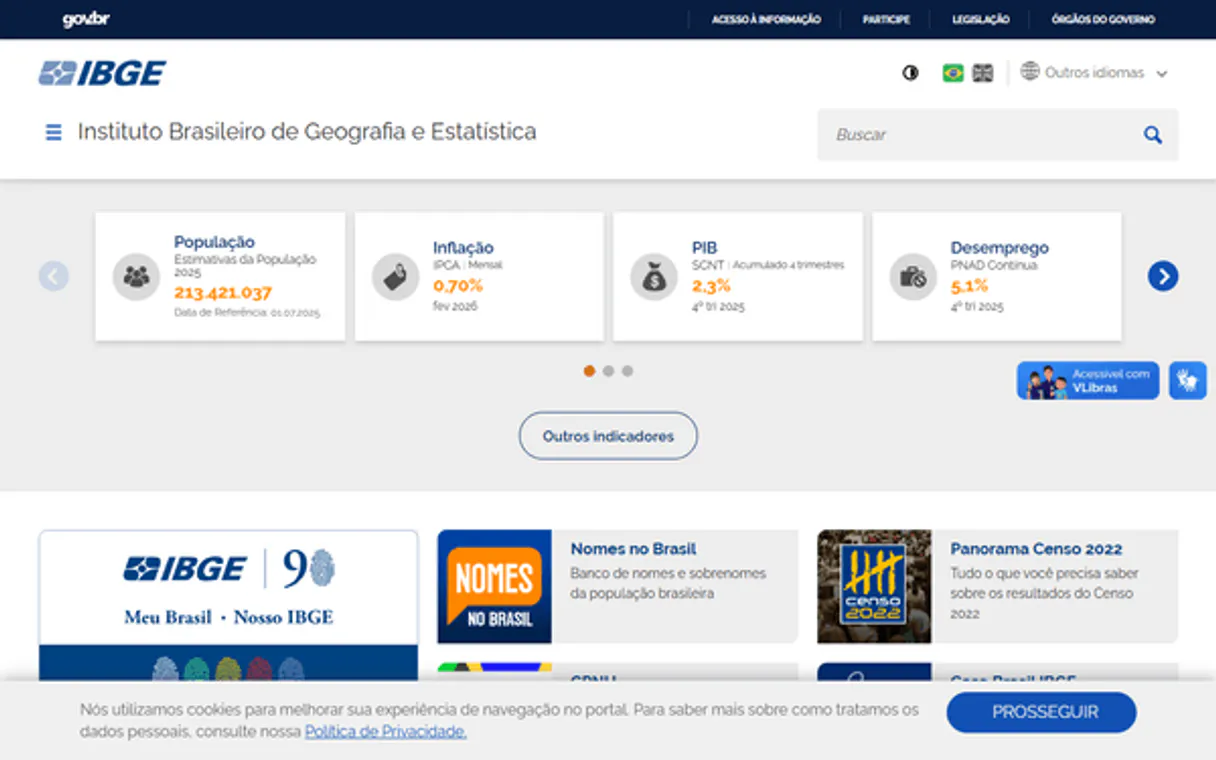
Independent Platform Disclaimer: Vinkius is an independent platform and is not affiliated with, endorsed by, sponsored by, verified by, or otherwise authorized by IBGE. All third-party trademarks, logos, and brand names are the property of their respective owners. Their use on this website is strictly for informational purposes to identify service compatibility and interoperability.
VINKIUS INFRASTRUCTURE
Cloud Hosted
Managed infra
V8 Isolated
Sandboxed per request
Zero-Trust Proxy
No stored credentials
DLP Enforced
Policy on every call
GDPR Compliant
EU data residency
Token Compression
~60% cost reduction
Works with Claude, ChatGPT, Cursor, and more
The Model Context Protocol standardizes how applications expose capabilities to LLMs. Instead of operating in isolation, your AI gains direct access to external platforms, live data, and real-world actions through secure, standardized connections.
This server provides 3 capabilities that interface natively with Claude, ChatGPT, Cursor, and any MCP client. No middleware. No custom integration required.
Available Capabilities
Analyzing cultural data means more than just looking at a list of names.
The old way is a messy process. You find a list of names, then you have to jump between separate databases or spreadsheets to check if they were popular in different states. You manually filter by decade, then you copy the name and paste it into a regional comparison tool. This takes hours of cross-referencing.
With this MCP server, you run a single query. Your agent uses `get_nome_por_localidade` and `get_nome_frequencia` together. It spits out a structured data comparison showing exactly how the name's popularity shifts between Bahia and São Paulo, instantly.
get_ranking_nomes: Get the top names for any decade and sex.
Before, figuring out the top 20 names for the 1950s meant finding a report, downloading it, and manually scanning it for gender and date filters. You had to trust that the source was current and complete.
Now, you ask for the top names directly. The agent uses `get_ranking_nomes`, providing the structured list for the 1950s, male. It's precise, and it's ready to be used in your application logic.
Common Questions About IBGE Nomes MCP
How do I use the get_nome_frequencia tool? +
You provide the name(s) and the decades you want to check. The tool returns the exact number of births for each name across the specified time period, helping you plot historical trends.
What states can I compare using get_nome_por_localidade? +
You must provide the IBGE UF codes for the states you want to compare. The tool then generates a frequency comparison, showing the difference in name usage between those specific regions.
Can get_ranking_nomes filter by multiple criteria? +
Yes, get_ranking_nomes accepts filters for both the decade and the sex (M or F), allowing you to pinpoint the most popular names for a very specific segment of the population.
Is the data from get_nome_frequencia current? +
No, the data is historical. It tracks name trends and birth frequency from decades past, providing context rather than real-time population data.
What is the format required for using the `get_nome_frequencia` tool? +
You must pass a list of names, separated by the pipe character ( | ). For example, use "Maria|João" to check two names. This format allows you to track multiple names in a single request.
Can `get_ranking_nomes` handle filtering by multiple decades or sexes? +
Yes, the tool accepts filters for both decade and sex. You can combine criteria to narrow down the search, for instance, checking for top male names in the 1990s.
What happens if I use `get_nome_por_localidade` with an incorrect IBGE UF code? +
The system returns a structured error message detailing the invalid code and the required format. You'll get specific feedback, so you can correct the state code easily.
Is there a limit on the number of names I can check using `get_nome_frequencia`? +
The tool supports multiple names in a single string, allowing you to check several names at once. While there isn't a hard limit documented, we recommend keeping the list manageable for best performance.
Where does this name data come from? +
All name data comes from official IBGE Census records spanning over 90 years. The frequency counts represent actual birth registrations aggregated by decade since the 1930s.
Use it with your favorite AI tools
Connect this server to Cursor, Claude, VS Code, and more.
More in this category

Sentinel Hub
Access and process satellite imagery from Sentinel, Landsat, and other Earth observation missions through a powerful cloud API.

BCB Inflação — IPCA, IGP-M, INPC e Expectativas
Brazilian inflation indices: IPCA (official CPI), IPCA-15 (advance reading), IGP-M (rent and contract index), INPC (minimum wage index), and Focus Survey market expectations for future inflation from Brazil's Central Bank.

TextRazor
Advanced Natural Language Processing (NLP) to extract entities, topics, and relations from text or URLs.
You might also like

USAJOBS (OPM)
Search and analyze federal job opportunities directly from USAJOBS. Access active listings, historic data, and detailed job requirements.

IPQualityScore (IPQS)
Detect fraud, proxies, and malicious activity via IPQS API.

Langfuse (LLM Tracing & Evals)
Monitor LLM apps via Langfuse — track traces, manage prompt templates, and audit evaluation scores.