
OpenTHC MCP Server for VS Code Copilot 12 tools — connect in under 2 minutes
GitHub Copilot in VS Code is the most widely adopted AI coding assistant, embedded directly into the world's most popular code editor. With MCP support in Agent mode, Copilot can access external data and APIs to generate context-aware code grounded in real-time information.
ASK AI ABOUT THIS MCP SERVER
Vinkius supports streamable HTTP and SSE.
Vinkius Desktop App
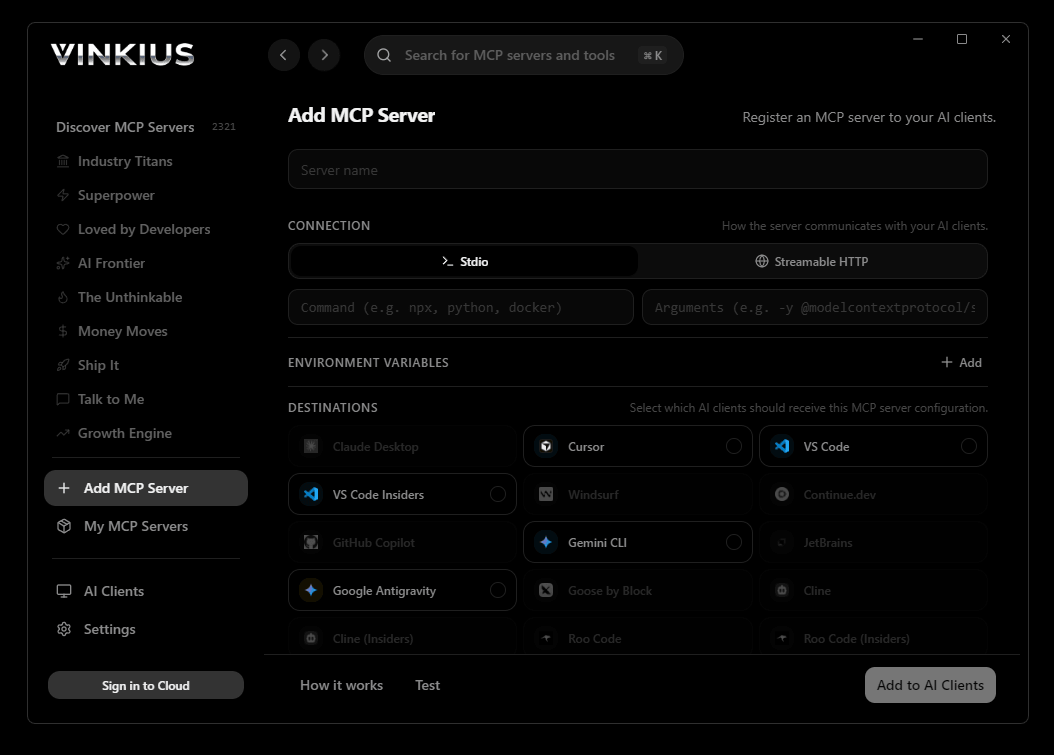
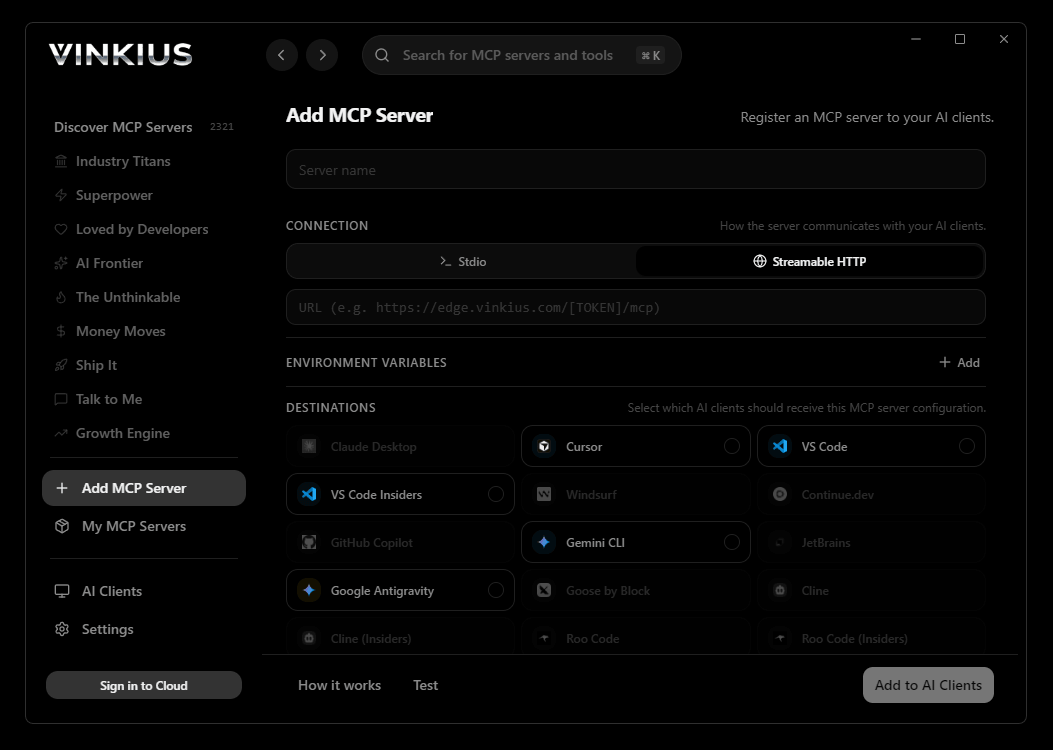
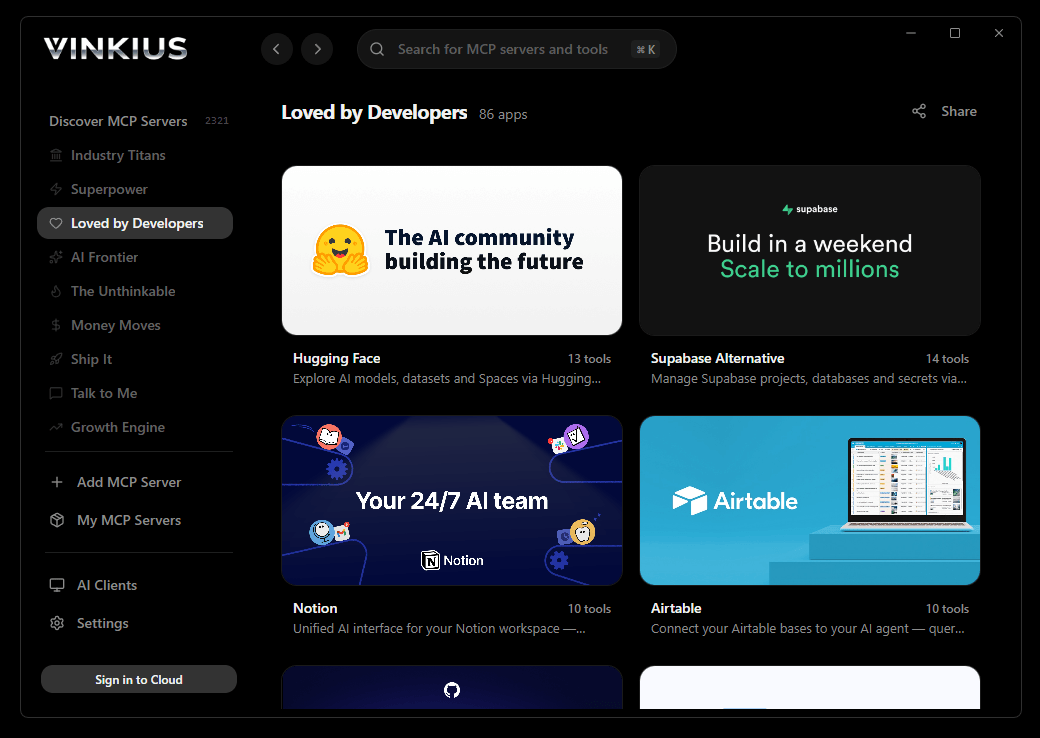
The modern way to manage MCP Servers — no config files, no terminal commands. Install OpenTHC and 2,500+ MCP Servers from a single visual interface.

{
  "mcpServers": {
    "openthc": {
      "url": "https://edge.vinkius.com/[YOUR_TOKEN_HERE]/mcp"
    }
  }
}
* Every MCP server runs on Vinkius-managed infrastructure inside AWS - a purpose-built runtime with per-request V8 isolates, Ed25519 signed audit chains, and sub-40ms cold starts optimized for native MCP execution. See our infrastructure
About OpenTHC MCP Server
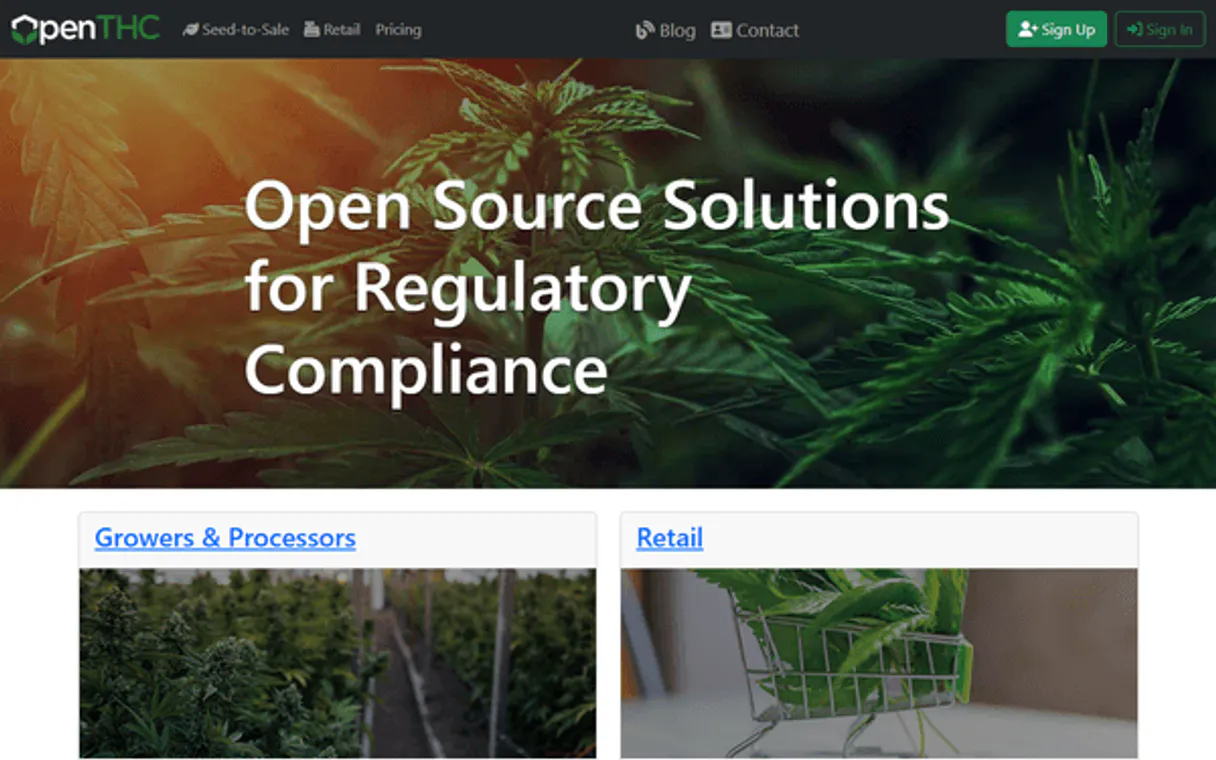
Connect your OpenTHC Cannabis Regulatory Compliance Engine to any AI agent and take full control of your seed-to-sale workflows through natural conversation.
GitHub Copilot Agent mode brings OpenTHC data directly into your VS Code workflow. With a project-scoped config, the entire team shares access to 12 tools. Copilot queries live data, generates typed code, and writes tests from actual API responses, all without leaving the editor.
What you can do
- Company & License Management — List all registered companies and verify active cannabis licenses for compliance assurance
- Cultivation Tracking — Query all active plants in cultivation with growth stages, strain varieties, and facility room locations
- Inventory Control — Fetch complete inventory ledger including harvested material, work-in-progress, finished goods, and destruction candidates
- Laboratory Testing — Access lab samples and Certificates of Analysis (CoA) with full potency, terpene, and contaminant test results
- B2B Transfers — Monitor incoming and outgoing wholesale transfer orders with manifests, bills of lading, and fulfillment status
- Retail Sales — Retrieve point-of-sale B2C transaction history for daily reporting, tax verification, and purchase limit enforcement
- Product Catalog — Browse your complete cannabis product catalog with THC/CBD percentages, SKU data, and regulatory classifications
- Facility Organization — List cultivation rooms, processing areas, and operational zones for spatial inventory and workflow planning
The OpenTHC MCP Server exposes 12 tools through the Vinkius. Connect it to VS Code Copilot in under two minutes — no API keys to rotate, no infrastructure to provision, no vendor lock-in. Your configuration, your data, your control.
How to Connect OpenTHC to VS Code Copilot via MCP
Follow these steps to integrate the OpenTHC MCP Server with VS Code Copilot.
Create MCP config
Create a .vscode/mcp.json file in your project root
Add the server config
Paste the JSON configuration above
Enable Agent mode
Open GitHub Copilot Chat and switch to Agent mode using the dropdown
Start using OpenTHC
Ask Copilot: "Using OpenTHC, help me...". 12 tools available
Why Use VS Code Copilot with the OpenTHC MCP Server
GitHub Copilot for Visual Studio Code provides unique advantages when paired with OpenTHC through the Model Context Protocol.
VS Code is used by over 70% of developers. adding MCP tools to Copilot means your team can leverage external data without leaving their primary editor
Project-scoped MCP configs (`.vscode/mcp.json`) let you commit server configurations to your repository, ensuring the entire team shares the same tool access
Copilot's Agent mode integrates MCP tools seamlessly with file editing, terminal commands, and workspace search in a single agentic loop
GitHub's enterprise compliance and audit features extend to MCP tool usage, providing visibility into how AI interacts with external services
OpenTHC + VS Code Copilot Use Cases
Practical scenarios where VS Code Copilot combined with the OpenTHC MCP Server delivers measurable value.
Live API integration: Copilot can query an MCP server, inspect the response schema, and generate typed API client code in the same step
DevSecOps workflows: security teams can give developers access to domain intelligence tools directly in their editor for real-time vulnerability assessment during code review
Data pipeline development: Copilot fetches sample data via MCP and generates transformation scripts, validators, and test fixtures from actual API responses
Documentation generation: Copilot queries available tools and auto-generates README sections, API reference docs, and usage examples
OpenTHC MCP Tools for VS Code Copilot (12)
These 12 tools become available when you connect OpenTHC to VS Code Copilot via MCP:
list_b2b_transactions
Each B2B transaction record contains the transfer ID, direction (incoming/outgoing), counterparty company, transfer status (draft, committed, received, rejected), creation date, expected fulfillment date, line items with quantities, and attached manifests or bills of lading. Essential for supply chain orchestration, logistics planning, and regulatory transfer documentation. AI agents use this to track shipment status, verify received quantities, and prepare compliance reports. List all B2B transfer transactions (incoming and outgoing)
list_b2c_transactions
Each transaction includes the sale ID, customer information (if recorded), sale date, line items with products and quantities, total amount, tax breakdown, dispensary location, and inventory deduction confirmations. Critical for daily sales reporting, tax calculation verification, inventory reconciliation, and regulatory sales limit enforcement. AI agents should query this to analyze sales patterns, verify compliance with purchase limits, and prepare end-of-day reports. List all retail B2C sales transactions
list_companies
Use this to understand which organizations are part of your regulatory network, including license holders, cultivators, processors, distributors, and retailers. Each company record contains legal identification data, registration status, and associated license information. Essential for multi-company operations and B2B transaction verification. List all companies registered in the OpenTHC compliance engine
list_contacts
Each contact includes company affiliation, contact type (B2B partner, regulatory agency, logistics provider), communication details, and relationship status. Use this to identify verified trading partners before creating B2B transfer orders or compliance documentation. List all business contacts in the OpenTHC network
list_inventory
Each inventory item displays the lot number, item type, quantity with unit of measurement, storage location, creation date, chain of custody history, and compliance status. Fundamental for stock reconciliation, audit preparation, transfer order creation, and regulatory reporting. AI agents should query this before fulfilling orders or conducting inventory audits. List all inventory items with quantities and locations
list_lab_results
Each result includes the lab result ID, linked sample, testing laboratory accreditation, full analytical results (THC/CBD potency, terpene profile, contaminant levels), pass/fail determination, and the official CoA document reference. Critical for regulatory compliance, product labeling accuracy, retail menu display, and consumer transparency. AI agents should reference this to verify product safety before sale or transfer. List all laboratory test results and certificates of analysis
list_lab_samples
Each sample contains the sample ID, linked inventory lot, sample type (flower, edible, concentrate), test panel requested (potency, pesticides, heavy metals, mycotoxins, microbials, residual solvents), submission date, testing laboratory, and current analysis status. Essential for quality assurance workflows, batch release decisions, and compliance with mandatory testing regulations. AI agents should check this to determine if a batch has pending or cleared lab results. List all laboratory samples submitted for testing
list_licenses
Each license contains the license type, expiration dates, regulatory conditions, and approval status. Critical for compliance verification — AI agents should check this before initiating any regulated activity to ensure the proper license is active and valid for the intended operation. List all cannabis licenses associated with your account
list_plants
Each plant record contains the unique plant ID (POP/PIP tags), growth stage (vegetative, flowering, harvesting), strain/variety, location within the facility (room, rack, shelf), planting date, and estimated harvest window. Critical for cultivation management, compliance reporting, and seed-to-sale traceability. AI agents use this to monitor crop health, predict harvest timelines, and ensure regulatory plant count limits are respected. List all cannabis plants in active cultivation
list_products
Each product entry contains the product name, type classification, SKU, potency information (THC/CBD percentages), package sizes, and regulatory tags. Essential for retail operations, menu generation, and B2B sales order creation. AI agents should reference this when checking product availability or creating sales transactions. List all cannabis products in your inventory catalog
list_sections
Each section entry includes the section ID, name, purpose classification (vegetation room, flowering room, drying room, processing area, retail floor, warehouse), environmental parameters, and capacity limits. Essential for spatial inventory tracking, cultivation workflow organization, facility compliance inspections, and operational planning. AI agents use this to assign plants to specific rooms during cultivation activities, locate inventory within the facility, and generate room-level production reports. List all facility sections and cultivation areas
list_varieties
Each variety record contains the variety ID, strain name (e.g., Blue Dream, OG Kush, Sour Diesel), genetics type (Type I - THC dominant, Type II - Mixed THC/CBD, Type III - CBD dominant), breeder information, and associated cultivation characteristics. Fundamental for cultivation planning, product labeling, genetic tracking, and regulatory strain registration. AI agents reference this when creating new plant records, generating product labels, or analyzing strain performance metrics. List all cannabis varieties (strains) in the system
Example Prompts for OpenTHC in VS Code Copilot
Ready-to-use prompts you can give your VS Code Copilot agent to start working with OpenTHC immediately.
"List all our active cannabis licenses and verify which ones are expiring soon."
"Show me all plants currently in flowering stage in Room 3 and estimate harvest readiness."
"Check inventory levels for all THC-dominant flower products and show me pending lab results."
Troubleshooting OpenTHC MCP Server with VS Code Copilot
Common issues when connecting OpenTHC to VS Code Copilot through the Vinkius, and how to resolve them.
MCP tools not available
OpenTHC + VS Code Copilot FAQ
Common questions about integrating OpenTHC MCP Server with VS Code Copilot.
Which VS Code version supports MCP?
How do I switch to Agent mode?
Can I restrict which MCP tools Copilot can access?
Does MCP work in VS Code Remote or Codespaces?
.vscode/mcp.json work in Remote SSH, WSL, and GitHub Codespaces environments. The MCP connection is established from the remote host, so ensure the server URL is accessible from that environment.Connect OpenTHC with your favorite client
Step-by-step setup guides for every MCP-compatible client and framework:
Anthropic's native desktop app for Claude with built-in MCP support.
AI-first code editor with integrated LLM-powered coding assistance.
GitHub Copilot in VS Code with Agent mode and MCP support.
Purpose-built IDE for agentic AI coding workflows.
Autonomous AI coding agent that runs inside VS Code.
Anthropic's agentic CLI for terminal-first development.
Python SDK for building production-grade OpenAI agent workflows.
Google's framework for building production AI agents.
Type-safe agent development for Python with first-class MCP support.
TypeScript toolkit for building AI-powered web applications.
TypeScript-native agent framework for modern web stacks.
Python framework for orchestrating collaborative AI agent crews.
Leading Python framework for composable LLM applications.
Data-aware AI agent framework for structured and unstructured sources.
Microsoft's framework for multi-agent collaborative conversations.
Connect OpenTHC to VS Code Copilot
Get your token, paste the configuration, and start using 12 tools in under 2 minutes. No API key management needed.