
Parknav MCP. Know where to park before you leave home.
 Gemini
 Works with every AI agent you already use
…and any MCP-compatible client









Just plug in your AI agents and start using Vinkius.
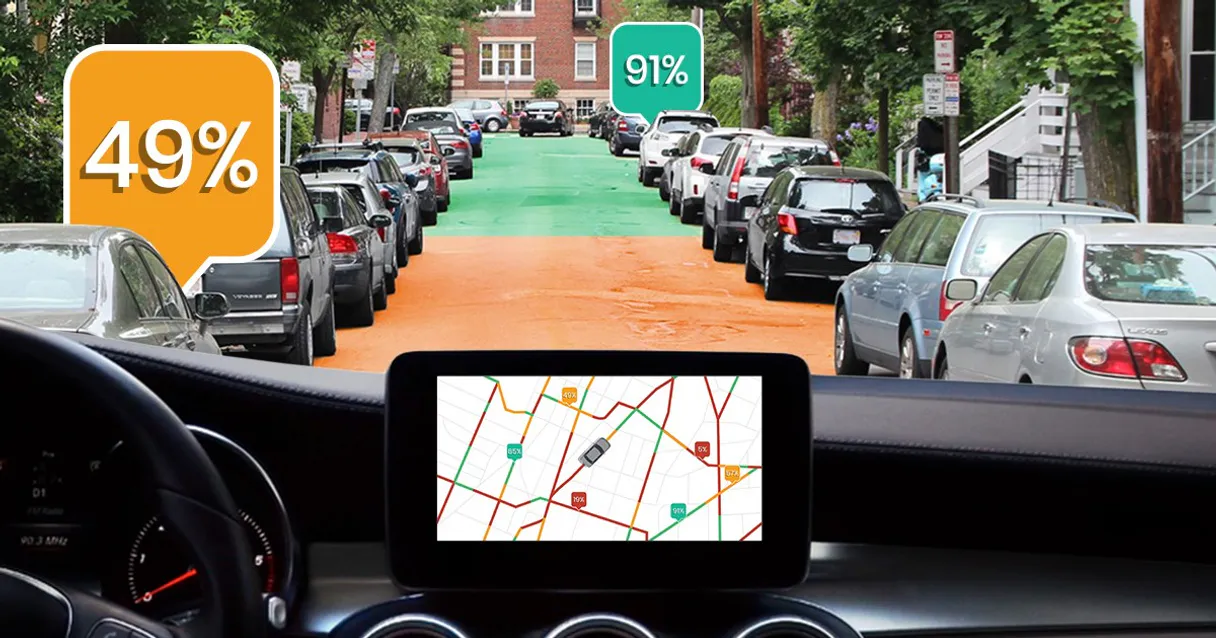
Parknav provides predictive parking intelligence for urban environments. This MCP Server gives your agent access to real-time block occupancy rates, predicts spot availability hours out, and helps you find the nearest open space using deep learning data.
What your AI agents can do
Get city insights
Provides high-level data points about general parking conditions within a specified city area.
Get historical trends
Retrieves past availability data to show how parking spots are used at specific locations over time.
Get nearest spot
Finds and returns the coordinates of a currently open parking spot closest to a given location.
Your agent predicts the likelihood of finding a parking spot at any specific future time or location.
You retrieve current, minute-by-minute usage data for designated street blocks in a city zone.
The system immediately directs you to the closest currently unoccupied parking spot based on live data.
You pull up local regulations, including time limits and associated fees for any given street segment.
The agent analyzes past data to show how parking availability changes across different days or times of the week.
You generate a planned route that incorporates estimated time spent finding and paying for parking along the way.
Ask AI about this MCP
Supported MCP Clients
Gemini Waiting for input…
Parknav MCP Server: 8 Tools for Urban Mobility
Use these tools to analyze, predict, and locate parking spots across any city zone.
019d75efget city insights
Provides high-level data points about general parking conditions within a specified city area.
019d75efget historical trends
Retrieves past availability data to show how parking spots are used at specific locations over time.
019d75efget nearest spot
Finds and returns the coordinates of a currently open parking spot closest to a given location.
019d75efget parking zones
Retrieves specific local rules, time limits, and associated fees for designated parking zones.
019d75efget realtime occupancy
Gathers the current number of occupied spaces on a block or street segment right now.
019d75efget street segments
Checks the live, granular status of individual sections of an on-street parking area.
019d75efoptimize parking route
Calculates and returns a revised travel route that factors in optimal stopping points for parking.
019d75efpredict availability
Estimates the probability of finding an open spot at a location given a specific date and time.
Choose How to Get Started
Build a custom MCP for your own tools, or connect a ready-made integration from our catalog.
Build Your Own
Turn any API into an MCP. Import a spec, define Agent Skills, or deploy with MCPFusion.
- Import from OpenAPI, Swagger, or YAML specs
- Create Agent Skills with progressive disclosure
- Deploy to edge with MCPFusion framework
- Built in DLP, auth, and compliance on every call
- Real time usage dashboard and cost metering
- Publish to catalog or keep private
Make Your AI Do More
Start with Parknav, then connect any of our 4,700+ other servers whenever your AI needs more. One click, no limits.
- Use this MCP plus 4,700+ others, all in one place
- Add new capabilities to your AI anytime you want
- Every connection is secured and compliant automatically
- Track usage and costs across all your servers
- Works with Claude, ChatGPT, Cursor, and more
- New servers added to the catalog every week
What you can do with this MCP connector
Look, finding parking downtown is always a nightmare. This Parknav MCP Server gives your agent something way better than just pointing at a map; it lets you actually know where to go and when you'll get there. You connect this server to any AI client, and suddenly, your agent can predict spot availability hours out or check the minute-by-minute usage of entire blocks.
It’s about knowing the score before you even hit the curb.
If you need to know what’s happening on the street right now, you've got a few ways to check it. You can use get_realtime_occupancy to get the current number of occupied spaces across an entire block or street segment immediately. For more granular details, get_street_segments checks the live status of individual sections along an on-street parking area.
Need high-level context for a whole neighborhood? Run get_city_insights and you'll get general data points about parking conditions across a specified city zone.
Want to know if it’s worth driving out there at all? You can use predict_availability. This function estimates the probability of finding an open spot at any location given a specific date and time. It lets your agent forecast spot chances long before you get there. For deeper background, get_historical_trends pulls past availability data, showing how parking spots are used across different locations over extended periods of time.
If you're already on the street looking for a quick fix, get_nearest_spot finds and returns the coordinates of an currently unoccupied spot that’s closest to wherever you are. And if you just need general intel about what kind of streets you'll be hitting, get_parking_zones pulls up local regulations, time limits, and associated fees for any designated parking zone.
When it comes to planning the whole trip, Parknav handles it. You can run optimize_parking_route, which calculates a revised travel route that factors in optimal stopping points specifically for parking. This means your agent isn't just giving you directions; it’s building you a plan that accounts for time spent finding and paying for spots along the way.
How Parknav MCP Works
- 1 Subscribe to the server, then provide your unique Parknav API Key and Base URL.
- 2 Call a specific tool (like
predict_availability), passing required parameters such as coordinates and desired time/date. - 3 Receive structured JSON data that details the predicted availability percentage, current occupancy, or optimal route.
The bottom line is you get reliable, actionable location intelligence without having to query multiple legacy databases manually.
Who Is Parknav MCP For?
Anyone dealing with complex urban logistics needs this. Think navigation engineers who need turn-by-turn guidance that accounts for traffic and parking search time. It's also the city planner reviewing historical data to adjust zoning laws, or the delivery manager optimizing a fleet route across a dense metropolitan area.
They integrate predict_availability into turn-by-turn guidance systems so users know if they can actually park where their GPS says.
They use get_historical_trends and get_city_insights to prove where parking is needed most, informing better zoning laws or pricing models.
They run optimize_parking_route for their delivery fleet, guaranteeing the fastest possible path that includes loading zone availability and legal stopping times.
What Changes When You Connect
- Stop guessing. Instead of just knowing if a street exists,
predict_availabilitygives your agent the percentage chance (e.g., 35%) that a spot will be open at 6 PM, letting users plan smarter trips. - Cut search time in half with
get_nearest_spot. Your client doesn't just give directions; it gets directed to an actual open space right now. -
optimize_parking_routebuilds better journeys. It doesn't just find the shortest path; it finds the most efficient path that accounts for legal stopping times and parking search time. - Don't get fined or wait forever. By using
get_parking_zones, your agent automatically checks local rules, so you know if a spot is only allowed for 2 hours or costs $5/hour. - Go beyond today's traffic. The
get_historical_trendstool lets city planners see that Tuesday afternoons are always peak time—data essential for smart infrastructure decisions.
Real-World Use Cases
The Weekend Visitor
A user is planning a trip downtown and asks, 'Will I find parking near the convention center on Saturday?' Your agent uses predict_availability to check that time. It replies with a low percentage chance and suggests arriving earlier or using a nearby garage.
The Delivery Driver
A logistics manager needs to route five stops across town. Instead of just mapping the shortest path, the agent runs optimize_parking_route. The result isn't just coordinates; it's a sequence that minimizes time spent searching for legal loading spots.
The City Planner
A municipal worker needs to justify changing parking rules on Main Street. They use get_historical_trends combined with get_city_insights to prove that occupancy spikes between 12 PM and 2 PM, making the current time limits insufficient.
The On-Site Navigator
A user is standing on a busy block and asks, 'Where's the closest empty spot?' The agent runs get_realtime_occupancy first to check the area, then calls get_nearest_spot to give precise coordinates for immediate use.
The Tradeoffs
Treating parking as static data
Asking a simple mapping service what the traffic looks like. It gives you general flow, but no idea if spots are actually open.
→
You need to check current capacity. Use get_realtime_occupancy for an immediate status or use predict_availability if you're planning more than a couple of hours out.
Ignoring local rules
Calculating the fastest route only to show up at a zone where parking is banned between 9 AM and 3 PM.
→
Always run get_parking_zones first. This forces your agent to verify time limits, fees, and regulations before planning anything.
Using one tool for everything
Relying solely on a basic route planner that only calculates distance, never accounting for the actual search time of parking.
→
Combine tools. Use optimize_parking_route to account for both travel and predicted parking search time, giving a true total trip estimate.
When It Fits, When It Doesn't
Use Parknav if your application's primary challenge is the unpredictable nature of urban parking and mobility. Specifically, you need predictive modeling (e.g., predict_availability) or real-time spot location data (get_nearest_spot). Don't use this server if all you need is a simple 'point A to point B' drive time calculation without considering finding a legal place to stop.
If you only need basic routing and don't care about parking availability, stick with standard mapping APIs. But if your service needs to account for how many spots are open right now (get_realtime_occupancy) or if the local rules change weekly (get_parking_zones), Parknav is mandatory.
Independent Platform Disclaimer: Vinkius is an independent platform and is not affiliated with, endorsed by, sponsored by, verified by, or otherwise authorized by Parknav. All third-party trademarks, logos, and brand names are the property of their respective owners. Their use on this website is strictly for informational purposes to identify service compatibility and interoperability.
VINKIUS INFRASTRUCTURE
Cloud Hosted
Managed infra
V8 Isolated
Sandboxed per request
Zero-Trust Proxy
No stored credentials
DLP Enforced
Policy on every call
GDPR Compliant
EU data residency
Token Compression
~60% cost reduction
Works with Claude, ChatGPT, Cursor, and more
The Model Context Protocol standardizes how applications expose capabilities to LLMs. Instead of operating in isolation, your AI gains direct access to external platforms, live data, and real-world actions through secure, standardized connections.
This server provides 8 capabilities that interface natively with Claude, ChatGPT, Cursor, and any MCP client. No middleware. No custom integration required.
Available Capabilities
Figuring out where to park shouldn't feel like a game of chance.
Before this, figuring out parking meant endless manual work: opening multiple city websites for zone rules, cross-referencing maps for current occupancy, and guessing if your destination was even worth the drive. You spent time copying codes and switching tabs just to get a vague idea of 'maybe.'
Now, Parknav handles that mess entirely. Your agent takes all those inputs—the date, the location, the rules—and spits out one answer: an accurate prediction or a clear path with open spots. It’s instant, specific intelligence.
Parknav MCP Server: Real-time and Predictive Data
The biggest thing that disappears is the need for multiple data calls. You don't have to call `get_realtime_occupancy` then check historical averages, and *then* run a route optimization; the system combines this into one actionable intelligence layer.
You get a complete picture of urban mobility—a prediction, not just a measurement. It changes your application from being merely directional to genuinely intelligent.
Common Questions About Parknav MCP
How far in advance can I check parking with the `predict_availability` tool? +
You can predict availability for specific future dates and times. This uses deep learning models, so it's much better than simple averages because it accounts for day-of-week patterns.
Does `get_nearest_spot` only find spots on major roads? +
No. It finds the nearest spot regardless of whether it’s a main artery or a smaller side street, as long as live data confirms it's open.
What is the difference between `get_realtime_occupancy` and `predict_availability`? +
get_realtime_occupancy tells you what's happening right now. predict_availability forecasts what will happen later, which is essential for planning trips that start hours from now.
Can I use the API to find out local parking fees? +
Yes. The get_parking_zones tool provides access to regulations, including time limits and associated pricing information for specific zones.
What credentials do I need to use the Parknav MCP Server with my AI client? +
You must provide a valid API key and base URL. Your agent needs these two strings configured in your environment variables for all calls, like those made by get_city_insights.
Are there rate limits when calling the `get_realtime_occupancy` tool? +
Yes, usage is governed by your subscription tier. Exceeding the defined request quota results in a 429 error; you must implement exponential backoff logic in your agent's workflow.
Can I use `get_historical_trends` to compare availability across different city blocks? +
Yes, the tool accepts an array of coordinates or street IDs. This lets you run comparative analyses on multiple locations in a single call, which is useful for strategic planning.
Does `optimize_parking_route` account for varying time constraints between stops? +
Yes, you must pass a detailed sequence of waypoints and their associated required duration estimates. The algorithm calculates travel time plus predicted parking search time at each stop.
How far in advance can Parknav predict availability? +
Parknav's AI can typically predict availability up to 24 hours in advance with high confidence, and up to 7 days with moderate confidence.
Does it cover off-street garages too? +
Parknav primarily focuses on on-street parking, but also integrates occupancy data from select off-street garages where sensors are available.
What data sources does Parknav use? +
Parknav combines IoT sensor data, historical trends, city event data, and weather patterns using deep learning models to generate its predictions.
Use it with your favorite AI tools
Connect this server to Cursor, Claude, VS Code, and more.
More in this category

TIGER/Line Geocoder (Census)
Access official US Census Bureau geocoding services to convert addresses into coordinates and detailed census geography data.

Uniqode
Create trackable QR codes with custom branding, dynamic content updates, and scan analytics for marketing and operations.

Zengain
Identify high-intent website visitors by company and reach out to warm leads before they fill out a form or contact you.
You might also like

Language Detector Engine
Detect the language of any text local using exact n-gram analysis. Supports 400+ languages. When AI guesses wrong on short or mixed text, this engine proves it.

100ms
Manage video rooms, active sessions, and participants on 100ms — the powerful live video infrastructure.

Linear (Issue Tracking & PM)
Manage product development via Linear — track issues, monitor sprint cycles, and audit team projects.