
The Movie Database (TMDb) MCP Server for Cursor 15 tools — connect in under 2 minutes
Cursor is an AI-first code editor built on VS Code that integrates LLM-powered coding assistance directly into the development workflow. Its Agent mode enables autonomous multi-step coding tasks, and MCP support lets agents access external data sources and APIs during code generation.
ASK AI ABOUT THIS MCP SERVER
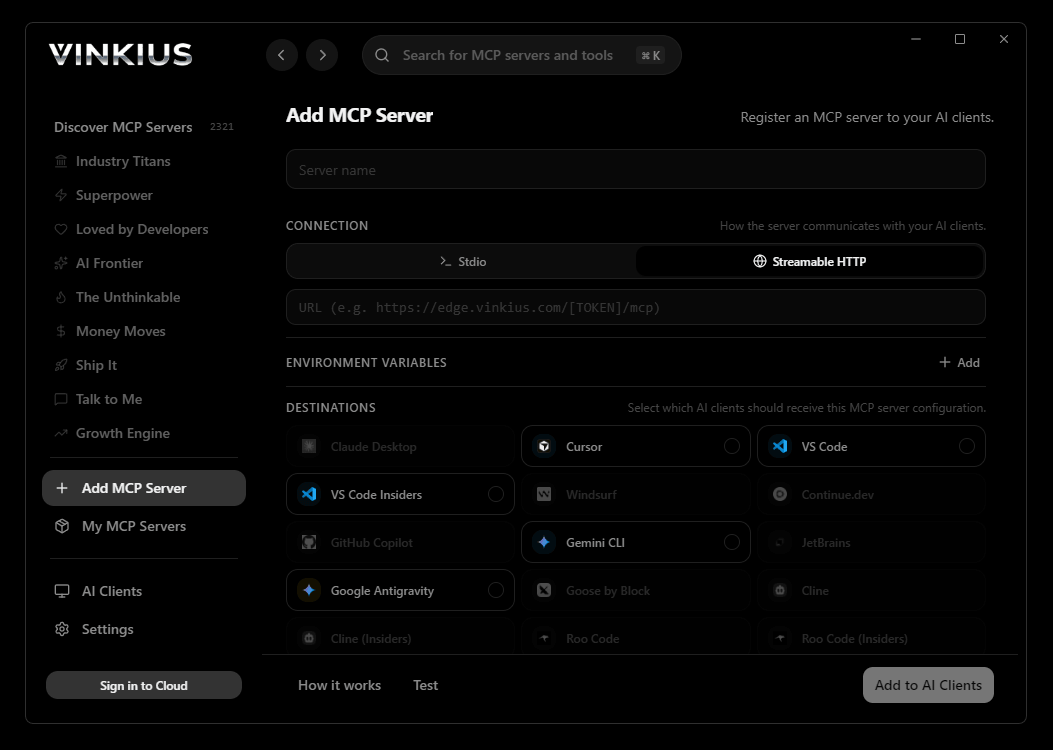
Vinkius supports streamable HTTP and SSE.
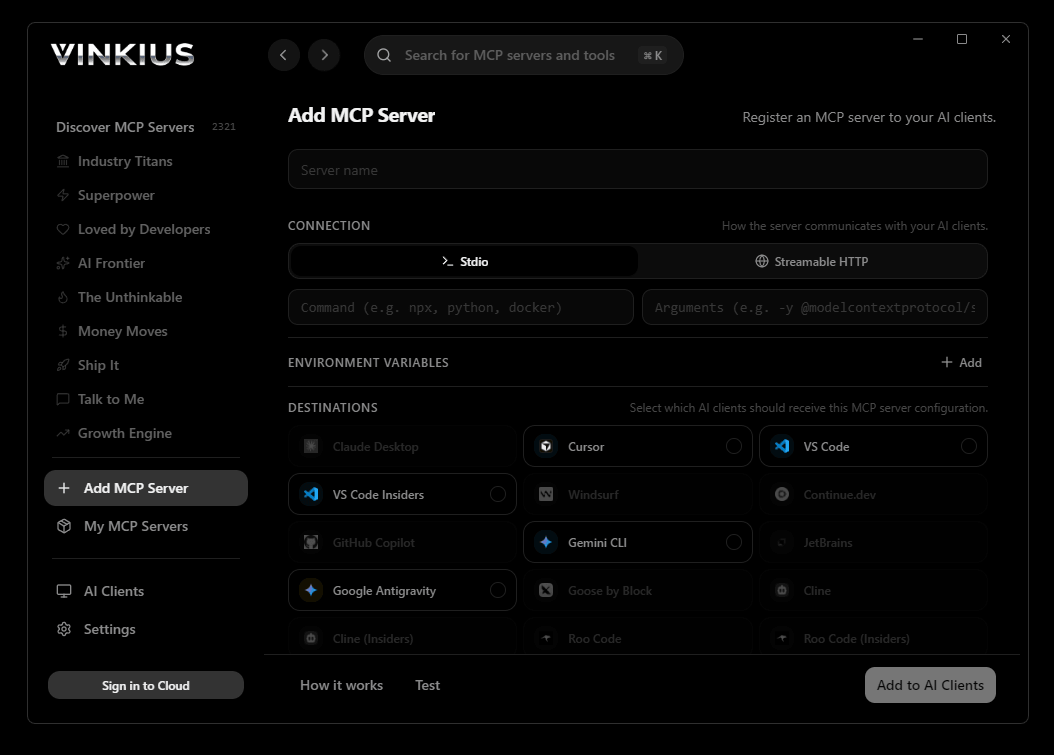
Vinkius Desktop App
The modern way to manage MCP Servers — no config files, no terminal commands. Install The Movie Database (TMDb) and 2,500+ MCP Servers from a single visual interface.


{
  "mcpServers": {
    "the-movie-database-tmdb": {
      "url": "https://edge.vinkius.com/[YOUR_TOKEN_HERE]/mcp"
    }
  }
}
* Every MCP server runs on Vinkius-managed infrastructure inside AWS - a purpose-built runtime with per-request V8 isolates, Ed25519 signed audit chains, and sub-40ms cold starts optimized for native MCP execution. See our infrastructure
About The Movie Database (TMDb) MCP Server
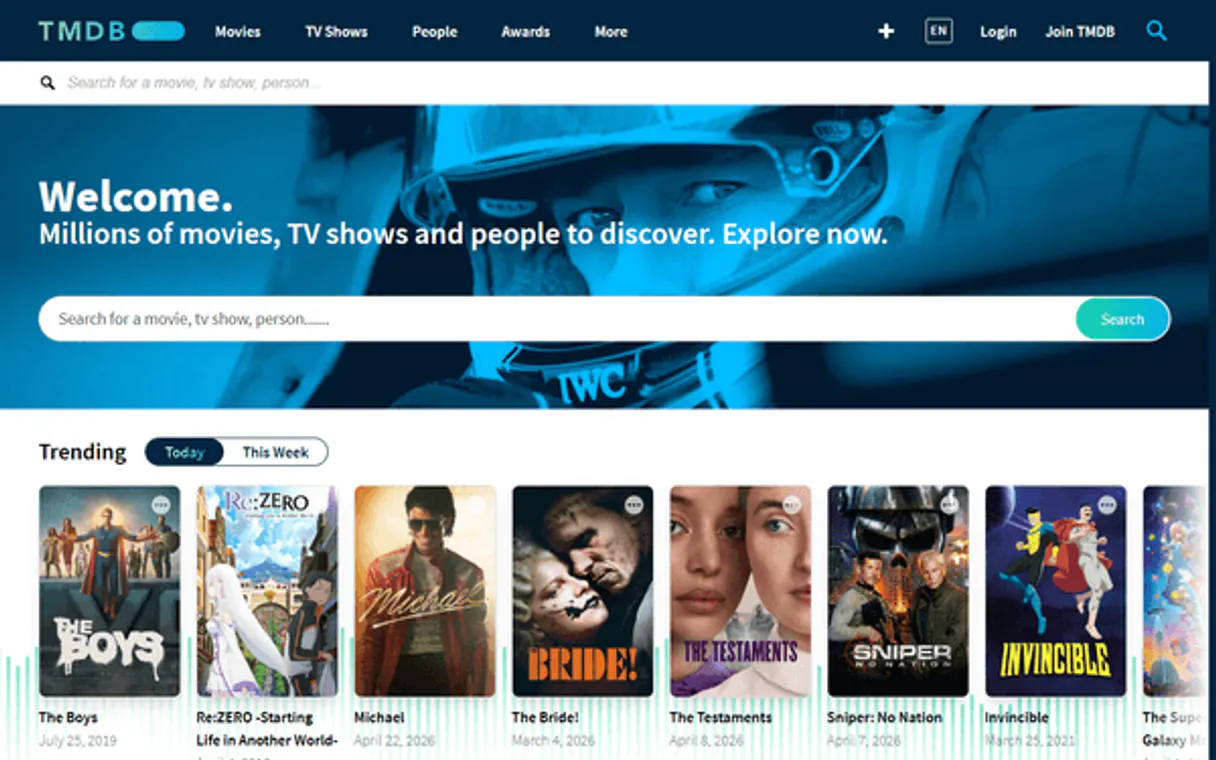
Connect The Movie Database (TMDb) to any AI agent and unlock the world's most comprehensive movie and TV show database through natural conversation. TMDb is the same database used by major streaming platforms, media players, and entertainment apps worldwide.
Cursor's Agent mode turns The Movie Database (TMDb) into an in-editor superpower. Ask Cursor to generate code using live data from The Movie Database (TMDb) and it fetches, processes, and writes — all in a single agentic loop. 15 tools appear alongside file editing and terminal access, creating a unified development environment grounded in real-time information.
What you can do
- Movie Search — Search any movie by title, keyword, or phrase with release dates, ratings, overviews, and poster images
- TV Show Search — Find TV shows and series with season counts, episode information, network details, and air dates
- Unified Multi-Search — Search movies, TV shows, and people simultaneously for broad entertainment queries
- Complete Movie Details — Get full movie metadata including budget, revenue, runtime, genres, production studios, taglines, and IMDb cross-references
- Cast & Crew Information — Retrieve complete cast lists with actor characters and crew details (directors, writers, producers, cinematographers)
- Trailers & Videos — Access official trailers, teasers, behind-the-scenes clips, and promotional videos (YouTube links)
- Popular & Top Rated — Browse currently popular movies/TV shows and all-time highest-rated content
- Trending Content — See what is trending today or this week across movies, TV shows, and people
- Advanced Movie Discovery — Filter movies by genre, year, minimum rating, production studio (e.g., Warner Bros., Marvel), and sort by popularity, rating, or revenue
- Movie Recommendations — Get similar movie suggestions based on a specific film using TMDb's recommendation algorithm
- Person Profiles — Search for actors, directors, and crew with biographies, filmographies, and combined credits
- External ID Lookup — Convert IMDb IDs (tt0111161), TVDb IDs, and other external identifiers to TMDb entries
- Genre Reference — Access the complete genre database with IDs for advanced filtering
The The Movie Database (TMDb) MCP Server exposes 15 tools through the Vinkius. Connect it to Cursor in under two minutes — no API keys to rotate, no infrastructure to provision, no vendor lock-in. Your configuration, your data, your control.
How to Connect The Movie Database (TMDb) to Cursor via MCP
Follow these steps to integrate the The Movie Database (TMDb) MCP Server with Cursor.
Open MCP Settings
Press Cmd+Shift+P (macOS) or Ctrl+Shift+P (Windows/Linux) → search "MCP Settings"
Add the server config
Paste the JSON configuration above into the mcp.json file that opens
Save the file
Cursor will automatically detect the new MCP server
Start using The Movie Database (TMDb)
Open Agent mode in chat and ask: "Using The Movie Database (TMDb), help me..." — 15 tools available
Why Use Cursor with the The Movie Database (TMDb) MCP Server
Cursor AI Code Editor provides unique advantages when paired with The Movie Database (TMDb) through the Model Context Protocol.
Agent mode turns Cursor into an autonomous coding assistant that can read files, run commands, and call MCP tools without switching context
Cursor's Composer feature can generate entire files using real-time data fetched through MCP — no copy-pasting from external dashboards
MCP tools appear alongside built-in tools like file reading and terminal access, creating a unified agentic environment
VS Code extension compatibility means your existing workflow, keybindings, and extensions all work alongside MCP tools
The Movie Database (TMDb) + Cursor Use Cases
Practical scenarios where Cursor combined with the The Movie Database (TMDb) MCP Server delivers measurable value.
Code generation with live data: ask Cursor to generate a security report module using live DNS and subdomain data fetched through MCP
Automated documentation: have Cursor query your API's tool schemas and generate TypeScript interfaces or OpenAPI specs automatically
Infrastructure-as-code: Cursor can fetch domain configurations and generate corresponding Terraform or CloudFormation templates
Test scaffolding: ask Cursor to pull real API responses via MCP and generate unit test fixtures from actual data
The Movie Database (TMDb) MCP Tools for Cursor (15)
These 15 tools become available when you connect The Movie Database (TMDb) to Cursor via MCP:
discover_movies
Find movies matching very specific criteria. Available filters: genre (genre IDs, comma-separated for OR), year, sortBy (popularity, rating, revenue, release date), vote_average.gte (minimum rating), with_companies (studio IDs, comma-separated), with_keywords (keyword IDs), primary_release_date.gte/lte (date range YYYY-MM-DD). Sort options: popularity.desc, popularity.asc, release_date.desc, release_date.asc, vote_average.desc, vote_average.asc, revenue.desc, revenue.asc, title.asc, title.desc. Use this for complex queries like "action movies from 2024 with rating above 7", "Warner Bros movies from the last year", or "horror movies sorted by rating". Genre IDs can be obtained from the get_genres tool. Company ID 17 = Warner Bros, 420 = Marvel Studios, 33 = Universal, etc. Discover movies with advanced filtering by genre, year, rating, studio, and more
find_by_external_id
The externalSource parameter must be one of: "imdb_id", "tvdb_id", "freebase_mid", "freebase_id", "tvrage_id", "wikidata_id". Returns matching movies, TV shows, and/or people from TMDb that have this external ID. Use this when you have an IMDb ID (like "tt0111161" for Shawshank Redemption) and want to find the corresponding TMDb entry. Common use case: converting IMDb IDs to TMDb IDs for use with other tools. IMDb IDs for movies start with "tt" followed by numbers (e.g., "tt0137523" for Fight Club). Results include all matching items across movies, TV, and people categories. Find movies, TV shows, or people using external IDs (IMDb, TVDb, etc)
get_genres
Each genre includes: id (numeric ID used for filtering in other tools) and name (localized genre name). Use this to get genre IDs needed for the discover_movies tool or to answer questions about available genres. Common movie genres: 28=Action, 12=Adventure, 16=Animation, 35=Comedy, 80=Crime, 18=Drama, 14=Fantasy, 27=Horror, 878=Science Fiction, 53=Thriller, 10749=Romance. The type parameter must be "movie" or "tv". Optional language parameter returns localized genre names. Get the complete list of movie or TV show genres with their IDs
get_movie
Returns: title, overview, runtime, release date, budget, revenue, vote average, vote count, genres, production companies, production countries, spoken languages, status, tagline, homepage, IMDb ID, poster/backdrop image paths, and collection information (if part of a franchise). Use this after a search to get full details about a specific movie. The movieId parameter is the TMDb ID (integer) returned by search_movies or other movie list tools. Optional language parameter returns localized title and overview if available. Get complete details for a specific movie by its TMDb ID
get_movie_credits
Returns two arrays: "cast" (actors with their characters, order, and profile images) and "crew" (directors, producers, writers, cinematographers, editors, composers, etc. with their jobs and departments). Use this when users ask "who starred in...", "who directed...", or want the full cast list of a movie. The movieId is the TMDb ID from search results. Cast includes: actor name, character name, order (billing order), profile image path. Crew includes: name, job title (Director, Producer, Screenplay, etc.), department. Get complete cast and crew information for a specific movie
get_movie_recommendations
TMDb uses an algorithm that considers genre, keywords, cast, crew, and user rating patterns to suggest similar movies that fans of the original might enjoy. Each recommendation includes: title, release date, overview, poster path, vote average, vote count, and TMDb ID. Use this when users ask "if I liked X, what should I watch?", "movies similar to...", or "recommendations for...". The movieId is the TMDb ID of the reference movie. Results are paginated; use the page parameter to get more recommendations. Get movie recommendations based on a specific movie (similar titles)
get_movie_videos
Each video result includes: video key (YouTube ID), site (YouTube), type (Trailer, Teaser, Clip, Behind the Scenes, etc.), name, size (resolution), official status, and publish date. Use this when users want to watch trailers, find official promotional videos, or access movie video content. YouTube videos can be viewed at: https://www.youtube.com/watch?v={key}. The movieId is the TMDb movie ID. Get trailers, teasers, clips, and behind-the-scenes videos for a movie
popular_movies
Each movie includes: title, release date, overview, poster path, vote average, vote count, genre IDs, and TMDb ID. Use this when users ask "what movies are popular now?", "what is trending?", or want movie recommendations. Results are updated regularly based on TMDb user activity. Optional: page for pagination, region (ISO 3166-1 country code like "US", "BR") for country-specific popularity, and language for localized titles and descriptions. Get a list of currently popular movies on TMDb
popular_tv
Popularity is based on user activity, view counts, and trending data. Each TV show includes: name, first air date, overview, poster path, vote average, vote count, genre IDs, number of seasons, number of episodes, origin country, and TMDb ID. Use this when users ask "what TV shows are popular?", "what should I watch?", or want series recommendations. Optional: page for pagination and language for localized titles and descriptions. Get a list of currently popular TV shows on TMDb
search_movies
Returns movie titles, release dates, overview descriptions, poster images, vote averages, and TMDb IDs. Use this when users ask to find movies by title, search for films about a topic, or look up movies from a specific year. The query parameter is required and should be the movie title or search term. Optional parameters: year (YYYY format) to filter by release year, page for pagination (1-500), and language (ISO 639-1 code like "pt-BR", "en-US", "es") to get results in a specific language. Example: query="The Matrix", year="1999" returns the 1999 sci-fi classic. Search for movies by title, keyword, or phrase in the TMDb database
search_multi
Returns results from all three categories with a media_type field indicating the type ("movie", "tv", or "person"). Use this when users provide a general search term and you want to return all relevant results across content types. Ideal for broad queries like "Christopher Nolan" (returns movies directed by him + person profile) or "Star Wars" (returns movies + TV series). The query parameter is required. Optional: page for pagination and language for localized results. Search movies, TV shows, and people simultaneously in the TMDb database
search_tv
Returns TV show names, first air dates, episode counts, overview descriptions, poster images, vote averages, and TMDb IDs. Use this when users ask to find TV series, look up shows by title, or search for programs about a specific topic. The query parameter is required. Optional: year to filter by first air date year, page for pagination, and language for localized results. Example: query="Breaking Bad" returns the critically acclaimed drama series. Search for TV shows by title or keyword in the TMDb database
top_rated_movies
These are the critically acclaimed films with the best user ratings. Each movie includes: title, release date, overview, vote average, vote count, poster path, genre IDs, and TMDb ID. Use this when users ask for "best movies ever", "top rated films", "highest rated movies", or want quality recommendations. This list includes classics like The Shawshank Redemption, The Godfather, and other critically acclaimed films. Optional: page for pagination and language for localized results. Get a list of the highest-rated movies of all time on TMDb
top_rated_tv
These are the most critically acclaimed series with the best user ratings. Each TV show includes: name, first air date, overview, vote average, vote count, poster path, number of seasons and episodes, and TMDb ID. Use this when users ask for "best TV shows ever", "top rated series", or want quality TV recommendations. This list includes acclaimed series like Breaking Bad, Band of Brothers, Chernobyl, and other top-rated shows. Optional: page for pagination and language for localized results. Get a list of the highest-rated TV shows of all time on TMDb
trending
The mediaType parameter can be: "movie", "tv", "person", or "all" (returns mixed results with media_type field). The timeWindow parameter can be: "day" (trending today) or "week" (trending this week). Each result includes: title/name, overview, poster path, vote average, popularity score, and media type. Use this when users ask "what is trending?", "what is popular today?", or want to see what is currently hot in entertainment. The trending algorithm considers user activity, page views, and search patterns on TMDb. Get trending content (movies, TV shows, or people) on TMDb for today or this week
Example Prompts for The Movie Database (TMDb) in Cursor
Ready-to-use prompts you can give your Cursor agent to start working with The Movie Database (TMDb) immediately.
"What movies are trending today?"
"Search for movies directed by Christopher Nolan with rating above 8."
"Who starred in The Matrix and what other movies have they been in?"
Troubleshooting The Movie Database (TMDb) MCP Server with Cursor
Common issues when connecting The Movie Database (TMDb) to Cursor through the Vinkius, and how to resolve them.
Tools not appearing in Cursor
Server shows as disconnected
The Movie Database (TMDb) + Cursor FAQ
Common questions about integrating The Movie Database (TMDb) MCP Server with Cursor.
What is Agent mode and why does it matter for MCP?
Where does Cursor store MCP configuration?
mcp.json file. You can configure servers at the project level (.cursor/mcp.json in your project root) or globally (~/.cursor/mcp.json). Project-level configs take precedence.Can Cursor use MCP tools in inline edits?
How do I verify MCP tools are loaded?
Connect The Movie Database (TMDb) with your favorite client
Step-by-step setup guides for every MCP-compatible client and framework:
Anthropic's native desktop app for Claude with built-in MCP support.
AI-first code editor with integrated LLM-powered coding assistance.
GitHub Copilot in VS Code with Agent mode and MCP support.
Purpose-built IDE for agentic AI coding workflows.
Autonomous AI coding agent that runs inside VS Code.
Anthropic's agentic CLI for terminal-first development.
Python SDK for building production-grade OpenAI agent workflows.
Google's framework for building production AI agents.
Type-safe agent development for Python with first-class MCP support.
TypeScript toolkit for building AI-powered web applications.
TypeScript-native agent framework for modern web stacks.
Python framework for orchestrating collaborative AI agent crews.
Leading Python framework for composable LLM applications.
Data-aware AI agent framework for structured and unstructured sources.
Microsoft's framework for multi-agent collaborative conversations.
Connect The Movie Database (TMDb) to Cursor
Get your token, paste the configuration, and start using 15 tools in under 2 minutes. No API key management needed.