
HUD User (USPS Crosswalk) MCP. Map any ZIP code to its precise Census geography.
 Gemini
 Works with every AI agent you already use
…and any MCP-compatible client









Just plug in your AI agents and start using Vinkius.
HUD User (USPS Crosswalk) MCP Server. This tool maps US ZIP codes to Census Bureau geographies. You can convert a ZIP code to its associated Census Tract, County, CBSA, or Congressional District.
It supports crosswalks in both directions, letting you find ZIP codes within a given Census Area, or finding the area for a known ZIP.
Essential for real estate, planning, and demographics analysis.
What your AI agents can do
Cbsa to zip
Maps Core Based Statistical Areas (CBSAs) to their associated ZIP codes.
Cbsadiv to zip
Maps CBSA Divisions to the ZIP codes they contain.
Cd to zip
Maps Congressional Districts to the ZIP codes they include.
You provide a ZIP code, and the server returns the corresponding Census Tract, County, CBSA, or Congressional District data.
You provide a Census area (like a County or CBSA), and the server returns a list of all ZIP codes that belong to that area.
You can chain lookups—for example, finding the County for a ZIP, and then finding the Tracts within that County.
The server provides specific tools to map between related units, like CBSA Divisions and their containing ZIP codes.
Ask AI about this MCP
Supported MCP Clients
Gemini Waiting for input…
HUD User (USPS Crosswalk) MCP Server: 10 Geographic Mapping Tools
These tools allow your AI agent to perform complex, official mappings between ZIP codes and all levels of US Census geography.
019d75b4cbsa to zip
Maps Core Based Statistical Areas (CBSAs) to their associated ZIP codes.
019d75b4cbsadiv to zip
Maps CBSA Divisions to the ZIP codes they contain.
019d75b4cd to zip
Maps Congressional Districts to the ZIP codes they include.
019d75b4county to zip
Maps Counties to the ZIP codes within those counties.
019d75b4tract to zip
Maps Census Tracts to the ZIP codes they contain.
019d75b4zip to cbsa
Maps a specific ZIP code to its Core Based Statistical Area (CBSA).
019d75b4zip to cbsadiv
Maps a specific ZIP code to its CBSA Division.
019d75b4zip to cd
Maps a specific ZIP code to its Congressional District.
019d75b4zip to county
Maps a specific ZIP code to its containing County.
019d75b4zip to tract
Maps a specific ZIP code to its Census Tract.
Choose How to Get Started
Build a custom MCP for your own tools, or connect a ready-made integration from our catalog.
Build Your Own
Turn any API into an MCP. Import a spec, define Agent Skills, or deploy with MCPFusion.
- Import from OpenAPI, Swagger, or YAML specs
- Create Agent Skills with progressive disclosure
- Deploy to edge with MCPFusion framework
- Built in DLP, auth, and compliance on every call
- Real time usage dashboard and cost metering
- Publish to catalog or keep private
Make Your AI Do More
Start with HUD User (USPS Crosswalk), then connect any of our 4,700+ other servers whenever your AI needs more. One click, no limits.
- Use this MCP plus 4,700+ others, all in one place
- Add new capabilities to your AI anytime you want
- Every connection is secured and compliant automatically
- Track usage and costs across all your servers
- Works with Claude, ChatGPT, Cursor, and more
- New servers added to the catalog every week
What you can do with this MCP connector
This MCP Server connects your AI client to the HUD User Data API, handling crosswalks between USPS ZIP codes and Census Bureau geographies. You can get the full map of US location data. You give it a ZIP code, and it spits out the corresponding Census Tract, County, CBSA, or Congressional District data.
It works in reverse too: you give it a Census area, and it returns every ZIP code that belongs there. For real estate, planning, or demographics analysis, this is critical. You can find the county for a ZIP code using zip_to_county, or get the specific tract using zip_to_tract. To map a ZIP to its Core Based Statistical Area, use zip_to_cbsa; for its division, use zip_to_cbsadiv; and for its Congressional District, run zip_to_cd.
Conversely, if you know the county, you can find all the ZIPs in it with county_to_zip. If you have a CBSA, cbsa_to_zip lists its associated ZIPs, and cbsadiv_to_zip does the same for CBSA Divisions. You can map a ZIP code to its Congressional District using zip_to_cd. You can also map a ZIP code to its containing County using zip_to_county, or get the specific tract using zip_to_tract.
You can determine the full geographic context by chaining lookups; for instance, you can get a ZIP's county, and then find all the tracts within that county. The server lets you analyze spatial data relationships by mapping between related units, like finding all ZIPs within a given Census Tract using tract_to_zip.
You can get a ZIP's CBSA, and then find all the ZIPs belonging to that CBSA using cbsa_to_zip. This lets you build out complex location data sets.
How HUD User (USPS Crosswalk) MCP Works
- 1 You tell your AI agent which data point you have (e.g., a ZIP code) and what you need it mapped to (e.g., County).
- 2 The agent calls the appropriate tool, sending the source data and the target geography type to the HUD User API.
- 3 The server executes the crosswalk and returns a structured data object containing the mapped Census identifiers.
The bottom line is: it converts raw ZIP code data into precise, structured Census data for analysis.
Who Is HUD User (USPS Crosswalk) MCP For?
The data scientist who needs to join real estate listings to Census data. The GIS analyst who must validate jurisdictional boundaries for a project. The urban planner tracking demographic shifts across specific Census Tracts. If your job requires knowing where a ZIP code truly is, this is for you.
Joining disparate datasets (e.g., sales figures to Census Tracts) and running spatial queries that require specific geographic boundaries.
Validating or correcting location data, mapping boundaries, or performing spatial joins between internal records and official Census data.
Modeling demographic changes or resource allocation by linking development zones to official CBSA or County boundaries.
What Changes When You Connect
- Map a ZIP code to its full Census context. Instead of just knowing the ZIP, you immediately get its corresponding Tract, County, CBSA, and Congressional District using
zip_to_tract,zip_to_county, and related tools. - Build accurate data pipelines using crosswalks. You can find all ZIP codes contained within a given boundary (like a County) using
county_to_ziporcbsa_to_zip. This is critical for defining your scope. - Handle multi-step lookups. You can first use
zip_to_cbsato get the Core Based Statistical Area, and then use that output to find more specific data, like the division usingzip_to_cbsadiv. - Ensure jurisdictional accuracy. The server provides specialized tools for niche linkages, such as mapping ZIP codes to Congressional Districts (
zip_to_cd) or Census Tracts (zip_to_tract). - Process large datasets efficiently. Instead of manually cross-referencing databases, your agent calls a tool, and the API returns the structured data for thousands of records at once.
- Go both ways. Need to know what ZIP codes fall into a specific County? Use
county_to_zip. Need the area for a ZIP? Usezip_to_county. The tools cover the full spectrum.
Real-World Use Cases
Analyzing Market Penetration by County
A real estate firm needs to know all active listings in a specific county. They ask their agent to use county_to_zip. The agent runs this tool, getting a list of all associated ZIP codes. Then, they use zip_to_cbsa on that list to filter the results by the correct Core Based Statistical Area.
Tracking Demographic Shifts by Tract
A public health agency wants to analyze vaccination rates across Census Tracts. They use the tract_to_zip tool to get all ZIP codes that belong to a target Tract. They then pass those ZIP codes to a data analysis tool to pull the specific health metrics.
Defining Election Boundaries
A political campaign needs to target voters within a specific Congressional District. They prompt their agent to run cd_to_zip with the district ID. This generates a clean list of all associated ZIP codes for immediate use in their CRM system.
Geocoding for Infrastructure Planning
An infrastructure company is planning new water lines. They identify a target CBSA. They use cbsa_to_zip to get all relevant ZIP codes, and then use zip_to_county to ensure the project scope stays within the correct county jurisdiction.
The Tradeoffs
Treating location data as simple key-value pairs
Assuming that because a ZIP code is associated with a County, it's also automatically associated with the correct Census Tract. This fails because the relationship is hierarchical and complex, not linear.
→
Don't guess the relationship. First, use zip_to_county to confirm the county. Then, call zip_to_tract to get the specific Census Tract. Use the tools to validate the hierarchy.
Only using ZIP code to look up data
Running only zip_to_cbsa and stopping. This leaves out the crucial County and Tract-level detail, resulting in too broad a scope for accurate analysis.
→
Start with the most granular tool possible. If you have a ZIP, call zip_to_tract. If you have a Census Area, start with cbsa_to_zip to get the full scope. Don't stop at the first tool that works.
Mixing up the direction of the crosswalk
Calling zip_to_county when you actually need to know all ZIP codes inside a County. This results in an incomplete dataset because the tool only looks up one direction.
→
If you have the area (e.g., a County), use the 'Area to ZIP' tool: county_to_zip. If you have the ZIP, use the 'ZIP to Area' tool: zip_to_county.
When It Fits, When It Doesn't
Use this server if your data requires precise, validated linkages between USPS ZIP codes and official Census Bureau geographies (Tracts, Counties, CBSAs, etc.). It's mandatory when the difference between a County and a CBSA matters for your business logic.
Don't use this if you just need a general list of coordinates or simple state-level grouping. If you only need state data, a basic lookup API will suffice. However, if you need to know the difference between a 'County' and a 'Tract'—or if you need to confirm all ZIP codes within a given boundary—you must use the specific tools here, like county_to_zip or tract_to_zip. If you only have ZIPs and want the area, start with zip_to_cbsa to set the scope.
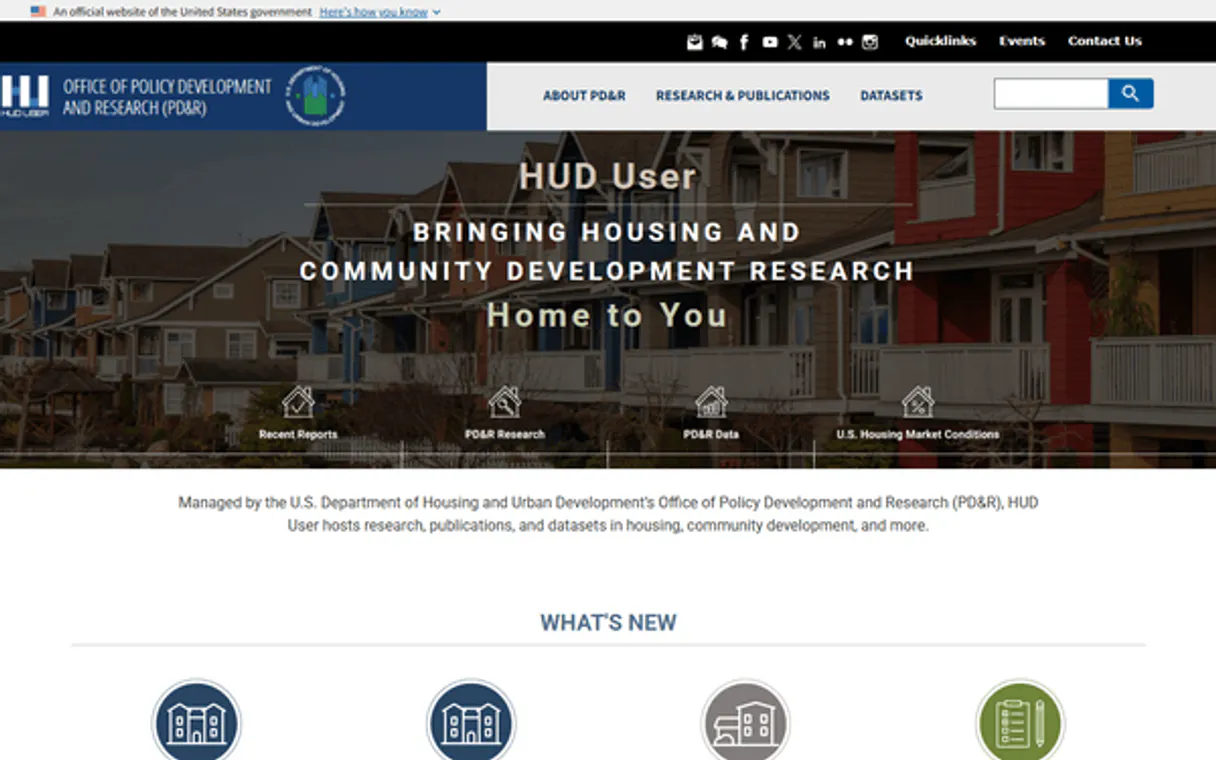
Independent Platform Disclaimer: Vinkius is an independent platform and is not affiliated with, endorsed by, sponsored by, verified by, or otherwise authorized by HUD User. All third-party trademarks, logos, and brand names are the property of their respective owners. Their use on this website is strictly for informational purposes to identify service compatibility and interoperability.
VINKIUS INFRASTRUCTURE
Cloud Hosted
Managed infra
V8 Isolated
Sandboxed per request
Zero-Trust Proxy
No stored credentials
DLP Enforced
Policy on every call
GDPR Compliant
EU data residency
Token Compression
~60% cost reduction
Works with Claude, ChatGPT, Cursor, and more
The Model Context Protocol standardizes how applications expose capabilities to LLMs. Instead of operating in isolation, your AI gains direct access to external platforms, live data, and real-world actions through secure, standardized connections.
This server provides 10 capabilities that interface natively with Claude, ChatGPT, Cursor, and any MCP client. No middleware. No custom integration required.
Available Capabilities
Trying to link location data means endless cross-referencing and guesswork.
Right now, linking data across jurisdictions is a manual mess. You find a ZIP code in one spreadsheet, then you have to open the Census site, find the corresponding County, and manually copy that ID. Then you cross-reference that with a separate list to find the Tracts. It’s copy-pasting and guessing, and it’s slow.
With this MCP server, you give your agent the ZIP code and the target geography (e.g., County). The agent calls the `zip_to_county` tool, and it returns the clean, verified County ID. You get the data instantly, without leaving your workflow.
Use the HUD User (USPS Crosswalk) MCP Server for Census Tracts to ZIP codes.
Manually finding all ZIP codes that belong to a specific Census Tract is nearly impossible. You'd have to query multiple databases and hope they all sync up. It’s a massive job.
Now, you tell the agent to use the `tract_to_zip` tool. It handles the entire crosswalk and gives you every single ZIP code associated with that Tract. The data flow is reliable.
Common Questions About HUD User (USPS Crosswalk) MCP
How do I map a ZIP code to a County using the zip_to_county tool? +
You provide the ZIP code, and the tool returns the corresponding County identifier. This is the primary way to confirm a ZIP's county jurisdiction.
What is the difference between zip_to_cbsa and zip_to_cbsadiv? +
The zip_to_cbsa tool maps the ZIP code to the broader Core Based Statistical Area. The zip_to_cbsadiv tool gives you the more granular CBSA Division within that area.
Can I map a County to ZIP codes using the county_to_zip tool? +
Yes. This is the reverse lookup. You give the County ID, and the tool returns all the ZIP codes that fall within that County's boundaries.
Which tool should I use for Census Tract mapping? +
Use zip_to_tract if you have a ZIP code and want its Tract. Use tract_to_zip if you have a Tract and want all associated ZIP codes.
Is this server only for US data? +
Yes. This server is specifically designed to handle crosswalks between USPS ZIP codes and Census Bureau geographies within the United States.
How do I use the `zip_to_tract` tool if I only have a Census Tract ID? +
You can't directly map a Tract ID to a ZIP code using this tool. However, you can first map the ZIP code to its County using zip_to_county, and then use the Census Tract ID for broader context.
What happens if I input a ZIP code that doesn't exist in the database? +
The system returns a clear error message indicating the invalid ZIP code. Your agent can then try a broader search, like mapping to the county using zip_to_county, to get partial data.
Does the `cbsa_to_zip` tool handle international ZIP codes? +
No, this server only handles US ZIP codes and Census data. It connects exclusively to the HUD User Data API for American geography.
How do I get a HUD User Access Token? +
Register for an account at the HUD User API page (https://www.huduser.gov/portal/dataset/uspszip-api.html), confirm your email, and generate a token in your user dashboard.
Which year of data is used? +
By default, the API returns the most recent available data. You can optionally specify a year and quarter in each tool.
Does it support mapping Tracts back to ZIP codes? +
Yes, tools like tract_to_zip and county_to_zip allow bidirectional crosswalking between geography IDs and ZIP codes.
Use it with your favorite AI tools
Connect this server to Cursor, Claude, VS Code, and more.
More in this category

Zillow
Search US residential and rental properties — find homes by address, city or zipcode with pricing and property details.

kvCORE
Manage real estate leads — search contacts, track listings, and audit agent tasks.

HUD Fair Market Rents
Access official US Department of Housing and Urban Development (HUD) data for Fair Market Rents and Income Limits.
You might also like

Jumpseller
Manage products, orders, and customers via Jumpseller API.

GitScrum
Manage workspaces, projects, workflows, and labels via GitScrum — browse your organizational structure and configure boards directly from any AI agent.

Product Hunt
Discover the latest tech products, submit your startup launch, and engage with early adopters on the leading product discovery platform.