
Internet Archive MCP Server for AutoGen 10 tools — connect in under 2 minutes
Microsoft AutoGen enables multi-agent conversations where agents negotiate, delegate, and execute tasks collaboratively. Add Internet Archive as an MCP tool provider through Vinkius and every agent in the group can access live data and take action.
ASK AI ABOUT THIS MCP SERVER
Vinkius supports streamable HTTP and SSE.
import asyncio
from autogen_agentchat.agents import AssistantAgent
from autogen_ext.tools.mcp import McpWorkbench

async def main():
    # Your Vinkius token. get it at cloud.vinkius.com
    async with McpWorkbench(
        server_params={"url": "https://edge.vinkius.com/[YOUR_TOKEN_HERE]/mcp"},
        transport="streamable_http",
    ) as workbench:
        tools = await workbench.list_tools()
        agent = AssistantAgent(
            name="internet_archive_agent",
            tools=tools,
            system_message=(
                "You help users with Internet Archive. "
                "10 tools available."
            ),
        )
        print(f"Agent ready with {len(tools)} tools")

asyncio.run(main())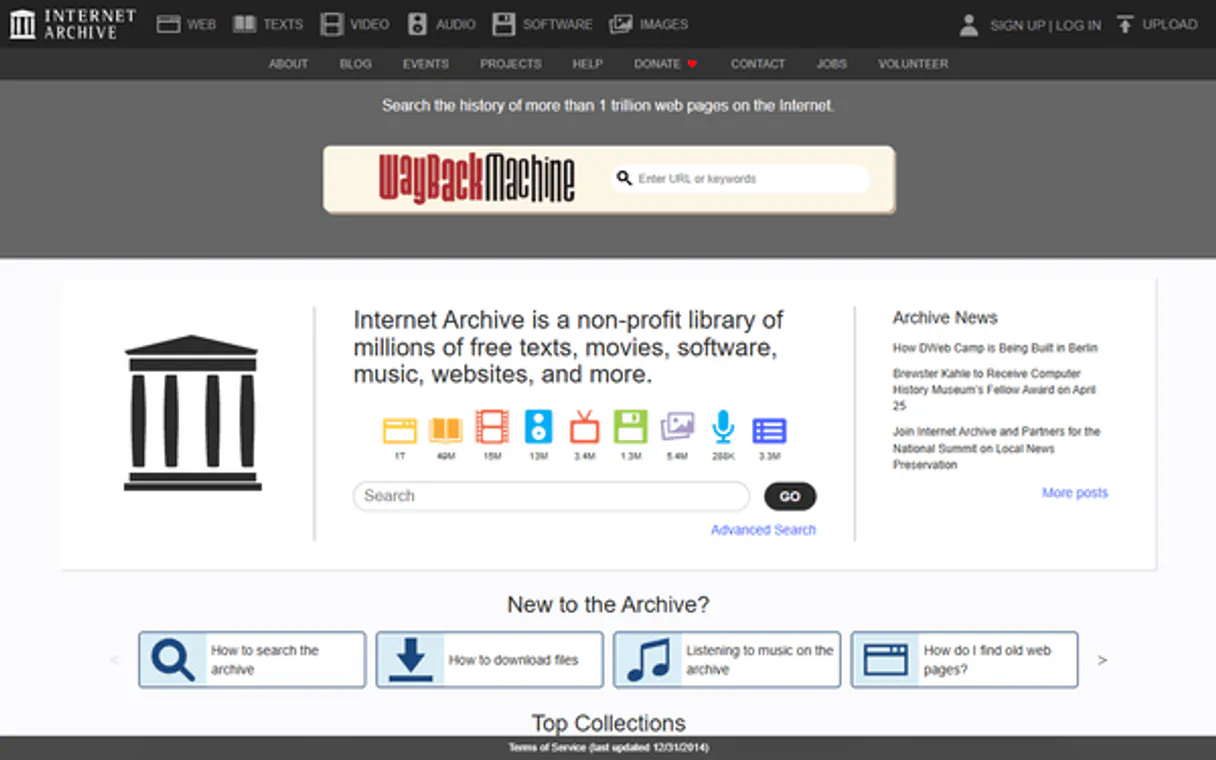
* Every MCP server runs on Vinkius-managed infrastructure inside AWS - a purpose-built runtime with per-request V8 isolates, Ed25519 signed audit chains, and sub-40ms cold starts optimized for native MCP execution. See our infrastructure
About Internet Archive MCP Server
Connect the Internet Archive to any AI agent and access the world's largest digital library — 40M+ books, videos, audio recordings, software, images, and archived web pages — plus the Wayback Machine for historical website snapshots, all through natural conversation.
AutoGen enables multi-agent conversations where agents negotiate, delegate, and collaboratively use Internet Archive tools. Connect 10 tools through Vinkius and assign role-based access. a data analyst queries while a reviewer validates, with optional human-in-the-loop approval for sensitive operations.
What you can do
- Universal Search — Search across the entire Internet Archive collection for books, films, music, software, images, and web pages with complex query syntax
- Collection Browsing — Explore curated collections like Prelinger Archives, Project Gutenberg, NASA images, TV news, and more
- Media Type Filtering — Search specifically for texts, movies, audio, software, images, or datasets
- Creator Search — Find all works by a specific author, director, musician, or organization
- Historical Date Range — Discover content from specific decades or year ranges
- Item Metadata — Get complete details for any item including description, subjects, collections, file formats, and download links
- File Listings — See all downloadable files for an item with formats (PDF, EPUB, MP4, MP3) and sizes
- User Reviews — Read community reviews and ratings for archived items
- Wayback Machine — Check if any URL has been archived and find the closest snapshot date
- View Statistics — Track popularity and access counts for archived items
The Internet Archive MCP Server exposes 10 tools through the Vinkius. Connect it to AutoGen in under two minutes — no API keys to rotate, no infrastructure to provision, no vendor lock-in. Your configuration, your data, your control.
How to Connect Internet Archive to AutoGen via MCP
Follow these steps to integrate the Internet Archive MCP Server with AutoGen.
Install AutoGen
Run pip install "autogen-ext[mcp]"
Replace the token
Replace [YOUR_TOKEN_HERE] with your Vinkius token
Integrate into workflow
Use the agent in your AutoGen multi-agent orchestration
Explore tools
The workbench discovers 10 tools from Internet Archive automatically
Why Use AutoGen with the Internet Archive MCP Server
AutoGen provides unique advantages when paired with Internet Archive through the Model Context Protocol.
Multi-agent conversations: multiple AutoGen agents discuss, delegate, and collaboratively use Internet Archive tools to solve complex tasks
Role-based architecture lets you assign Internet Archive tool access to specific agents. a data analyst queries while a reviewer validates
Human-in-the-loop support: agents can pause for human approval before executing sensitive Internet Archive tool calls
Code execution sandbox: AutoGen agents can write and run code that processes Internet Archive tool responses in an isolated environment
Internet Archive + AutoGen Use Cases
Practical scenarios where AutoGen combined with the Internet Archive MCP Server delivers measurable value.
Collaborative analysis: one agent queries Internet Archive while another validates results and a third generates the final report
Automated review pipelines: a researcher agent fetches data from Internet Archive, a critic agent evaluates quality, and a writer produces the output
Interactive planning: agents negotiate task allocation using Internet Archive data to make informed decisions about resource distribution
Code generation with live data: an AutoGen coder agent writes scripts that process Internet Archive responses in a sandboxed execution environment
Internet Archive MCP Tools for AutoGen (10)
These 10 tools become available when you connect Internet Archive to AutoGen via MCP:
get_item_files
Items may contain multiple files in various formats (PDF, EPUB, MP4, MP3, JPEG, etc.). The identifier is the unique item ID from search results or the item URL. Use this to see what formats are available for download. Files can be downloaded from: https://archive.org/download/{identifier}/{filename} Get the file listing for a specific Internet Archive item
get_item_metadata
Returns: title, creator, date, description, subjects, collection(s), publisher, language, license, download stats, reviews, and complete file listing with formats and sizes. The identifier is obtained from search results or can be found in the item URL (e.g., from https://archive.org/details/big_buck_bunny, the identifier is "big_buck_bunny"). Use this to get comprehensive information about a specific item before downloading or citing it. Get complete metadata and details for a specific Internet Archive item
get_item_reviews
Each review includes reviewer name, star rating, review text, and submission date. Use this to understand community reception and quality assessment of items. Not all items have reviews — community items tend to have more user feedback. Get user reviews for a specific Internet Archive item
get_views_stats
Returns total views and, when available, daily view counts and geographic breakdown. Use this to measure the popularity and reach of archived content. The identifier is the unique item ID from search results or the item URL. Get view count statistics for an Internet Archive item
search
The query parameter supports complex search syntax: AND, OR, NOT, wildcards (*), phrase matching ("..."), and field-specific searches (title:"X", subject:"Y"). Returns item identifiers, titles, media types, creators, dates, and collection info. Use this for broad searches across all media types. Optional fields parameter specifies which fields to return (comma-separated: "identifier,title,mediatype,creator,date,collection"). Default returns 25 rows; use rows to get up to 100 per page. Use page for pagination. Sort options: "date desc", "date asc", "title asc", "title desc", "creator asc", "downloads desc". Example queries: "moon landing", "subject:world war 2", "collection:prelinger". Search the Internet Archive for books, videos, audio, software, images, and more
search_by_collection
Common collections: "prelinger" (Prelinger Archives), "fedflix" (Federal government films), "gutenberg" (Project Gutenberg ebooks), "opensource_movies" (community films), "netlabels" (netlabel music), "softwarelibrary" (classic software), "tv" (TV news archive), "pubmed" (medical journal articles), "nasa" (NASA images and videos), "americanlibraries" (library collections). Returns items within that collection with their identifiers, titles, and metadata. Use this to browse or search within curated collections. Search for items in a specific Internet Archive collection
search_by_creator
The creator name should match how it appears in the item metadata (may be full name or organization name). Use this to find the complete works of an author, all films by a director, or all content from an organization. Example creators: "George Orwell", "Charlie Chaplin", "NASA", "Project Gutenberg". Search for items created by a specific person or organization
search_by_date_range
Combines a search query with year filtering to find historical content from a specific era. Use this to find content from specific decades or periods. Example: query="science fiction", startYear="1950", endYear="1959" finds 1950s sci-fi. The query parameter can be any valid search term. Years should be 4-digit format. Search for items within a specific year range
search_by_mediatype
Media types include: "texts" (books, articles, documents), "movies" (films, videos, TV clips), "audio" (music, podcasts, radio, audiobooks), "software" (classic PC games, applications), "image" (photos, artwork, maps), "dataset" (data files), "web" (web pages). Use this when you want to find only items of a specific format. Example: mediatype="movies" returns only video content. Search for items of a specific media type in the Internet Archive
wayback_availability
Returns the closest (most recent) archived snapshot with its timestamp and availability status. Use this to find archived versions of websites, verify if a page is preserved, or get the date of the most recent snapshot. The archived URL can be accessed at: https://web.archive.org/web/{timestamp}/{original_url}. Example: For https://example.com, returns the closest archived snapshot date and URL. Check if a URL has been archived by the Wayback Machine and find available snapshots
Example Prompts for Internet Archive in AutoGen
Ready-to-use prompts you can give your AutoGen agent to start working with Internet Archive immediately.
"Search for public domain films from the 1940s."
"Check if https://example.com has been archived."
"Show me all NASA images available."
Troubleshooting Internet Archive MCP Server with AutoGen
Common issues when connecting Internet Archive to AutoGen through the Vinkius, and how to resolve them.
McpWorkbench not found
pip install "autogen-ext[mcp]"Internet Archive + AutoGen FAQ
Common questions about integrating Internet Archive MCP Server with AutoGen.
How does AutoGen connect to MCP servers?
Can different agents have different MCP tool access?
Does AutoGen support human approval for tool calls?
Connect Internet Archive with your favorite client
Step-by-step setup guides for every MCP-compatible client and framework:
Anthropic's native desktop app for Claude with built-in MCP support.
AI-first code editor with integrated LLM-powered coding assistance.
GitHub Copilot in VS Code with Agent mode and MCP support.
Purpose-built IDE for agentic AI coding workflows.
Autonomous AI coding agent that runs inside VS Code.
Anthropic's agentic CLI for terminal-first development.
Python SDK for building production-grade OpenAI agent workflows.
Google's framework for building production AI agents.
Type-safe agent development for Python with first-class MCP support.
TypeScript toolkit for building AI-powered web applications.
TypeScript-native agent framework for modern web stacks.
Python framework for orchestrating collaborative AI agent crews.
Leading Python framework for composable LLM applications.
Data-aware AI agent framework for structured and unstructured sources.
Microsoft's framework for multi-agent collaborative conversations.
Connect Internet Archive to AutoGen
Get your token, paste the configuration, and start using 10 tools in under 2 minutes. No API key management needed.