
Odoo ERP (Full) MCP. Manage your entire sales lifecycle in one conversation.
 Gemini
 Works with every AI agent you already use
…and any MCP-compatible client









Just plug in your AI agents and start using Vinkius.
Odoo ERP (Full) connects your AI agent directly to a complete business backend. You manage leads, contacts, sales orders, and internal notes—all without leaving the chat window.
Instead of jumping between CRM tabs, you ask your agent to find company data or list recent sales orders using natural conversation.
What your AI agents can do
Odoo create contact
Creates a new person or company record in Odoo using required contact details.
Odoo create lead
Registers a new CRM lead or qualified opportunity, including expected revenue and type.
Odoo create note
Attaches an internal comment to any specific Odoo record (e.g., sales order, contact).
Find existing prospects and leads in your CRM by name, company, or keyword.
Look up individual people or corporate accounts using their name, phone number, or email address.
Register a new prospect into the CRM pipeline with initial contact details and expected revenue.
Establish a new individual or corporate partner record in your address book.
Pull a summary of the most recent sales orders, including customer name, amount, and status.
Log a specific comment or note onto any existing Odoo record (leads, contacts, or orders).
Ask AI about this MCP
Supported MCP Clients
Gemini Waiting for input…
Odoo ERP (Full) MCP Server: 7 Tools for CRM & Sales Management
Use these seven tools to manage every aspect of your sales pipeline—from searching initial leads to logging final order details.
019d75e2odoo create contact
Creates a new person or company record in Odoo using required contact details.
019d75e2odoo create lead
Registers a new CRM lead or qualified opportunity, including expected revenue and type.
019d75e2odoo create note
Attaches an internal comment to any specific Odoo record (e.g., sales order, contact).
019d75e2odoo list sales orders
Pulls a list of the most recent sales orders, showing status, amount, and customer name.
019d75e2odoo search companies
Searches for corporate or organization records within your Odoo partner database by name.
019d75e2odoo search contacts
Finds individual people (non-company) in Odoo using their name, email, or phone number.
019d75e2odoo search leads
Searches the CRM for leads and opportunities matching a query by name, company, or keyword.
Choose How to Get Started
Build a custom MCP for your own tools, or connect a ready-made integration from our catalog.
Build Your Own
Turn any API into an MCP. Import a spec, define Agent Skills, or deploy with MCPFusion.
- Import from OpenAPI, Swagger, or YAML specs
- Create Agent Skills with progressive disclosure
- Deploy to edge with MCPFusion framework
- Built in DLP, auth, and compliance on every call
- Real time usage dashboard and cost metering
- Publish to catalog or keep private
Make Your AI Do More
Start with Odoo ERP (Full), then connect any of our 4,700+ other servers whenever your AI needs more. One click, no limits.
- Use this MCP plus 4,700+ others, all in one place
- Add new capabilities to your AI anytime you want
- Every connection is secured and compliant automatically
- Track usage and costs across all your servers
- Works with Claude, ChatGPT, Cursor, and more
- New servers added to the catalog every week
What you can do with this MCP connector
Odoo ERP (Full) connects your AI agent straight into your entire business backend. You manage everything—leads, contacts, sales orders, and internal notes—without ever leaving the chat window. Forget jumping between different CRM tabs; you just talk to your agent, and it handles the data retrieval or modification for you.
When you need to find someone, odoo_search_contacts lets you locate individual people by name, email address, or phone number stored in Odoo's database. If you’re looking for a whole corporation instead of just one person, you use odoo_search_companies; this searches your partner records using the organization’s official name. For leads and opportunities, odoo_search_leads checks the entire CRM pipeline, finding prospects by name, company affiliation, or any specific keyword you throw at it.
If you find what you need, great. If not, you can build it right there. You'll use odoo_create_contact to establish a new record—whether it’s an individual person or a whole company—by supplying all the required contact details. To bring in a brand-new prospect into your sales funnel, you call odoo_create_lead, which registers a qualified opportunity and requires details like its type and the expected revenue amount so you can track potential growth from day one.
When it comes to tracking existing business, listing recent orders is simple. odoo_list_sales_orders pulls up a summary of your latest sales transactions, giving you the customer name, total amount, order number, and current status all in one quick pull. If you need to document something about any record—say, a specific note on a lead, or a comment tied to an existing sales order—you use odoo_create_note.
This tool attaches internal comments directly to the chosen Odoo record, making sure everyone sees that historical context.
Your agent does all the heavy lifting. You give a natural language command—for instance, 'Find me every lead in California expected to bring over ten grand' or 'Create a new contact for Acme Corp using this email address.' The system recognizes which tool you need (odoo_search_leads or odoo_create_contact), runs the necessary function against your live Odoo data, and formats the results right back into the chat.
If you want to change something—like noting that an order needs a follow-up call, or registering a new opportunity based on a meeting—it uses the corresponding creation or listing tool. You don't have to remember field names; you just tell your agent what needs to happen.
This setup means your AI client acts as your full-time back office clerk. It handles everything from initial data entry and prospect identification through to logging final sales order status updates, all while keeping you in the chat window. You'll use these tools together: first, searching for a company using odoo_search_companies, then creating a follow-up note on their record with odoo_create_note, and finally listing the recent orders from that account using odoo_list_sales_orders.
It’s all connected. You just ask it to do the work.
How Odoo ERP (Full) MCP Works
- 1 First, ask your agent to find the target data. You might run
odoo_search_companiesif you need an organization's details, orodoo_search_leadsif you are checking pipeline status. - 2 Second, once the necessary IDs or information is confirmed, tell the agent what to do next—like creating a new contact using
odoo_create_contactor logging follow-up notes withodoo_create_note. - 3 Finally, the system executes the action and returns structured data. You get the ID of the newly created record, or a clean table listing all sales orders.
The bottom line is you don't run API calls; you just ask your agent to do what you need done inside Odoo.
Who Is Odoo ERP (Full) MCP For?
This is for anyone whose job involves moving data between systems—Sales Ops, Account Managers, and Operations teams. If you spend more time copying IDs or switching tabs than actually selling, this server fixes that headache.
Needs to quickly find a client's contact info (odoo_search_contacts), check if they have an open sales order (odoo_list_sales_orders), and log a quick follow-up note (odoo_create_note)—all in one prompt.
Manages the pipeline. They use odoo_search_leads to audit prospects, then run odoo_create_lead when a deal is qualified, keeping the CRM clean.
Monitors fulfillment and revenue flow by listing recent sales orders (odoo_list_sales_orders) and cross-referencing them with company records (odoo_search_companies).
What Changes When You Connect
- Stop switching tabs. You can list recent orders using
odoo_list_sales_ordersand then immediately add a follow-up note to that record usingodoo_create_note, all without leaving your chat client. - Get accurate contact data fast. Use
odoo_search_contactsto find an individual's phone or email, then useodoo_create_leadright away if they are a new prospect. - Keep the pipeline clean and auditable. Running
odoo_search_leadsshows you who's where in the funnel, whileodoo_create_noteensures every interaction is logged against that lead record. - Handle corporate data better. Instead of searching for a person, use
odoo_search_companiesto pull up the official company details before creating a new partner withodoo_create_contact. - Reduce manual entry errors. The server validates and structures all submissions. You tell it to create an opportunity, and
odoo_create_leadhandles the full record setup.
Real-World Use Cases
The Hand-off Follow-up
A sales rep hands off a hot lead. Instead of emailing a spreadsheet to Account Management, they prompt their agent: 'Find Acme Corp's contact details and create a new opportunity for them.' The agent uses odoo_search_companies first, then executes odoo_create_lead, completing the hand-off instantly.
Checking Order Status
A client asks about their order. You prompt: 'Show me recent orders for Acme Corp.' The agent uses odoo_list_sales_orders and gives you the status, amount, and SO#. If they ask why it's stuck in 'Draft,' you use odoo_create_note to document the next step.
Audit Trail Cleanup
You need to track a tricky conversation. You first search for the contact using odoo_search_contacts. Then, because the discussion was complex, you use odoo_create_note on that specific record so the entire history is centralized.
Prospecting Blitz
You are researching a new vertical. You ask: 'Find all companies in Texas with over $50k expected revenue.' The agent uses odoo_search_leads to pull the data, letting you know exactly who to target next.
The Tradeoffs
Using multiple tools manually
Having to open Odoo > Go to CRM > Search leads > Copy ID > Open Contacts > Paste ID > Manually write a note. This takes 5 minutes of context switching.
→
Just ask your agent: 'Add a note about the follow-up meeting to lead Acme Corp.' The system runs odoo_create_note and handles all the linking and documentation in one step.
Assuming data existence
Telling the agent, 'Update the sales order for Acme,' without first confirming the SO# or customer details. The task fails because it lacks a precise identifier.
→
Always start by listing the relevant records: odoo_list_sales_orders or odoo_search_companies. This confirms the IDs and statuses needed before you try to modify anything.
Confusing people with companies
Trying to find 'Acme Corp' when the contact is actually Jane Doe at Acme. The system searches for a company record but finds nothing, wasting time.
→
Use odoo_search_contacts if you know a person's name or email. Use odoo_search_companies only if you are looking up the legal entity.
When It Fits, When It Doesn't
Use this server if your core workflow requires managing interconnected data: leads, contacts, and sales orders. You need to move information from one stage of the business cycle (e.g., 'Lead') directly into another ('Opportunity'). If you only need to read a simple spreadsheet or perform calculations on raw numbers—and don't need to update records in Odoo—then this is overkill. For pure data retrieval, sometimes a simpler query tool suffices. But if your job involves logging activity, managing the pipeline state, and documenting interactions across multiple record types, this full ERP access is necessary.
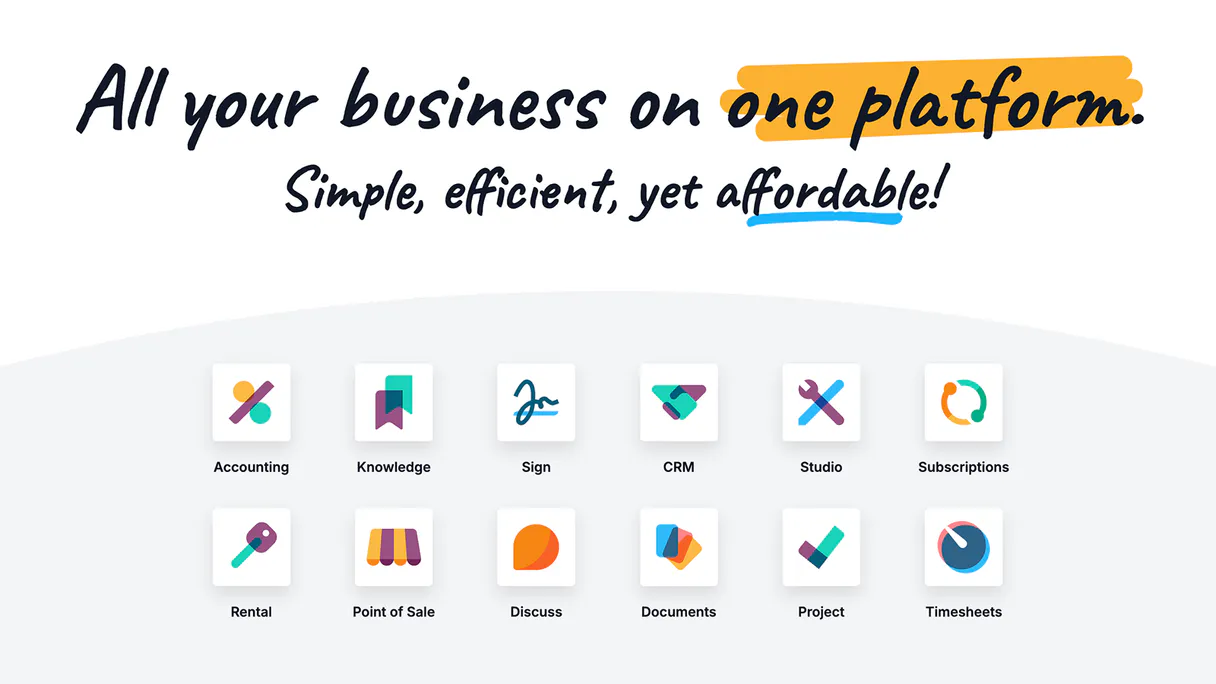
Independent Platform Disclaimer: Vinkius is an independent platform and is not affiliated with, endorsed by, sponsored by, verified by, or otherwise authorized by Odoo. All third-party trademarks, logos, and brand names are the property of their respective owners. Their use on this website is strictly for informational purposes to identify service compatibility and interoperability.
VINKIUS INFRASTRUCTURE
Cloud Hosted
Managed infra
V8 Isolated
Sandboxed per request
Zero-Trust Proxy
No stored credentials
DLP Enforced
Policy on every call
GDPR Compliant
EU data residency
Token Compression
~60% cost reduction
Works with Claude, ChatGPT, Cursor, and more
The Model Context Protocol standardizes how applications expose capabilities to LLMs. Instead of operating in isolation, your AI gains direct access to external platforms, live data, and real-world actions through secure, standardized connections.
This server provides 7 capabilities that interface natively with Claude, ChatGPT, Cursor, and any MCP client. No middleware. No custom integration required.
Available Capabilities
The biggest time sink isn't writing emails; it's moving between tabs.
Today, if you need to track a lead that was discovered via a website form, you open Odoo CRM. You find the name. Then you switch to Contacts to check if they exist. If they do, you copy their ID and paste it into a sales order record. Finally, you have to click 'Add Note' on the correct document type just so your team knows what was discussed.
With this MCP Server, you skip the clicks. You tell your agent: 'Find all leads from last week that need follow-up.' It uses `odoo_search_leads` and provides the list. If you find a name, you use `odoo_create_note` on the spot to document the conversation's outcome. The whole process runs in chat.
Odoo ERP (Full) MCP Server: Centralizing your sales data.
You stop relying on separate sheets or local databases for critical information. All client records, order statuses, and internal notes live in Odoo. Your agent accesses the single source of truth using tools like `odoo_search_companies` and `odoo_list_sales_orders`.
The result is a unified view of every customer interaction. You don't just get data; you get actionability. The system lets your AI client perform the necessary CRUD operations directly, making the chat interface feel like it’s inside Odoo itself.
Common Questions About Odoo ERP (Full) MCP
How do I check if a company exists using odoo_search_companies? +
Run odoo_search_companies and provide the organization's name. The tool returns structured data including its email, phone number, website, city, and country if it matches an existing record.
What is the difference between odoo_create_contact and odoo_create_lead? +
Use odoo_search_contacts first to see if the person exists. If they are a new prospect, use odoo_create_lead. Use odoo_create_contact when you just need a basic record of an individual or company in your address book.
Can I log notes on sales orders using odoo_create_note? +
Yes. You must provide the specific Sales Order ID and model (sale.order). This ensures the note is attached directly to that order's history, so the full context remains visible.
How do I list recent orders with odoo_list_sales_orders? +
Just ask your agent to run odoo_list_sales_orders. It returns a clear table showing the SO#, customer name, total amount, current state (draft/sent/done), and date.
How do I link a newly created individual to an existing company using odoo_create_contact? +
You must provide the parent_id. This links the new person record directly under an established partner/company within Odoo's structure, maintaining data integrity.
What is the difference between setting the type to "lead" versus "opportunity" when using odoo_create_lead? +
You set the type based on qualification. Use "lead" for initial, unqualified prospects who need nurturing. Reserve "opportunity" for prospects already confirmed and deep into your sales pipeline.
How do I find a specific individual contact using odoo_search_contacts? +
You search by name, email, or phone number. This tool targets individual partners (people), distinguishing them from searches that retrieve entire company organizations.
Can I use odoo_create_note to add an internal comment to a contact record? +
Yes, you must specify the target's model (resModel) and its unique ID (resId). This logs information directly into that specific record's history or chatter feed.
Which Odoo versions are supported? +
This server uses the JSON-RPC protocol, which is compatible with Odoo 14, 15, 16, 17, and 18. Both Odoo Community and Enterprise editions are supported.
Does it work with Odoo.com (SaaS)? +
Yes! Works with both Odoo.com hosted instances and self-hosted Odoo servers. Just provide your instance URL and API key.
How do I generate an API Key? +
Go to Settings → Users → select your user → API Keys tab → New API Key. Give it a descriptive name and copy the generated key.
Use it with your favorite AI tools
Connect this server to Cursor, Claude, VS Code, and more.
More in this category
Oppo Game Open Platform
Manage Oppo Game Open Platform distribution — validate logins, query orders, and report game data directly from any AI agent.

Zoho Creator
Low-code platform to build applications and manage records with AI using Creator API v2.1.

Safepoint
Protect your business data with secure backup, disaster recovery, and cloud-to-cloud replication for critical SaaS applications.
You might also like
Dashdoc
Equip your AI agent to manage transport orders, fleet, and delivery addresses via the Dashdoc API.

General Motors
AI connected car: control GM vehicles, check diagnostics, and track location via agents.

Duoplane
Equip your AI agent to manage multi-vendor orders, track purchase orders, and monitor vendor inventory via the Duoplane API.