
Pipefy MCP, Ready to Go
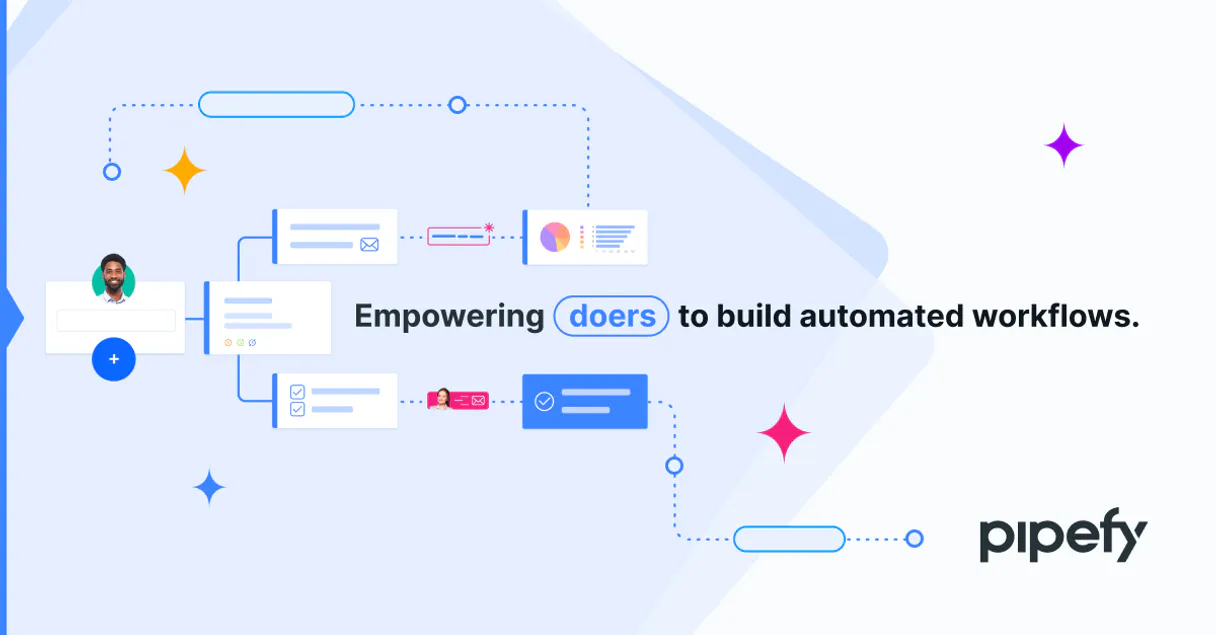
Use the Pipefy MCP with Claude or Cursor to manage workflow automation and task tracking. Let your AI agent handle your Pipefy cards for you.
No credit card required. Experience the power of this integration risk-free.
Manage your organization's workflow automation and task tracking through natural conversation.
Works with every AI agent you already use
…and any MCP-compatible client









How fast is the Pipefy Connector?
Average time for the server to become ready for requests over the last 14 days, measured until the initialize / tools/list handshake completes. Metrics are updated daily between 00:00 and 04:00 UTC. Create a free account, use this Connector on Vinkius Cloud, and connect it to your AI agent in seconds.
Waiting for input…
What AI agents can do with Pipefy 14 Tools for Workflow Automation
Use these tools to create, move, search, and update cards in your Pipefy pipes using natural language.
Clone card
Create a duplicate of an existing card in the same pipe. This is useful for using an existing card as a template for new items.
Get user profile
Check your authenticated profile to verify your API access. It also shows which organizations and pipes you can see.
Create card
Add a new card to a specific Pipefy pipe with custom field values. This helps you log new requests without manual data entry.
Delete card
Permanently remove a card and all its associated data from a pipe. Use this to clean up test cards or errors.
Get card
Pull the full details of a specific card to review its data. This is helpful before you update fields or move it to a new phase.
Get organization
View the structure of your organization. It helps you understand team membership and discover available pipes.
Get phase
Inspect a specific phase to see what fields are required at that step. This helps you understand the workflow requirements.
Get pipe
Retrieve the structure of a specific pipe. It shows all phases, names, and custom fields defined for that process.
List cards
See all cards in a pipe with an optional filter for a specific phase. Use this to monitor progress and find cards needing attention.
List phases
Get a list of all stages in a pipe. This helps you identify phase IDs for filtering cards or moving them through the workflow.
List pipes
Discover all available pipes within your organization. This is the first step to finding where your cards live.
Move card to phase
Move a card to a different step in the workflow. This is the primary way to advance items from one stage to the next.
Search cards by field
Find specific cards by searching for text within a field like email, name, or ID. It uses a contains operator for flexible matching.
Update card field
Change a specific piece of information on a card. This is useful for updating priority, contact info, or descriptions as requests evolve.
A Connector is a URL. Vinkius runs it: hosting, security, governance, observability.
You're looking at one of 5,800+ managed Connectors. The real value isn't the catalog. It's the control plane that secures, governs, audits, and manages every interaction between your agents and the tools they use.
No Shadow AI
Every agent action is visible, approved, and auditable. Nothing runs outside your governance.
Absolute agent control
Fine-grained permissions for every agent, MCP, and tool. Instantly revoke access and audit every execution.
Cost control per token
Spend broken down to the token, tool, and agent. Budgets and hard limits. No surprise invoices.
Managed & monitored infra
We operate the runtime, authentication, scaling, retries, and monitoring. Your team manages AI, not infrastructure.
Data protection, DLP by design
Sensitive data is filtered before reaching the model. Access is governed so agents receive only the information they're allowed to use.
Token optimization, real savings
Lower AI costs by delivering the right context instead of unnecessary tools. Better accuracy, faster responses, and fewer wasted tokens.
Pipefy Workflow Automation for Faster Task Tracking
This is for the operations lead who is drowning in manual updates and the support manager who is tired of hunting for specific tickets in a messy pipe.
Operations Manager
Moves cards through complex approval chains and updates status fields without manual entry.
Support Lead
Searches for customer emails to quickly find and update related requests in a high-volume pipe.
Project Coordinator
Clones recurring tasks and manages field values as new projects move through the workflow.
Frequently Asked Questions
Can the Pipefy MCP help me manage my team's tasks? +
Yes, it lets you manage cards, move them between phases, and update fields using natural language. This makes it much faster to keep your team's tasks moving without manually clicking through the dashboard.
How does the Pipefy MCP handle moving cards between different stages? +
You can simply tell your agent which card to move and which phase it should go to. The Connector handles the transition automatically while keeping all your existing field data intact.
Can I use the Pipefy MCP to find specific requests by email? +
Yes, you can search for cards using specific field values like email addresses. This is great for quickly locating customer requests in a high-volume pipe.
Does the Pipefy MCP support cloning cards for recurring work? +
It does. You can ask your agent to clone an existing card to create a duplicate. This is a great way to use a card as a template for repeating processes.
Can I use the Pipefy MCP to update specific fields on a card? +
Absolutely. You can tell your agent to change specific pieces of information, such as the priority level, status, or contact details on any card in your pipes.
How do I connect the Pipefy MCP to my AI client? +
Once you subscribe, you just need to provide your Pipefy API token. Your AI client will then be able to see your pipes and perform actions on your behalf.
How do I get a Pipefy API token and where do I find it? +
Log in to Pipefy, click on your Profile icon (top-right), go to Profile > API Access, and generate a new token. Alternatively, use Service Accounts for team-based access. Copy the token immediately — it starts with eyJhbG.... Paste it into the API token field below. This token authenticates all GraphQL API requests to https://api.pipefy.com/graphql.
How do I move a card from one phase to another in a pipe? +
Use the move_card_to_phase tool with the card_id (from list_cards or get_card) and the target phase_id (from get_pipe or list_phases). This advances the card through your workflow. For example, moving a card from 'New Requests' to 'In Review' phase. The card retains all its field values after moving. This is the primary way to progress items through your process.
Can I search for cards by a specific field value like email or customer name? +
Yes! Use the search_cards_by_field tool with the pipe_id, field_id (the specific field to search in), and search_value (the text to find). This searches all cards in the pipe where that field contains your search text. It's perfect for finding cards by customer email, name, order number, or any custom field. Results include full card details with all field values.
How do I create a new card with custom field values? +
Use the create_card tool with the pipe_id and a JSON object containing field values. The fields parameter should be a JSON object where keys are field IDs (from get_pipe) and values are the data to store. Example: { "name": "John Doe", "email": "john@example.com", "priority": "High" }. You can also optionally specify a phase_id to start the card in a specific phase instead of the default first phase.
Your AI, connected to everything.











No credit card required · Free tier available













Other Connectors in this category
Clio Connector
Manage legal practice and matters via Clio. Track cases, monitor contacts, and manage firm tasks directly from any AI agent.
GitScrum ClientFlow Connector
Streamline client operations via GitScrum ClientFlow. Manage clients, create invoices, draft proposals, and monitor project budgets directly from any AI agent.
ProofHub Connector
Empower your AI agent to manage your ProofHub projects. List tasks, create to-dos, read discussions, and track timesheets instantly.
Related Connectors
Albi Restoration Connector
Manage restoration projects from damage assessment through job completion with tools built for contractors and adjusters.

Collision Detection Primitives Connector
Calculate 3D intersections, penetrations, and impact timings for spheres, AABBs, rays, and planes.
HHS Open Payments Connector
Access the HHS Open Payments database to search for physicians, teaching hospitals, and financial relationships in the healthcare industry.