
CoreMedia Content Cloud MCP. Audit content structure and retrieve global assets via GraphQL.
 Gemini
 Works with every AI agent you already use
…and any MCP-compatible client









Just plug in your AI agents and start using Vinkius.
CoreMedia Content Cloud MCP Server manages headless content delivery for enterprise sites. Execute GraphQL queries to fetch structured data, retrieve articles (CMArticle) and channels (CMChannel) by path, and search global assets using Solr.
You can audit site navigation, find metadata, and manage content structure directly from your AI client.
What your AI agents can do
Execute graphql payload
Runs custom GraphQL queries against the headless CoreMedia Delivery Schema.
Execute persisted query
Mutates global Web CRM boundaries using a pre-compiled SHA256 hash.
Get cmarticle path
Extracts properties for active CMArticle nodes by providing a content path.
Send arbitrary GraphQL payloads to the CoreMedia Delivery Schema for deep data interrogation.
Retrieve detailed articles or channel layouts using their known site paths.
Perform full-text searches across all nodes in the CMS, regardless of content type.
Identify and map the current navigation hierarchy, including parent-child relationships.
Verify the structural matching and brand configurations for global, multi-brand deployments.
Get details about specific image assets and resolve their URIs.
Ask AI about this MCP
Supported MCP Clients
Gemini Waiting for input…
019d757cexecute graphql payload
Runs custom GraphQL queries against the headless CoreMedia Delivery Schema.
019d757cexecute persisted query
Mutates global Web CRM boundaries using a pre-compiled SHA256 hash.
019d757cget cmarticle path
Extracts properties for active CMArticle nodes by providing a content path.
019d757cget cmchannel page
Enumerates structured rules defining active CMChannel layouts by path.
019d757cget cmpicture asset
Retrieves details and metadata for specific image assets in the cloud.
019d757cget cmviewtypes
Retrieves view types for specific application nodes.
019d757cget introspection query
Checks the server's schema limits to validate available data types and fields.
019d757cget navigation tree
Identifies the precise array structure of the native site navigation hierarchy.
019d757cget site context
Gets the structural data verifying multi-brand environments and site context.
019d757csearch global content
Runs a full-text search across all content nodes using a query string.
Choose How to Get Started
Build a custom MCP for your own tools, or connect a ready-made integration from our catalog.
Build Your Own
Turn any API into an MCP. Import a spec, define Agent Skills, or deploy with MCPFusion.
- Import from OpenAPI, Swagger, or YAML specs
- Create Agent Skills with progressive disclosure
- Deploy to edge with MCPFusion framework
- Built in DLP, auth, and compliance on every call
- Real time usage dashboard and cost metering
- Publish to catalog or keep private
Make Your AI Do More
Start with CoreMedia Content Cloud, then connect any of our 4,700+ other servers whenever your AI needs more. One click, no limits.
- Use this MCP plus 4,700+ others, all in one place
- Add new capabilities to your AI anytime you want
- Every connection is secured and compliant automatically
- Track usage and costs across all your servers
- Works with Claude, ChatGPT, Cursor, and more
- New servers added to the catalog every week
What you can do with this MCP connector
This MCP Server manages content delivery for enterprise sites using CoreMedia Content Cloud. Your AI client can run custom GraphQL queries against the headless CoreMedia Delivery Schema, and it can mutate global Web CRM boundaries using a pre-compiled SHA256 hash with execute_persisted_query. You'll find detailed articles or channel layouts by passing a known content path using get_cmarticle_path and get_cmchannel_page.
You can retrieve metadata and details for specific image assets in the cloud using get_cmpicture_asset. Want to check the server's schema limits and validate available data types? Run get_introspection_query. To find out how the site navigates, get_navigation_tree identifies the precise array structure of the native site navigation hierarchy. For multi-brand deployments, get_site_context gets the structural data verifying site context.
You can also check the structural data of application nodes with get_cmviewtypes. Need to know the overall structure? execute_graphql_payload runs custom GraphQL queries against the headless CoreMedia Delivery Schema. You can perform full-text searches across all content nodes using search_global_content. You'll also get the structural data verifying multi-brand environments and site context with get_site_context.
How CoreMedia Content Cloud MCP Works
- 1 Subscribe to the server and provide your CoreMedia GraphQL Host URL and Access Token.
- 2 Your AI client calls a specific tool, providing necessary inputs (e.g., a content path or search string).
- 3 The server executes the GraphQL operation against CoreMedia and returns the structured data to your AI client.
The bottom line is, you use your AI client to talk to the content system, and the server handles the complex API calls and data retrieval.
Who Is CoreMedia Content Cloud MCP For?
This is for developers and architects who live in the content layer. You're the one running the site build, tracing a broken link, or auditing why a brand page looks different in two markets. You need to know the content graph structure without logging into a CMS studio.
Uses the server to test GraphQL queries and pull asset metadata directly from the IDE or chat, validating content paths before committing code.
Audits site configurations and brand hierarchies across global environments using get_site_context and get_navigation_tree.
Verifies site navigation and searches for articles without having to open the CoreMedia Studio interface.
What Changes When You Connect
- Need to find an article but don't know the exact endpoint? Use
search_global_contentto run a full-text query across the entire CMS. You don't have to guess which tool to call. - Don't rely on the UI to show you the site map. Call
get_navigation_treeto get the exact, structured array of the navigation hierarchy. This is crucial for building accurate component menus. - Working with global sites?
get_site_contextverifies brand configurations and structural matches for multi-brand environments. This saves you from manual audits of locale metadata. - Optimizing for speed? Use
execute_persisted_querywith a SHA256 hash. This bypasses standard fetching and forces the fastest, cached content version into your build. - Debugging asset placement?
get_cmpicture_assetretrieves the full details and URI templates for image assets. You can confirm the exact placement structure for a component. - Need raw data? Use
execute_graphql_payloadto run any arbitrary GraphQL query. This gives you full control when the built-in tools aren't specific enough.
Real-World Use Cases
A developer needs to build a component menu for a new market.
The developer knows they need the menu structure for the EU market but doesn't know the root node ID. They call get_site_context first to get the correct locale metadata and then use get_navigation_tree to map out the full menu array. This ensures the component builds correctly for all regional variations.
A content marketer needs to verify if a key topic was updated.
Instead of logging into the CMS and clicking through sections, the marketer runs search_global_content for 'Sustainability'. The agent returns a list of all matching content paths, allowing the marketer to instantly verify the scope of the update across the entire site.
A front-end engineer needs to pull the HTML body and metadata for a specific article.
The engineer calls get_cmarticle_path with the article's known URL path. The server returns the detailed HTML grid and associated metadata, letting the engineer test the rendering pipeline directly from their chat client without a local dev environment build.
An architect needs to check the entire site's content structure before deployment.
The architect runs get_introspection_query to see the available schema and then uses execute_graphql_payload to test a complex query that spans multiple content types. This verifies the system's current capabilities and prevents unexpected runtime errors.
The Tradeoffs
Treating the CMS like a simple database search.
Calling search_global_content and assuming the result includes the full, rendered HTML body for the article. It only provides a list of matching paths and basic metadata.
→
If you need the full content, you must first use search_global_content to find the correct path, then use get_cmarticle_path (or get_cmchannel_page) to pull the full, structured content payload.
Building site logic without checking brand variations.
Writing a component that assumes a single global navigation structure, which fails immediately when deployed to a region with different menu items.
→
Always start by calling get_site_context. This validates the multi-brand environment and gives you the specific structural matching rules before attempting to map the navigation with get_navigation_tree.
Relying on cached data without checking versioning.
Running a query and assuming the data is fresh. If the content team updated the article five minutes ago, your query might pull stale data.
→
To guarantee the freshest possible content, use execute_persisted_query with the correct SHA256 hash to force the use of the optimized, current version.
When It Fits, When It Doesn't
Use this server if your job requires direct, programmatic access to CoreMedia's content graph—meaning you need to read data (articles, assets, navigation) or test complex queries outside of the CMS UI. You should call this if you are building front-end code, writing integration tests, or performing content audits.
Don't use this if you just need to edit a single paragraph or manually verify a piece of text. For those tasks, you still need to log into the CoreMedia Studio. Also, don't use it if you only need to know if content exists; you must use search_global_content first to find the path, and then use a specific getter tool (like get_cmarticle_path) to pull the actual data.
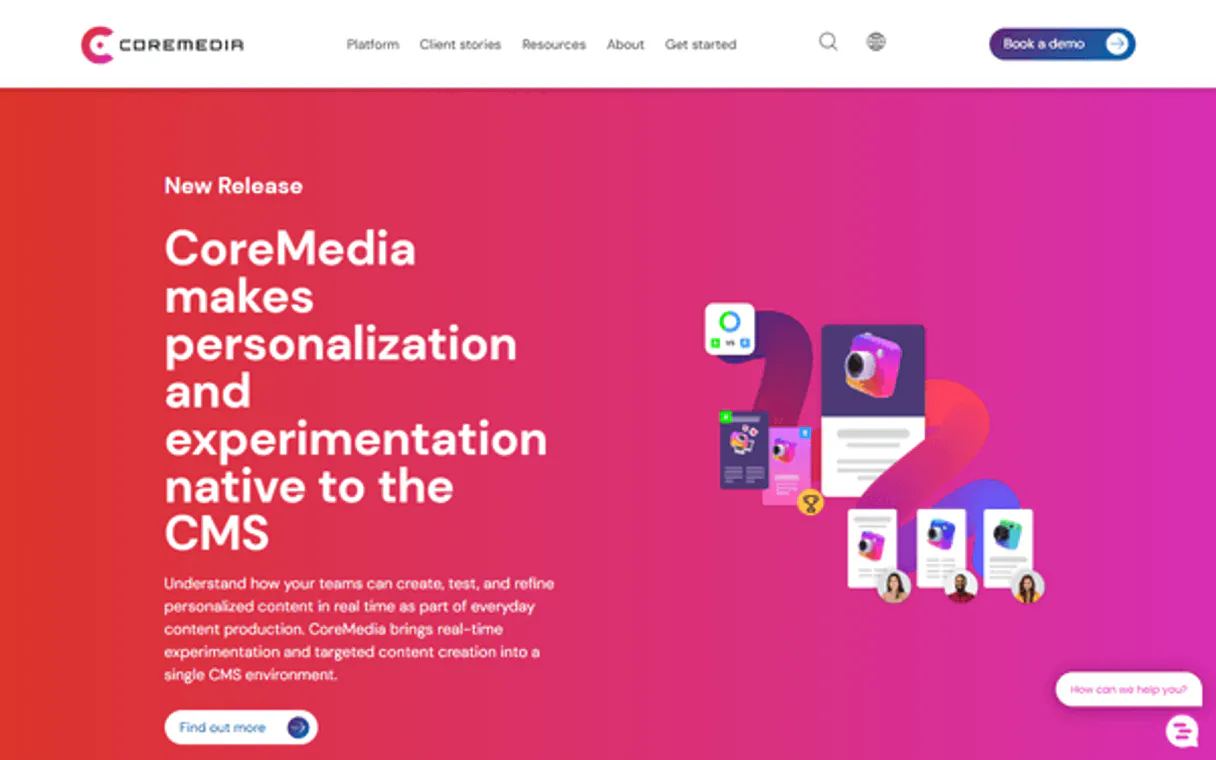
Independent Platform Disclaimer: Vinkius is an independent platform and is not affiliated with, endorsed by, sponsored by, verified by, or otherwise authorized by CoreMedia. All third-party trademarks, logos, and brand names are the property of their respective owners. Their use on this website is strictly for informational purposes to identify service compatibility and interoperability.
VINKIUS INFRASTRUCTURE
Cloud Hosted
Managed infra
V8 Isolated
Sandboxed per request
Zero-Trust Proxy
No stored credentials
DLP Enforced
Policy on every call
GDPR Compliant
EU data residency
Token Compression
~60% cost reduction
Works with Claude, ChatGPT, Cursor, and more
The Model Context Protocol standardizes how applications expose capabilities to LLMs. Instead of operating in isolation, your AI gains direct access to external platforms, live data, and real-world actions through secure, standardized connections.
This server provides 10 capabilities that interface natively with Claude, ChatGPT, Cursor, and any MCP client. No middleware. No custom integration required.
Available Capabilities
Checking the site map used to require jumping between the CMS and a separate documentation tool.
Before this server, mapping a site's navigation was a multi-step chore. You'd log into the CMS, navigate to the 'Site Structure' tab, export the raw JSON, and then copy-paste that into a separate schema validator to confirm field names. It was slow, and the JSON was often incomplete.
Now, your AI client calls `get_navigation_tree`. It instantly returns the complete, structured array of the navigation hierarchy. You get the data you need, right in the chat, ready for consumption.
CoreMedia Content Cloud MCP Server: Get full article details instantly.
Used to get article content, you had to manually find the article's unique path in the CMS, then request a content preview, which often resulted in a truncated or poorly formatted HTML snippet. It was a guessing game.
Now, call `get_cmarticle_path` with the path. You get the full HTML body and all associated metadata, period. That's the data you need, no fluff.
Common Questions About CoreMedia Content Cloud MCP
How do I use `search_global_content` to find articles? +
You just pass the search term (e.g., 'AI ethics'). The tool returns a list of matching paths and basic metadata, telling you where the content lives. It won't give you the full article body itself.
What is the difference between `get_cmarticle_path` and `get_navigation_tree`? +
get_cmarticle_path retrieves the full content (HTML body, metadata) for a specific article path. get_navigation_tree only maps the site menu structure, showing the parent/child links, not the content itself.
How do I check if the site supports multiple brands? +
Use get_site_context. This tool verifies the structural matching and brand configurations, confirming if the environment is multi-brand before you start coding the components.
Can I run custom queries using `execute_graphql_payload`? +
Yes. This tool lets you pass any custom GraphQL payload. Use it when the pre-built tools don't support the exact data structure you need.
What is the fastest way to get content data? +
Use execute_persisted_query. By providing a SHA256 hash, you force the system to use the pre-compiled, cached version of the data, which is faster for high-performance front-ends.
How do I use `execute_persisted_query` to optimize content delivery? +
It uses pre-compiled SHA256 hashes to ensure edge caching. This significantly improves performance for high-traffic frontends by validating known data paths.
What is the purpose of `get_introspection_query` in the CoreMedia Cloud? +
It automatically validates the schema. You run this to fetch dynamic headless types and verify that all active model extensions are available.
How do I get asset details using `get_cmpicture_asset`? +
This tool retrieves specific Cloud logging tracing for image assets. You use it to get detailed metadata and resolve the URI templates needed for placement in your digital experience.
Can my agent execute custom GraphQL queries against CoreMedia? +
Yes. Use the 'execute_graphql_payload' tool. You can provide any valid GraphQL query string and variables. The agent will fetch the data natively from your Headless Delivery schema, bypassing rigid model limits.
How do I search for articles using specific keywords? +
Use the 'search_global_content' tool. The agent leverages CoreMedia's Solr integration to pull explicitly queried words spanning all CMS nodes, returning the exact matches and their paths.
Can I use persisted queries to optimize performance? +
Absolutely. Use the 'execute_persisted_query' tool. Provide the SHA256 hash of your pre-compiled query. This ensures proper Edge caching and allows your agent to retrieve content with minimum latency.
Use it with your favorite AI tools
Connect this server to Cursor, Claude, VS Code, and more.
More in this category
NVIDIA AI
Access LLMs, embeddings, code generation, and reasoning via NVIDIA API Catalog.

Fly.io
Manage edge infrastructure via Fly.io — monitor apps and machines, scale compute horizontally, handle persistent volumes, and run remote commands directly from any AI agent.

FOSSA (License Compliance)
Manage license compliance and security vulnerabilities via FOSSA — list projects, inspect revisions, and track dependencies directly from your AI agent.
You might also like
Megaphone
Podcast publishing and ad management via Megaphone — manage networks, podcasts, and campaigns.

Xiaomi Push Service / 小米推送
Xiaomi's essential device push platform — send notifications to MIUI and Global devices via AI.
Pipedrive Products
Manage your product catalog, attach products to deals, and track recurring revenue subscriptions in Pipedrive.