
Meetup MCP. Audit community data and event rosters instantly.
 Gemini
 Works with every AI agent you already use
…and any MCP-compatible client









Just plug in your AI agents and start using Vinkius.
Meetup MCP Server lets your AI agent handle community administration. You can use the 'Search groups' tool to find new local meetups by keyword, or run 'List upcoming events' to pull a full roster of scheduled dates for any group.
It also audits member lists and retrieves specific event metadata using 'Get details for a specific event'.
What your AI agents can do
Get event
Retrieves detailed information for a single, specific Meetup event using its ID or URL.
Get me
Fetches and returns the authenticated user's profile details from their Meetup account.
List group members
Queries and lists all member profiles associated with a specific Meetup group ID.
Searches Meetup by keywords to find new community groups.
Retrieves a list of all current members for a specified group.
Pulls every upcoming event scheduled for a specific Meetup group.
Retrieves the full description and metadata for one single, known event.
Gets authenticated user information from your Meetup profile.
Ask AI about this MCP
Supported MCP Clients
Gemini Waiting for input…
Meetup MCP Server: 5 Tools for Community Data
Manage group data, track event schedules, and audit member lists across Meetup using these five specialized tools.
019d8456get event
Retrieves detailed information for a single, specific Meetup event using its ID or URL.
019d8456get me
Fetches and returns the authenticated user's profile details from their Meetup account.
019d8456list group members
Queries and lists all member profiles associated with a specific Meetup group ID.
019d8456list upcoming events
Pulls a chronological list of future events scheduled for an entire Meetup group.
019d8456search groups
Searches the entire platform to find groups that match given keywords or interests.
Choose How to Get Started
Build a custom MCP for your own tools, or connect a ready-made integration from our catalog.
Build Your Own
Turn any API into an MCP. Import a spec, define Agent Skills, or deploy with MCPFusion.
- Import from OpenAPI, Swagger, or YAML specs
- Create Agent Skills with progressive disclosure
- Deploy to edge with MCPFusion framework
- Built in DLP, auth, and compliance on every call
- Real time usage dashboard and cost metering
- Publish to catalog or keep private
Make Your AI Do More
Start with Meetup, then connect any of our 4,700+ other servers whenever your AI needs more. One click, no limits.
- Use this MCP plus 4,700+ others, all in one place
- Add new capabilities to your AI anytime you want
- Every connection is secured and compliant automatically
- Track usage and costs across all your servers
- Works with Claude, ChatGPT, Cursor, and more
- New servers added to the catalog every week
What you can do with this MCP connector
Your AI agent handles all the dirty work managing your community on Meetup. Forget logging into dashboards and clicking through forms; you just tell your client what you need, and it runs the reports. This server lets your agent act like a full-time community coordinator—it'll pull member lists, track events, and find groups without you lifting a finger.
To start finding new circles, use search_groups. You can query the whole platform by keywords or specific interests to pinpoint new local meetups. If you wanna know what's happening down the line for a group you already belong to, run list_upcoming_events; that pulls up a chronological roster of future dates and times for the entire community.
Need to deep dive on one specific date? You use get_event. This tool fetches all the detailed metadata—the full description, location specifics, everything—for a single event when you know its ID or URL. For group governance, you've got list_group_members. When you run this, it queries and lists every profile belonging to a specific Meetup group ID, letting you audit the roster instantly.
When you need to check your own standing on the platform, use get_me. This fetches and returns your authenticated user's profile details directly from your Meetup account. It’s quick, reliable data for building out personalized reports.
Your agent takes these capabilities—from finding new groups via search_groups to auditing member lists using list_group_members, pulling every future event with list_upcoming_events, getting deep specs on one date with get_event, and checking your own profile status via get_me—and turns complex administrative tasks into simple, actionable data points. You don't have to juggle multiple systems; you just ask for the information, and it shows up.
How Meetup MCP Works
- 1 Subscribe to the server and provide your unique Meetup Access Token.
- 2 Your AI client initiates a request (e.g., 'List upcoming events for Group X').
- 3 The MCP Server executes the necessary tool call, returning structured data like event titles, dates, and member IDs.
The bottom line is, your agent treats Meetup like a live API connection, letting you query group data through natural conversation.
Who Is Meetup MCP For?
Community organizers who are sick of manually checking dashboards. It's for the operations lead who needs to quantify community growth or the marketing professional who must verify event details before launch.
Uses list_upcoming_events and list_group_members to monitor event signups, track member participation, and plan outreach.
Runs get_event on specific listings to verify that descriptions are correct for maximum reach; uses search_groups to find new market segments.
Performs rapid audits using search_groups to identify relevant local groups and events without spending time manually browsing the site.
What Changes When You Connect
- Check the entire calendar at once. Instead of navigating to a group dashboard, use
list_upcoming_eventsto get all future events for a group in one go. You see every date, time, and associated URL. - Quickly vet new markets. Need to know if 'Data Science' groups exist in Chicago? Run
search_groupswith keywords instead of manually browsing the city’s listing pages. - Audit membership status instantly. Use
list_group_membersto get a full roster of members for your group, letting you track growth and participation numbers without manual exports. - Get deep event details fast. When an event link is vague, call
get_event. This tool gives you the full description and specific metadata needed for cross-posting or marketing copy. - Understand your user base. Call
get_meto confirm who you are connected as, ensuring all subsequent calls like group audits use the correct identity.
Real-World Use Cases
Checking a Competitor's Event Schedule
A marketing team needs to check what events a rival group is promoting next month. They don't know the exact event IDs, so they use search_groups first. Once they find the group ID, they run list_upcoming_events. The agent returns three dates and their respective URLs immediately.
Auditing a Board Member Roster
An operations lead needs to verify who belongs to an executive committee within the main 'Tech' group. They use list_group_members with the specific Group ID. The agent returns a list of member names and IDs, allowing the user to cross-reference their internal CRM.
Drafting Event Previews
A content writer needs to write a blog post about an upcoming local meetup. They use list_upcoming_events to get the date and title, then feed that specific event's data into get_event. The agent returns the full description text, saving hours of manual copy-pasting.
Finding a Niche Interest Group
A user wants to find groups focused on combining 'AI' and 'Healthcare'. They run search_groups with those two keywords. The agent identifies several top matches, like 'Health AI Innovators', allowing the user to pick the most relevant community.
The Tradeoffs
Trying to find a group by name only
The user just types: 'Find me groups about tech stuff.' This is too vague and doesn't use the proper search mechanisms.
→
Use search_groups and provide specific keywords. For example, calling search_groups(keywords='AI AND healthcare') gets a much narrower and more useful list than just general terms.
Assuming all event details are in the list
The user calls list_upcoming_events but needs to know if there's a specific speaker bio or cancellation notice. The basic list doesn't contain this depth.
→
After getting the list, take the relevant Event ID and call get_event(event_id=...). This tool fetches the detailed metadata you need.
Relying on memory for group IDs
The user tries to run a member audit but forgets the exact, complicated Group ID. The call fails with a 'Bad ID' error.
→
First, use search_groups to find the community and get its clean name or ID. Then, pass that retrieved ID directly into list_group_members.
When It Fits, When It Doesn't
Use this MCP Server if your process involves routine auditing of local communities—checking rosters, verifying event metadata, or discovering new groups based on keywords. It excels at querying structured data (e.g., 'Give me all events for Group X'). Don't use it if you need to perform actions like RSVPing or changing profile settings; those require direct API calls outside this read-only scope. If your goal is general web search, a standard Google API will work better than using search_groups.
Key differentiation: Use list_upcoming_events when you know the Group and want its whole calendar. Use get_event when you know the specific Event ID and only want its details.
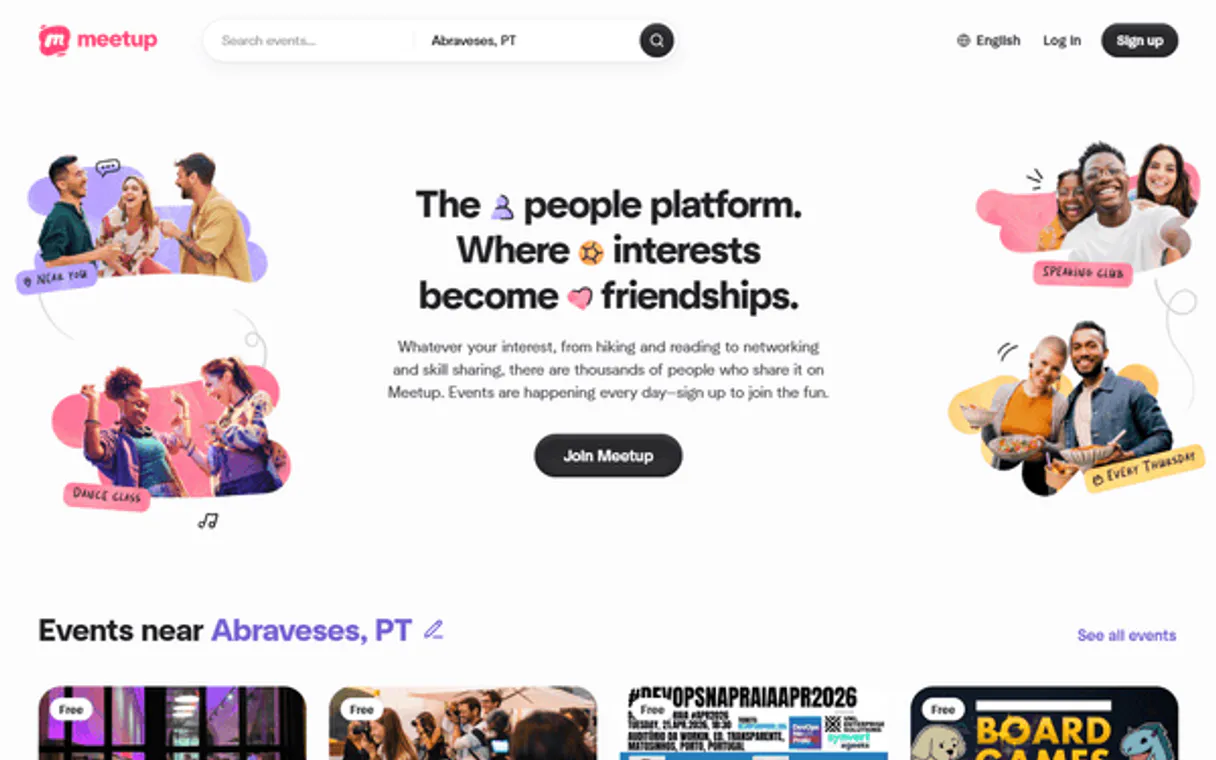
Independent Platform Disclaimer: Vinkius is an independent platform and is not affiliated with, endorsed by, sponsored by, verified by, or otherwise authorized by Meetup. All third-party trademarks, logos, and brand names are the property of their respective owners. Their use on this website is strictly for informational purposes to identify service compatibility and interoperability.
VINKIUS INFRASTRUCTURE
Cloud Hosted
Managed infra
V8 Isolated
Sandboxed per request
Zero-Trust Proxy
No stored credentials
DLP Enforced
Policy on every call
GDPR Compliant
EU data residency
Token Compression
~60% cost reduction
Works with Claude, ChatGPT, Cursor, and more
The Model Context Protocol standardizes how applications expose capabilities to LLMs. Instead of operating in isolation, your AI gains direct access to external platforms, live data, and real-world actions through secure, standardized connections.
This server provides 5 capabilities that interface natively with Claude, ChatGPT, Cursor, and any MCP client. No middleware. No custom integration required.
Available Capabilities
Manually checking Meetup group rosters is a massive time sink.
Today, if you need to audit a community's membership or check their event schedule, you have to log in. You navigate to the main page, click on 'Members', then manually scroll through pages of names and IDs. To see what’s coming up, you cross-reference dates across multiple tabs, often copy/pasting links just to confirm the full description.
With this MCP server, you tell your agent exactly what you need. You call `list_group_members` and get a structured list of every member ID and name instantly. Need the calendar? One call to `list_upcoming_events`, and all dates and URLs appear—no clicks required.
Meetup MCP Server: Get full event intelligence.
Manual processes force you to treat every event like a separate link. You click the URL, open the page, search for the 'Details' tab, and then copy-paste any necessary information into your document or spreadsheet. It’s slow, tedious work.
Now, just give the agent an Event ID and call `get_event`. The full description, metadata, times—it all comes back in one clean JSON payload. That's how you do it.
Common Questions About Meetup MCP
How do I find groups using Meetup MCP Server? (search_groups) +
You use the search_groups tool and pass in your keywords. This searches across the whole site, letting you identify new communities by topic without browsing.
What is the difference between listing events and getting an event? (list_upcoming_events vs get_event) +
list_upcoming_events gives you a calendar view for a group. get_event requires an ID and returns all details for one specific, single event.
Can I list members of any group with Meetup MCP Server? (list_group_members) +
Yes, you run the list_group_members tool. You'll need to provide a valid Group ID for the agent to query the roster.
Does get_me help with group data? (get_me) +
It doesn't give group data, but it provides your authenticated user profile info. This is often required so the server knows who running the audit or search.
What permissions does the Meetup MCP Server need for the `get_me` tool? +
The access token must grant at least read-only scope across user and group data. This ensures your agent can pull necessary profile details without requiring write or administrative rights.
If I use `get_event` with an invalid event ID, what does the server do? +
The tool returns a specific error code and message indicating that the requested event ID is inaccessible or doesn't exist. Your agent can catch this precise error to prompt you for correct input.
Are there rate limits when calling `list_upcoming_events` on large groups? +
Yes, standard API rate limiting applies across all bulk data calls. For extensive event schedules, implement a delay or batch your requests within your AI client's workflow.
How can I filter members when using `list_group_members`? +
The tool accepts optional parameters like date range or membership status. This allows your agent to pull targeted data, such as only active members who joined in the last quarter.
How do I find my Meetup Access Token? +
You must perform an OAuth 2.0 flow to generate a Bearer Token for your account. Please refer to the Meetup API documentation for setup steps. Copy and paste it below.
Can the agent list upcoming events for any group? +
Yes. Use the list_upcoming_events tool providing the group's urlname. Your agent will retrieve the next 10 events, including their titles and scheduled times.
Is it possible to search for new communities via the agent? +
Yes. The search_groups tool allows your agent to query the Meetup platform for groups matching a specific keyword, helping you discover new community opportunities.
Use it with your favorite AI tools
Connect this server to Cursor, Claude, VS Code, and more.
More in this category

Infinity Work Manager
Manage work items, boards, comments, and folders via Infinity API.

timeghost
Log working hours directly from Microsoft Teams and Outlook with time tracking that integrates into the tools you already use.

Figma Alternative
Access Figma design files, comments, components and images via API — inspect nodes, render exports and track version history from any AI agent.
You might also like

Nutshell CRM
Manage sales and relationships via Nutshell CRM — track leads, contacts, and accounts directly from your AI agent.

watsonx Discovery
Search and analyze complex data with AI-powered insights on IBM watsonx Discovery — the cognitive search engine.

Pipeline CRM
Manage sales and contacts via Pipeline CRM — list deals, track people, and monitor tasks directly from any AI agent.