
Bring Siem
to AutoGen
Create your Vinkius account to connect Elastic Security to AutoGen and start using all 10 AI tools in minutes. Fully managed, enterprise secure, and ready to use without writing a single line of code. No hosting, no server setup — just connect and start using.
 GDPR Free for Subscribers
Compatible with every major AI agent and IDE
 Gemini
What is the Elastic Security MCP Server?
Connect your Elastic Security (SIEM) deployment to any AI agent and take full control of your threat detection and SOC auditing through natural conversation.
What you can do
- Detection Rule Orchestration — List all configured detection rules and retrieve exact EQL or KQL statements to map MITRE ATT&CK coverage natively
- Live Alert Auditing — Search raw generated security signals (alerts) consolidating hostname, user profiles, and IP geolocations into a single view
- Rule Lifecycle Management — Create new custom log detection rules or irreversibly purge custom logic from the Kibana SIEM engine to tune your environment
- Exception & Whitelisting — List global exception lists and whitelist hostnames inside existing containers to resolve false positives and noise in real-time
- Threat Intel Verification — Search for specific rules by name, tag, or MITRE tactic to expedite SOC auditing for newly reported CVEs or ransomware
- State Control — Enable or disable existing detection rules to manage noisy triggers across large organizational units seamlessly
- System Health Checks — Verify if official Elastic prepackaged rules need updates to ensure lack of latest official threat models is addressed
How it works
- Subscribe to this server
- Enter your Kibana Host, Port, and Elastic API Key (found in Kibana > Stack Management > Security > API Keys)
- Start managing your SIEM operations from Claude, Cursor, or any MCP-compatible client
Who is this for?
- SOC Analysts — monitor security alerts and audit detection rules without leaving the chat interface
- Security Engineers — create and update detection logic and manage exception lists using natural language
- CISO & Incident Responders — quickly search for signals and verify threat coverage during active investigations
- DevOps Teams — monitor SIEM health and verify prepackaged rule update statuses in real-time
Built-in capabilities (10)
name value to the target exception container, implicitly ignoring telemetry matched on this field for any rule bound to the list. Use explicitly to resolve false positives. Whitelist a hostname inside an existing Exception List
Defines immediate risk scores multiplying against asset valuations, generating Elastic Signals tracking MITRE TTPs upon match. Create a new Log Detection Rule tracking malicious Elastic telemetry
Cannot be applied to Elastic Pre-built rules which are managed globally via package updates. Irreversible. Hard-delete a custom Elastic detection rule completely
Expedites SOC auditing when evaluating coverage for newly reported CVEs or specific localized threats. Search for specific Elastic rules by name, tag or MITRE tactic
Identifies if the environment is lacking the latest official threat models targeting Windows, Linux, and Cloud environments. Check if official Elastic prepackaged rules need updates
Displays run intervals, severity assignment, index scopes, and explicit reference URLs matching threat intel reports. Get exact details, intervals, and query logic for a distinct Rule
g., logs-endpoint*, winlogbeat*). Vital for mapping MITRE ATT&CK coverage against the Elastic schema. List all detection rules configured within the Elastic SIEM
These lists logically bypass specific rules, preventing SIEM alerts from triggering on known-good administrative behavior like vulnerability scanners. List global exception lists managing detection bypass logic
Signals consolidate the triggering payload structure, enriching it with Hostname, User profiles, IP geolocations, and process trees. Search raw generated Elastic Security alerts (Signals)
Used explicitly to disable noisy rules triggering false positives across large organizational units, or to re-enable them post-tuning. Enable or Disable an existing Elastic Detection Rule
Why AutoGen?
AutoGen enables multi-agent conversations where agents negotiate, delegate, and collaboratively use Elastic Security tools. Connect 10 tools through Vinkius and assign role-based access. a data analyst queries while a reviewer validates, with optional human-in-the-loop approval for sensitive operations.
- —
Multi-agent conversations: multiple AutoGen agents discuss, delegate, and collaboratively use Elastic Security tools to solve complex tasks
- —
Role-based architecture lets you assign Elastic Security tool access to specific agents. a data analyst queries while a reviewer validates
- —
Human-in-the-loop support: agents can pause for human approval before executing sensitive Elastic Security tool calls
- —
Code execution sandbox: AutoGen agents can write and run code that processes Elastic Security tool responses in an isolated environment
Elastic Security in AutoGen
Why run Elastic Security with Vinkius?
The Elastic Security connection runs on our fully managed, secure cloud infrastructure. We handle the hosting, maintenance, and security so you don't have to deal with servers or code. All 10 tools are ready to work instantly without any complex setup.
You stay in complete control of your data. Your AI only accesses the information you approve, keeping your sensitive passwords and private details completely safe. Plus, with automatic optimizations, your AI works faster and more efficiently.
* Every connection is hosted and maintained by Vinkius. We handle the security, updates, and infrastructure so you don't have to write code or manage servers. See our infrastructure
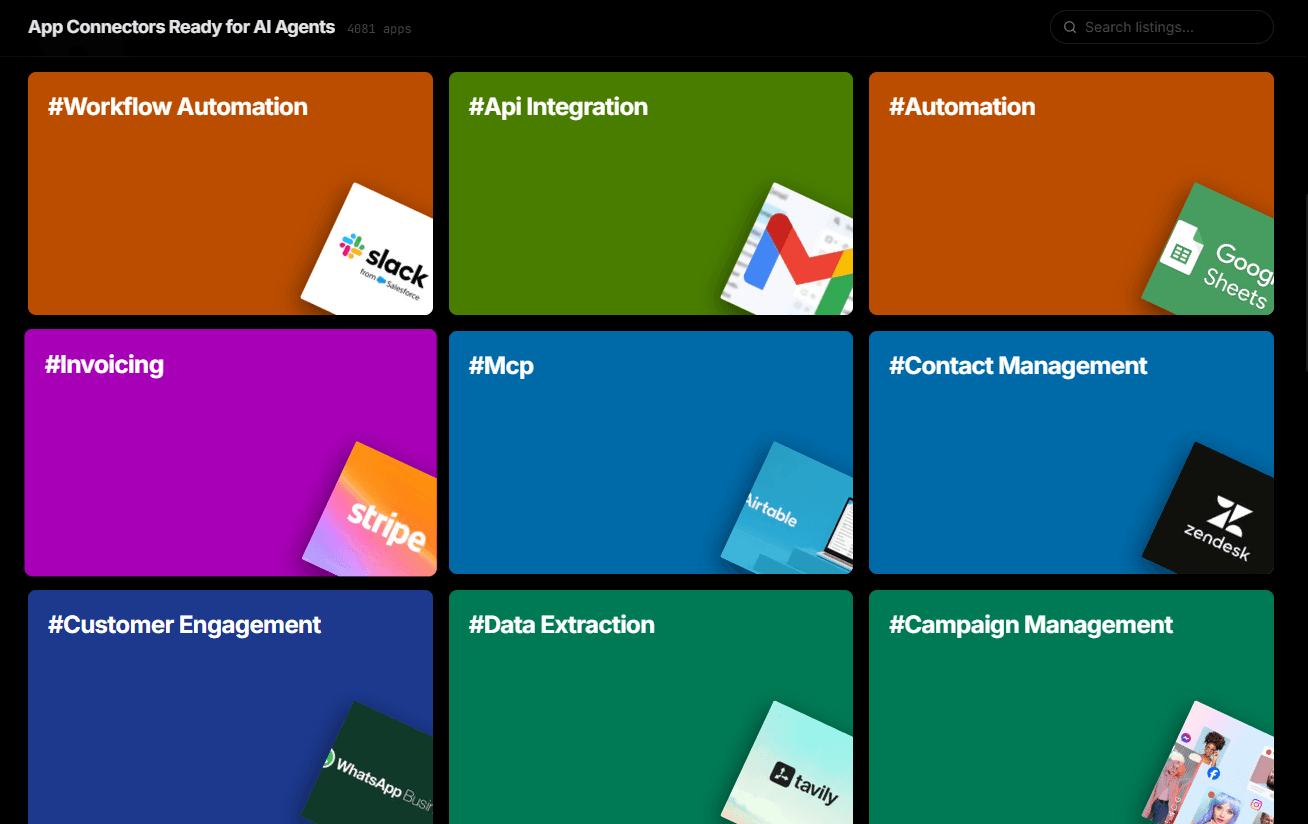
Over 4,000 integrations ready for AI agents
Explore a vast library of pre-built integrations, optimized and ready to deploy.
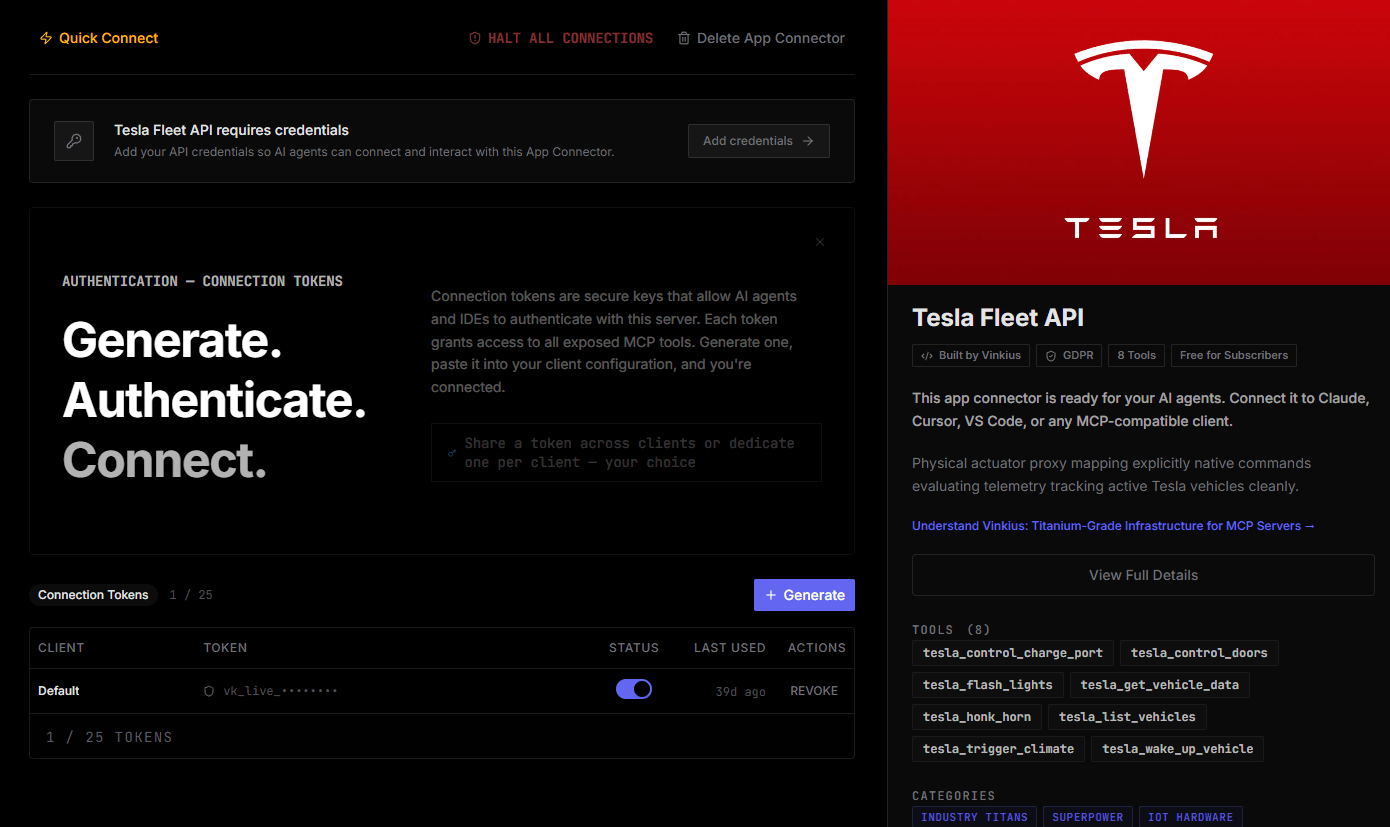
Connect securely in under 30 seconds
Generate tokens to authenticate and link external services in a single step.
Complete visibility into every agent action
Audit live requests, latency, success rates, and active security compliance policies.
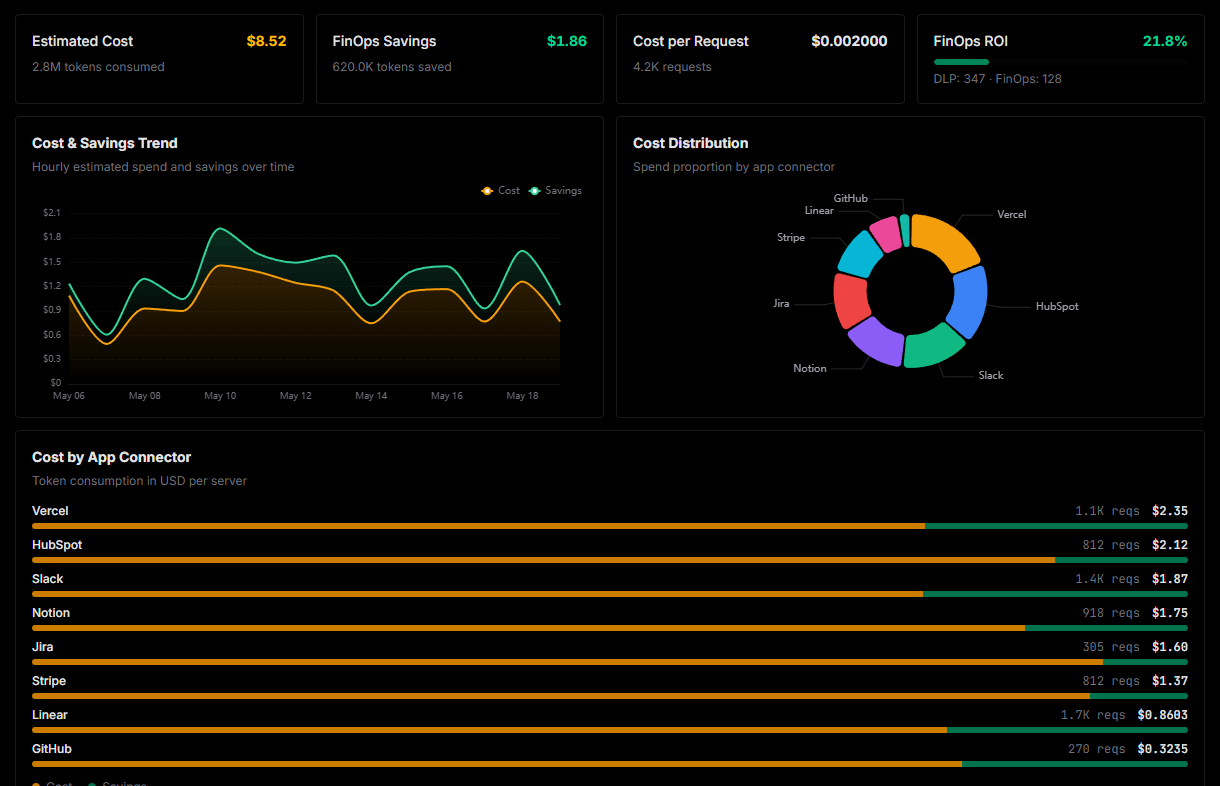
Optimize spending and track token ROI
Analyze real-time token consumption and cost metrics detailed by connection.
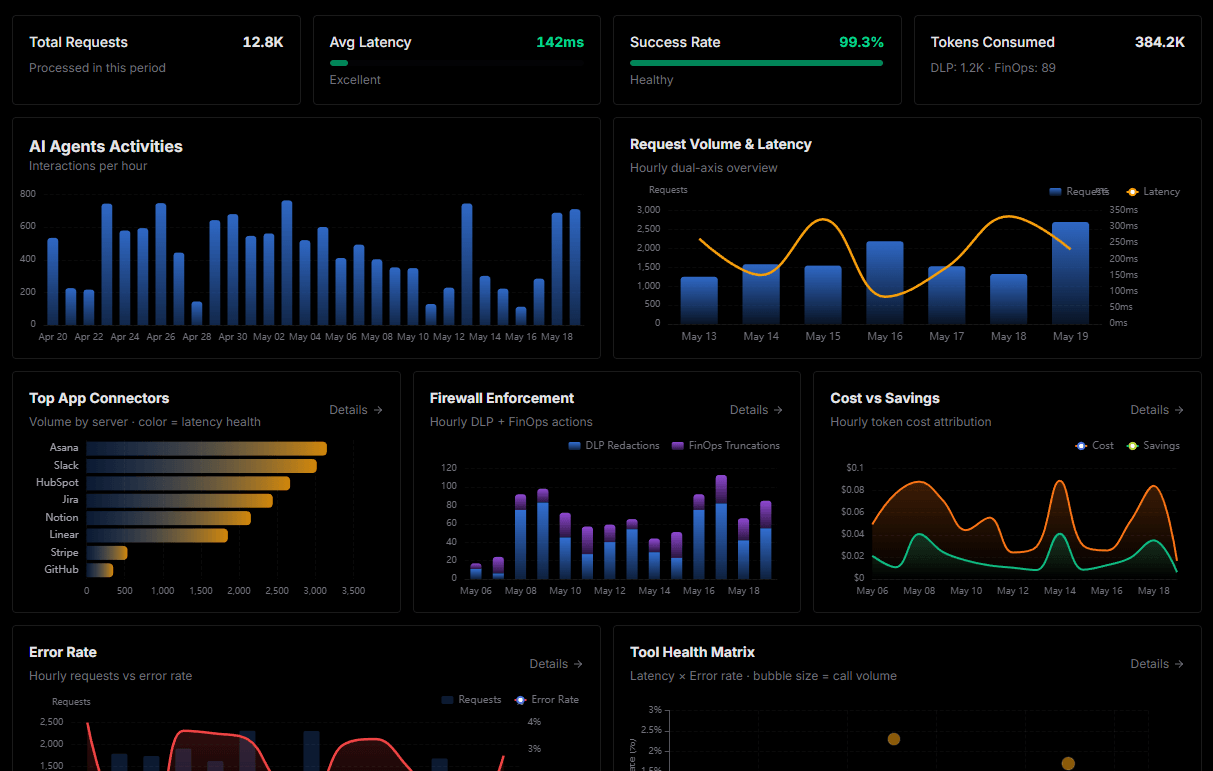
Explore our live AI Agents Analytics dashboard to see it all working
This dashboard is included when you connect Elastic Security using Vinkius. You will never be left in the dark about what your AI agents are doing with your tools.
Elastic Security and 4,000+ other AI tools. No hosting, no code, ready to use.
Professionals who connect Elastic Security to AutoGen through Vinkius don't need to write code, manage servers, or worry about security. Everything is pre-configured, secure, and runs automatically in the background.
Raw MCP | Vinkius | |
|---|---|---|
| Ready-to-use MCPs | Find and configure each manually | 4,000+ MCPs ready to use |
| Connection Setup | Manual coding & server setup | 1-click instant connection |
| Server Hosting | You host it yourself (needs 24/7 uptime) | 100% hosted & managed by Vinkius |
| Security & Privacy | Stored in plaintext config files | Bank-grade encrypted vault |
| Activity Visibility | Blind execution (no logs or tracking) | Live dashboard with real-time logs |
| Cost Control | Runaway AI token spend risk | Automatic budget limits |
| Revoking Access | Must delete files or code to stop | 1-click disconnect button |
How Vinkius secures
Elastic Security for AutoGen
Every request between AutoGen and Elastic Security is protected by our secure gateway. We automatically keep your sensitive data private, prevent unauthorized access, and let you disconnect instantly at any time.
Frequently asked questions
Can my agent list all detection rules currently active in my SIEM?
Yes. Use the 'list_detection_rules' tool. It returns both custom rules and Elastic prepackaged ML algorithms, which is vital for mapping your MITRE ATT&CK coverage.
How do I whitelist a hostname to resolve a false positive via chat?
Use the 'add_exception' mutation. Provide the Exception List ID and the hostname string. The agent will update the container, implicitly ignoring telemetry matched on this host for any bound rule.
Can I search for security alerts (Signals) using KQL through the agent?
Absolutely. The 'search_signals' tool allows you to retrieve critical alert logs. You can provide an optional KQL query to filter for specific users, hostnames, or process trees within your security telemetry.
How does AutoGen connect to MCP servers?
Create an MCP tool adapter and assign it to one or more agents in the group chat. AutoGen agents can then call Elastic Security tools during their conversation turns.
Can different agents have different MCP tool access?
Yes. AutoGen's role-based architecture lets you assign specific MCP tools to specific agents, so a querying agent has different capabilities than a reviewing agent.
Does AutoGen support human approval for tool calls?
Yes. Configure human-in-the-loop mode so agents pause and request approval before executing sensitive MCP tool calls.
McpWorkbench not found
Install: pip install "autogen-ext[mcp]"
Explore More MCP Servers
View all →
Snyk
9 toolsBring your Snyk code security ecosystem directly to your AI. Analyze vulnerabilities, project metadata, and scan issues right from your editor.
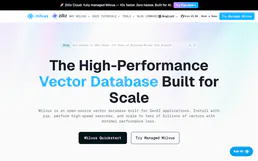
Milvus (Open-Source Vector Database)
7 toolsManage vector storage via Milvus — perform ANN searches, query scalar entities, and audit collections.

Prometheus
14 toolsMonitor your infrastructure with Prometheus — run PromQL queries, analyze metrics, and manage time-series data directly from your AI agent.

Netlify
10 toolsManage your Netlify sites and deployments via the Netlify API — list sites, trigger builds, and monitor forms directly from any AI agent.