
Bring Ui Components
to AutoGen
Create your Vinkius account to connect Storybook to AutoGen and start using all 6 AI tools in minutes. Fully managed, enterprise secure, and ready to use without writing a single line of code. No hosting, no server setup — just connect and start using.
 GDPR Free for Subscribers
Compatible with every major AI agent and IDE
 Gemini
What is the Storybook MCP Server?
Seamlessly integrate your Storybook design system into your conversational AI workflows. Empower front-end engineers and designers to instantly query component libraries, retrieve prop signatures, and extract documentation paths natively within their terminal. By connecting your deployed Storybook instance directly to your AI context, you eliminate context switching, prevent duplicate UI implementations, and accelerate component-driven architecture development across your entire front-end ecosystem.
What you can do
- Design System Discovery — Systematically map your component folder structures invoking
list_categoriesand browse all rendered elements across your UI utilizinglist_components. - Component Inspection — Quickly lookup predefined interface elements utilizing
search_componentsto avoid code duplication, and retrieve component properties and metadata viaget_story_args. - Implementation Guidance — Extract local source code paths directly from the Storybook index using
extract_docs_guidanceto efficiently evaluate implementation logic. - Visual Previews — Generate interactive, isolated sandbox iframe endpoints by running
get_preview_urlto safely preview changes before integrating.
How it works
- Install the Storybook MCP module into your local AI configuration.
- In the connection parameters, simply provide your deployed
STORYBOOK_URL. - Storybook generates a static
index.jsoninherently; the MCP natively reads this JSON index to retrieve your entire frontend component hierarchy. - Prompt your AI: "Search the Storybook components for 'Button', detail its default arguments, and generate an isolated preview URL."
Who is this for?
- Frontend Engineers — Rapidly discover existing UI elements and their expected properties without leaving your coding interface.
- UI/UX Designers — Validate and audit deployed component structures programmatically, ensuring implementation aligns exactly with design tokens.
- Technical Writers — Extract existing Storybook documentation pathways automatically to maintain consistent, up-to-date design system guidelines.
Built-in capabilities (6)
Get guidance on how to read documentation for a component
Generate the preview URL for a component sandbox
Get metadata and default arguments for a specific component
g., Atoms, Molecules, Organisms). List the top-level categories and folder structure of the Design System
You can optionally filter by category folder. List all UI components available in the Storybook Design System
Search for specific components by name or keyword
Why AutoGen?
AutoGen enables multi-agent conversations where agents negotiate, delegate, and collaboratively use Storybook tools. Connect 6 tools through Vinkius and assign role-based access. a data analyst queries while a reviewer validates, with optional human-in-the-loop approval for sensitive operations.
- —
Multi-agent conversations: multiple AutoGen agents discuss, delegate, and collaboratively use Storybook tools to solve complex tasks
- —
Role-based architecture lets you assign Storybook tool access to specific agents. a data analyst queries while a reviewer validates
- —
Human-in-the-loop support: agents can pause for human approval before executing sensitive Storybook tool calls
- —
Code execution sandbox: AutoGen agents can write and run code that processes Storybook tool responses in an isolated environment
Storybook in AutoGen
Why run Storybook with Vinkius?
The Storybook connection runs on our fully managed, secure cloud infrastructure. We handle the hosting, maintenance, and security so you don't have to deal with servers or code. All 6 tools are ready to work instantly without any complex setup.
You stay in complete control of your data. Your AI only accesses the information you approve, keeping your sensitive passwords and private details completely safe. Plus, with automatic optimizations, your AI works faster and more efficiently.
* Every connection is hosted and maintained by Vinkius. We handle the security, updates, and infrastructure so you don't have to write code or manage servers. See our infrastructure
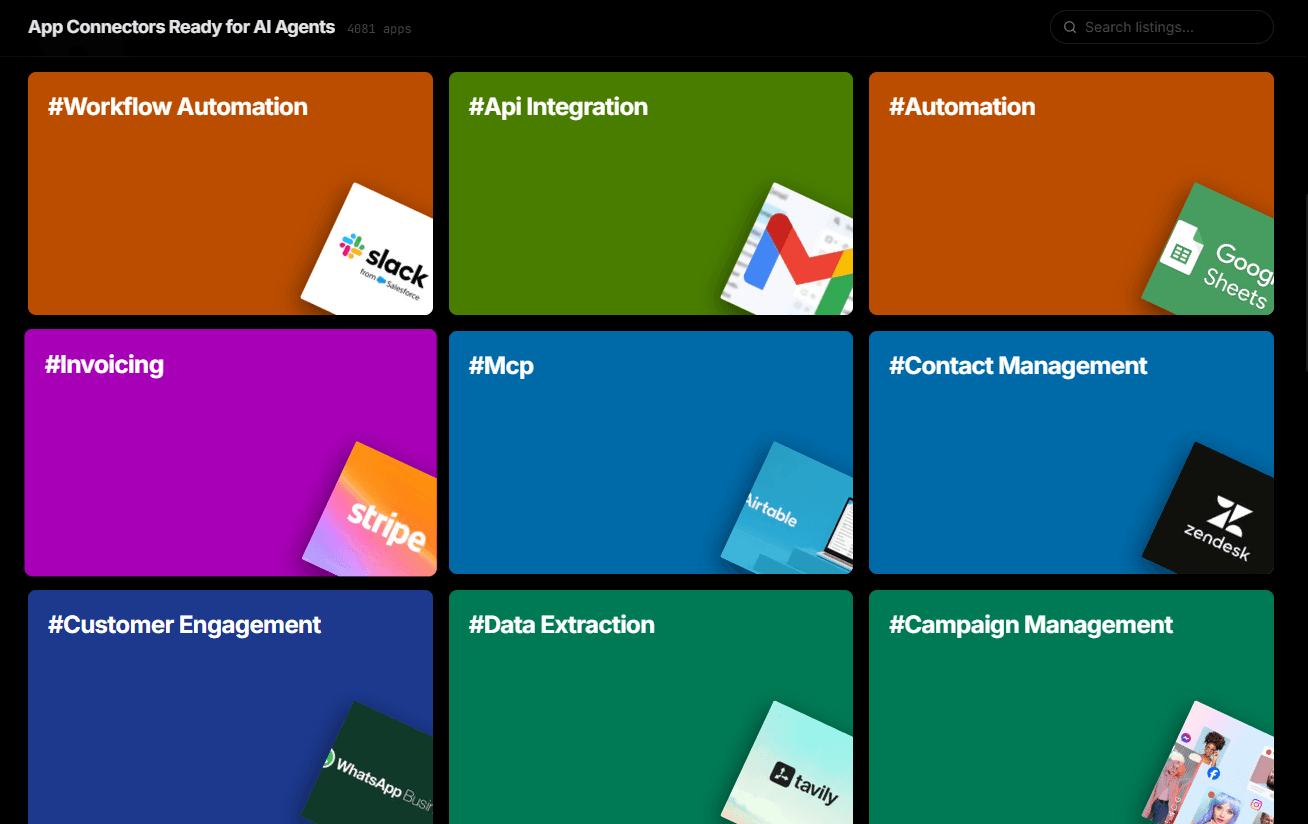
Over 4,000 integrations ready for AI agents
Explore a vast library of pre-built integrations, optimized and ready to deploy.
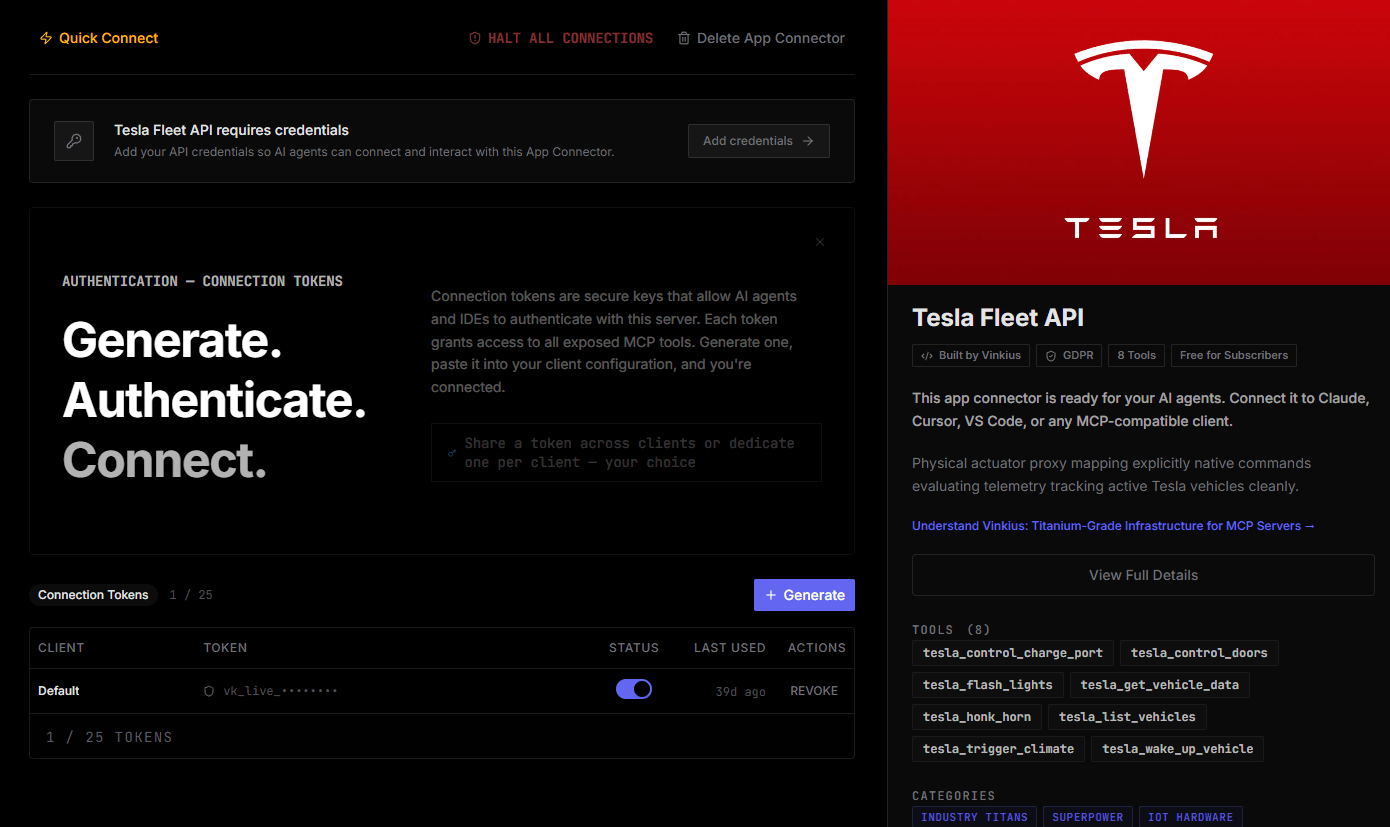
Connect securely in under 30 seconds
Generate tokens to authenticate and link external services in a single step.
Complete visibility into every agent action
Audit live requests, latency, success rates, and active security compliance policies.
Optimize spending and track token ROI
Analyze real-time token consumption and cost metrics detailed by connection.
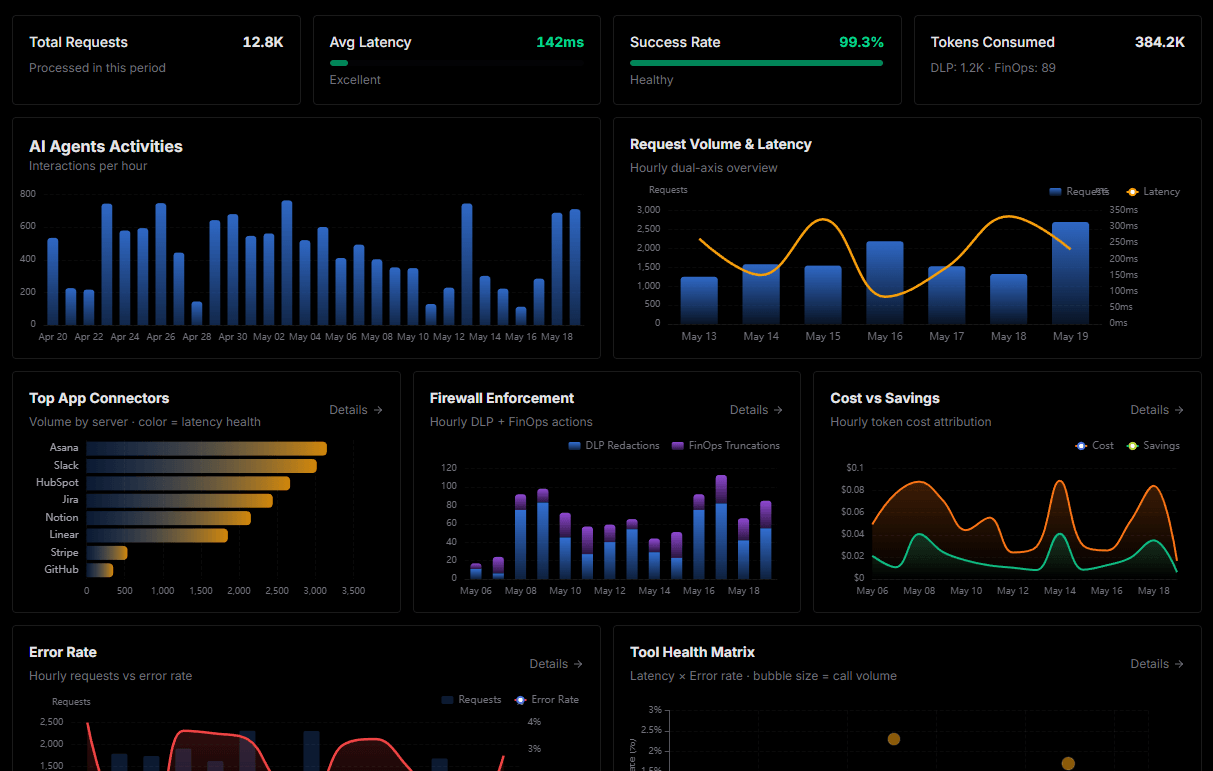
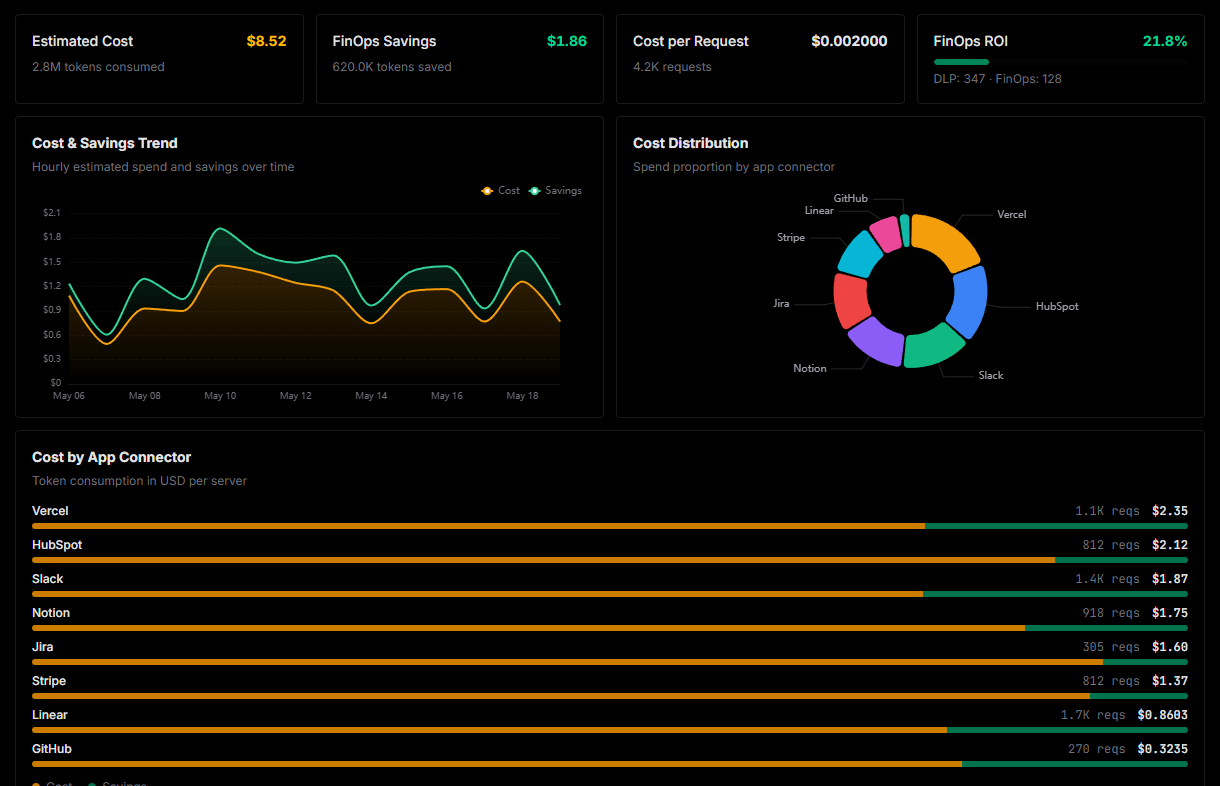
Explore our live AI Agents Analytics dashboard to see it all working
This dashboard is included when you connect Storybook using Vinkius. You will never be left in the dark about what your AI agents are doing with your tools.
Storybook and 4,000+ other AI tools. No hosting, no code, ready to use.
Professionals who connect Storybook to AutoGen through Vinkius don't need to write code, manage servers, or worry about security. Everything is pre-configured, secure, and runs automatically in the background.
Raw MCP | Vinkius | |
|---|---|---|
| Ready-to-use MCPs | Find and configure each manually | 4,000+ MCPs ready to use |
| Connection Setup | Manual coding & server setup | 1-click instant connection |
| Server Hosting | You host it yourself (needs 24/7 uptime) | 100% hosted & managed by Vinkius |
| Security & Privacy | Stored in plaintext config files | Bank-grade encrypted vault |
| Activity Visibility | Blind execution (no logs or tracking) | Live dashboard with real-time logs |
| Cost Control | Runaway AI token spend risk | Automatic budget limits |
| Revoking Access | Must delete files or code to stop | 1-click disconnect button |
How Vinkius secures
Storybook for AutoGen
Every request between AutoGen and Storybook is protected by our secure gateway. We automatically keep your sensitive data private, prevent unauthorized access, and let you disconnect instantly at any time.
Frequently asked questions
Does it require API keys or OAuth?
No. The MCP reads the static index.json file generated by your Storybook build. As long as the agent can reach the STORYBOOK_URL over the network, no additional authentication is needed.
Is the integration read-only?
Yes. The AI reads component metadata, props, and documentation from the static index. It cannot modify actual React, Vue, or Angular source files through this integration.
Which UI frameworks are supported?
Any framework supported by Storybook — React, Vue, Angular, Svelte, Web Components, and more. The MCP reads the universal index.json format, which is framework-agnostic.
How does AutoGen connect to MCP servers?
Create an MCP tool adapter and assign it to one or more agents in the group chat. AutoGen agents can then call Storybook tools during their conversation turns.
Can different agents have different MCP tool access?
Yes. AutoGen's role-based architecture lets you assign specific MCP tools to specific agents, so a querying agent has different capabilities than a reviewing agent.
Does AutoGen support human approval for tool calls?
Yes. Configure human-in-the-loop mode so agents pause and request approval before executing sensitive MCP tool calls.
McpWorkbench not found
Install: pip install "autogen-ext[mcp]"
Explore More MCP Servers
View all →
Apptoto
6 toolsReduce no-shows with smart appointment reminders, automated confirmations, and two-way messaging for every booking.

SEC XBRL (Financial Reporting)
4 toolsAccess real-time SEC EDGAR financial data — query filing histories, company facts, and XBRL disclosures directly from any AI agent.

Nearmap (High-Res Aerial Imagery & AI)
10 toolsManage geospatial data via Nearmap — retrieve high-res aerial imagery, extract AI features, and audit survey coverage.

Mode (Collaborative Data Platform)
7 toolsManage collaborative analytics via Mode — list data reports, explore organizational spaces, and audit data sources.