
Bring Public Transport
to Cline
Create your Vinkius account to connect TransportAPI to Cline and start using all 12 AI tools in minutes. Fully managed, enterprise secure, and ready to use without writing a single line of code. No hosting, no server setup — just connect and start using.
 GDPR Free for Subscribers
Compatible with every major AI agent and IDE
 Gemini
What is the TransportAPI MCP Server?
Connect your TransportAPI UK public transport data platform to any AI agent and take full control of real-time bus and rail tracking, multimodal journey planning, and service disruption monitoring across Great Britain through natural conversation.
What you can do
- Real-Time Bus Tracking — Check upcoming departures and arrivals at any UK bus stop with ETAs and delay indicators
- Rail Services — Monitor train arrivals, departures, and services at any UK rail station
- Journey Planning — Plan door-to-door multimodal trips combining bus, rail, tram, underground, walking, and cycling
- Stop Discovery — Search UK bus stops by name, address, or landmark with Naptan identifiers
- Route Analysis — Get train route information between any two UK rail stations with calling points
- Service Updates — Check real-time disruption alerts and operational notices across UK transport networks
- Bus Timetables — Access complete timetables for any UK bus line with weekday/weekend patterns
- Station Information — Get detailed UK rail station data including facilities, accessibility, and managing TOCs
- Stop Details — Retrieve comprehensive bus stop information with served lines and accessibility features
How it works
- Subscribe to this server
- Enter your TransportAPI credentials (App ID and App Key from the developer portal)
- Start tracking UK public transport from Claude, Cursor, or any MCP-compatible client
No more navigating multiple transport operator websites or manually parsing real-time data feeds. Your AI acts as a dedicated UK travel planner and transit operations analyst.
Who is this for?
- UK Commuters — track buses and trains, plan journeys, and check disruptions before traveling
- Tourists — navigate UK public transport with multimodal journey planning and stop discovery
- Transit Analysts — research service patterns, station facilities, and operational performance
- Travel Apps — integrate real-time UK transit data into mobility and journey planning applications
Built-in capabilities (12)
Returns list of arriving services with line names and numbers, origins, scheduled and real-time arrival times (ETA), expected wait times, direction, operator details, and any delay indicators. Essential for passenger pickup coordination, arrival monitoring, and real-time arrival boards. AI agents use this when users ask "when is the next bus arriving at this stop", "show incoming buses at stop X", or need to track arriving bus services for passenger coordination. Get real-time bus arrivals at a specific UK stop
Returns list of departing services with line names and numbers, destinations, scheduled and real-time departure times (ETD), expected wait times, direction, operator details, and any service disruption notices. Covers all bus services across Great Britain including London Buses, Transport for Greater Manchester, West Midlands, and regional operators. Essential for passenger information displays, departure boards, journey planning, and real-time transit monitoring. AI agents should reference this when users ask "when is the next bus from this stop", "show departures from stop ID X", or need to monitor upcoming bus services at a known UK bus stop. Get real-time bus departures from a specific stop in the UK
Supports multimodal trips combining bus, rail, tram, underground (tube), walking, and cycling. Returns complete itinerary with departure and arrival times, total duration, number of changes, legs with mode details (line name, operator, vehicle type), intermediate stops/stations, walking distances, and real-time disruption information. Essential for travel planning, multimodal journey optimization, passenger information systems, and UK-wide mobility applications. AI agents should use this when users ask "how do I get from London Victoria to Heathrow Airport", "plan a journey from Manchester Piccadilly to Old Trafford", or need door-to-door trip planning across UK public transport. Plan a multimodal journey between two UK locations
Returns list of arriving services with train operating companies, origins, scheduled and real-time arrival times (ETA), platforms, expected delays, cancellation status, and service type information. Covers all National Rail services. Essential for passenger pickup coordination, arrival monitoring, station management, and real-time arrival boards. AI agents use this when users ask "what trains are arriving at Kings Cross", "show incoming trains at Manchester Piccadilly", or need to track arriving rail services. Get real-time train arrivals at a specific UK rail station
Returns list of departing services with train operating companies, destinations, scheduled and real-time departure times (ETD), platforms, expected delays, cancellation status, calling points, and service type (express, local, sleeper). Covers all National Rail services across Great Britain. Essential for departure boards, journey planning, station operations, and passenger information. AI agents should use this when users ask "what trains are leaving Paddington", "show departures from Birmingham New Street", or need comprehensive departure listings for a UK rail station. Get real-time train departures from a specific UK rail station
Returns available services, journey duration, number of changes, calling points, train operating companies, typical frequency, and first/last service times. Essential for rail journey planning, route comparison, travel itinerary preparation, and understanding rail connectivity. AI agents should reference this when users ask "what is the train route from London to Manchester", "show rail connections between Edinburgh and Glasgow", or need to understand rail service options between two UK stations. Get train route information between two UK rail stations
Returns services with train operating companies (TOCs), destinations, origins, scheduled times, platforms, service types (express, local, sleeper), and any disruption information. Covers National Rail services across Great Britain. Essential for station information displays, service monitoring, rail journey planning, and operational awareness. AI agents should reference this when users ask "what services call at Euston", "show all trains at Edinburgh Waverley", or need comprehensive service listings for a UK rail station. Get all train services calling at a specific UK rail station
Returns station name, location (address, latitude, longitude), facilities (ticket office, ticket machines, waiting room, car park, cycle storage, WiFi, step-free access), staffing hours, managing train operating company, annual entry/exit statistics, and accessibility information. Essential for station planning, accessibility assessment, facility verification, and passenger information. AI agents should use this when users ask "tell me about Clapham Junction station", "does Euston have step-free access", or need detailed station metadata for UK rail journey planning. Get detailed information about a specific UK rail station
Returns stop name, location (latitude, longitude, address, locality, landmark), common services, served lines, stop type (bus stop, bus station, coach station), accessibility features (wheelchair access, sheltered, seating), and operator information. Essential for stop identification, accessibility planning, transit network analysis, and passenger information. AI agents should use this when users ask "tell me about this bus stop", "what lines serve stop X", or need detailed stop metadata to contextualize transit queries. Get detailed information about a specific UK bus stop
Returns all scheduled services with departure times from origin through to terminus, stops served in sequence, journey duration variations by time of day, weekday/weekend/holiday service patterns, operator information, and any planned service changes. Essential for comprehensive schedule analysis, journey planning at specific times, service pattern research, and understanding bus frequency throughout the day. AI agents use this when users ask "show me the full timetable for bus route 73", "what times does the X59 run on Sundays", or need complete schedule data for a UK bus service. Get full timetable for a specific UK bus line
Returns active alerts with affected lines, services, or operators, disruption descriptions, severity levels, expected duration, alternative route recommendations, and timestamps. Covers bus, rail, tram, and underground services across Great Britain. Essential for disruption awareness, passenger communication, journey reliability monitoring, and travel planning during service changes. AI agents should reference this when users ask "are there any disruptions on the Northern Line", "is there engineering work on Great Western Railway", or need to check service reliability before planning UK journeys. Get real-time service updates and disruption alerts for UK transport
Returns matching stops with Naptan stop IDs, names, locations (latitude, longitude), served lines, localities, and stop types. Essential for stop discovery, journey planning interfaces, transit stop identification, and building location-based transit features. AI agents should use this when users ask "find the bus stop near Oxford Street", "search for stops called Piccadilly", or need to identify Naptan stop IDs for use in departure/arrival queries. Search for UK bus stops by name, location, or landmark
Why Cline?
Cline operates autonomously inside VS Code. it reads your codebase, plans a strategy, and executes multi-step tasks including TransportAPI tool calls without waiting for prompts between steps. Connect 12 tools through Vinkius and Cline can fetch data, generate code, and commit changes in a single autonomous run.
- —
Cline operates autonomously. it reads your codebase, plans a strategy, and executes multi-step tasks including MCP tool calls without step-by-step prompts
- —
Runs inside VS Code, so you get MCP tool access alongside your existing extensions, terminal, and version control in a single window
- —
Cline can create, edit, and delete files based on MCP tool responses, enabling end-to-end automation from data retrieval to code generation
- —
Transparent execution: every tool call and file change is shown in Cline's activity log for full visibility and approval before committing
TransportAPI in Cline
Why run TransportAPI with Vinkius?
The TransportAPI connection runs on our fully managed, secure cloud infrastructure. We handle the hosting, maintenance, and security so you don't have to deal with servers or code. All 12 tools are ready to work instantly without any complex setup.
You stay in complete control of your data. Your AI only accesses the information you approve, keeping your sensitive passwords and private details completely safe. Plus, with automatic optimizations, your AI works faster and more efficiently.
* Every connection is hosted and maintained by Vinkius. We handle the security, updates, and infrastructure so you don't have to write code or manage servers. See our infrastructure
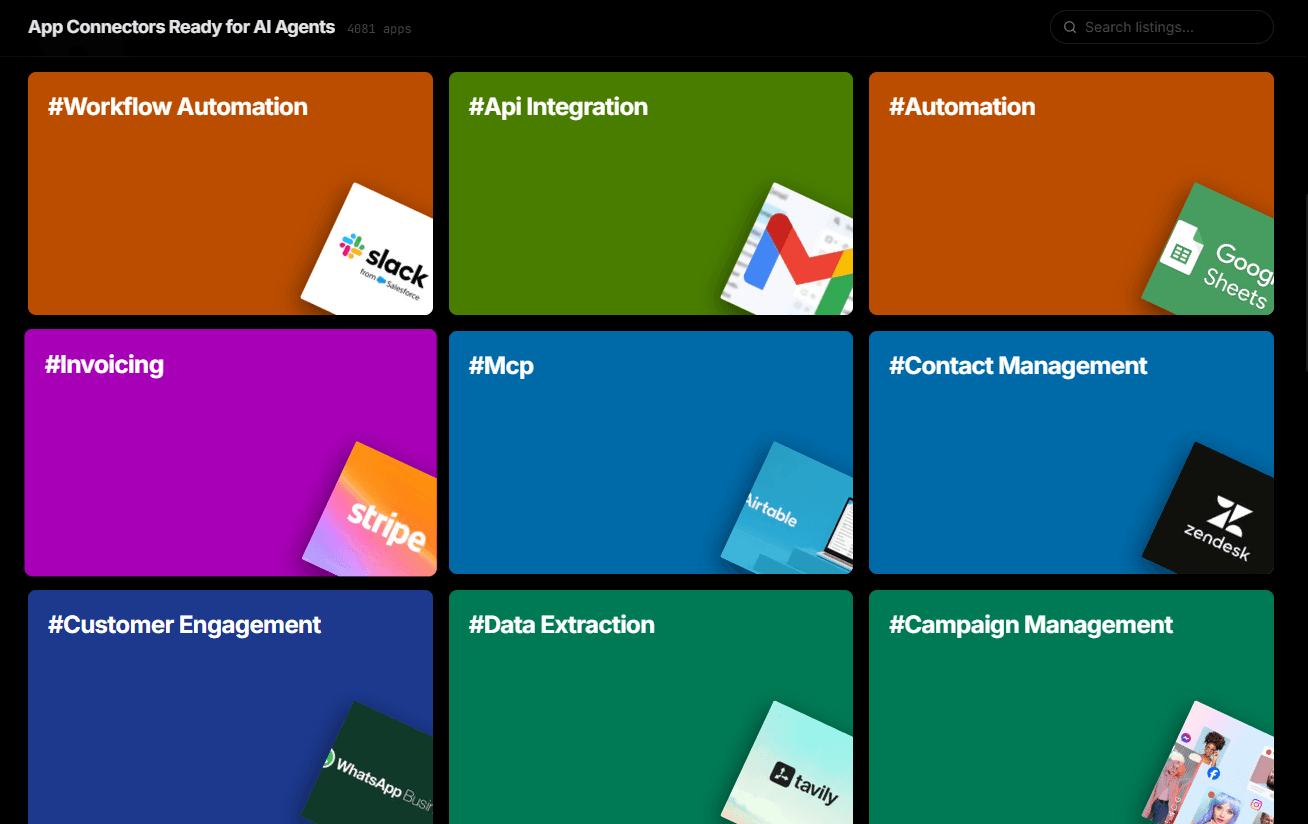
Over 4,000 integrations ready for AI agents
Explore a vast library of pre-built integrations, optimized and ready to deploy.
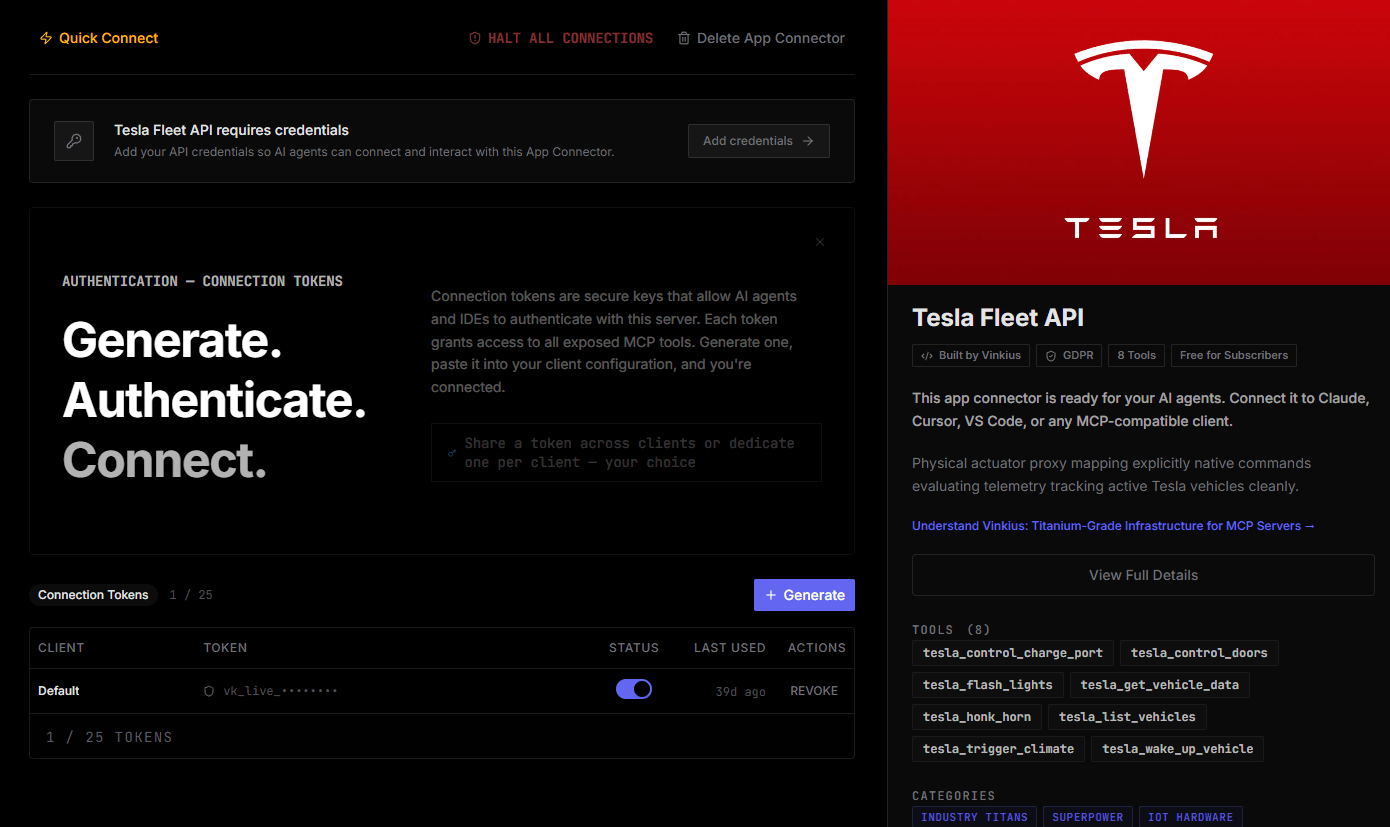
Connect securely in under 30 seconds
Generate tokens to authenticate and link external services in a single step.
Complete visibility into every agent action
Audit live requests, latency, success rates, and active security compliance policies.
Optimize spending and track token ROI
Analyze real-time token consumption and cost metrics detailed by connection.
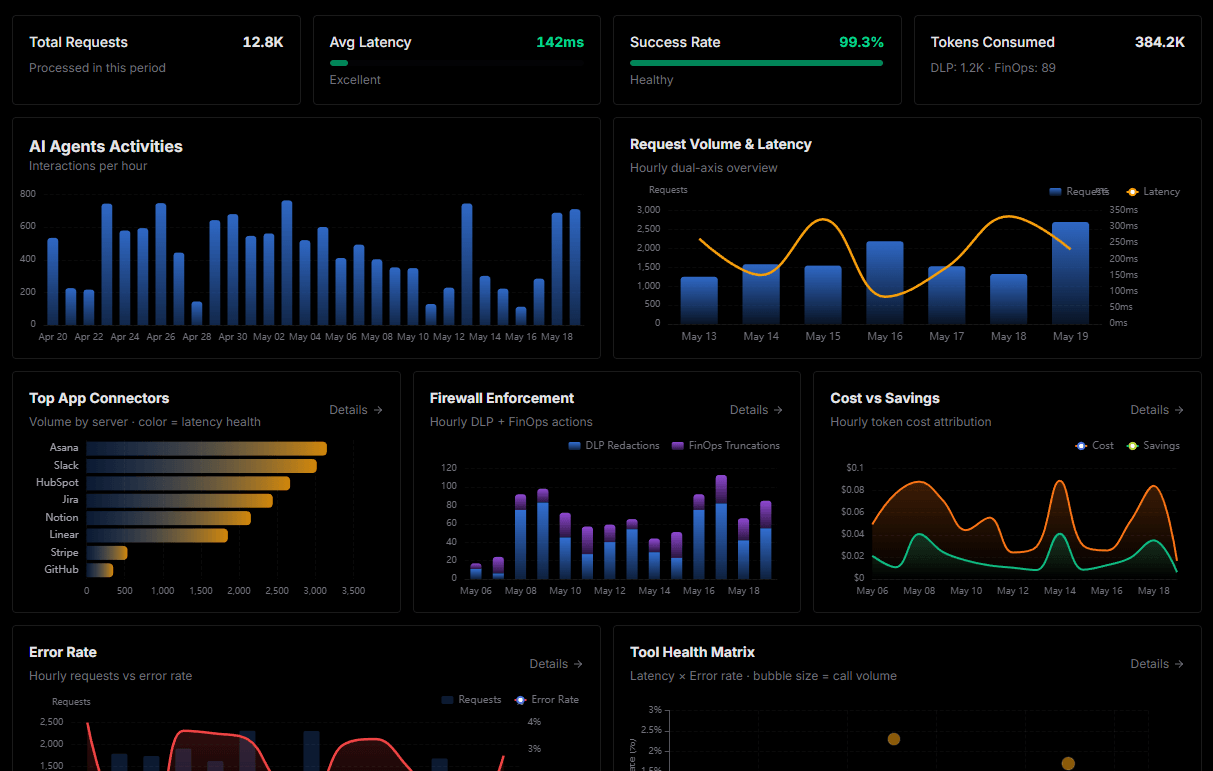
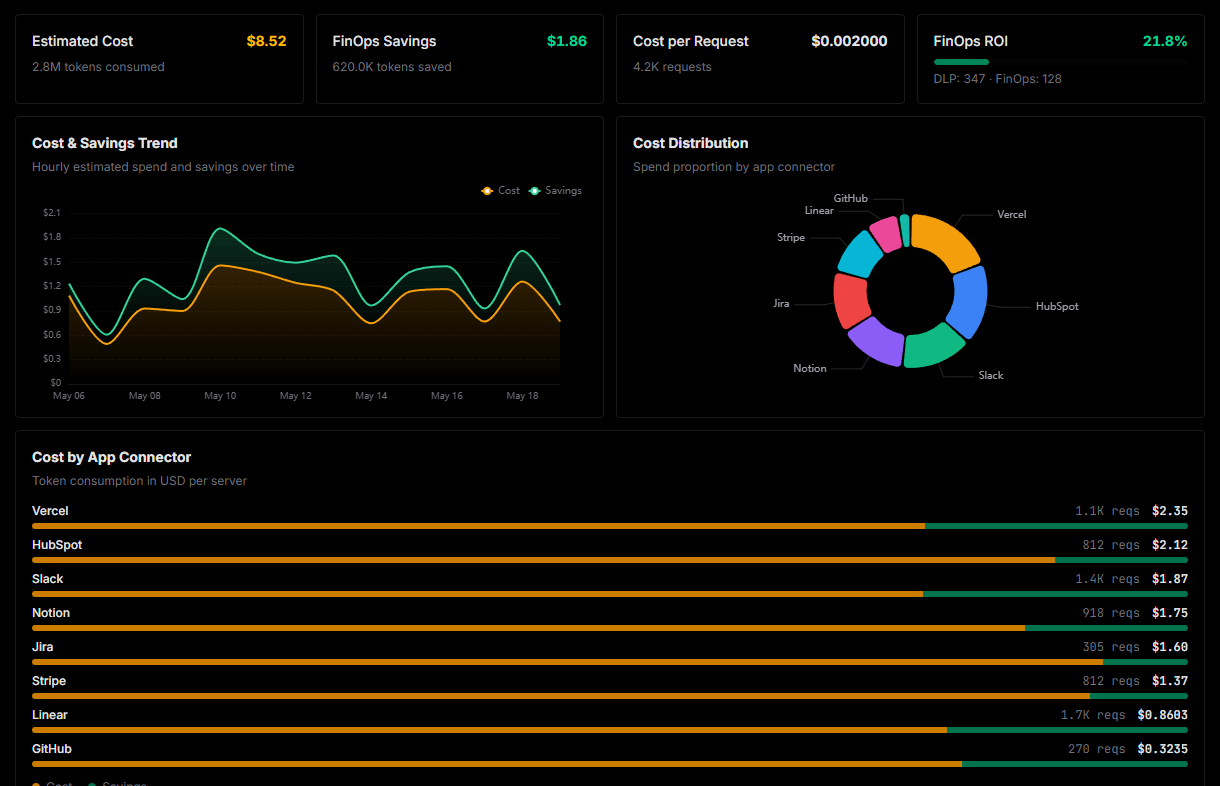
Explore our live AI Agents Analytics dashboard to see it all working
This dashboard is included when you connect TransportAPI using Vinkius. You will never be left in the dark about what your AI agents are doing with your tools.
TransportAPI and 4,000+ other AI tools. No hosting, no code, ready to use.
Professionals who connect TransportAPI to Cline through Vinkius don't need to write code, manage servers, or worry about security. Everything is pre-configured, secure, and runs automatically in the background.
Raw MCP | Vinkius | |
|---|---|---|
| Ready-to-use MCPs | Find and configure each manually | 4,000+ MCPs ready to use |
| Connection Setup | Manual coding & server setup | 1-click instant connection |
| Server Hosting | You host it yourself (needs 24/7 uptime) | 100% hosted & managed by Vinkius |
| Security & Privacy | Stored in plaintext config files | Bank-grade encrypted vault |
| Activity Visibility | Blind execution (no logs or tracking) | Live dashboard with real-time logs |
| Cost Control | Runaway AI token spend risk | Automatic budget limits |
| Revoking Access | Must delete files or code to stop | 1-click disconnect button |
How Vinkius secures
TransportAPI for Cline
Every request between Cline and TransportAPI is protected by our secure gateway. We automatically keep your sensitive data private, prevent unauthorized access, and let you disconnect instantly at any time.
Frequently asked questions
Can my AI check when the next bus is arriving at a specific UK bus stop?
Yes! First use search_stops to find the bus stop by name or location (e.g., "Oxford Street" or "Piccadilly Circus"). This returns the Naptan stop ID. Then use get_bus_departures with that stop ID to see all upcoming departures with expected arrival times, line numbers, destinations, and any delay information. You can also use get_bus_arrivals to monitor incoming services. The API provides real-time predictions based on live vehicle tracking across Great Britain.
How do I plan a complete journey from my hotel to a UK attraction using public transport?
Use the get_journey_plan tool with your hotel address or postcode as the origin and the attraction name or postcode as the destination. The TransportAPI journey planner will return complete multimodal itineraries combining buses, trains, trams, underground (tube), walking, and cycling with departure times, arrival times, total duration, number of changes, detailed legs with line names and operators, walking distances, and real-time disruption alerts. You can also specify a desired departure or arrival time for time-specific planning.
Can I check if there are any disruptions or engineering works affecting UK rail services?
Absolutely! Use get_updates to fetch current service alerts and disruption notices across the UK transport network. You can filter by mode ("rail" for trains, "bus" for buses) to get targeted alerts. The results include affected lines or stations, disruption descriptions, severity levels, expected duration, and alternative route recommendations. For station-specific information, use get_rail_departures or get_rail_arrivals which include cancellation and delay indicators for individual services.
How does Cline connect to MCP servers?
Cline reads MCP server configurations from its settings panel in VS Code. Add the server URL and Cline discovers all available tools on initialization.
Can Cline run MCP tools without approval?
By default, Cline asks for confirmation before executing tool calls. You can configure auto-approval rules for trusted servers in the settings.
Does Cline support multiple MCP servers at once?
Yes. Configure as many servers as needed. Cline can use tools from different servers within the same autonomous task execution.
Server shows error in sidebar
Click the server name to see logs. Verify the URL and token are correct.
Explore More MCP Servers
View all →
Genius Referrals
12 toolsManage referral programs, track advocates, and oversee rewards via AI agents with Genius Referrals.

Payload CMS Alternative
10 toolsManage your Payload CMS content directly from any AI agent — query collections, update documents, and manage globals via REST API.

Headscale (Tailscale Alternative)
18 toolsManage your private Tailscale network via Headscale — control users, nodes, and pre-auth keys directly from your AI agent.

ORCID
13 toolsAccess and manage ORCID researcher records — search the registry, fetch biographical data, and manage works or affiliations directly.