
Bring Utility Rates
to Cursor
Create your Vinkius account to connect OpenEI to Cursor and start using all 10 AI tools in minutes. Fully managed, enterprise secure, and ready to use without writing a single line of code. No hosting, no server setup — just connect and start using.
 GDPR Free for Subscribers
Compatible with every major AI agent and IDE
 Gemini
What is the OpenEI MCP Server?
Access the National Utility Rate Database through OpenEI — the most comprehensive source for US electricity rate data maintained by the Department of Energy. Connect OpenEI to your AI agent to instantly query utility rates by address or coordinates, analyze rate structures across residential, commercial, and industrial sectors, retrieve complete tariff details including time-of-use periods and demand charges — all through natural conversation.
What you can do
- Location-Based Rate Lookup — Find all applicable utility rates by providing a street address or GPS coordinates.
- Sector-Specific Rates — Query residential, commercial, or industrial electricity rates separately.
- Complete Tariff Analysis — Retrieve full rate structures including time-of-use periods, seasonal variations, demand charges, and energy charges.
- Utility Company Research — Search and browse US electric utilities, get company details and service territories.
- Solar Feasibility Studies — Instant rate quotes for solar ROI calculations and net metering analysis.
- Energy Cost Modeling — Access detailed rate structures for accurate energy cost projections.
- Demand Charge Analysis — Understand demand charges for commercial and industrial facilities.
- Rate Comparison — Compare rate options across different utilities and locations.
How it works
- Subscribe to this server
- Enter your OpenEI API Key
- Start querying electricity rates through Claude, Cursor, or any MCP-compatible client
Who is this for?
- Solar Installers — instant rate quotes for customer proposals and ROI calculations.
- Energy Consultants — detailed rate structures for energy cost modeling and feasibility studies.
- Facility Managers — compare rates across locations for site selection and budget planning.
- Researchers — access comprehensive US electricity rate data for academic and policy analysis.
Built-in capabilities (10)
Use lat/lon or address to identify the location. Returns all available commercial tariffs including general service, large power, and time-of-use rates. Essential for commercial solar installations, demand response analysis, and business energy cost modeling. Get commercial electricity rates for a location
Industrial rates typically include the lowest per-kWh costs but may have complex demand charges and power factor adjustments. Use for heavy manufacturing energy cost analysis, load forecasting, and industrial facility site selection. Get industrial electricity rates for a location
Returns the full rate structure including energy charges, demand charges, fixed charges, minimum charges, time-of-use periods, seasonal variations, and applicable taxes. Use this after identifying a rate ID from get_utility_rates to get exhaustive details for cost modeling or bill analysis. Get detailed information about a specific utility rate/tariff
Simply provide a street address and the API will geocode it and identify the serving utility and applicable rates. Perfect for solar installers providing instant rate quotes to customers, or homeowners checking their electricity rates. Returns all available rate options at that address. Get utility rates for a specific street address
Automatically identifies the serving utility for that location and returns applicable rates. Essential for solar installers, energy consultants, and site selection analysis. Returns residential, commercial, and industrial rates if available. Set detail=full for complete rate structures. Get utility rates for a location using GPS coordinates
Perfect for homeowners comparing electricity costs, evaluating solar ROI, or understanding time-of-use rate options. Returns all residential tariffs including tiered rates, time-of-use plans, and electric vehicle charging rates. Get residential electricity rates for a location
Returns the utility name, address, contact information, service territory, owned generation resources, and associated rates. Use this to research utility companies, understand their generation mix, or identify all rates offered by a specific utility. Get detailed information about a specific utility company
Provide either latitude/longitude coordinates or a physical address to find applicable utility rates. Filter by sector (residential, commercial, industrial) to get specific rate types. Use detail=full to retrieve complete rate structures including time-of-use periods, seasonal variations, demand charges, and energy charges. This is essential for solar analysis, energy cost modeling, and economic feasibility studies. Sector values: 1=Residential, 2=Commercial, 3=Industrial. Get utility rate information for a specific location
Filter by state, country, or utility name to find specific companies. Returns utility names, addresses, company IDs, and service territories. Use this to identify utility companies for research or to get company IDs for further queries. Use limit and offset for pagination through large result sets. List electric utility companies in the OpenEI database
Useful for finding the correct utility when you know part of the company name but not the ID. Returns matching utilities with their IDs, addresses, and service areas. Use the returned IDs for detailed queries. Search for utility companies by name
Why Cursor?
Cursor's Agent mode turns OpenEI into an in-editor superpower. Ask Cursor to generate code using live data from OpenEI and it fetches, processes, and writes. all in a single agentic loop. 10 tools appear alongside file editing and terminal access, creating a unified development environment grounded in real-time information.
- —
Agent mode turns Cursor into an autonomous coding assistant that can read files, run commands, and call MCP tools without switching context
- —
Cursor's Composer feature can generate entire files using real-time data fetched through MCP. no copy-pasting from external dashboards
- —
MCP tools appear alongside built-in tools like file reading and terminal access, creating a unified agentic environment
- —
VS Code extension compatibility means your existing workflow, keybindings, and extensions all work alongside MCP tools
OpenEI in Cursor
Why run OpenEI with Vinkius?
The OpenEI connection runs on our fully managed, secure cloud infrastructure. We handle the hosting, maintenance, and security so you don't have to deal with servers or code. All 10 tools are ready to work instantly without any complex setup.
You stay in complete control of your data. Your AI only accesses the information you approve, keeping your sensitive passwords and private details completely safe. Plus, with automatic optimizations, your AI works faster and more efficiently.
* Every connection is hosted and maintained by Vinkius. We handle the security, updates, and infrastructure so you don't have to write code or manage servers. See our infrastructure
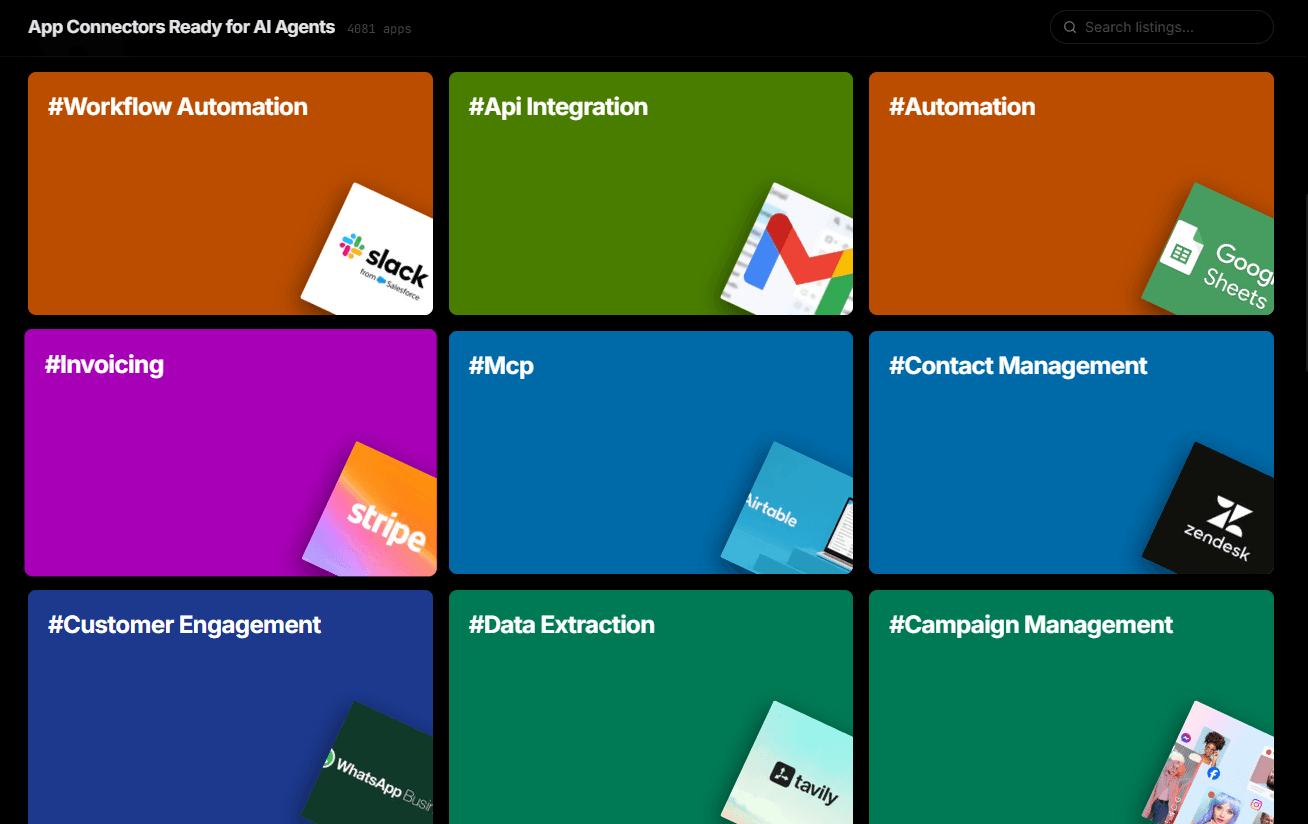
Over 4,000 integrations ready for AI agents
Explore a vast library of pre-built integrations, optimized and ready to deploy.
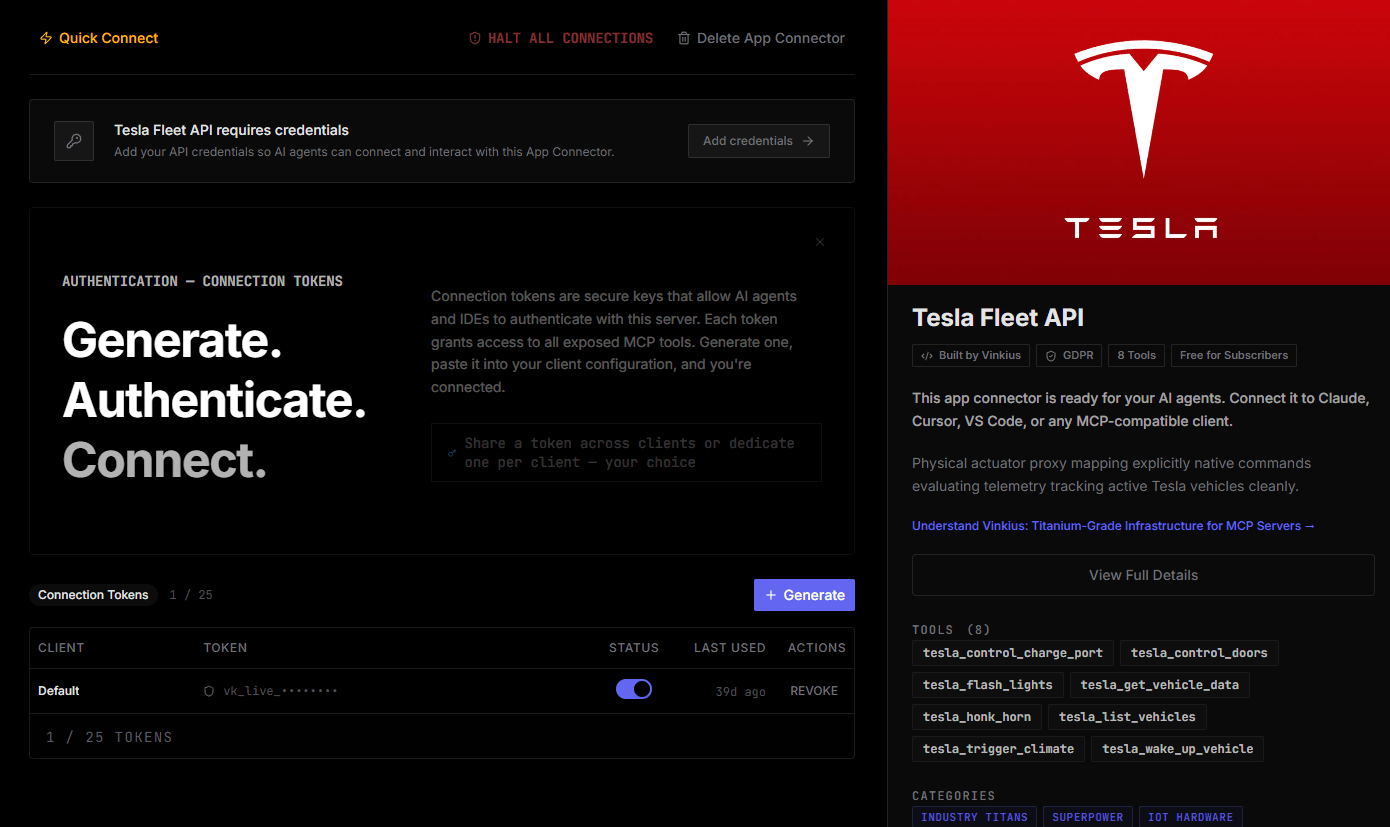
Connect securely in under 30 seconds
Generate tokens to authenticate and link external services in a single step.
Complete visibility into every agent action
Audit live requests, latency, success rates, and active security compliance policies.
Optimize spending and track token ROI
Analyze real-time token consumption and cost metrics detailed by connection.
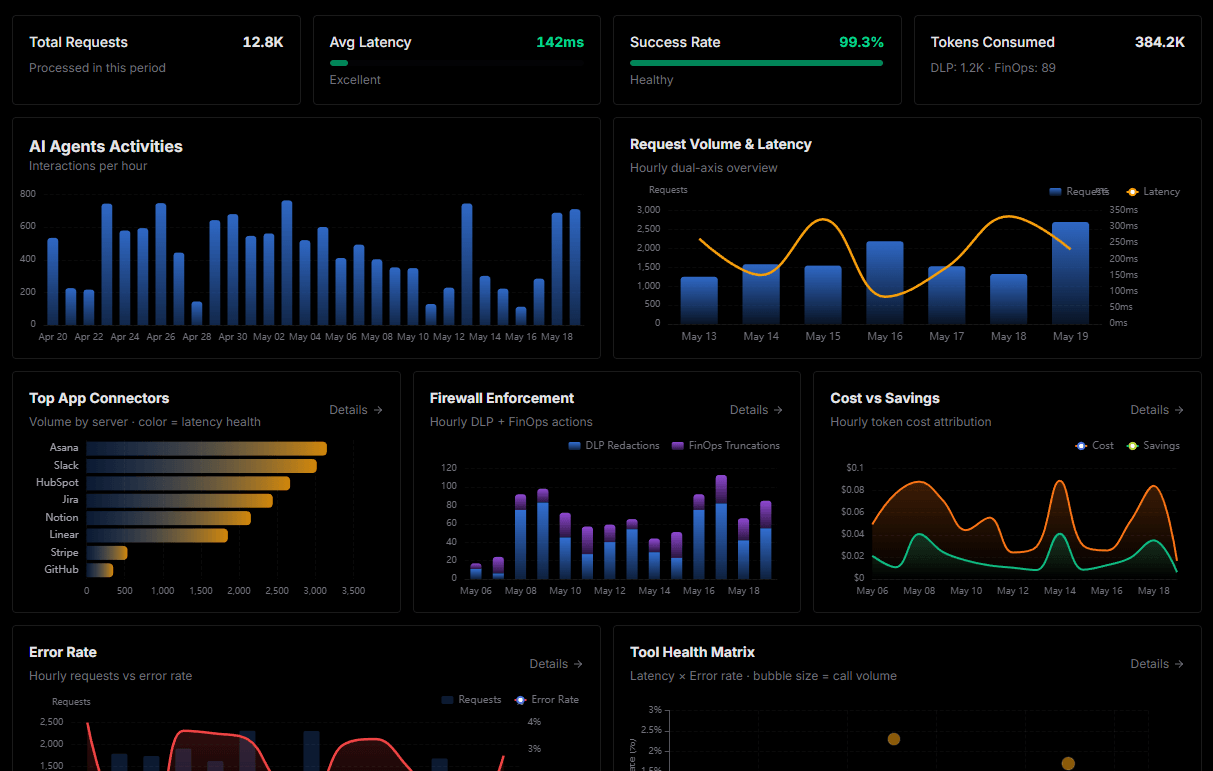
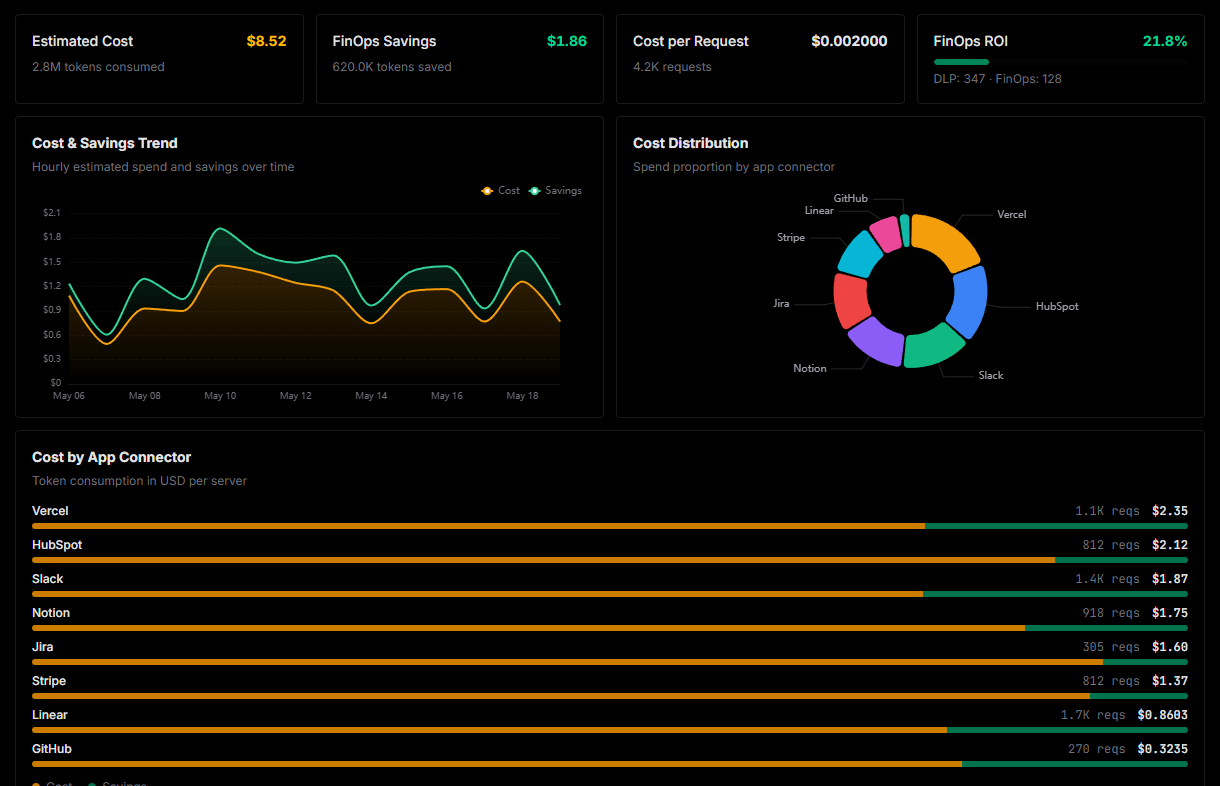
Explore our live AI Agents Analytics dashboard to see it all working
This dashboard is included when you connect OpenEI using Vinkius. You will never be left in the dark about what your AI agents are doing with your tools.
OpenEI and 4,000+ other AI tools. No hosting, no code, ready to use.
Professionals who connect OpenEI to Cursor through Vinkius don't need to write code, manage servers, or worry about security. Everything is pre-configured, secure, and runs automatically in the background.
Raw MCP | Vinkius | |
|---|---|---|
| Ready-to-use MCPs | Find and configure each manually | 4,000+ MCPs ready to use |
| Connection Setup | Manual coding & server setup | 1-click instant connection |
| Server Hosting | You host it yourself (needs 24/7 uptime) | 100% hosted & managed by Vinkius |
| Security & Privacy | Stored in plaintext config files | Bank-grade encrypted vault |
| Activity Visibility | Blind execution (no logs or tracking) | Live dashboard with real-time logs |
| Cost Control | Runaway AI token spend risk | Automatic budget limits |
| Revoking Access | Must delete files or code to stop | 1-click disconnect button |
How Vinkius secures
OpenEI for Cursor
Every request between Cursor and OpenEI is protected by our secure gateway. We automatically keep your sensitive data private, prevent unauthorized access, and let you disconnect instantly at any time.
Frequently asked questions
How do I find electricity rates for my address?
Use the get_rates_by_address tool with your full street address. The API will geocode your location and return all applicable utility rates (residential, commercial, industrial). For example, enter '1617 Cole Blvd, Golden, CO 80401' to see rates from Xcel Energy and other providers serving that area.
What's the difference between residential, commercial, and industrial rates?
Residential rates (sector 1) are for homes and typically have simple tiered or time-of-use structures. Commercial rates (sector 2) serve businesses and include general service and large power tariffs with demand charges. Industrial rates (sector 3) are for heavy manufacturing with the lowest per-kWh costs but complex demand and power factor adjustments. Use the specific sector tools or filter with the sector parameter.
Can I get complete rate structures with time-of-use details?
Yes. Set the detail parameter to 'full' when calling get_utility_rates or get_rate_detail. This returns the complete tariff structure including energyratestructure (time-of-use periods and seasonal blocks), demandratestructure, fixed charges, minimum charges, and tax adjustments. Essential for accurate solar ROI calculations and detailed energy cost modeling.
What is Agent mode and why does it matter for MCP?
Agent mode is Cursor's autonomous execution mode where the AI can perform multi-step tasks: reading files, editing code, running terminal commands, and calling MCP tools. Without Agent mode, Cursor operates in a simpler ask-and-answer mode that doesn't support tool calling. Always ensure you're in Agent mode when working with MCP servers.
Where does Cursor store MCP configuration?
Cursor looks for MCP server configurations in a mcp.json file. You can configure servers at the project level (.cursor/mcp.json in your project root) or globally (~/.cursor/mcp.json). Project-level configs take precedence.
Can Cursor use MCP tools in inline edits?
No. MCP tools are only available in Agent mode through the chat panel. Inline completions and Tab suggestions do not trigger MCP tool calls. This is by design. tool calls require user visibility and approval.
How do I verify MCP tools are loaded?
Open Settings → Features → MCP and look for your server name. A green indicator means the server is connected. You can also check Agent mode's available tools by clicking the tools dropdown in the chat panel.
Tools not appearing in Cursor
Ensure you are in Agent mode (not Ask mode). MCP tools only work in Agent mode.
Server shows as disconnected
Check Settings → Features → MCP and verify the server status. Try clicking the refresh button.
Explore More MCP Servers
View all →
WeCom / 企业微信
10 toolsEnterprise communication and management platform — manage departments, users, and messages via AI.

Cartola FC (Fantasy Football)
12 toolsThe definitive server for Cartola FC — track scouts, player values, and live scores for Brasileirão Série A.

SendGrid Email Sender
1 toolsThis MCP does exactly one thing: it sends transactional emails using Twilio SendGrid. That's its only function, and nothing else. Incredible for giving your AI agents the ability to dispatch email reports.

ECB Full — Complete Eurozone Financial Intelligence
14 toolsThe definitive ECB Mega-Server: 14 tools for EUR exchange rates against 40+ currencies, key interest rates (MRO, DFR, MLFR), MFI bank rates, monetary aggregates (M1/M2/M3), government bond yield curves, euro banknotes, and a universal SDMX query engine for all ECB statistical data.