
Bring Bluetooth Beacons
to Google ADK
Create your Vinkius account to connect Estimote to Google ADK and start using all 10 AI tools in minutes. Fully managed, enterprise secure, and ready to use without writing a single line of code. No hosting, no server setup — just connect and start using.
 GDPR Free for Subscribers
Compatible with every major AI agent and IDE
 Gemini
What is the Estimote MCP Server?
Connect your Estimote Cloud account to any AI agent and take full control of your beacon fleet management and proximity data workflows through natural conversation.
What you can do
- Fleet Orchestration — List all Estimote beacons including Proximity, Location, and Stickers, returning identifiers, hardware types, and current battery levels natively
- Device Shadow Management — Retrieve detailed configurations and status for specific beacons and update broadcasting parameters or transmission power through the shadow system
- Proximity Analytics — Pull detection counts, unique visitor estimates, and dwell time distributions over specified periods to measure real-world engagement
- Real-time Telemetry — Access live sensor data including temperature readings, ambient light levels, motion detection, and barometric pressure from supported hardware
- Physical Location Auditing — Register and manage venues, buildings, or stores, providing geographic coordinates for beacon organization and analytics grouping
- Taxonomy & Tagging — List fleet tags and assign organizational labels to devices for logical grouping and proximity campaign targeting
- Decommissioning Oversight — Permanently remove beacon devices from your cloud account while maintaining physical broadcasting for legacy integrations
How it works
- Subscribe to this server
- Enter your Estimote App Token (found in Estimote Cloud > Apps > Your Own App)
- Start managing your beacon fleet from Claude, Cursor, or any MCP-compatible client
Who is this for?
- IoT Developers — test and debug beacon settings and verify sensor telemetry through natural conversation
- Retail Managers — monitor foot traffic analytics and visitor engagement across multiple store locations
- Facility Managers — track environmental data and space utilization using natural language
- Operations Teams — audit beacon battery levels and manage physical device assignments in real-time
Built-in capabilities (10)
If the tag does not exist, it is created automatically. A device can have multiple tags. Use to organize beacons by floor, zone, store section, or campaign. Tags persist in the cloud and do not require physical beacon access. Assign an organizational tag to a specific Estimote beacon device, adding it to a logical group for fleet management, analytics filtering, and proximity campaign targeting
After creating a location, assign beacon devices to it for organized fleet management and location-scoped analytics. Use when deploying beacons at a new site. Register a new physical location (store, office, venue) in Estimote Cloud, providing the site name, street address, and geographic coordinates for beacon fleet organization and analytics grouping
The identifier is the beacon MAC address or Estimote Cloud ID. Returns the full device shadow including pending settings changes. Use to diagnose beacon configuration issues or verify firmware update status. Retrieve detailed configuration and status for a specific Estimote beacon device, including its current broadcasting power, advertising interval, sensor readings, firmware version, and physical location assignment
Returns the most recent sensor readings from the beacon. Not all sensors are available on all hardware models. Estimote Proximity Beacons support temperature and motion; Location Beacons add light and pressure sensors. Use for environmental monitoring and occupancy detection. Retrieve real-time sensor telemetry data from a specific Estimote beacon, including temperature readings, ambient light levels, accelerometer motion detection, magnetometer orientation, and barometric pressure where supported by hardware
Supports query parameters for date range (from, to), device identifier, and tag filtering. Returns aggregated metrics showing how many mobile devices detected each beacon. Use for foot traffic analysis, retail engagement measurement, and space utilization studies. Retrieve proximity analytics data for Estimote beacon devices, including detection counts, unique visitor estimates, dwell time distributions, and engagement metrics over a specified time period
estimote.com. Returns a paginated array of beacon objects. Each beacon includes its MAC address (the most reliable identifier), iBeacon UUID/Major/Minor, Eddystone namespace/instance, and shadow settings. Use to inventory your deployed beacon fleet. List all Estimote beacon devices registered in your Estimote Cloud account, returning device identifiers, hardware types (Proximity/Location/Sticker), battery levels, firmware versions, and current configuration status
Returns an array of tag objects with names and associated device counts. Tags are the primary organizational mechanism in Estimote Cloud. Use to understand your current fleet taxonomy before assigning or filtering devices. List all organizational tags defined in your Estimote Cloud account, which are used to group and categorize beacon devices by location, use case, department, or any custom classification scheme
Returns an array of location objects. Locations serve as containers for organizing beacons by physical site. Each location can have multiple beacon devices assigned to it. Use to audit your deployment footprint across multiple sites. List all physical locations (venues/buildings/stores) registered in your Estimote Cloud account, returning location names, addresses, geographic coordinates, and the number of beacons deployed at each site
WARNING: This permanently removes the device from your fleet. The beacon will continue broadcasting but will no longer be managed by Estimote Cloud. Only use when decommissioning hardware. The device can be re-added later via the Estimote app. Permanently remove an Estimote beacon device from your Cloud account, deleting all associated configuration, analytics history, and location assignments. This action is irreversible
Changes are queued in the cloud shadow and synchronized to the physical beacon when a device running the Estimote SDK connects to it. Common updates include name, tags, broadcasting power (dBm), and advertising interval (ms). Update the configuration of a specific Estimote beacon device by modifying its broadcasting parameters, advertising interval, transmission power, or attached metadata tags through the Estimote Cloud shadow system
Why Google ADK?
Google ADK natively supports Estimote as an MCP tool provider. declare Vinkius Edge URL and the framework handles discovery, validation, and execution automatically. Combine 10 tools with Gemini's long-context reasoning for complex multi-tool workflows, with production-ready session management and evaluation built in.
- —
Google ADK natively supports MCP tool servers. declare a tool provider and the framework handles discovery, validation, and execution
- —
Built on Gemini models, ADK provides long-context reasoning ideal for complex multi-tool workflows with Estimote
- —
Production-ready features like session management, evaluation, and deployment come built-in. not bolted on
- —
Seamless integration with Google Cloud services means you can combine Estimote tools with BigQuery, Vertex AI, and Cloud Functions
Estimote in Google ADK
Why run Estimote with Vinkius?
The Estimote connection runs on our fully managed, secure cloud infrastructure. We handle the hosting, maintenance, and security so you don't have to deal with servers or code. All 10 tools are ready to work instantly without any complex setup.
You stay in complete control of your data. Your AI only accesses the information you approve, keeping your sensitive passwords and private details completely safe. Plus, with automatic optimizations, your AI works faster and more efficiently.
* Every connection is hosted and maintained by Vinkius. We handle the security, updates, and infrastructure so you don't have to write code or manage servers. See our infrastructure
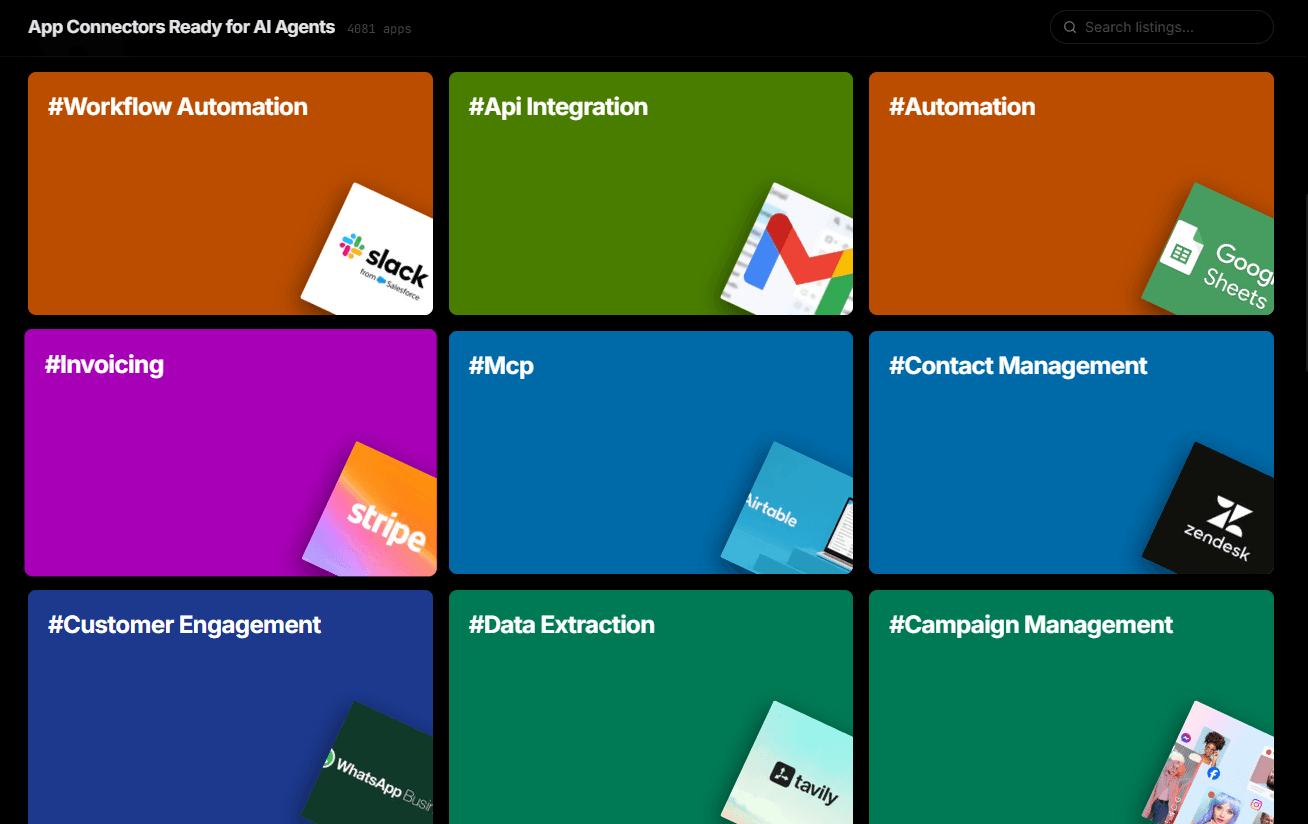
Over 4,000 integrations ready for AI agents
Explore a vast library of pre-built integrations, optimized and ready to deploy.
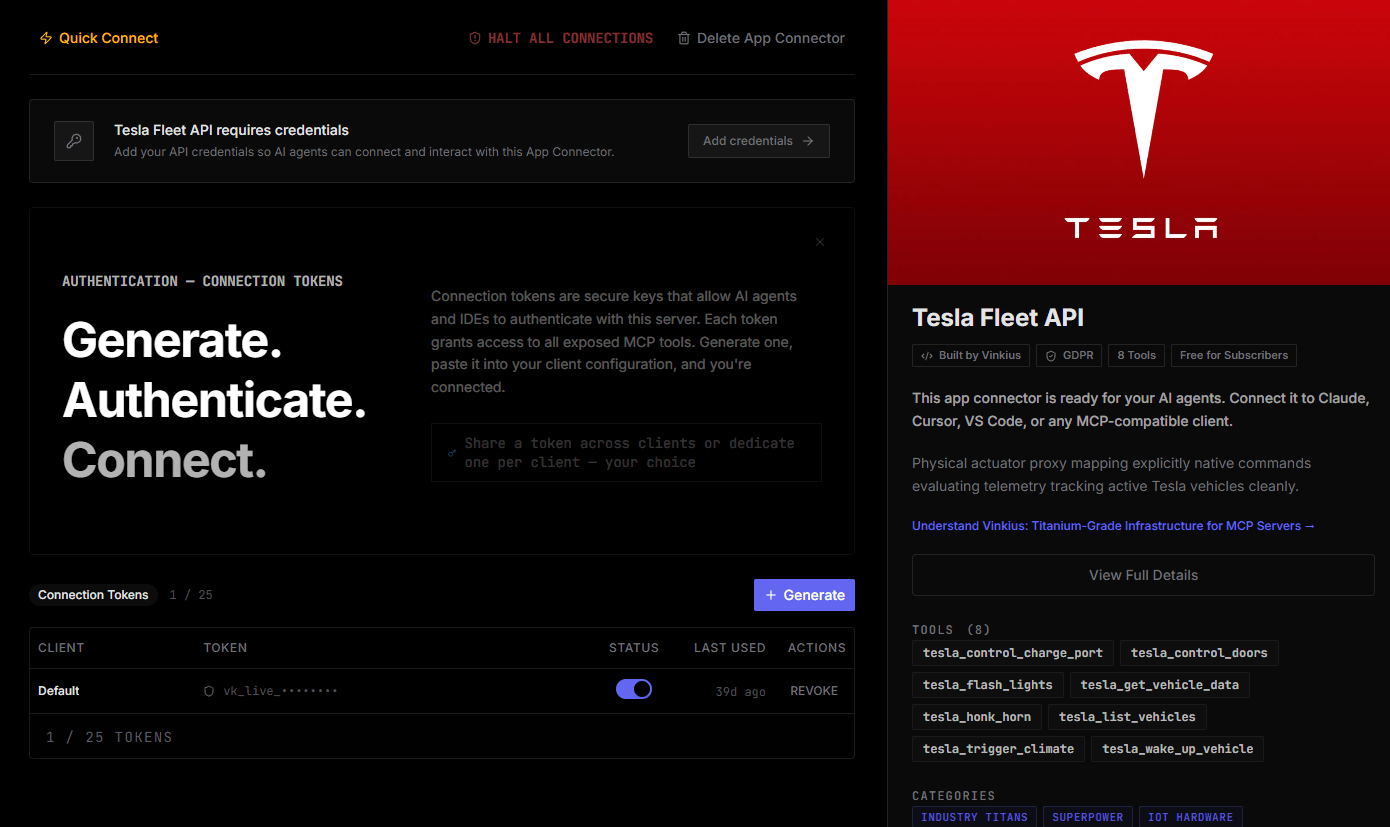
Connect securely in under 30 seconds
Generate tokens to authenticate and link external services in a single step.
Complete visibility into every agent action
Audit live requests, latency, success rates, and active security compliance policies.
Optimize spending and track token ROI
Analyze real-time token consumption and cost metrics detailed by connection.
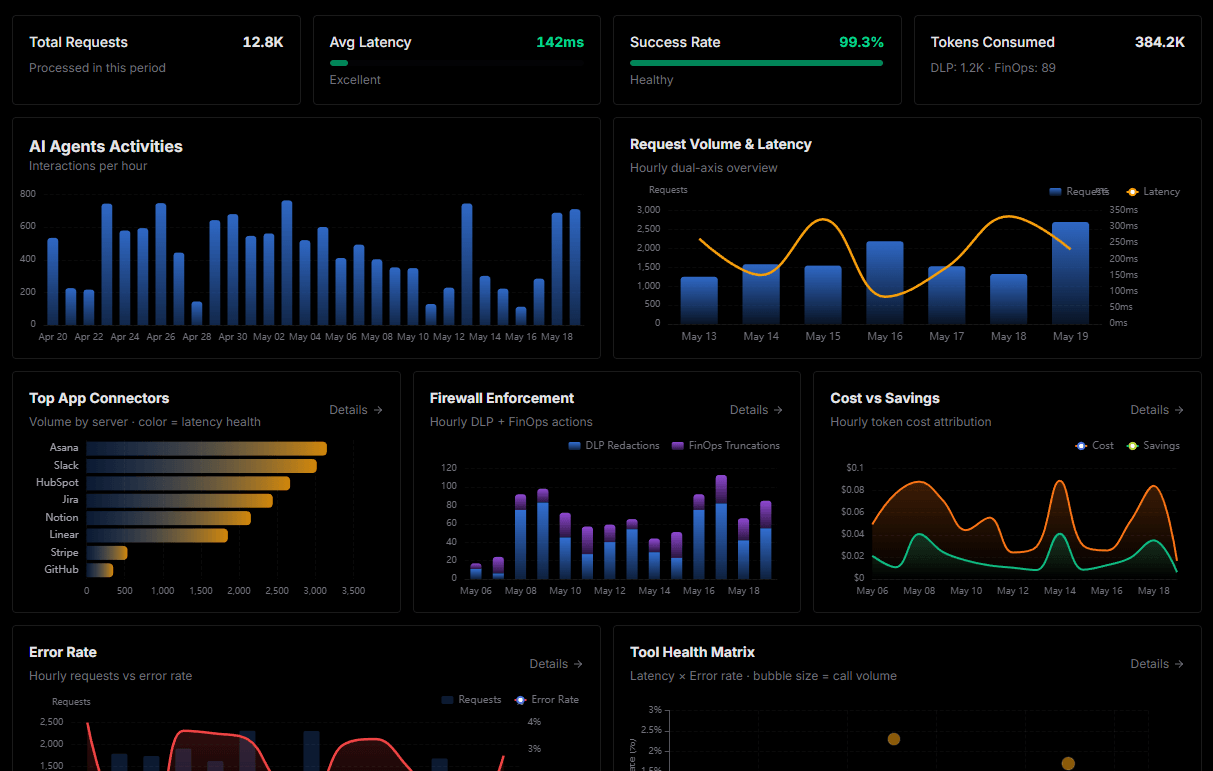
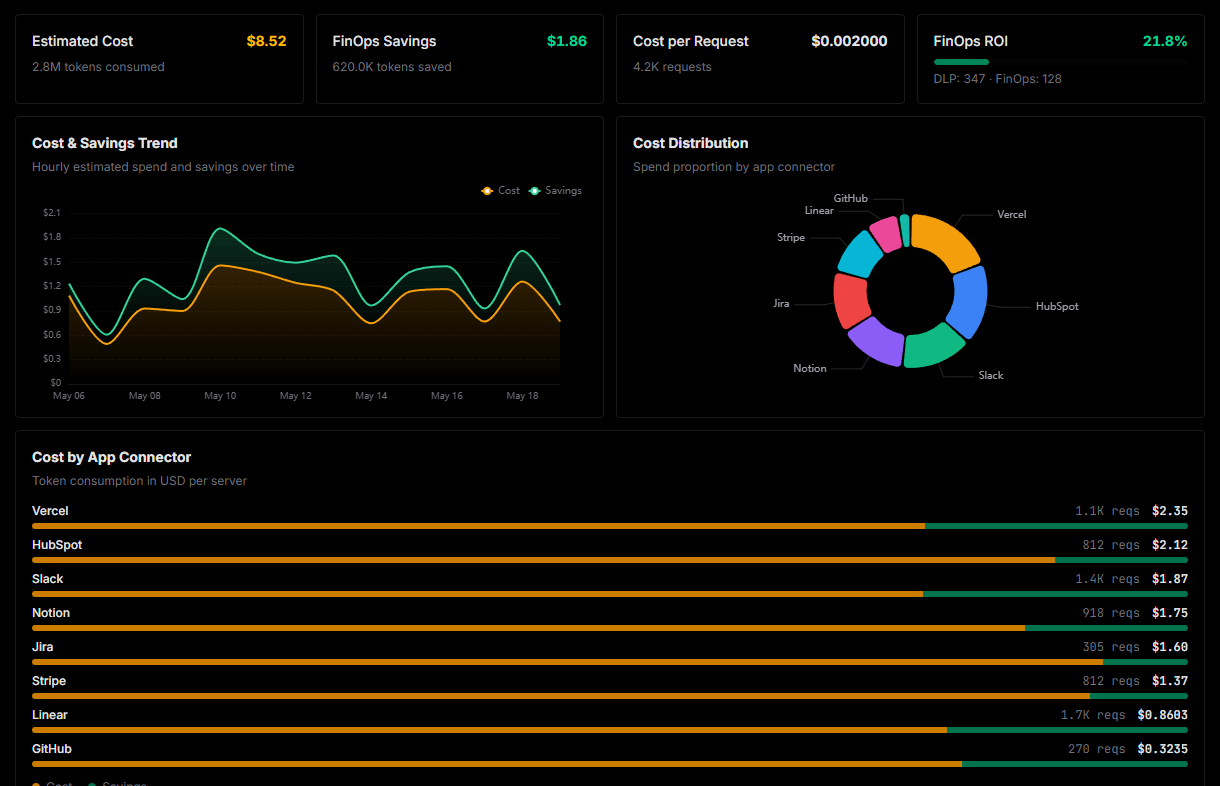
Explore our live AI Agents Analytics dashboard to see it all working
This dashboard is included when you connect Estimote using Vinkius. You will never be left in the dark about what your AI agents are doing with your tools.
Estimote and 4,000+ other AI tools. No hosting, no code, ready to use.
Professionals who connect Estimote to Google ADK through Vinkius don't need to write code, manage servers, or worry about security. Everything is pre-configured, secure, and runs automatically in the background.
Raw MCP | Vinkius | |
|---|---|---|
| Ready-to-use MCPs | Find and configure each manually | 4,000+ MCPs ready to use |
| Connection Setup | Manual coding & server setup | 1-click instant connection |
| Server Hosting | You host it yourself (needs 24/7 uptime) | 100% hosted & managed by Vinkius |
| Security & Privacy | Stored in plaintext config files | Bank-grade encrypted vault |
| Activity Visibility | Blind execution (no logs or tracking) | Live dashboard with real-time logs |
| Cost Control | Runaway AI token spend risk | Automatic budget limits |
| Revoking Access | Must delete files or code to stop | 1-click disconnect button |
How Vinkius secures
Estimote for Google ADK
Every request between Google ADK and Estimote is protected by our secure gateway. We automatically keep your sensitive data private, prevent unauthorized access, and let you disconnect instantly at any time.
Frequently asked questions
Can my agent check the battery levels of all my beacons?
Yes. Use the 'list_beacon_devices' tool. The agent retrieves the overarching inventory of your fleet, returning hardware types and precise battery levels for every registered device natively.
How do I update the advertising interval of a beacon via chat?
Use the 'update_beacon_settings' tool. Provide the beacon identifier and a JSON object with the new settings (e.g., '{"settings": {"advertisingInterval": 300}}'). The changes are queued in the cloud shadow and synced automatically.
Can I see real-time temperature data from my beacons through the agent?
Absolutely. Use the 'get_beacon_telemetry' tool. Your agent will fetch the most recent sensor readings, including temperature, light, and motion detection, directly from the beacon's cloud record.
How does Google ADK connect to MCP servers?
Import the MCP toolset class and pass the server URL. ADK discovers and registers all tools automatically, making them available to your agent's tool-use loop.
Can ADK agents use multiple MCP servers?
Yes. Declare multiple MCP tool providers in your agent configuration. ADK merges all tool schemas and the agent can call tools from any server in a single turn.
Which Gemini models work best with MCP tools?
Gemini 2.0 Flash and Pro models both support function calling required for MCP tools. Flash is recommended for latency-sensitive use cases, Pro for complex reasoning.
McpToolset not found
Update: pip install --upgrade google-adk
Explore More MCP Servers
View all →
Customer.io
12 toolsSend behavior-driven emails, push notifications, and in-app messages triggered by what your users actually do in your product.
Sapling (Kallidus)
10 toolsManage employee onboarding, data, and tasks via Sapling API.
Clickatell
10 toolsManage mobile messaging via Clickatell — send SMS, track delivery status, monitor balance, and handle inbound rules directly from any AI agent.

Dagger (Programmable CI)
10 toolsBuild, test, and deploy using Dagger's programmable CI engine. Execute GraphQL queries, manage containers, and orchestrate pipelines directly from your AI agent.