
Bring Biorxiv
to Mastra AI
Learn how to connect Stanford bioRxiv to Mastra AI and start using 16 AI agent tools in minutes. Fully managed, enterprise secure, and ready to use without writing a single line of code.
 GDPR Free for Subscribers
Compatible with every major AI agent and IDE
 Gemini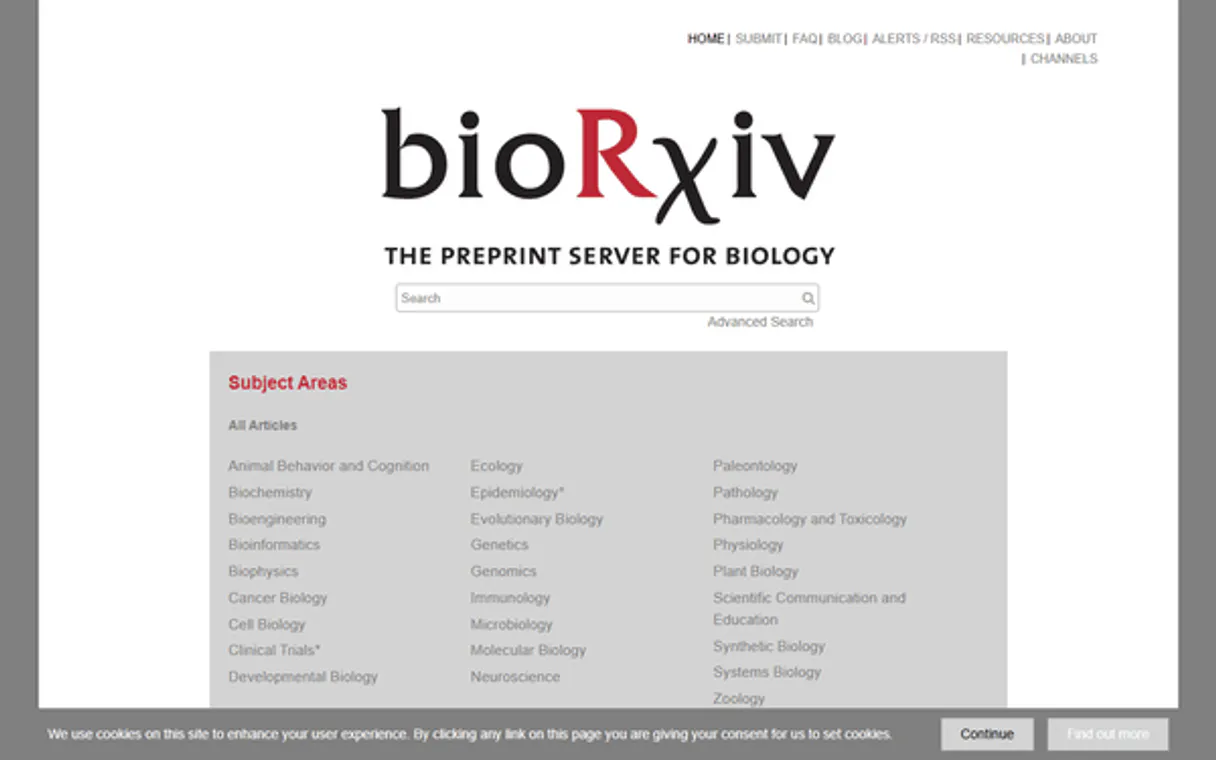
What is the Stanford bioRxiv MCP Server?
Connect to the bioRxiv and medRxiv APIs — the world's leading preprint servers for biology and health sciences.
What you can do
- bioRxiv Preprints — Browse the latest biology preprints across 25+ categories
- medRxiv Preprints — Browse health sciences preprints (clinical, epidemiology, public health)
- Category Filters — Neuroscience, genomics, cell biology, cancer, immunology, and more
- Preprint Details — Get full metadata including abstracts by DOI
- Version Tracking — See how a preprint has been revised over time
- Publication Tracking — Discover which preprints have been published in peer-reviewed journals
- Institution View — Browse preprints by corresponding author institution
- Subject Feeds — Dedicated feeds for neuroscience, genomics, immunology, cell biology, cancer, and epidemiology
Why preprints matter
Preprints appear 6-12 months before peer-reviewed publication. This server gives you access to science at the cutting edge — the same day researchers share their findings with the world.
Who is this for?
- Biologists — stay current with your field before journals publish
- Medical Researchers — monitor clinical and epidemiological preprints
- PhD Students — discover the freshest research in your specialty
- Science Journalists — track breaking scientific discoveries
Built-in capabilities (16)
Searches both bioRxiv and medRxiv. Returns title, authors, corresponding author and institution, date, version, category, abstract, and license. DOI format: "10.1101/2024.01.15.575123". Get preprint details by DOI
Preprints on bioRxiv/medRxiv can be updated multiple times. This lets you see the full revision history and understand how a manuscript has evolved. Get all versions of a preprint to track revisions
Shows the preprint DOI, published DOI, journal name, and publication date. Essential for understanding the preprint-to-publication pipeline. Track which preprints have been published in journals
Returns the published DOI, journal citation, and publication date. Essential for finding the final, peer-reviewed version of a preprint you have read. Find the journal-published version of a preprint
Default is 7 days. Essential for staying at the cutting edge of biological research — preprints appear here 6-12 months before peer-reviewed publication. Get the latest bioRxiv preprints
Covers clinical medicine, epidemiology, public health, and health systems research. Critical for monitoring emerging health research before journal publication. Get the latest medRxiv preprints
The bioRxiv API returns preprints in batches of 100. Use the date interval format "YYYY-MM-DD/YYYY-MM-DD" (e.g. "2024-01-01/2024-01-31"). Use cursor for pagination (0, 100, 200, etc.). Browse bioRxiv preprints by date range
bioRxiv categories include: neuroscience, genomics, bioinformatics, cell_biology, cancer_biology, immunology, microbiology, molecular_biology, biochemistry, genetics, developmental_biology, evolutionary_biology, ecology, plant_biology, physiology, pharmacology, systems_biology, biophysics, synthetic_biology. medRxiv categories: epidemiology, infectious_diseases, public_and_global_health, health_systems, cardiovascular_medicine, oncology, psychiatry, neurology. Filter preprints by subject category
Use this to explore what institutions are producing preprints in a given time period. Each preprint includes the corresponding author and their institutional affiliation. Browse preprints with author institution metadata
Covers tumor biology, oncogenomics, cancer immunology, drug resistance, and experimental therapeutics. Browse cancer biology preprints
Covers cell signaling, organelle biology, cytoskeleton, cell division, stem cells, and cellular mechanisms of disease. Browse cell biology preprints
Covers disease surveillance, outbreak analysis, population health, health policy, and clinical epidemiology. Critical for public health monitoring. Browse epidemiology and public health preprints
Covers genome sequencing, gene regulation, epigenomics, metagenomics, and computational genomics — core disciplines in modern biology. Browse genomics and bioinformatics preprints
Covers immune system research, host-pathogen interactions, vaccine development, autoimmune diseases, and immunotherapy. Browse immunology and microbiology preprints
medRxiv covers clinical research, epidemiology, public health, and health policy. Use interval "YYYY-MM-DD/YYYY-MM-DD" format. Results paginated in batches of 100. Browse medRxiv preprints by date range
Neuroscience is one of the largest and most active categories, covering brain research, neural circuits, cognitive science, and neurological disorders. Browse neuroscience preprints
Why Mastra AI?
Mastra's agent abstraction provides a clean separation between LLM logic and Stanford bioRxiv tool infrastructure. Connect 16 tools through Vinkius and use Mastra's built-in workflow engine to chain tool calls with conditional logic, retries, and parallel execution. deployable to any Node.js host in one command.
- —
Mastra's agent abstraction provides a clean separation between LLM logic and tool infrastructure. add Stanford bioRxiv without touching business code
- —
Built-in workflow engine chains MCP tool calls with conditional logic, retries, and parallel execution for complex automation
- —
TypeScript-native: full type inference for every Stanford bioRxiv tool response with IDE autocomplete and compile-time checks
- —
One-command deployment to any Node.js host. Vercel, Railway, Fly.io, or your own infrastructure
Stanford bioRxiv in Mastra AI
Stanford bioRxiv and 4,000+ other MCP servers. One platform. One governance layer.
Teams that connect Stanford bioRxiv to Mastra AI through Vinkius don't need to source, host, or maintain individual MCP servers. Every tool call runs inside a hardened runtime with credential isolation, DLP, and a signed audit chain.
Raw MCP | Vinkius | |
|---|---|---|
| Server catalog | Find and host yourself | 4,000+ managed |
| Infrastructure | Self-hosted | Sandboxed V8 isolates |
| Credential handling | Plaintext in config | Vault + runtime injection |
| Data loss prevention | None | Configurable DLP policies |
| Kill switch | None | Global instant shutdown |
| Financial circuit breakers | None | Per-server limits + alerts |
| Audit trail | None | Ed25519 signed logs |
| SIEM log streaming | None | Splunk, Datadog, Webhook |
| Honeytokens | None | Canary alerts on leak |
| Custom domains | Not applicable | DNS challenge verified |
| GDPR compliance | Manual effort | Automated purge + export |
Why teams choose Vinkius for Stanford bioRxiv in Mastra AI
The Stanford bioRxiv MCP Server runs on Vinkius-managed infrastructure inside AWS — a purpose-built runtime with per-request V8 isolates, Ed25519 signed audit chains, and sub-40ms cold starts. All 16 tools execute in hardened sandboxes optimized for native MCP execution.
Your AI agents in Mastra AI only access the data you authorize, with DLP that blocks sensitive information from ever reaching the model, kill switch for instant shutdown, and up to 60% token savings. Enterprise-grade infrastructure, zero maintenance.
* Every MCP server runs on Vinkius-managed infrastructure inside AWS - a purpose-built runtime with per-request V8 isolates, Ed25519 signed audit chains, and sub-40ms cold starts optimized for native MCP execution. See our infrastructure
How Vinkius secures
Stanford bioRxiv for Mastra AI
Every tool call from Mastra AI to the Stanford bioRxiv MCP Server is protected by DLP redaction, cryptographic audit chains, V8 sandbox isolation, kill switch, and financial circuit breakers.
Frequently asked questions
Do I need an API key?
No. The bioRxiv and medRxiv APIs are completely free and public.
What is the difference between bioRxiv and medRxiv?
bioRxiv covers biological sciences (neuroscience, genomics, cell biology, ecology, etc.) while medRxiv covers health sciences (clinical research, epidemiology, public health, health systems).
Are preprints peer-reviewed?
No. Preprints are shared before formal peer review. They undergo basic screening but not the full editorial process. This server also tracks which preprints later get published in peer-reviewed journals.
How does Mastra AI connect to MCP servers?
Create an MCPClient with the server URL and pass it to your agent. Mastra discovers all tools and makes them available with full TypeScript types.
Can Mastra agents use tools from multiple servers?
Yes. Pass multiple MCP clients to the agent constructor. Mastra merges all tool schemas and the agent can call any tool from any server.
Does Mastra support workflow orchestration?
Yes. Mastra has a built-in workflow engine that lets you chain MCP tool calls with branching logic, error handling, and parallel execution.
createMCPClient not exported
Install: npm install @mastra/mcp
Explore More MCP Servers
View all →
WebVizio
10 toolsReview and annotate live websites with visual feedback tools that let teams comment directly on pages during design and QA.

CocktailFyi
12 toolsExplore cocktails, ingredients, and bartending techniques — get recipes and guides via AI.

Endorsal Testimonials
10 toolsEquip your AI agent to manage testimonials, track display widgets, and approve reviews via the Endorsal API.

MakePlans
10 toolsOnline booking and appointment scheduling via MakePlans MCP.