
Bring Workflow Orchestration
to OpenAI Agents SDK
Create your Vinkius account to connect Make (Workflow Automation) to OpenAI Agents SDK and start using all 7 AI tools in minutes. Fully managed, enterprise secure, and ready to use without writing a single line of code. No hosting, no server setup — just connect and start using.
 GDPR Free for Subscribers
Compatible with every major AI agent and IDE
 Gemini
What is the Make (Workflow Automation) MCP Server?
Connect your Make account to any AI agent and take full control of your visual workflow automation and scenario management through natural conversation.
What you can do
- Scenario Orchestration — List all managed scenarios and retrieve detailed flow design structures, including module mappings and trigger settings directly from your agent
- Execution Diagnostics — Extract historical scenario logs to identify errors, track data processing volumes, and debug automation failures in real-time
- Infrastructure Audit — Enumerate active organizations, teams, and connections to understand your automation footprint and verify authentication hooks securely
- Data Store Visibility — List and inspect internal Make Data stores (key-value tables) to monitor persistent data used across your automated workflows
- Environment Mapping — Retrieve precise organization and team IDs required for complex downstream API operations and organizational auditing
- Metadata Inspection — Deep-dive into specific scenario configurations to understand the logic and logic loops powering your business processes
How it works
- Subscribe to this server
- Enter your Make API Token and Zone (e.g., eu1, us1)
- Start managing your automation infrastructure from Claude, Cursor, or any MCP-compatible client
Who is this for?
- Automation Engineers — verify scenario designs and audit connection statuses through natural conversation without manual dashboard navigation
- Ops Managers — monitor execution logs and scenario health across multiple teams to ensure business process reliability
- Developers — inspect data store contents and retrieve scenario metadata directly from your workspace for rapid debugging
Built-in capabilities (7)
Get Make scenario details
List Make connections linked to an organization
List Make data stores
List Make organizations for the current authenticated user
Helps debug automation errors. Get execution logs of a Make scenario
Check the list of organizations if org_id is unknown. List Make scenarios
Needs org_id. List Make teams inside an organization
Why OpenAI Agents SDK?
The OpenAI Agents SDK auto-discovers all 7 tools from Make (Workflow Automation) through native MCP integration. Build agents with built-in guardrails, tracing, and handoff patterns. chain multiple agents where one queries Make (Workflow Automation), another analyzes results, and a third generates reports, all orchestrated through Vinkius.
- —
Native MCP integration via
MCPServerSse, pass the URL and the SDK auto-discovers all tools with full type safety - —
Built-in guardrails, tracing, and handoff patterns let you build production-grade agents without reinventing safety infrastructure
- —
Lightweight and composable: chain multiple agents and MCP servers in a single pipeline with minimal boilerplate
- —
First-party OpenAI support ensures optimal compatibility with GPT models for tool calling and structured output
Make (Workflow Automation) in OpenAI Agents SDK
Why run Make (Workflow Automation) with Vinkius?
The Make (Workflow Automation) connection runs on our fully managed, secure cloud infrastructure. We handle the hosting, maintenance, and security so you don't have to deal with servers or code. All 7 tools are ready to work instantly without any complex setup.
You stay in complete control of your data. Your AI only accesses the information you approve, keeping your sensitive passwords and private details completely safe. Plus, with automatic optimizations, your AI works faster and more efficiently.
* Every connection is hosted and maintained by Vinkius. We handle the security, updates, and infrastructure so you don't have to write code or manage servers. See our infrastructure
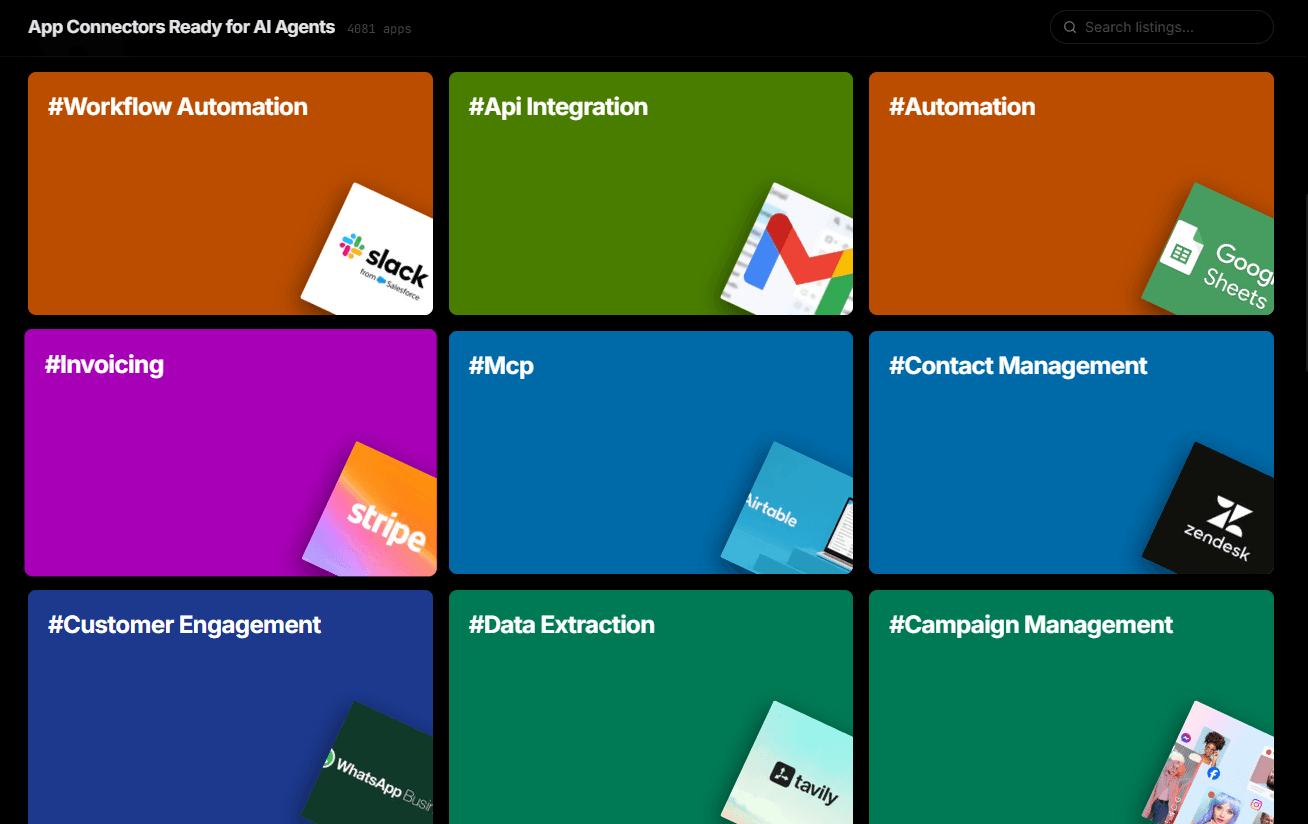
Over 4,000 integrations ready for AI agents
Explore a vast library of pre-built integrations, optimized and ready to deploy.
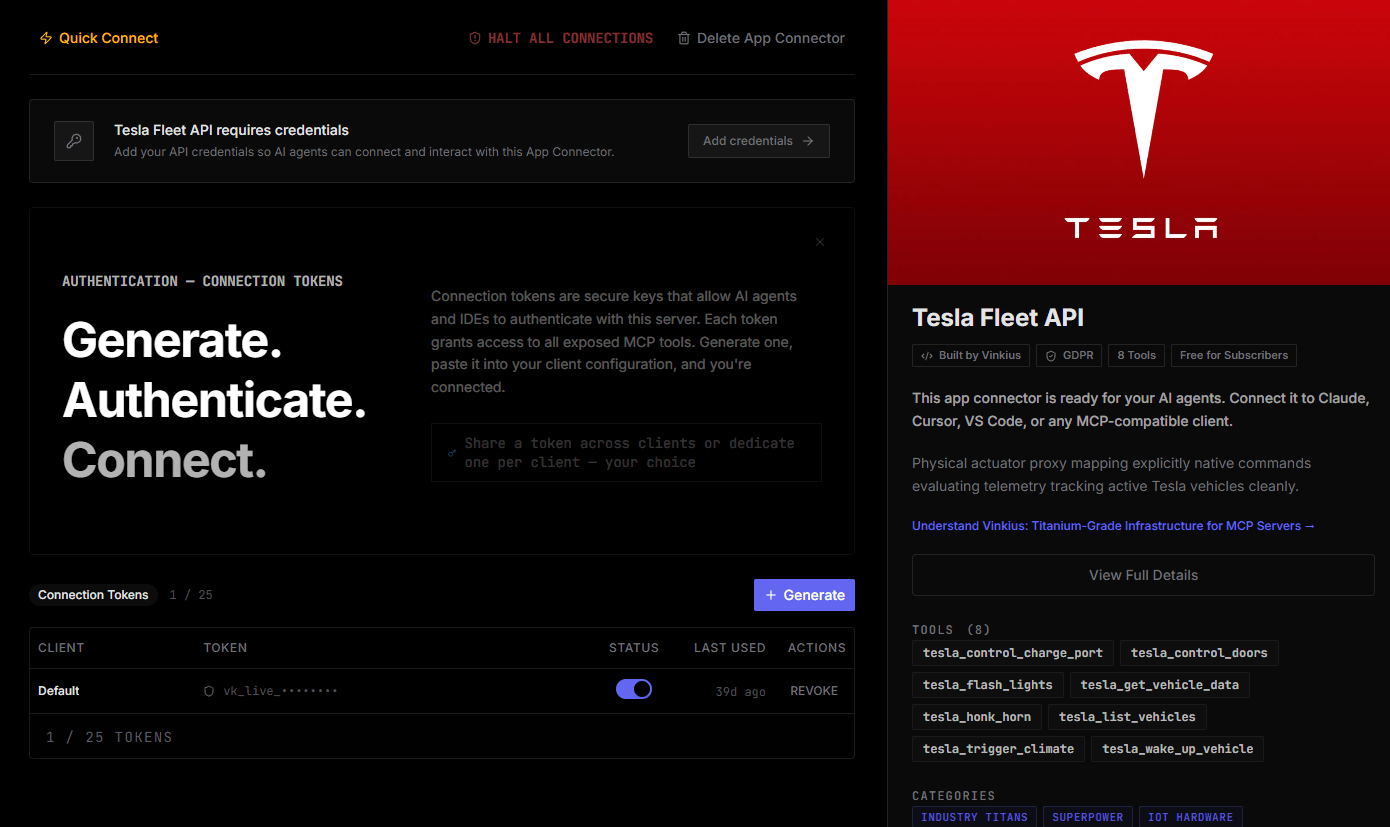
Connect securely in under 30 seconds
Generate tokens to authenticate and link external services in a single step.
Complete visibility into every agent action
Audit live requests, latency, success rates, and active security compliance policies.
Optimize spending and track token ROI
Analyze real-time token consumption and cost metrics detailed by connection.
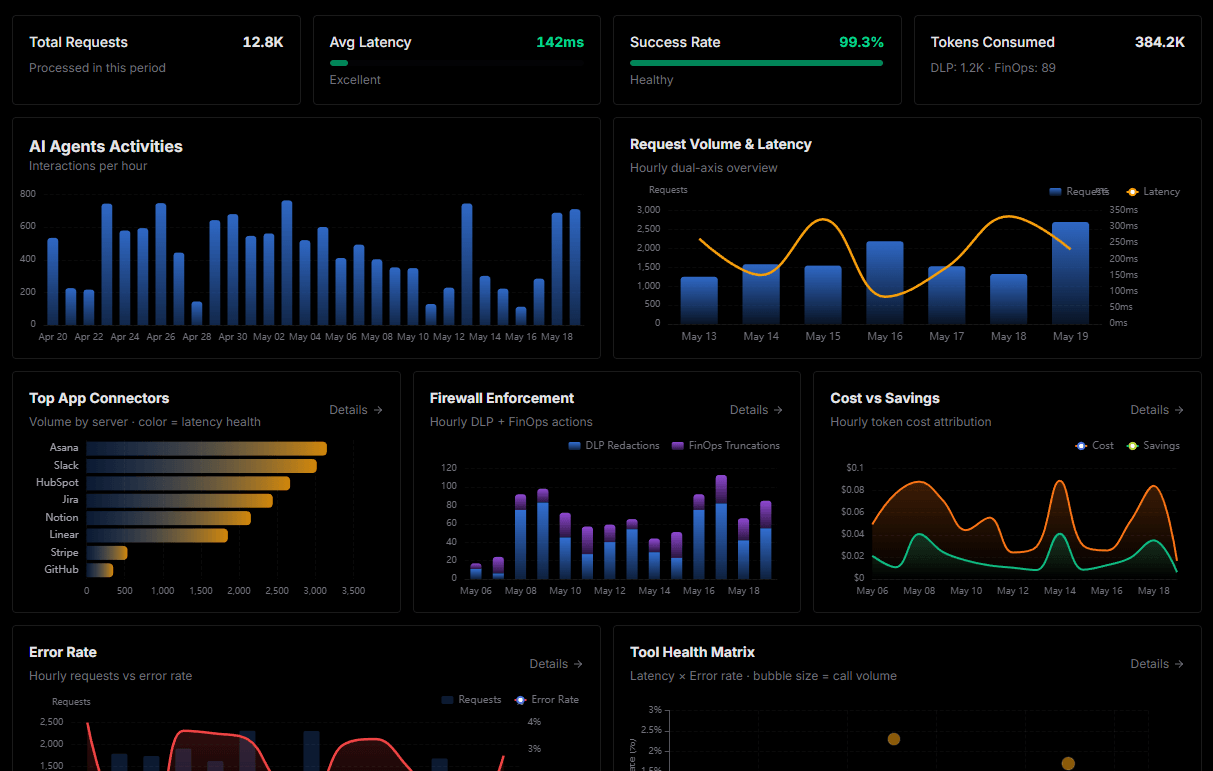
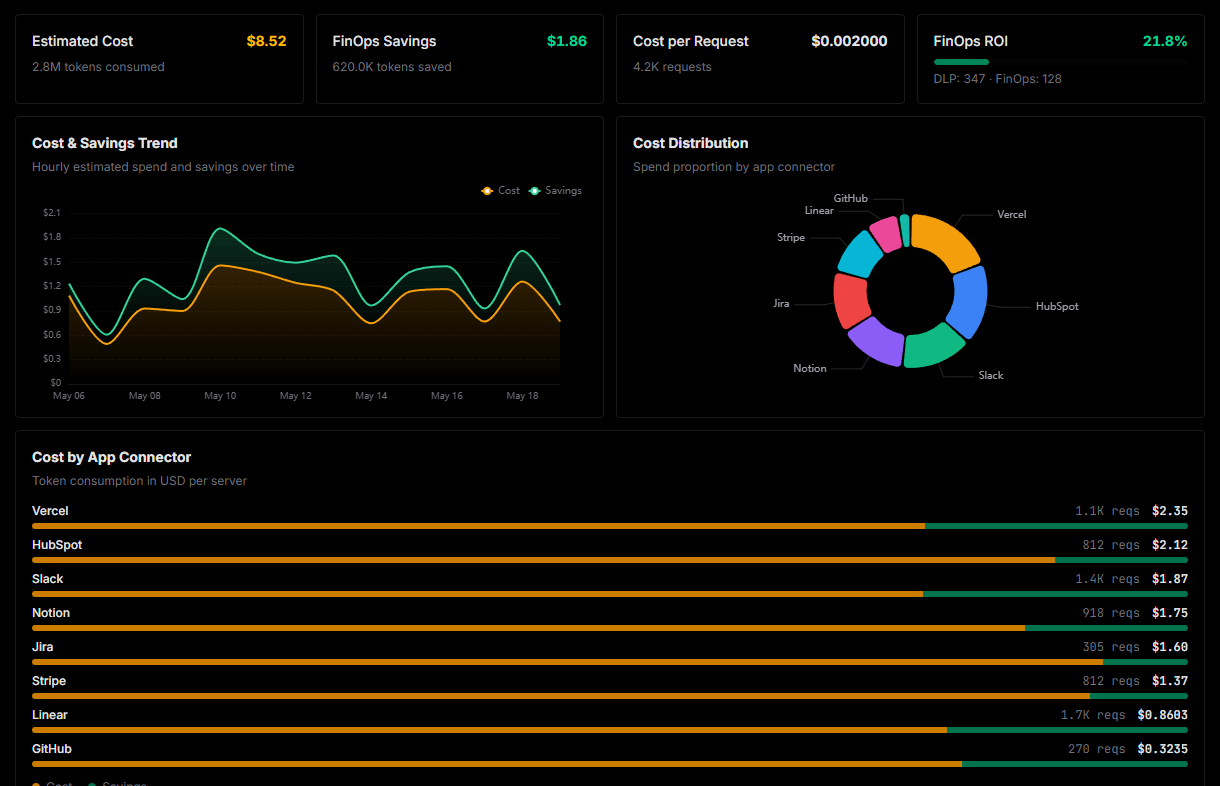
Explore our live AI Agents Analytics dashboard to see it all working
This dashboard is included when you connect Make (Workflow Automation) using Vinkius. You will never be left in the dark about what your AI agents are doing with your tools.
Make (Workflow Automation) and 4,000+ other AI tools. No hosting, no code, ready to use.
Professionals who connect Make (Workflow Automation) to OpenAI Agents SDK through Vinkius don't need to write code, manage servers, or worry about security. Everything is pre-configured, secure, and runs automatically in the background.
Raw MCP | Vinkius | |
|---|---|---|
| Ready-to-use MCPs | Find and configure each manually | 4,000+ MCPs ready to use |
| Connection Setup | Manual coding & server setup | 1-click instant connection |
| Server Hosting | You host it yourself (needs 24/7 uptime) | 100% hosted & managed by Vinkius |
| Security & Privacy | Stored in plaintext config files | Bank-grade encrypted vault |
| Activity Visibility | Blind execution (no logs or tracking) | Live dashboard with real-time logs |
| Cost Control | Runaway AI token spend risk | Automatic budget limits |
| Revoking Access | Must delete files or code to stop | 1-click disconnect button |
How Vinkius secures
Make (Workflow Automation) for OpenAI Agents SDK
Every request between OpenAI Agents SDK and Make (Workflow Automation) is protected by our secure gateway. We automatically keep your sensitive data private, prevent unauthorized access, and let you disconnect instantly at any time.
Frequently asked questions
Can I see the modules and filters used in a Make scenario through my agent?
Yes. Use the get_scenario tool with a specific Scenario ID. Your agent will retrieve the complete design structure, exposing the modules, mapping variables, and any logic filters configured in the flow.
How do I find out why a Make scenario failed recently?
The list_scenario_logs tool allows your agent to extract the execution history for a given scenario. You'll be able to see exactly when the failure occurred and retrieve the error message to assist with debugging.
Can my agent list all active connections in my Make organization?
Absolutely. Use the list_connections tool with your Organization ID. Your agent will report all configured auth hooks, helping you audit which services are currently linked to your Make account.
How does the OpenAI Agents SDK connect to MCP?
Use MCPServerSse(url=...) to create a server connection. The SDK auto-discovers all tools and makes them available to your agent with full type information.
Can I use multiple MCP servers in one agent?
Yes. Pass a list of MCPServerSse instances to the agent constructor. The agent can use tools from all connected servers within a single run.
Does the SDK support streaming responses?
Yes. The SDK supports SSE and Streamable HTTP transports, both of which work natively with Vinkius.
MCPServerStreamableHttp not found
Ensure you have the latest version: pip install --upgrade openai-agents
Agent not calling tools
Make sure your prompt explicitly references the task the tools can help with.
Explore More MCP Servers
View all →
Ideogram (AI Image Generation)
10 toolsGenerate and edit images via Ideogram — the industry leader for rendering text within AI-generated visuals.
Zapier Smart Home
12 toolsControl smart home devices via natural language through Zapier NLA API — access 5000+ app integrations for home automation.

Anaplan
10 toolsManage Anaplan workspaces, models, and data actions (imports, exports, processes) directly via AI.
Fellow
12 toolsRun better meetings with collaborative agendas, action item tracking, and AI-generated summaries that keep teams accountable.