
Bring Proteins
to VS Code Copilot
Learn how to connect EBI Proteins API to VS Code Copilot and start using 16 AI agent tools in minutes. Fully managed, enterprise secure, and ready to use without writing a single line of code.
 GDPR Free for Subscribers
Compatible with every major AI agent and IDE
 Gemini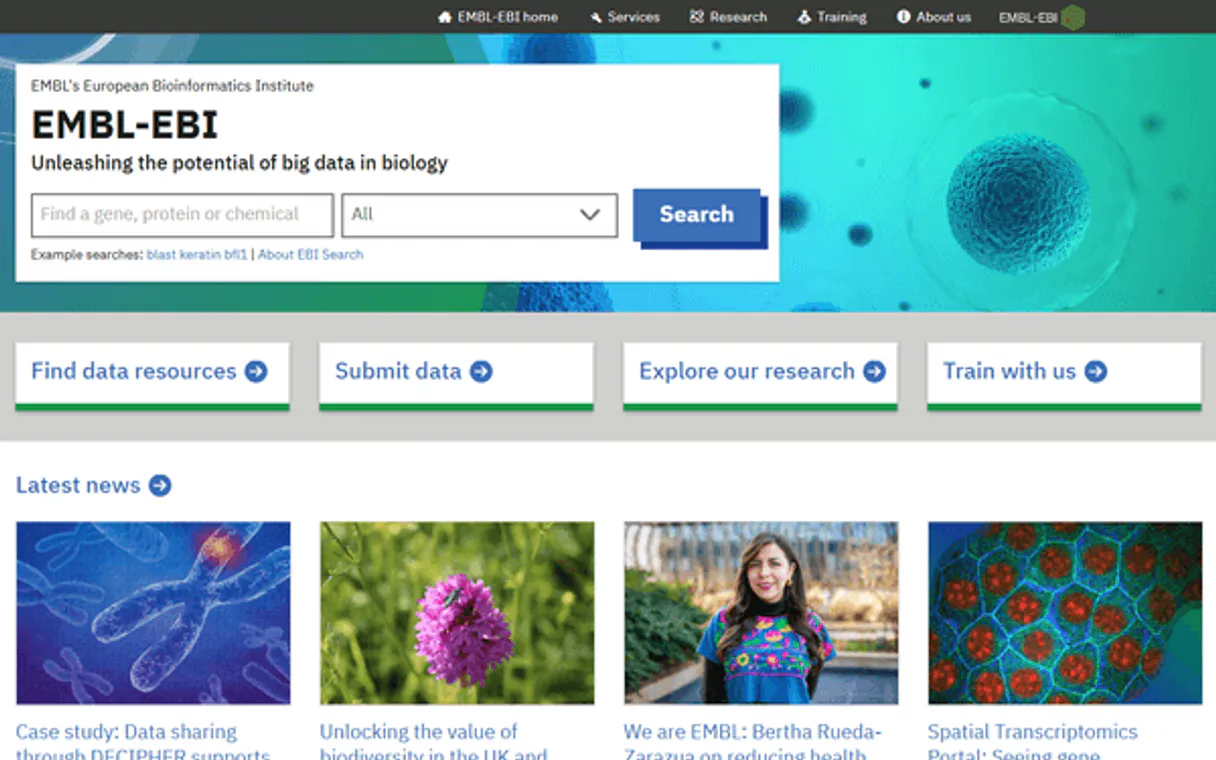
What is the EBI Proteins API MCP Server?
Connect to the EMBL-EBI Proteins API and access comprehensive protein biology data from one of the world's leading bioinformatics institutes.
What you can do
- Protein Retrieval — Fetch complete protein entries by UniProt accession with names, organisms, gene information, sequences, and cross-references
- Sequence Features — Retrieve annotated domains, binding sites, active sites, signal peptides, transmembrane regions, and disulfide bonds for any protein
- Genetic Variants — Access curated variants from UniProtKB aggregated with large-scale studies including ClinVar, gnomAD, 1000 Genomes, COSMIC, and TOPMed
- Proteomics & PTMs — Query mass-spectrometry peptide evidence and post-translational modifications from PeptideAtlas, MaxQB, EPD, and ProteomicsDB
- Mutagenesis — Explore curated mutagenesis experiments with detailed phenotypic effect descriptions
- Proteomes & Taxonomy — Search reference proteomes and navigate the taxonomy tree by ID or organism name
- Genome Coordinates — Map proteins to genome positions on GRCh38/GRCh37 with Ensembl gene, transcript, and translation IDs
How it works
- Subscribe to this server
- No API key required — the EBI Proteins API is fully public
- Start querying protein data from Claude, Cursor, or any MCP-compatible client
Your AI agent becomes a molecular biology research assistant with direct access to the entire UniProt protein knowledge base. All data is sourced from the official EMBL-EBI Proteins REST API.
Who is this for?
- Molecular Biologists — retrieve protein sequences, domain architectures, and functional annotations without navigating complex web databases
- Clinical Geneticists — access aggregated variant data from ClinVar, gnomAD, and COSMIC for variant interpretation and pathogenicity assessment
- Structural Biologists — query sequence features, binding sites, and mutagenesis data to guide experimental design
- Bioinformaticians — programmatically access proteomes, taxonomy, and genome coordinate mappings for pipeline integration
Built-in capabilities (16)
These are peptide regions used for antibody generation, indicating experimentally validated protein expression targets. Useful for immunology and antibody-based research. Get antigen sequences from Human Protein Atlas
Returns Ensembl gene, transcript, and translation IDs along with chromosome, start/end positions, and strand information. Essential for bridging protein annotations with genomic data. Get genome coordinate mappings for a protein
Shows canonical protein and related protein count for each gene. Use with a UniProt Proteome ID (e.g. UP000005640). Get the gene-centric view of a proteome
Each entry includes the wild-type and mutant residues, position, and a description of the functional impact. Critical for understanding structure-function relationships. Get mutagenesis experiments and phenotypic effects
Use a UniProt accession such as P12345, Q9Y6K9, or P53_HUMAN. Retrieve a full protein entry by UniProt accession
Features include domains, binding sites, active sites, signal peptides, transmembrane regions, disulfide bonds, glycosylation sites, and more. Each feature has start/end positions and evidence counts. Get sequence feature annotations for a protein
Returns taxonomy, protein count, gene count, reference status, and component information. Use IDs like UP000005640 for human proteome or UP000000589 for mouse. Get a specific proteome by UniProt Proteome ID
Shows which peptides have been experimentally detected and whether they are unique to this protein. Essential for validating protein expression. Get mass-spectrometry proteomics data for a protein
Provides residue-level PTM positions with evidence counts. Get post-translational modifications from mass-spec data
Returns scientific name, common name, rank, lineage, parent, and children nodes. Use IDs like 9606 for human, 10090 for mouse, 562 for E. coli. Get taxonomy node details by NCBI taxon ID
Each variant includes wild-type and mutant residues, clinical significance, consequence type (e.g. missense, nonsense), and cross-references. Critical for clinical genomics and variant interpretation. Get genetic variants for a protein from multiple sources
Valid types include: DOMAIN, BINDING, ACTIVE_SITE, SIGNAL, TRANSMEM, DISULFID, CARBOHYD, MOD_RES, VARIANT, MUTAGEN, REGION, MOTIF, SITE, REPEAT, COILED, COMPBIAS, HELIX, STRAND, TURN. Search features by type across proteins
You can combine gene name (e.g. TP53), organism (e.g. human, 9606), keyword (e.g. kinase), or accession. Returns a summarized list of matching proteins with names, organisms, and sequence lengths. Search proteins by gene name, organism, or keyword
Returns proteome IDs, taxonomy, protein counts, gene counts, and reference proteome status. Use queries like "homo sapiens", "escherichia coli", "arabidopsis". Search proteomes by organism name
Returns matching taxonomy entries with scientific names, common names, taxon IDs, and ranks. Useful for finding the correct taxon ID before querying proteins or proteomes for a specific organism. Search taxonomy by organism name
g. large_scale_study, uniprot, mixed), consequence type (e.g. missense, stop gained), and wild-type residue. Use this to find clinically relevant variants across the proteome. Search variants by consequence type, source, or residue
Why VS Code Copilot?
GitHub Copilot Agent mode brings EBI Proteins API data directly into your VS Code workflow. With a project-scoped config, the entire team shares access to 16 tools. Copilot queries live data, generates typed code, and writes tests from actual API responses, all without leaving the editor.
- —
VS Code is used by over 70% of developers. adding MCP tools to Copilot means your team can leverage external data without leaving their primary editor
- —
Project-scoped MCP configs (
.vscode/mcp.json) let you commit server configurations to your repository, ensuring the entire team shares the same tool access - —
Copilot's Agent mode integrates MCP tools seamlessly with file editing, terminal commands, and workspace search in a single agentic loop
- —
GitHub's enterprise compliance and audit features extend to MCP tool usage, providing visibility into how AI interacts with external services
EBI Proteins API in VS Code Copilot
EBI Proteins API and 4,000+ other MCP servers. One platform. One governance layer.
Teams that connect EBI Proteins API to VS Code Copilot through Vinkius don't need to source, host, or maintain individual MCP servers. Every tool call runs inside a hardened runtime with credential isolation, DLP, and a signed audit chain.
Raw MCP | Vinkius | |
|---|---|---|
| Server catalog | Find and host yourself | 4,000+ managed |
| Infrastructure | Self-hosted | Sandboxed V8 isolates |
| Credential handling | Plaintext in config | Vault + runtime injection |
| Data loss prevention | None | Configurable DLP policies |
| Kill switch | None | Global instant shutdown |
| Financial circuit breakers | None | Per-server limits + alerts |
| Audit trail | None | Ed25519 signed logs |
| SIEM log streaming | None | Splunk, Datadog, Webhook |
| Honeytokens | None | Canary alerts on leak |
| Custom domains | Not applicable | DNS challenge verified |
| GDPR compliance | Manual effort | Automated purge + export |
Why teams choose Vinkius for EBI Proteins API in VS Code Copilot
The EBI Proteins API MCP Server runs on Vinkius-managed infrastructure inside AWS — a purpose-built runtime with per-request V8 isolates, Ed25519 signed audit chains, and sub-40ms cold starts. All 16 tools execute in hardened sandboxes optimized for native MCP execution.
Your AI agents in VS Code Copilot only access the data you authorize, with DLP that blocks sensitive information from ever reaching the model, kill switch for instant shutdown, and up to 60% token savings. Enterprise-grade infrastructure, zero maintenance.
* Every MCP server runs on Vinkius-managed infrastructure inside AWS - a purpose-built runtime with per-request V8 isolates, Ed25519 signed audit chains, and sub-40ms cold starts optimized for native MCP execution. See our infrastructure
How Vinkius secures
EBI Proteins API for VS Code Copilot
Every tool call from VS Code Copilot to the EBI Proteins API MCP Server is protected by DLP redaction, cryptographic audit chains, V8 sandbox isolation, kill switch, and financial circuit breakers.
Frequently asked questions
Do I need an API key to use this server?
No. The EMBL-EBI Proteins API is completely public and requires no authentication. Simply subscribe to this server and enter any placeholder value in the API key field to start querying protein data immediately.
What kind of variant data is available?
The server aggregates genetic variants from multiple authoritative sources: UniProtKB curated variants, ClinVar clinical significance data, gnomAD population frequencies, 1000 Genomes Project, COSMIC somatic mutations, TOPMed whole-genome sequencing, ExAC exome data, and TCGA cancer variants. Each variant includes consequence type, clinical significance, and source cross-references.
Can I map protein positions to genome coordinates?
Yes. The get_coordinates tool maps any UniProt protein to reference genome coordinates on GRCh38 and GRCh37 assemblies. It returns Ensembl gene, transcript, and translation identifiers along with chromosome, start/end positions, and strand orientation. This bridges the gap between protein-level annotations and genomic-level analyses.
Which VS Code version supports MCP?
MCP support requires VS Code 1.99 or later with the GitHub Copilot extension. Ensure both are updated to the latest version. Older versions of Copilot may not expose the Agent mode toggle.
How do I switch to Agent mode?
Open the Copilot Chat panel and look for two mode options: "Ask" and "Agent". Click "Agent" to enable autonomous tool calling. In Ask mode, Copilot provides conversational answers but cannot invoke MCP tools.
Can I restrict which MCP tools Copilot can access?
Yes. VS Code shows a tool consent dialog before any MCP tool is invoked for the first time. You can also configure tool access policies at the organization level through GitHub Copilot settings.
Does MCP work in VS Code Remote or Codespaces?
Yes. MCP servers configured via .vscode/mcp.json work in Remote SSH, WSL, and GitHub Codespaces environments. The MCP connection is established from the remote host, so ensure the server URL is accessible from that environment.
MCP tools not available
Ensure you are in Agent mode in Copilot Chat. MCP tools only appear in Agent mode.
Explore More MCP Servers
View all →
Ironclad
10 toolsManage contracts, workflows, approvals, and counterparties via Ironclad CLM — launch, track, and search agreements directly from any AI agent.

Luhn CC Validator
1 toolsStop LLMs from sending fake credit card numbers to payment gateways. Validates the mathematical Luhn check instantly.

ClickFunnels
8 toolsManage sales funnels and contacts via ClickFunnels 2.0 — track performance, monitor leads, and manage orders directly from any AI agent.

YouCanBook.me
10 toolsAutomate scheduling workflows via YouCanBook.me — manage booking pages, appointments, and availability directly from any AI agent.