
Bring Silo Monitoring
to VS Code Copilot
Create your Vinkius account to connect Grain Watch to VS Code Copilot and start using all 12 AI tools in minutes. Fully managed, enterprise secure, and ready to use without writing a single line of code. No hosting, no server setup — just connect and start using.
 GDPR Free for Subscribers
Compatible with every major AI agent and IDE
 Gemini
What is the Grain Watch MCP Server?
Connect your Grain Watch Silo Temperature Monitoring API to any AI agent and take full control of real-time temperature tracking, humidity monitoring, hot spot detection, and AI-powered spoilage risk assessment through natural conversation.
What you can do
- Silo Management — List and manage all temperature-monitored silos with grain types and sensor status
- Real-Time Temperature — Get current temperature readings from all sensors throughout the grain mass
- Humidity Monitoring — Track relative humidity levels for condensation risk assessment
- Temperature History — Analyze historical temperature trends to detect developing hot spots
- Humidity History — Monitor humidity patterns for moisture migration and condensation detection
- Sensor Mapping — View complete sensor layout with positions, depths, and zones
- Hot Spot Alerts — Receive automatic alerts when localized heating indicates potential spoilage
- Spoilage Risk — Get AI-powered risk assessments combining temperature, humidity, and grain type
- Alert Management — Monitor all active alerts for temperature, humidity, and sensor issues
- Sensor Health — Track sensor battery levels, communication status, and operational health
- Facility Overview — Get comprehensive facility-wide temperature summaries for executive reporting
How it works
- Subscribe to this server
- Enter your Grain Watch API key and base URL (from your Grain Cloud dashboard)
- Start monitoring silo conditions from Claude, Cursor, or any MCP-compatible client
No more manual temperature cable readings or climbing silos for inspections. Your AI acts as a dedicated grain storage analyst and condition monitoring assistant.
Who is this for?
- Grain Farmers — monitor stored grain temperature conditions and detect hot spots early
- Grain Elevator Operators — manage temperature across hundreds of silos with automated alerts
- Facility Managers — oversee storage facilities with real-time sensor data and spoilage risk assessments
- Agricultural Consultants — provide data-driven storage management recommendations to clients
Built-in capabilities (12)
Returns alert type, severity (critical, warning, info), affected silo, timestamp, and recommended actions. Essential for comprehensive operational monitoring, issue detection, and management response. AI agents should use this when users ask "show me all active alerts", "what warnings have been triggered for silo 3", or need alert data for operational monitoring. Optional silo_id filters alerts for a specific silo. Get all active alerts for temperature, humidity, and sensor issues
Returns relative humidity (%) values from multiple sensor positions. High humidity combined with temperature indicates condensation risk and potential spoilage conditions. Essential for moisture migration detection, condensation risk assessment, and grain quality preservation. AI agents should reference this when users ask "what is the humidity level in silo 3", "show me humidity readings for silo 5", or need current humidity data for storage condition assessment. Get current humidity readings from sensors in a grain silo
Returns temperature values (Celsius) from multiple sensor positions throughout the grain mass including top, middle, bottom, and center zones. Essential for real-time grain condition monitoring, hot spot detection, and spoilage prevention. AI agents should use this when users ask "what is the current temperature in silo 2", "show me all temperature readings for silo 4", or need immediate grain temperature data for storage management decisions. Get current temperature readings from all sensors in a grain silo
Essential for executive reporting, facility-wide condition assessment, and strategic storage management. AI agents should use this when users ask "give me an overview of all my silos", "what is the overall temperature status across the facility", or need facility-level summaries for management reporting. Get comprehensive overview of all monitored silos and their temperature status
Returns alert severity (critical, warning), affected silo, sensor zone location, temperature differential, detection timestamp, and recommended actions. Hot spots are early indicators of grain quality issues that require immediate attention. Essential for proactive grain management, spoilage prevention, and quality preservation. AI agents should use this when users ask "are there any hot spots detected", "show hotspot alerts for silo 3", or need early warning indicators of grain spoilage. Optional silo_id filters alerts for a specific silo. Get active hot spot detection alerts for all silos or a specific silo
Humidity patterns over time help identify moisture migration, condensation events, and drying effectiveness. Returns time-series humidity data (%) with timestamps from multiple sensor positions. Essential for moisture migration analysis, condensation detection, and storage safety monitoring. AI agents should reference this when users ask "show me humidity trends for silo 1", "has humidity been stable in silo 2", or need historical humidity data for storage management. Get historical humidity readings to track moisture migration patterns
Returns sensor IDs, positions, communication status, last reading time, battery levels (for wireless sensors), and operational status (active, offline, fault, needs calibration). Essential for sensor network maintenance, data continuity assurance, and monitoring system reliability. AI agents should reference this when users ask "are all sensors working in silo 5", "which sensors have gone offline", or need sensor health data for system administration. Get health status of all temperature and humidity sensors in a silo
Returns sensor IDs, physical locations (top/middle/bottom, center/perimeter), installation depths, and current operational status. Essential for understanding temperature distribution across the grain mass, identifying which sensor corresponds to which physical location, and troubleshooting sensor issues. AI agents should use this when users ask "show me the sensor layout for silo 4", "where are the sensors positioned in silo 6", or need sensor positioning data for temperature analysis interpretation. Get the layout and positions of all temperature sensors in a silo
Essential for understanding silo context before analyzing temperature data, planning aeration strategies, or generating storage condition reports. AI agents should reference this when users ask "tell me about silo 3", "what grain is stored in silo 5 and how many sensors does it have", or need detailed silo metadata for informed analysis. Get detailed information about a specific grain silo
Returns silo IDs, names, locations, grain types, current temperature status, and monitoring health. Essential for facility overview, silo inventory management, and selecting specific silos for detailed temperature analysis. AI agents should use this when users ask "show me all my monitored silos", "list temperature-monitored storage units", or need to identify available silos before querying temperature readings or alerts. List all grain silos monitored by Grain Watch
Returns risk level (low, moderate, high, critical), contributing factors, predicted days until spoilage if conditions persist, and recommended preventive actions. Essential for proactive grain management, early intervention planning, and quality preservation. AI agents should use this when users ask "what is the spoilage risk for silo 3", "is silo 5 at risk of spoilage", or need AI-driven risk assessments for storage management decisions. Get AI-powered spoilage risk assessment for a specific silo
Temperature trends over time are critical for identifying developing hot spots, spoilage heating, or effective cooling from aeration. Returns time-series temperature data (Celsius) with timestamps from multiple sensor zones. Essential for hot spot detection, spoilage heating identification, aeration effectiveness evaluation, and grain quality preservation. AI agents should use this when users ask "show me temperature trends for silo 3 over the past 30 days", "has silo 5 been heating up", or need historical temperature data for storage condition analysis. Optional days parameter controls lookback period. Get historical temperature readings to detect trends and hot spot development
Why VS Code Copilot?
GitHub Copilot Agent mode brings Grain Watch data directly into your VS Code workflow. With a project-scoped config, the entire team shares access to 12 tools. Copilot queries live data, generates typed code, and writes tests from actual API responses, all without leaving the editor.
- —
VS Code is used by over 70% of developers. adding MCP tools to Copilot means your team can leverage external data without leaving their primary editor
- —
Project-scoped MCP configs (
.vscode/mcp.json) let you commit server configurations to your repository, ensuring the entire team shares the same tool access - —
Copilot's Agent mode integrates MCP tools seamlessly with file editing, terminal commands, and workspace search in a single agentic loop
- —
GitHub's enterprise compliance and audit features extend to MCP tool usage, providing visibility into how AI interacts with external services
Grain Watch in VS Code Copilot
Why run Grain Watch with Vinkius?
The Grain Watch connection runs on our fully managed, secure cloud infrastructure. We handle the hosting, maintenance, and security so you don't have to deal with servers or code. All 12 tools are ready to work instantly without any complex setup.
You stay in complete control of your data. Your AI only accesses the information you approve, keeping your sensitive passwords and private details completely safe. Plus, with automatic optimizations, your AI works faster and more efficiently.
* Every connection is hosted and maintained by Vinkius. We handle the security, updates, and infrastructure so you don't have to write code or manage servers. See our infrastructure
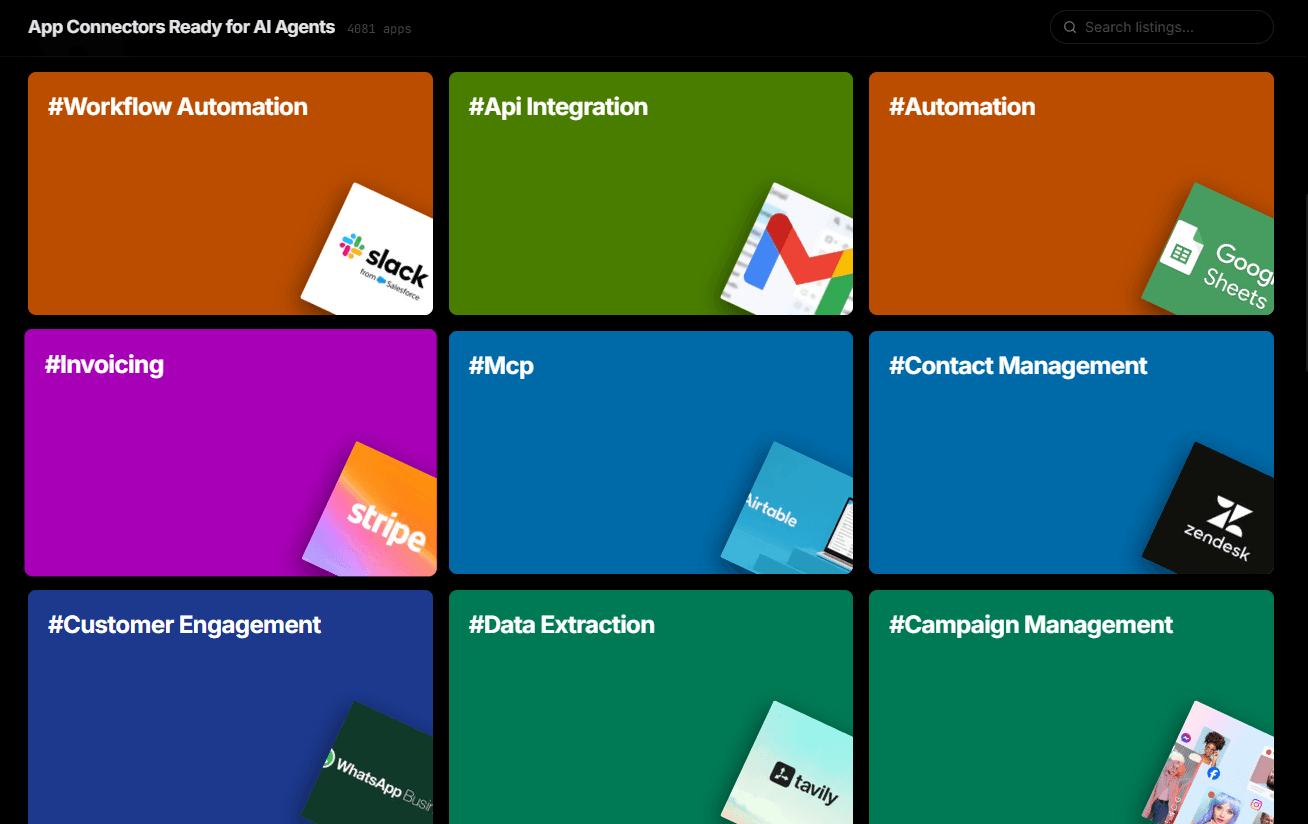
Over 4,000 integrations ready for AI agents
Explore a vast library of pre-built integrations, optimized and ready to deploy.
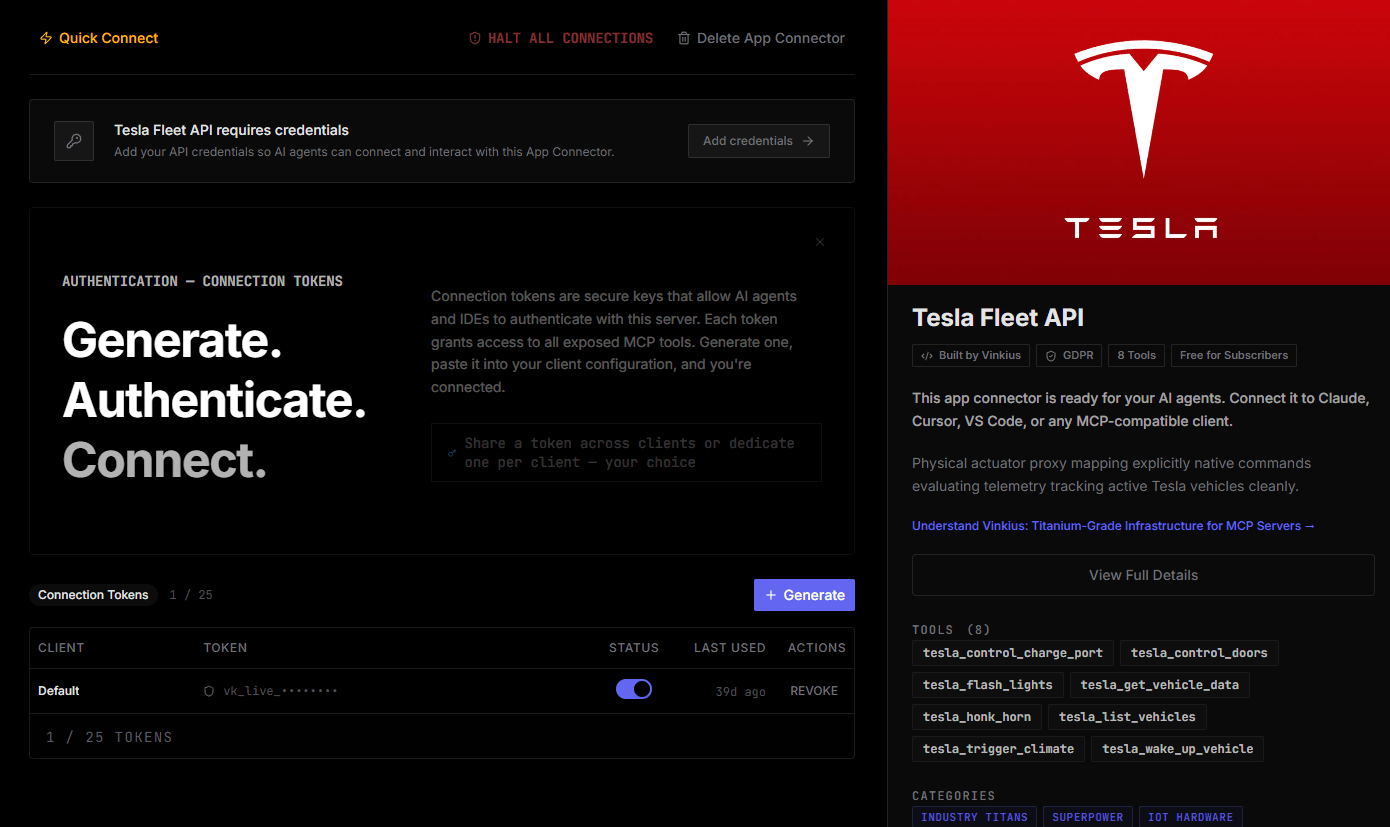
Connect securely in under 30 seconds
Generate tokens to authenticate and link external services in a single step.
Complete visibility into every agent action
Audit live requests, latency, success rates, and active security compliance policies.
Optimize spending and track token ROI
Analyze real-time token consumption and cost metrics detailed by connection.
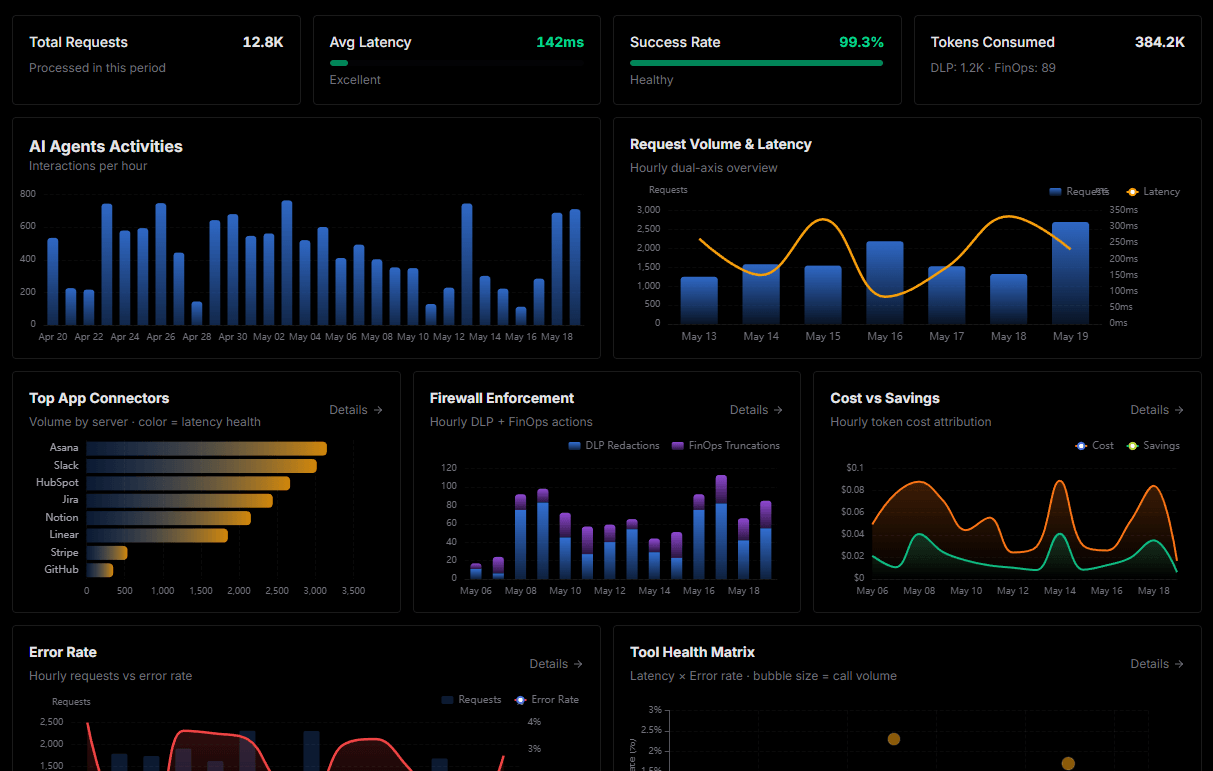
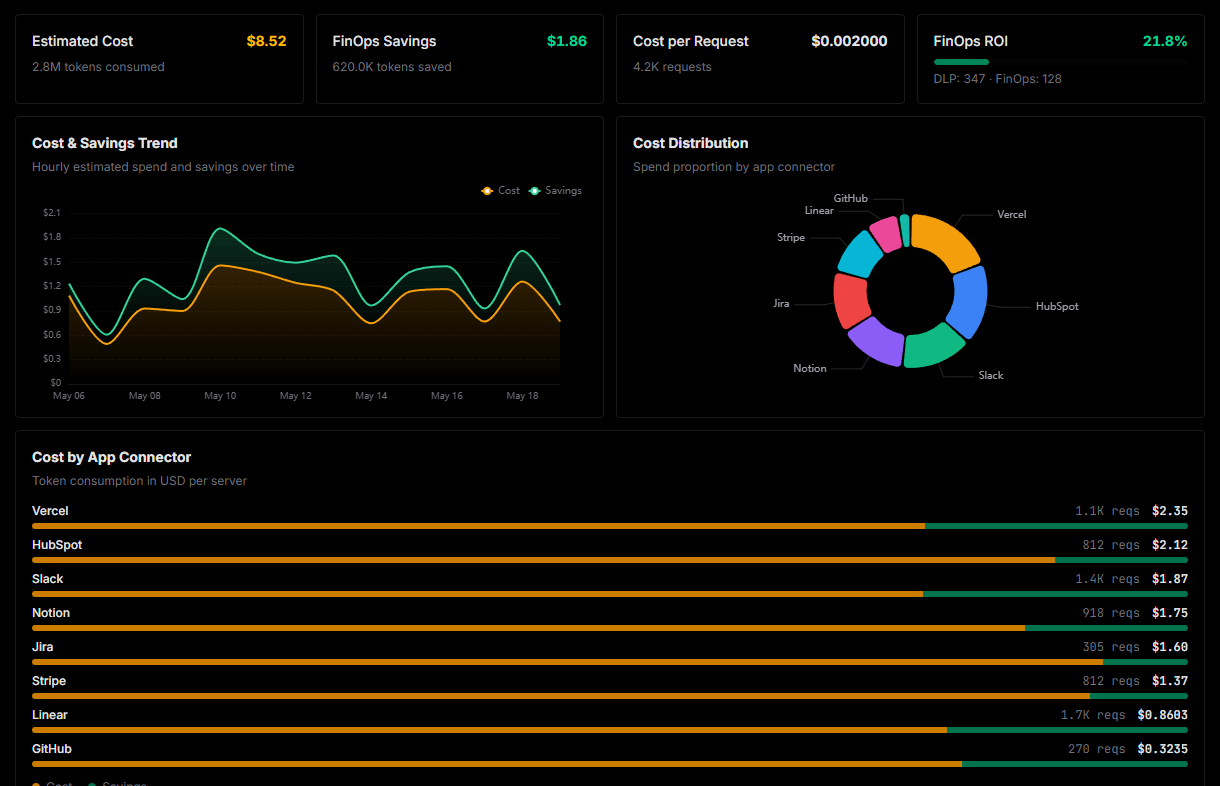
Explore our live AI Agents Analytics dashboard to see it all working
This dashboard is included when you connect Grain Watch using Vinkius. You will never be left in the dark about what your AI agents are doing with your tools.
Grain Watch and 4,000+ other AI tools. No hosting, no code, ready to use.
Professionals who connect Grain Watch to VS Code Copilot through Vinkius don't need to write code, manage servers, or worry about security. Everything is pre-configured, secure, and runs automatically in the background.
Raw MCP | Vinkius | |
|---|---|---|
| Ready-to-use MCPs | Find and configure each manually | 4,000+ MCPs ready to use |
| Connection Setup | Manual coding & server setup | 1-click instant connection |
| Server Hosting | You host it yourself (needs 24/7 uptime) | 100% hosted & managed by Vinkius |
| Security & Privacy | Stored in plaintext config files | Bank-grade encrypted vault |
| Activity Visibility | Blind execution (no logs or tracking) | Live dashboard with real-time logs |
| Cost Control | Runaway AI token spend risk | Automatic budget limits |
| Revoking Access | Must delete files or code to stop | 1-click disconnect button |
How Vinkius secures
Grain Watch for VS Code Copilot
Every request between VS Code Copilot and Grain Watch is protected by our secure gateway. We automatically keep your sensitive data private, prevent unauthorized access, and let you disconnect instantly at any time.
Frequently asked questions
Can my AI detect hot spots developing in my grain silos before spoilage occurs?
Yes! Use the get_hotspot_alerts tool to check for active hot spot detections across your silos. Hot spots are localized temperature increases that indicate early biological activity (mold, insects, or grain respiration) before visible spoilage. For trend analysis, use get_temperature_history to see how temperatures have been changing over the past days or weeks. Early hot spot detection gives you critical time to activate aeration and prevent grain loss.
How do I get the AI spoilage risk assessment for my silos?
Use the get_spoilage_risk tool with your silo ID. Grain Watch AI analyzes temperature trends, humidity patterns, and grain type to provide a risk level (low, moderate, high, critical), contributing factors, predicted days until spoilage if conditions persist, and recommended preventive actions. This combines multiple data sources into a single actionable assessment. For a facility-wide view, use get_facility_overview to see overall risk across all silos.
Can I check the health of my temperature sensors to ensure reliable monitoring?
Yes! Use the get_sensor_health tool with your silo ID to check the status of all temperature and humidity sensors. This shows which sensors are active, offline, or faulted, along with last communication times and battery levels for wireless sensors. You can also use get_sensor_map to see the physical layout of all sensors in a silo, helping you understand which zones each sensor monitors.
Which VS Code version supports MCP?
MCP support requires VS Code 1.99 or later with the GitHub Copilot extension. Ensure both are updated to the latest version. Older versions of Copilot may not expose the Agent mode toggle.
How do I switch to Agent mode?
Open the Copilot Chat panel and look for two mode options: "Ask" and "Agent". Click "Agent" to enable autonomous tool calling. In Ask mode, Copilot provides conversational answers but cannot invoke MCP tools.
Can I restrict which MCP tools Copilot can access?
Yes. VS Code shows a tool consent dialog before any MCP tool is invoked for the first time. You can also configure tool access policies at the organization level through GitHub Copilot settings.
Does MCP work in VS Code Remote or Codespaces?
Yes. MCP servers configured via .vscode/mcp.json work in Remote SSH, WSL, and GitHub Codespaces environments. The MCP connection is established from the remote host, so ensure the server URL is accessible from that environment.
MCP tools not available
Ensure you are in Agent mode in Copilot Chat. MCP tools only appear in Agent mode.
Explore More MCP Servers
View all →
Easyship
10 toolsEquip your AI agent to manage global shipments, track packages, and request shipping rates via the Easyship API.

ROC AUC Evaluator
1 toolsCompute the exact Area Under the ROC Curve for binary classification predictions. Local, mathematically perfect, zero LLM estimation.
Campaigner
10 toolsManage email marketing via Campaigner — track campaigns, manage subscribers, and monitor performance directly from any AI agent.

Telebroad
12 toolsConnect your business phone system with cloud PBX that includes auto-attendant, call queues, and voicemail-to-email transcription.