
Bring Toxicology
to AutoGen
Create your Vinkius account to connect EPA Computational Toxicology to AutoGen and start using all 10 AI tools in minutes. Fully managed, enterprise secure, and ready to use without writing a single line of code. No hosting, no server setup — just connect and start using.
 GDPR Free for Subscribers
Compatible with every major AI agent and IDE
 Gemini
What is the EPA Computational Toxicology MCP Server?
Connect to the US Environmental Protection Agency's (EPA) Center for Computational Toxicology and Exposure (CCTE) and explore a massive repository of chemical data through natural conversation.
What you can do
- Chemical Search — Find substances by name, CAS Registry Number (CASRN), or DTXSID
- Physicochemical Properties — Retrieve melting points, boiling points, logP, and water solubility
- Hazard Assessments — Access toxicity values, NOAELs, and points-of-departure from ToxValDB
- Exposure Predictions — Explore predicted exposure levels and product use categories via ExpoCast and CPDat
- Bioactivity Screening — Analyze ToxCast/Tox21 high-throughput screening results for thousands of assays
- Environmental Fate — Check persistence, transport, and biodegradation metrics
How it works
- Subscribe to this server
- Enter your free EPA API Key (request it by emailing
ccte_api@epa.gov) - Start investigating chemical safety and properties directly from your agent
This tool is essential for toxicologists, environmental scientists, and regulatory professionals who need instant access to high-quality chemical data.
Who is this for?
- Toxicologists — quickly gather hazard and bioactivity data for risk assessments
- Environmental Scientists — analyze fate and transport properties of contaminants
- Product Safety Teams — check chemical exposure and product use profiles
- Researchers — retrieve identifiers and synonyms for chemical lists
Built-in capabilities (10)
Retrieve a summary of high-throughput screening results from ToxCast/Tox21 assays
Get comprehensive metadata and identification details for a specific chemical using its DTXSID
Identify which chemical lists (regulatory, research, or commercial) this chemical belongs to
Retrieve all known synonyms and alternative names for a specific chemical
Retrieve predicted exposure levels and product use data (ExpoCast/CPDat)
Retrieve environmental fate and transport data (e.g., half-life, bioconcentration)
Retrieve a summary of toxicity values and hazard assessment data from ToxValDB
Retrieve predicted and experimental physicochemical properties (e.g., melting point, logP, solubility) for a chemical
Search for chemicals by their CAS Registry Number (CASRN)
Search for chemicals by common, IUPAC, or synonym names in the EPA CompTox database
Why AutoGen?
AutoGen enables multi-agent conversations where agents negotiate, delegate, and collaboratively use EPA Computational Toxicology tools. Connect 10 tools through Vinkius and assign role-based access. a data analyst queries while a reviewer validates, with optional human-in-the-loop approval for sensitive operations.
- —
Multi-agent conversations: multiple AutoGen agents discuss, delegate, and collaboratively use EPA Computational Toxicology tools to solve complex tasks
- —
Role-based architecture lets you assign EPA Computational Toxicology tool access to specific agents. a data analyst queries while a reviewer validates
- —
Human-in-the-loop support: agents can pause for human approval before executing sensitive EPA Computational Toxicology tool calls
- —
Code execution sandbox: AutoGen agents can write and run code that processes EPA Computational Toxicology tool responses in an isolated environment
EPA Computational Toxicology in AutoGen
Why run EPA Computational Toxicology with Vinkius?
The EPA Computational Toxicology connection runs on our fully managed, secure cloud infrastructure. We handle the hosting, maintenance, and security so you don't have to deal with servers or code. All 10 tools are ready to work instantly without any complex setup.
You stay in complete control of your data. Your AI only accesses the information you approve, keeping your sensitive passwords and private details completely safe. Plus, with automatic optimizations, your AI works faster and more efficiently.
* Every connection is hosted and maintained by Vinkius. We handle the security, updates, and infrastructure so you don't have to write code or manage servers. See our infrastructure
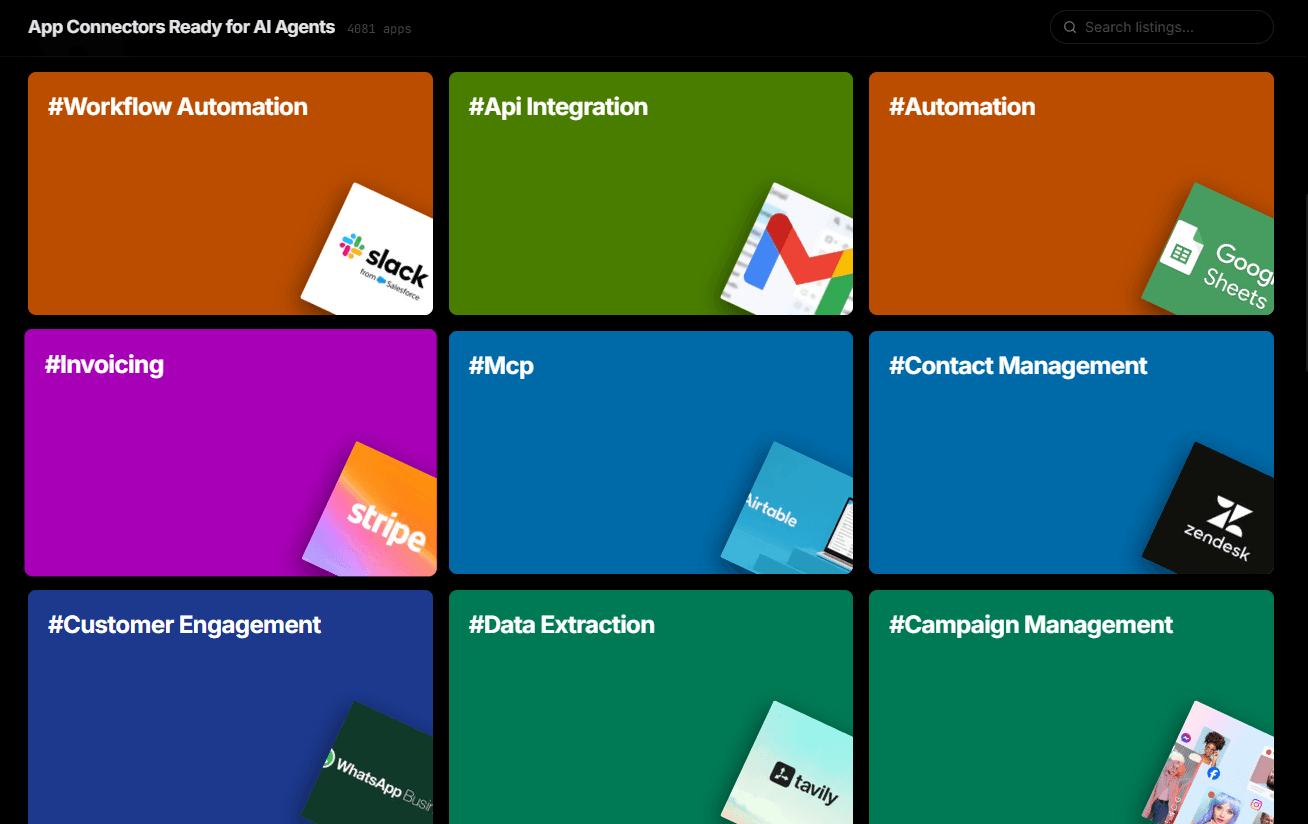
Over 4,000 integrations ready for AI agents
Explore a vast library of pre-built integrations, optimized and ready to deploy.
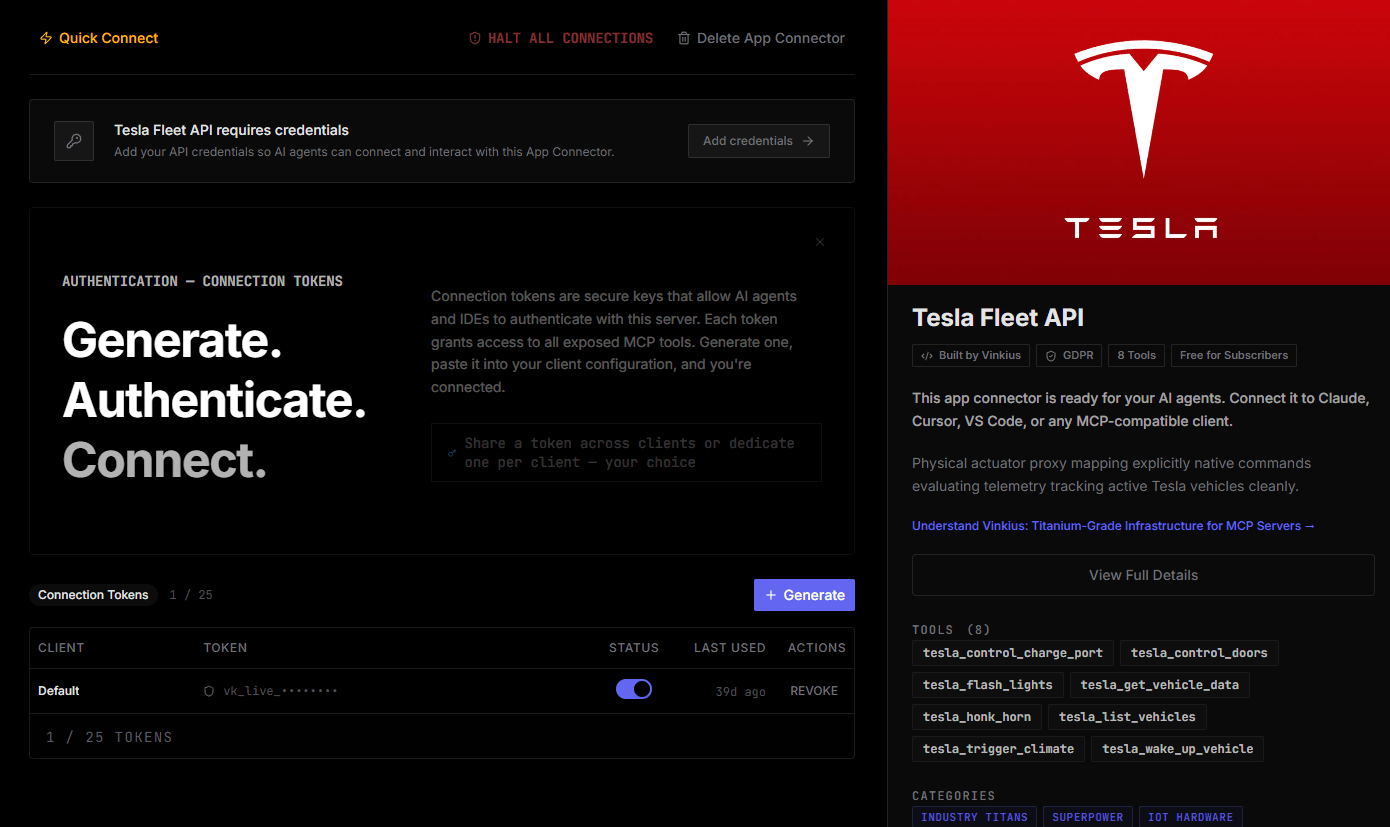
Connect securely in under 30 seconds
Generate tokens to authenticate and link external services in a single step.
Complete visibility into every agent action
Audit live requests, latency, success rates, and active security compliance policies.
Optimize spending and track token ROI
Analyze real-time token consumption and cost metrics detailed by connection.
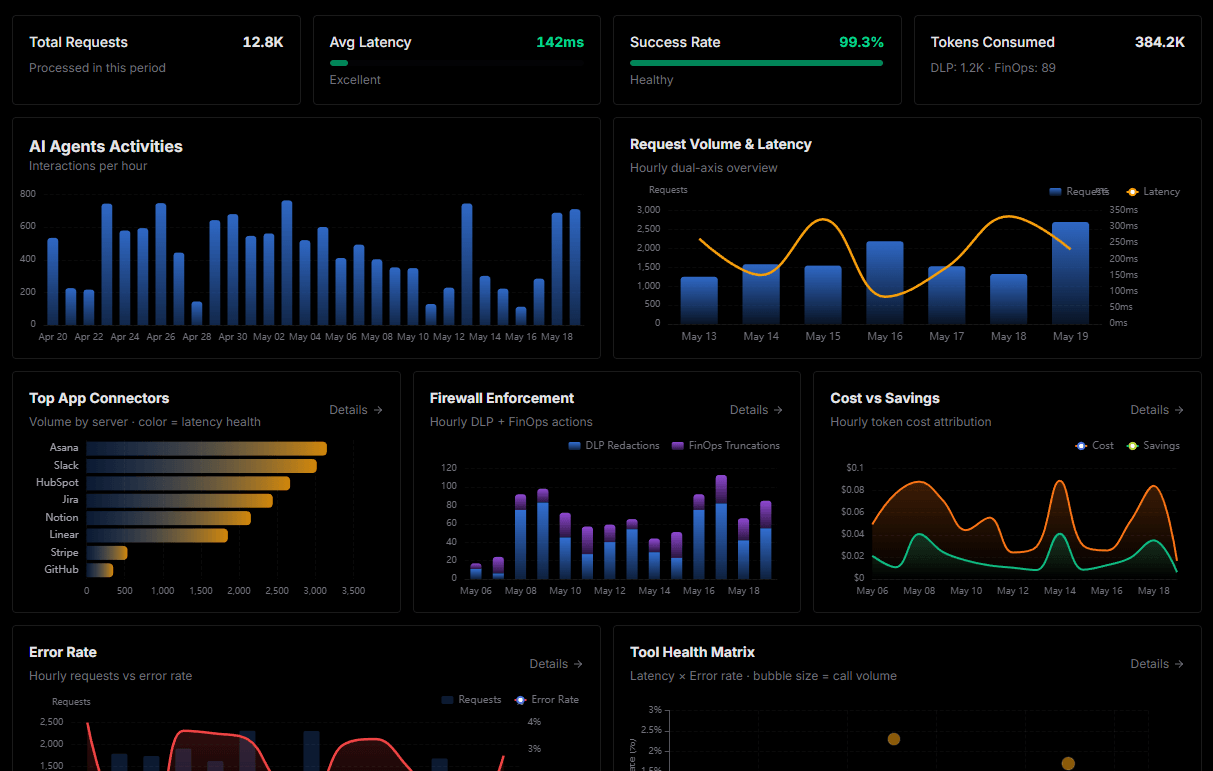
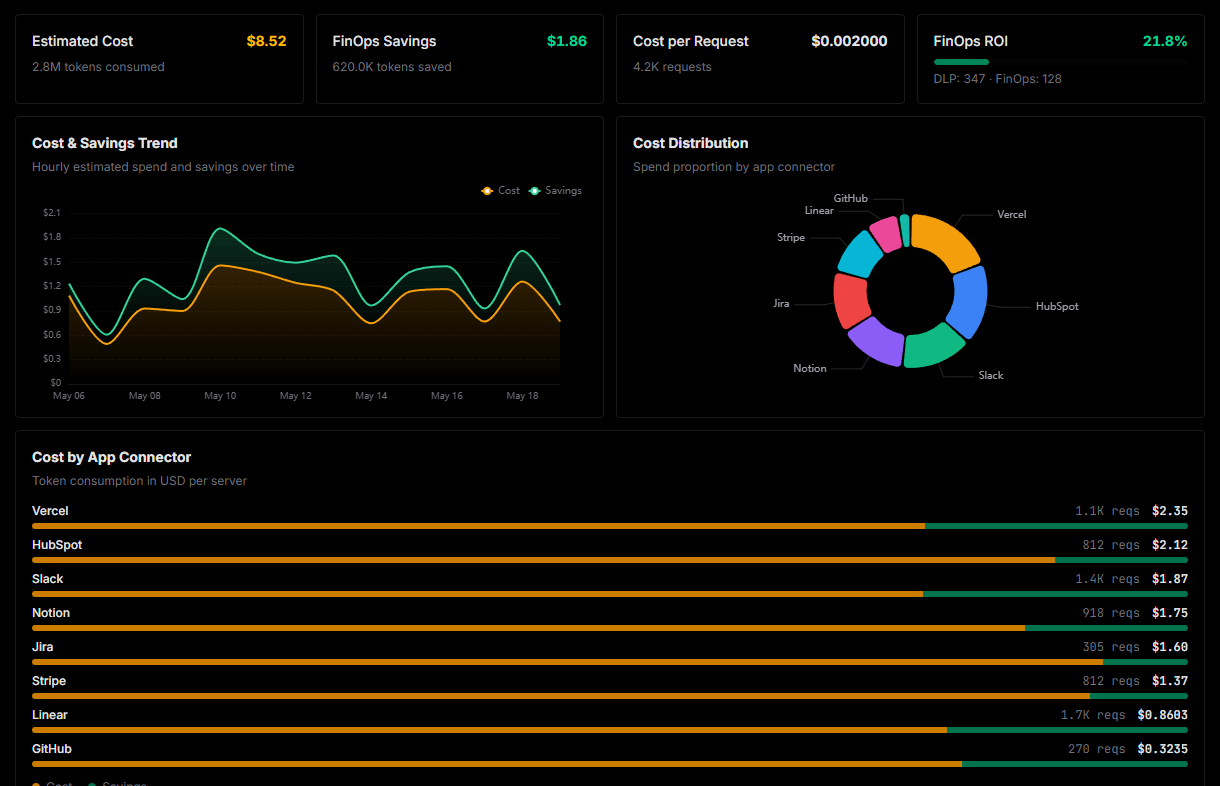
Explore our live AI Agents Analytics dashboard to see it all working
This dashboard is included when you connect EPA Computational Toxicology using Vinkius. You will never be left in the dark about what your AI agents are doing with your tools.
EPA Computational Toxicology and 4,000+ other AI tools. No hosting, no code, ready to use.
Professionals who connect EPA Computational Toxicology to AutoGen through Vinkius don't need to write code, manage servers, or worry about security. Everything is pre-configured, secure, and runs automatically in the background.
Raw MCP | Vinkius | |
|---|---|---|
| Ready-to-use MCPs | Find and configure each manually | 4,000+ MCPs ready to use |
| Connection Setup | Manual coding & server setup | 1-click instant connection |
| Server Hosting | You host it yourself (needs 24/7 uptime) | 100% hosted & managed by Vinkius |
| Security & Privacy | Stored in plaintext config files | Bank-grade encrypted vault |
| Activity Visibility | Blind execution (no logs or tracking) | Live dashboard with real-time logs |
| Cost Control | Runaway AI token spend risk | Automatic budget limits |
| Revoking Access | Must delete files or code to stop | 1-click disconnect button |
How Vinkius secures
EPA Computational Toxicology for AutoGen
Every request between AutoGen and EPA Computational Toxicology is protected by our secure gateway. We automatically keep your sensitive data private, prevent unauthorized access, and let you disconnect instantly at any time.
Frequently asked questions
How do I obtain a free API key for the EPA CTX services?
You must send an email to ccte_api@epa.gov to request an individual API key. The key is usually issued free of charge for research and professional use.
What is a DTXSID and how is it used?
DTXSID is the EPA Dashboard Chemical Identifier. It is the primary unique identifier used across all CompTox APIs to ensure precise substance identification.
Are the results returned in real-time from the EPA databases?
Yes, this agent queries the live CompTox Chemicals Dashboard APIs directly, ensuring you have the most up-to-date scientific data available from the CCTE.
How does AutoGen connect to MCP servers?
Create an MCP tool adapter and assign it to one or more agents in the group chat. AutoGen agents can then call EPA Computational Toxicology tools during their conversation turns.
Can different agents have different MCP tool access?
Yes. AutoGen's role-based architecture lets you assign specific MCP tools to specific agents, so a querying agent has different capabilities than a reviewing agent.
Does AutoGen support human approval for tool calls?
Yes. Configure human-in-the-loop mode so agents pause and request approval before executing sensitive MCP tool calls.
McpWorkbench not found
Install: pip install "autogen-ext[mcp]"
Explore More MCP Servers
View all →
ChangeDetection.io
14 toolsMonitor website changes automatically — track visual or text updates, manage watches, and receive alerts via any AI agent.

Metrc
10 toolsCannabis track-and-trace via Metrc — track facilities, items, plants, and harvests.

DingConnect
10 toolsEquip your AI agent to manage mobile top-ups, track operators, and monitor account balance via the DingConnect API.

Creatomate
9 toolsEquip your AI agent to automate video generation, rendering, and asset management via the Creatomate API.