
Bring Statistical Analysis
to AutoGen
Learn how to connect Outlier Detection Engine to AutoGen and start using 1 AI agent tools in minutes. Fully managed, enterprise secure, and ready to use without writing a single line of code.
 GDPR Free for Subscribers
Compatible with every major AI agent and IDE
 Gemini
What is the Outlier Detection Engine MCP Server?
Outliers skew machine learning models and corrupt statistical analysis. If you ask an LLM to scan 10,000 rows for anomalies, it will exhaust its context and arbitrarily flag random rows based on visual intuition — not math.
This MCP delegates outlier detection to simple-statistics. The engine calculates exact Means, Standard Deviations, and Quartiles, then flags specific rows mathematically using Z-Score or IQR bounds. No intuition, no guessing — just pure deterministic statistics.
The Superpowers
- Mathematical Precision: Every flagged outlier comes with its exact Z-Score or IQR boundary values.
- Multiple Methods: Choose Z-Score (parametric, best for normal distributions) or IQR (robust, best for skewed data).
- Customizable Threshold: Set your own sensitivity (Z > 3, IQR × 1.5, etc.).
- High Performance: Scans thousands of rows instantly on your local machine.
Built-in capabilities (1)
Deterministically identify statistical outliers in datasets using Z-Score or IQR methods
Why AutoGen?
AutoGen enables multi-agent conversations where agents negotiate, delegate, and collaboratively use Outlier Detection Engine tools. Connect 1 tools through Vinkius and assign role-based access. a data analyst queries while a reviewer validates, with optional human-in-the-loop approval for sensitive operations.
- —
Multi-agent conversations: multiple AutoGen agents discuss, delegate, and collaboratively use Outlier Detection Engine tools to solve complex tasks
- —
Role-based architecture lets you assign Outlier Detection Engine tool access to specific agents. a data analyst queries while a reviewer validates
- —
Human-in-the-loop support: agents can pause for human approval before executing sensitive Outlier Detection Engine tool calls
- —
Code execution sandbox: AutoGen agents can write and run code that processes Outlier Detection Engine tool responses in an isolated environment
Outlier Detection Engine in AutoGen
Outlier Detection Engine and 4,000+ other MCP servers. One platform. One governance layer.
Teams that connect Outlier Detection Engine to AutoGen through Vinkius don't need to source, host, or maintain individual MCP servers. Every tool call runs inside a hardened runtime with credential isolation, DLP, and a signed audit chain.
Raw MCP | Vinkius | |
|---|---|---|
| Server catalog | Find and host yourself | 4,000+ managed |
| Infrastructure | Self-hosted | Sandboxed V8 isolates |
| Credential handling | Plaintext in config | Vault + runtime injection |
| Data loss prevention | None | Configurable DLP policies |
| Kill switch | None | Global instant shutdown |
| Financial circuit breakers | None | Per-server limits + alerts |
| Audit trail | None | Ed25519 signed logs |
| SIEM log streaming | None | Splunk, Datadog, Webhook |
| Honeytokens | None | Canary alerts on leak |
| Custom domains | Not applicable | DNS challenge verified |
| GDPR compliance | Manual effort | Automated purge + export |
Why teams choose Vinkius for Outlier Detection Engine in AutoGen
The Outlier Detection Engine MCP Server runs on Vinkius-managed infrastructure inside AWS — a purpose-built runtime with per-request V8 isolates, Ed25519 signed audit chains, and sub-40ms cold starts. All 1 tools execute in hardened sandboxes optimized for native MCP execution.
Your AI agents in AutoGen only access the data you authorize, with DLP that blocks sensitive information from ever reaching the model, kill switch for instant shutdown, and up to 60% token savings. Enterprise-grade infrastructure, zero maintenance.
* Every MCP server runs on Vinkius-managed infrastructure inside AWS - a purpose-built runtime with per-request V8 isolates, Ed25519 signed audit chains, and sub-40ms cold starts optimized for native MCP execution. See our infrastructure
How Vinkius secures
Outlier Detection Engine for AutoGen
Every tool call from AutoGen to the Outlier Detection Engine MCP Server is protected by DLP redaction, cryptographic audit chains, V8 sandbox isolation, kill switch, and financial circuit breakers.
Frequently asked questions
What is the difference between Z-Score and IQR?
Z-Score assumes data is normally distributed and is sensitive to extreme outliers. IQR is based on percentiles (25th and 75th), making it robust and ideal for skewed or non-normal data.
Can I customize the outlier sensitivity threshold?
Yes! You set the threshold parameter: typically 3 for Z-Score (flagging values beyond 3 standard deviations) or 1.5 for IQR (the standard Tukey fence multiplier).
Does it automatically remove the outliers?
No. The engine flags the outliers and provides their exact Z-Scores or IQR bounds so the AI can report them to you. The decision to drop or keep them remains with you.
How does AutoGen connect to MCP servers?
Create an MCP tool adapter and assign it to one or more agents in the group chat. AutoGen agents can then call Outlier Detection Engine tools during their conversation turns.
Can different agents have different MCP tool access?
Yes. AutoGen's role-based architecture lets you assign specific MCP tools to specific agents, so a querying agent has different capabilities than a reviewing agent.
Does AutoGen support human approval for tool calls?
Yes. Configure human-in-the-loop mode so agents pause and request approval before executing sensitive MCP tool calls.
McpWorkbench not found
Install: pip install "autogen-ext[mcp]"
Explore More MCP Servers
View all →
Castmagic
8 toolsAutomate audio and video content repurposing via Castmagic — generate transcripts, show notes, and social posts directly from any AI agent.

Hygraph (Headless CMS)
10 toolsManage headless content via Hygraph — execute GraphQL queries, introspect schemas, and manage documents.

FDA Drug Labels (openFDA)
2 toolsAccess official FDA drug labels and structured product labeling (SPL) data via openFDA.
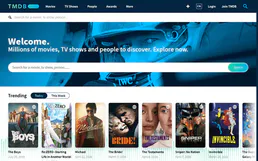
The Movie Database (TMDb)
15 toolsSearch movies, TV shows, people, get details, cast, trailers, and discover content via TMDb API.