
Bring Process Management
to AutoGen
Create your Vinkius account to connect Pipefy to AutoGen and start using all 14 AI tools in minutes. Fully managed, enterprise secure, and ready to use without writing a single line of code. No hosting, no server setup — just connect and start using.
 GDPR Free for Subscribers
Compatible with every major AI agent and IDE
 Gemini
What is the Pipefy MCP Server?
Connect your Pipefy account to any AI agent and take full control of your process management workflows through natural conversation.
What you can do
- Pipe Discovery — List all pipes (processes) in your organization and inspect their structure, phases, and fields
- Card Management — Create, read, update, and delete cards (items/records) flowing through your pipes
- Field Updates — Update specific field values on existing cards as information changes or processes evolve
- Phase Transitions — Move cards between phases to advance workflow steps (e.g., New → In Progress → Done)
- Card Search — Search for cards by field value to find specific items by email, name, ID, or custom data
- Card Cloning — Duplicate existing cards to quickly create similar items with pre-filled field values
- Organization Info — View organization details, members, and available pipes
- User Profile — Check your authenticated user profile and organization memberships
How it works
- Subscribe to this server
- Enter your Pipefy API token (from Profile > API Access or Service Accounts)
- Start managing your workflows from Claude, Cursor, or any MCP-compatible client
No more navigating the Pipefy dashboard for every workflow action. Your AI acts as a dedicated process manager.
Who is this for?
- Operations Teams — instantly create cards, move them through phases, and update fields without opening the Pipefy dashboard
- Project Managers — monitor card progress across multiple pipes and identify bottlenecks in workflows
- Support Staff — search for cards by customer email or ID to quickly find and update related requests
- Process Owners — clone cards for recurring processes and manage field values as requests evolve
Built-in capabilities (14)
You must provide the card_id of the card to clone. The new card is created in the same pipe as the original, starting at the first phase. This is useful for creating similar requests, repeating processes, or using an existing card as a template for new items. The cloned card gets a new unique ID but retains all field data. Clone an existing card to create a duplicate
You must provide the pipe_id and a JSON object containing field values matching the pipe's required fields. Fields are key-value pairs where keys are field IDs and values are the data to store. Optionally specify a phase_id to start the card in a specific phase (defaults to first phase). Example fields: { "name": "John Doe", "email": "john@example.com", "priority": "High" } Create a new card in a Pipefy pipe
You must provide the card_id. This action cannot be undone. Use this to remove test cards, duplicates, or items that were created in error. Be careful as this will also remove all associated data including comments, attachments, and field values for that card. Delete a card from a pipe
Use the card_id obtained from list_cards to inspect full card information. This is useful for reviewing card details before updating fields or moving to another phase. Get detailed information about a specific card
Use the organization_id to inspect your organization's structure, understand team membership, and discover available pipes for card management. Get details of a Pipefy organization
Phases represent steps in a pipe's workflow. Use the phase_id obtained from get_pipe or list_phases to inspect phase configuration. This helps understand what fields are required at each step of the workflow. Get details of a specific phase
Each pipe represents a workflow or process with multiple phases (steps) and custom fields. Use the pipe_id to get the structure of a pipe before creating cards or managing cards within it. The response includes all phases with their IDs, names, and the custom fields defined for the pipe. Get details of a specific Pipefy pipe (process)
Use this to verify API token access and discover organization IDs needed for other queries. This is also useful for understanding which organizations and pipes the user has access to. Get the authenticated user profile
Cards represent individual items flowing through the pipe's workflow phases (e.g., requests, tasks, tickets, leads). You must provide the pipe_id. Optionally filter by phase_id to see cards in a specific phase. Each card includes title, current phase, completion status, due date, and assignees. Use this to monitor workflow progress and identify cards that need attention. List all cards in a pipe with optional phase filter
Each phase represents a stage that cards flow through in the process. Use this to understand the workflow structure and identify phase IDs for filtering cards or moving cards between phases. The response includes phase names and card counts. List all phases in a pipe
Each pipe represents a structured workflow with phases, fields, and cards. You must provide the organization_id which can be found in your Pipefy URL or obtained from get_user_profile. Use this to discover all available pipes before managing cards within them. List all pipes in an organization
You must provide the card_id and the target phase_id. This is the primary way to advance workflow items through the pipe's process steps. Common use cases: moving a request from "New" to "In Review", advancing a lead to "Qualified", or progressing a task to "Completed". The card retains all its field values after moving. Move a card to a different phase in the pipe
This is useful for finding cards by email, name, ID, or any custom field content. You must provide the pipe_id, field_id (the field to search in), and search_value (text to find). Results include card title, current phase, status, and all field values for matching cards. The search uses a "contains" operator for flexible matching. Search cards in a pipe by a specific field value
You must provide the card_id, the field_id of the field to update, and the new value as a string. This is useful for updating card information as requests progress or details change. Common updates: changing priority, updating contact info, modifying descriptions, or setting dates. Update a specific field value on a card
Why AutoGen?
AutoGen enables multi-agent conversations where agents negotiate, delegate, and collaboratively use Pipefy tools. Connect 14 tools through Vinkius and assign role-based access. a data analyst queries while a reviewer validates, with optional human-in-the-loop approval for sensitive operations.
- —
Multi-agent conversations: multiple AutoGen agents discuss, delegate, and collaboratively use Pipefy tools to solve complex tasks
- —
Role-based architecture lets you assign Pipefy tool access to specific agents. a data analyst queries while a reviewer validates
- —
Human-in-the-loop support: agents can pause for human approval before executing sensitive Pipefy tool calls
- —
Code execution sandbox: AutoGen agents can write and run code that processes Pipefy tool responses in an isolated environment
Pipefy in AutoGen
Why run Pipefy with Vinkius?
The Pipefy connection runs on our fully managed, secure cloud infrastructure. We handle the hosting, maintenance, and security so you don't have to deal with servers or code. All 14 tools are ready to work instantly without any complex setup.
You stay in complete control of your data. Your AI only accesses the information you approve, keeping your sensitive passwords and private details completely safe. Plus, with automatic optimizations, your AI works faster and more efficiently.
* Every connection is hosted and maintained by Vinkius. We handle the security, updates, and infrastructure so you don't have to write code or manage servers. See our infrastructure
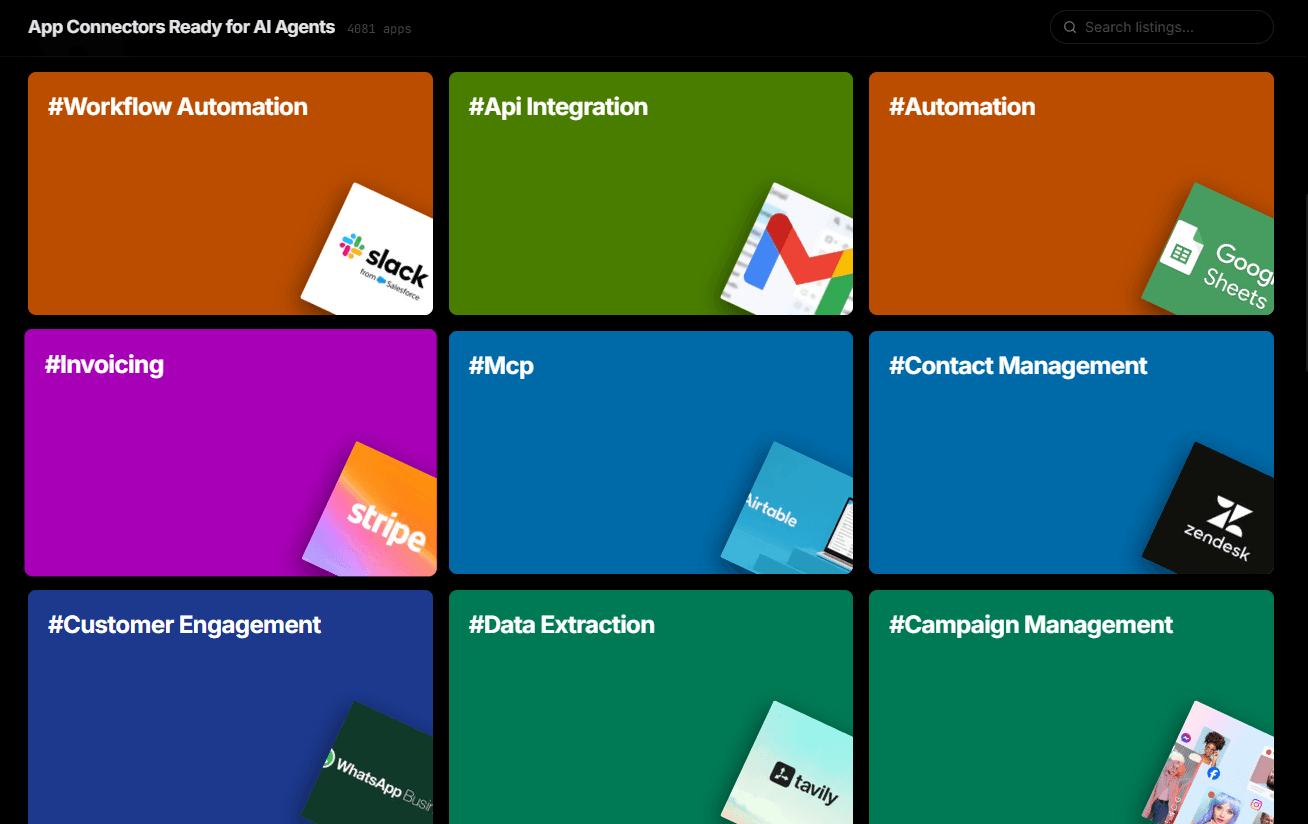
Over 4,000 integrations ready for AI agents
Explore a vast library of pre-built integrations, optimized and ready to deploy.
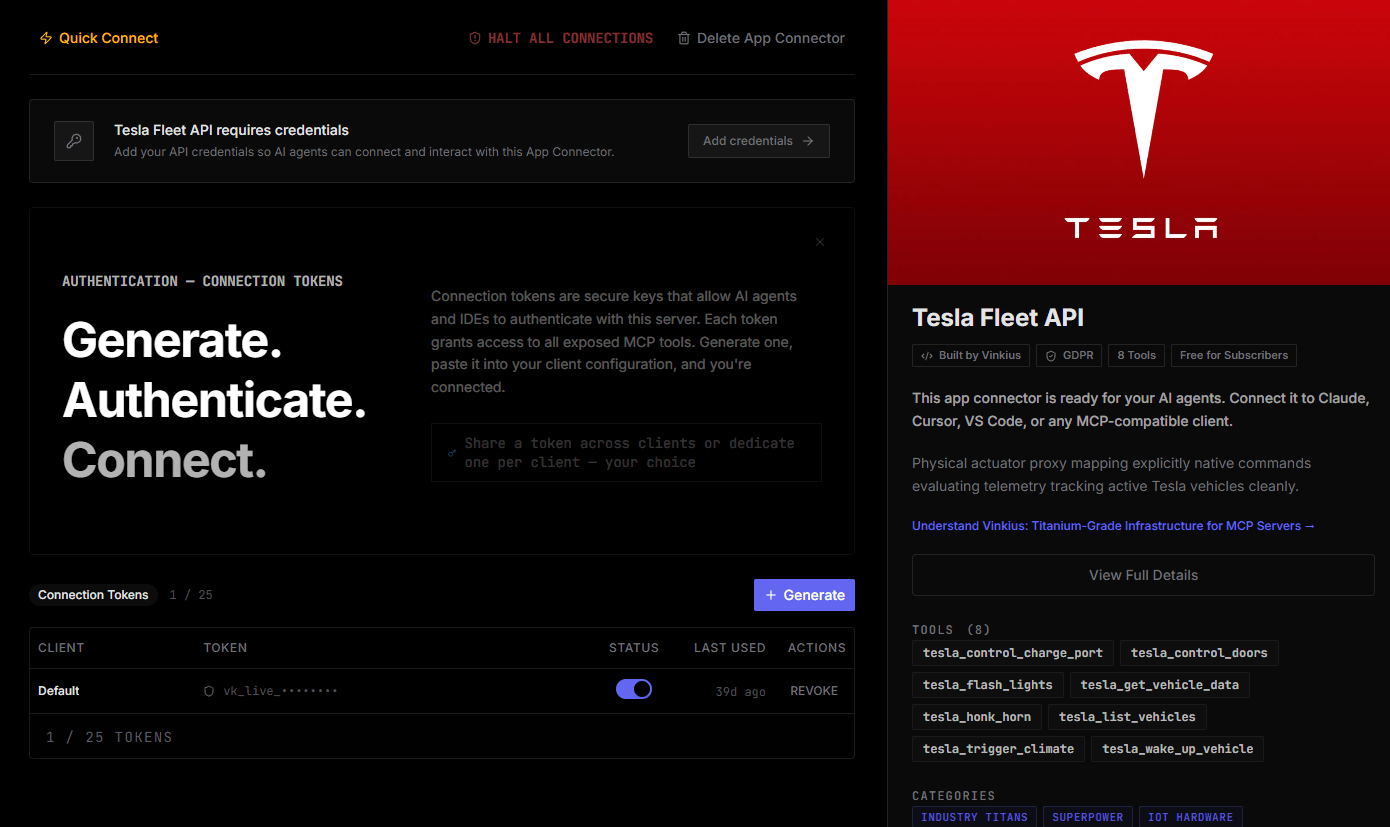
Connect securely in under 30 seconds
Generate tokens to authenticate and link external services in a single step.
Complete visibility into every agent action
Audit live requests, latency, success rates, and active security compliance policies.
Optimize spending and track token ROI
Analyze real-time token consumption and cost metrics detailed by connection.
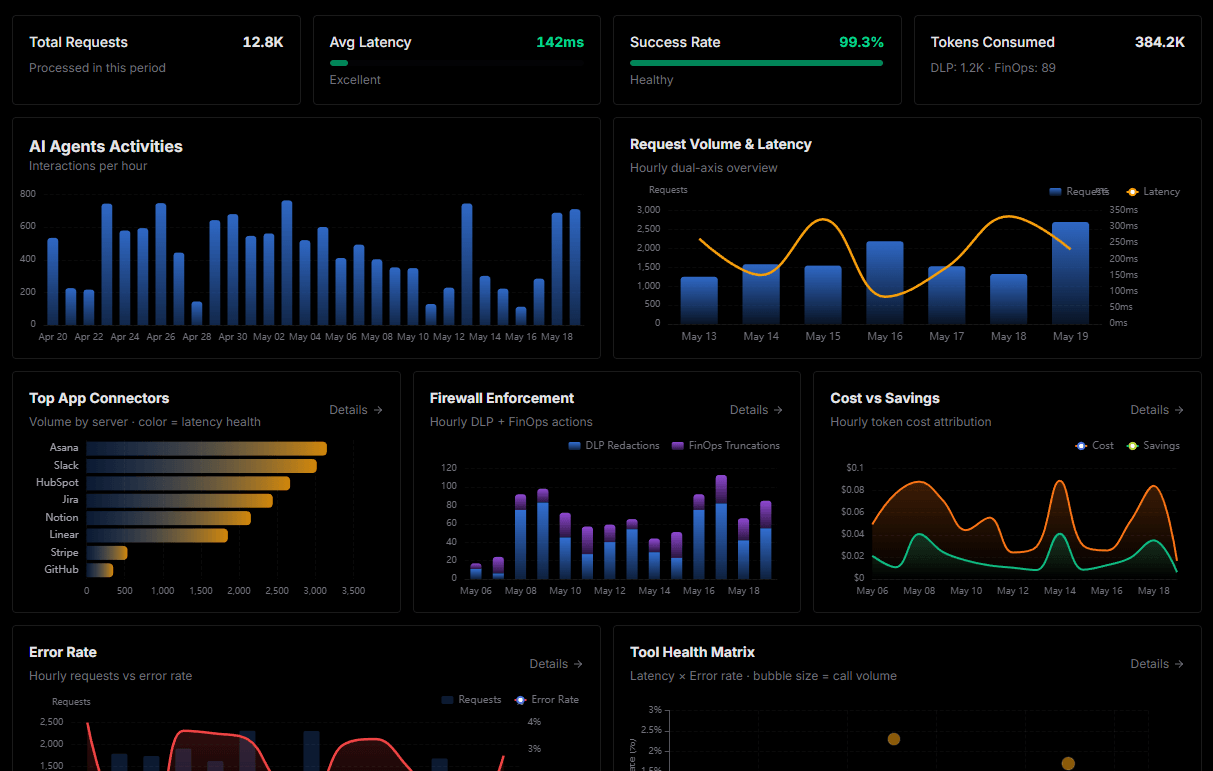
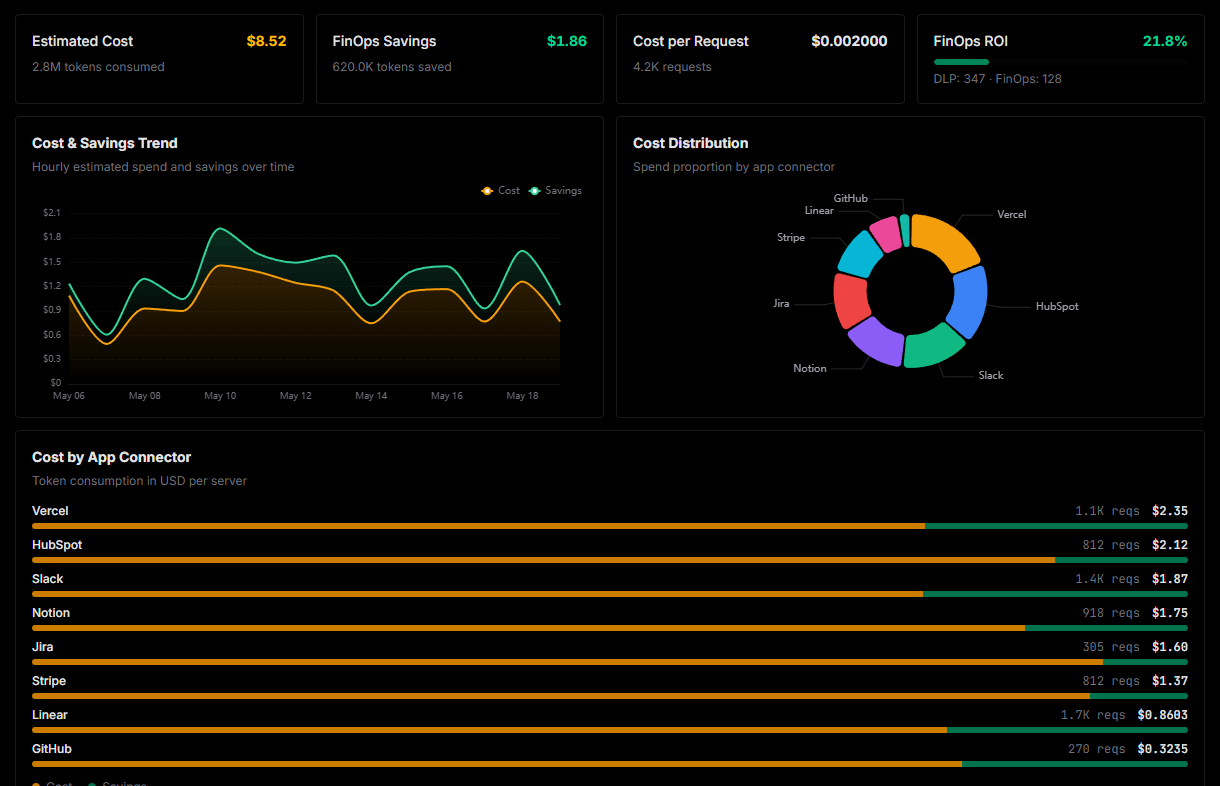
Explore our live AI Agents Analytics dashboard to see it all working
This dashboard is included when you connect Pipefy using Vinkius. You will never be left in the dark about what your AI agents are doing with your tools.
Pipefy and 4,000+ other AI tools. No hosting, no code, ready to use.
Professionals who connect Pipefy to AutoGen through Vinkius don't need to write code, manage servers, or worry about security. Everything is pre-configured, secure, and runs automatically in the background.
Raw MCP | Vinkius | |
|---|---|---|
| Ready-to-use MCPs | Find and configure each manually | 4,000+ MCPs ready to use |
| Connection Setup | Manual coding & server setup | 1-click instant connection |
| Server Hosting | You host it yourself (needs 24/7 uptime) | 100% hosted & managed by Vinkius |
| Security & Privacy | Stored in plaintext config files | Bank-grade encrypted vault |
| Activity Visibility | Blind execution (no logs or tracking) | Live dashboard with real-time logs |
| Cost Control | Runaway AI token spend risk | Automatic budget limits |
| Revoking Access | Must delete files or code to stop | 1-click disconnect button |
How Vinkius secures
Pipefy for AutoGen
Every request between AutoGen and Pipefy is protected by our secure gateway. We automatically keep your sensitive data private, prevent unauthorized access, and let you disconnect instantly at any time.
Frequently asked questions
How do I get a Pipefy API token and where do I find it?
Log in to Pipefy, click on your Profile icon (top-right), go to Profile > API Access, and generate a new token. Alternatively, use Service Accounts for team-based access. Copy the token immediately — it starts with eyJhbG.... Paste it into the API token field below. This token authenticates all GraphQL API requests to https://api.pipefy.com/graphql.
How do I move a card from one phase to another in a pipe?
Use the move_card_to_phase tool with the card_id (from list_cards or get_card) and the target phase_id (from get_pipe or list_phases). This advances the card through your workflow. For example, moving a card from 'New Requests' to 'In Review' phase. The card retains all its field values after moving. This is the primary way to progress items through your process.
Can I search for cards by a specific field value like email or customer name?
Yes! Use the search_cards_by_field tool with the pipe_id, field_id (the specific field to search in), and search_value (the text to find). This searches all cards in the pipe where that field contains your search text. It's perfect for finding cards by customer email, name, order number, or any custom field. Results include full card details with all field values.
How do I create a new card with custom field values?
Use the create_card tool with the pipe_id and a JSON object containing field values. The fields parameter should be a JSON object where keys are field IDs (from get_pipe) and values are the data to store. Example: { "name": "John Doe", "email": "john@example.com", "priority": "High" }. You can also optionally specify a phase_id to start the card in a specific phase instead of the default first phase.
How does AutoGen connect to MCP servers?
Create an MCP tool adapter and assign it to one or more agents in the group chat. AutoGen agents can then call Pipefy tools during their conversation turns.
Can different agents have different MCP tool access?
Yes. AutoGen's role-based architecture lets you assign specific MCP tools to specific agents, so a querying agent has different capabilities than a reviewing agent.
Does AutoGen support human approval for tool calls?
Yes. Configure human-in-the-loop mode so agents pause and request approval before executing sensitive MCP tool calls.
McpWorkbench not found
Install: pip install "autogen-ext[mcp]"
Explore More MCP Servers
View all →
HCL AppScan
10 toolsManage security scans and vulnerabilities with HCL AppScan — track issues and audit applications via AI.

Best Buy
10 toolsSearch products, check store availability, read reviews, and explore categories via Best Buy — execute retail inquiries directly from any AI agent.
Deskpro
12 toolsDeliver exceptional helpdesk support with ticket management, self-service portals, and SLA tracking across every channel.

Clerk
8 toolsManage authentication and users via Clerk — track active sessions, monitor organizations, and manage invitations directly from any AI agent.