
Bring Infrastructure As Code
to AutoGen
Create your Vinkius account to connect Pulumi to AutoGen and start using all 11 AI tools in minutes. Fully managed, enterprise secure, and ready to use without writing a single line of code. No hosting, no server setup — just connect and start using.
 GDPR Free for Subscribers
Compatible with every major AI agent and IDE
 Gemini
What is the Pulumi MCP Server?
Connect your Pulumi account to any AI agent and take full control of your infrastructure-as-code through natural conversation.
What you can do
- Organization Discovery — List organizations and retrieve their details, team settings and member info
- Stack Management — List, create and delete stacks (infrastructure environments) across all your projects
- Deployment Tracking — Monitor stack update history with status (succeeded, failed, in-progress), resource changes and error logs
- Output Inspection — View exported output values from the latest deployment (URLs, IPs, resource IDs)
- Tag Management — List and set custom tags on stacks for organization and filtering (environment, team, cost-center)
How it works
- Subscribe to this server
- Enter your Pulumi Access Token
- Start managing your infrastructure from Claude, Cursor, or any MCP-compatible client
No more switching to the Pulumi Console to check deployment status or review stack outputs. Your AI acts as a dedicated infrastructure operations engineer.
Who is this for?
- DevOps Engineers — quickly check stack status, review deployment history and inspect outputs without opening the Pulumi Console
- Platform Teams — audit infrastructure changes, track deployment success rates and manage stack tags across organizations
- Developers — discover available stacks, review exported endpoints and verify resource provisioning via conversation
Built-in capabilities (11)
A stack is an isolated, independently configurable instance of your Pulumi program. Requires the org name, project name and stack name (e.g. "staging", "prod"). Returns the created stack with its URL. Create a new Pulumi stack
The stack must be empty (no resources) or force deletion must be enabled. Provide the org name, project name and stack name. WARNING: this action is irreversible. Delete a Pulumi stack
Returns the user's GitHub login, avatar URL, email and name. Use this to verify your access token is working correctly and to see which identity the API calls will appear as. Get the currently authenticated Pulumi user
Provide the org name, project name, stack name and deployment version number. Get details for a specific Pulumi deployment
Provide the organization name (slug). Get details for a specific Pulumi organization
Provide the org name, project name and stack name. Get details for a specific Pulumi stack
Outputs are values your Pulumi program exports, such as URLs, IP addresses, resource IDs and connection strings. Useful for discovering endpoint addresses and configuration values after infrastructure deployment. Get the exported output values from a Pulumi stack
Each deployment shows its version number, status (succeeded, failed, in-progress), start/end time, resource changes (created, updated, deleted) and the user who triggered it. Use this to audit infrastructure changes and track deployment success/failure patterns. List deployment history for a Pulumi stack
Tags are key-value metadata labels used for organizing, filtering and managing stacks (e.g. environment=prod, team=platform, cost-center=engineering). List tags on a Pulumi stack
Each stack represents an isolated, independently configurable instance of your infrastructure (e.g. dev, staging, prod). Returns stack name, project name, last update info, resource count and whether updates are in progress. List all stacks in a Pulumi organization
Tags are used for organizing, filtering and managing stacks (e.g. key="environment", value="prod", key="team", value="platform"). Provide the org name, project name, stack name, tag name and tag value. Set a tag on a Pulumi stack
Why AutoGen?
AutoGen enables multi-agent conversations where agents negotiate, delegate, and collaboratively use Pulumi tools. Connect 11 tools through Vinkius and assign role-based access. a data analyst queries while a reviewer validates, with optional human-in-the-loop approval for sensitive operations.
- —
Multi-agent conversations: multiple AutoGen agents discuss, delegate, and collaboratively use Pulumi tools to solve complex tasks
- —
Role-based architecture lets you assign Pulumi tool access to specific agents. a data analyst queries while a reviewer validates
- —
Human-in-the-loop support: agents can pause for human approval before executing sensitive Pulumi tool calls
- —
Code execution sandbox: AutoGen agents can write and run code that processes Pulumi tool responses in an isolated environment
Pulumi in AutoGen
Why run Pulumi with Vinkius?
The Pulumi connection runs on our fully managed, secure cloud infrastructure. We handle the hosting, maintenance, and security so you don't have to deal with servers or code. All 11 tools are ready to work instantly without any complex setup.
You stay in complete control of your data. Your AI only accesses the information you approve, keeping your sensitive passwords and private details completely safe. Plus, with automatic optimizations, your AI works faster and more efficiently.
* Every connection is hosted and maintained by Vinkius. We handle the security, updates, and infrastructure so you don't have to write code or manage servers. See our infrastructure
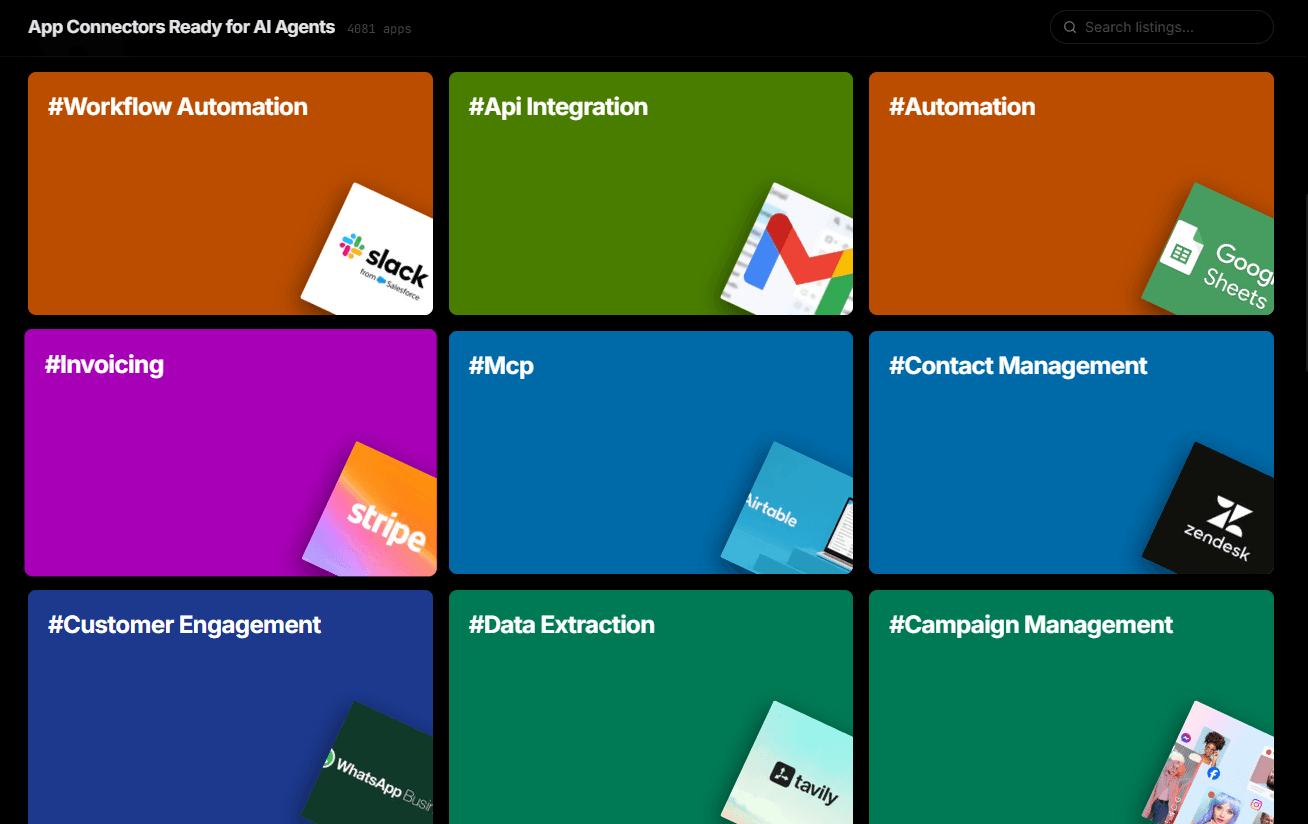
Over 4,000 integrations ready for AI agents
Explore a vast library of pre-built integrations, optimized and ready to deploy.
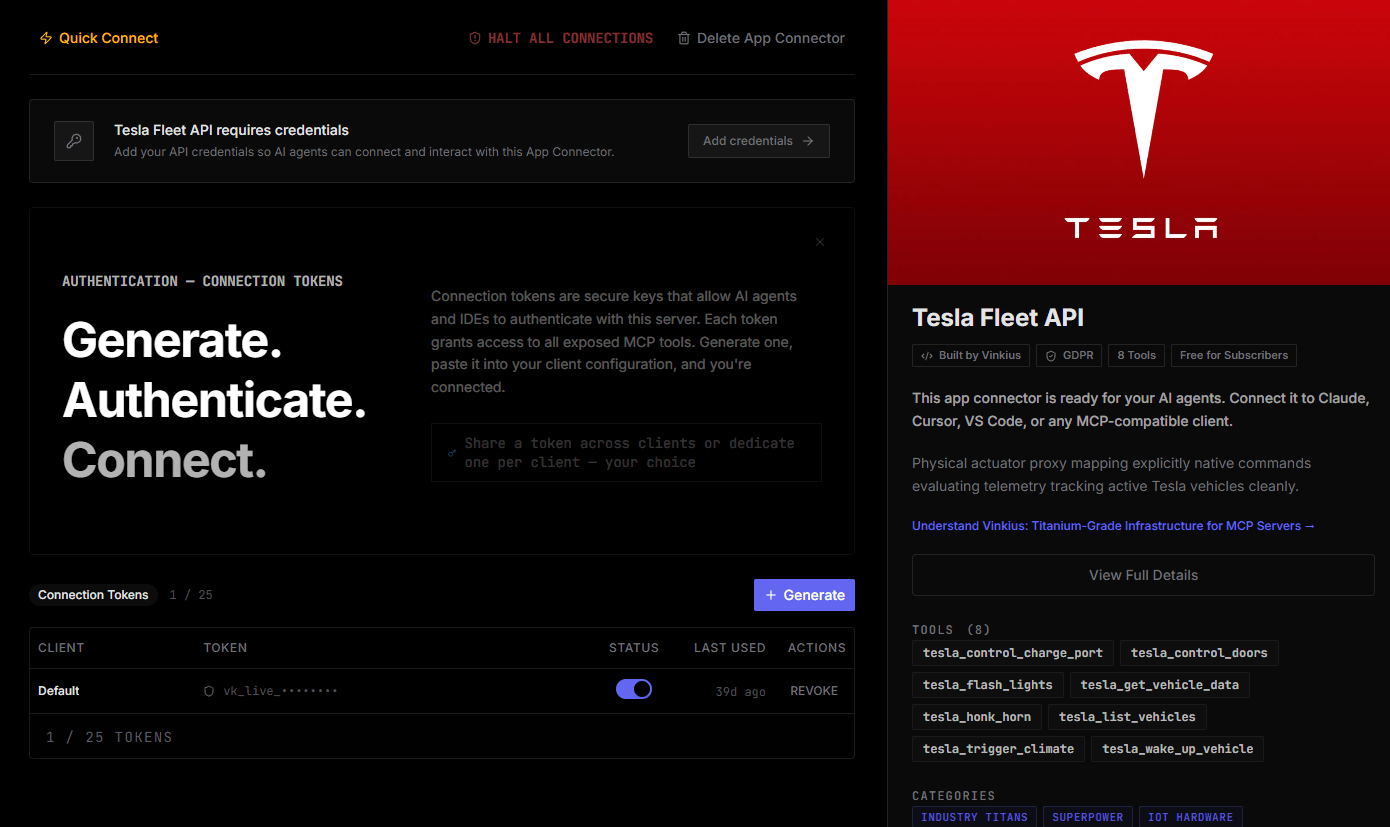
Connect securely in under 30 seconds
Generate tokens to authenticate and link external services in a single step.
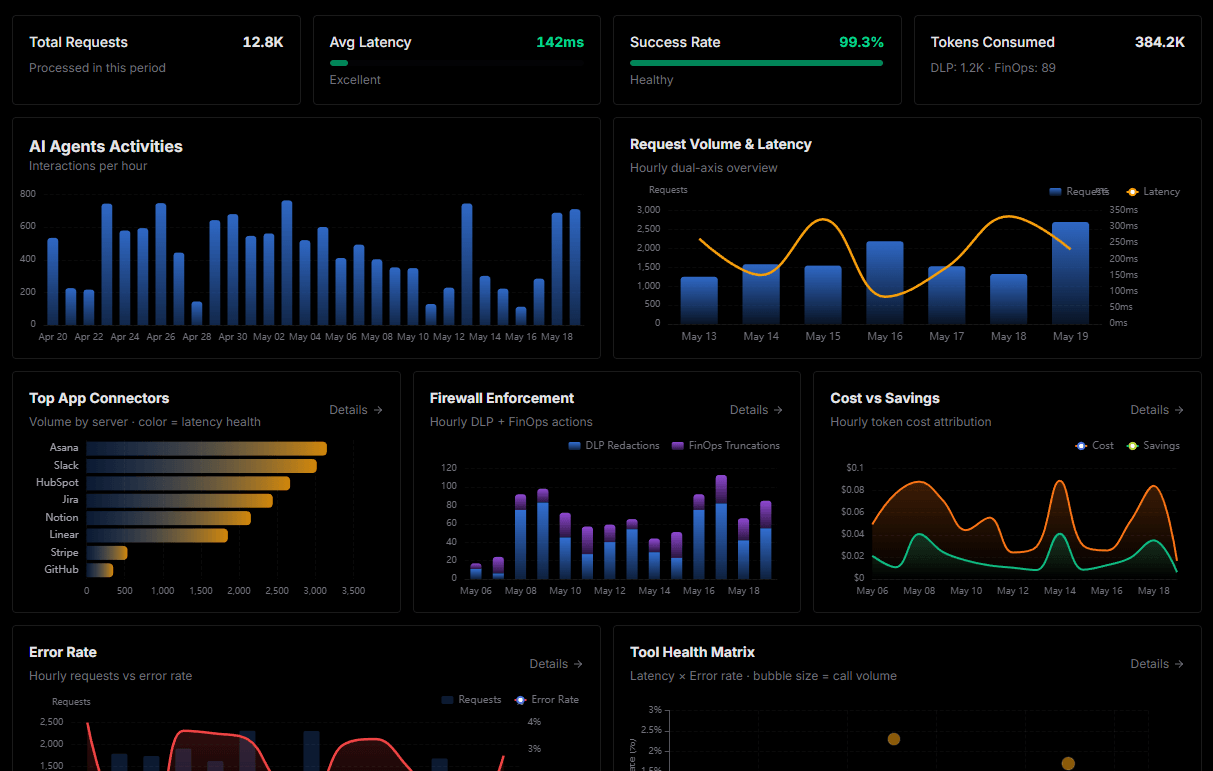
Complete visibility into every agent action
Audit live requests, latency, success rates, and active security compliance policies.
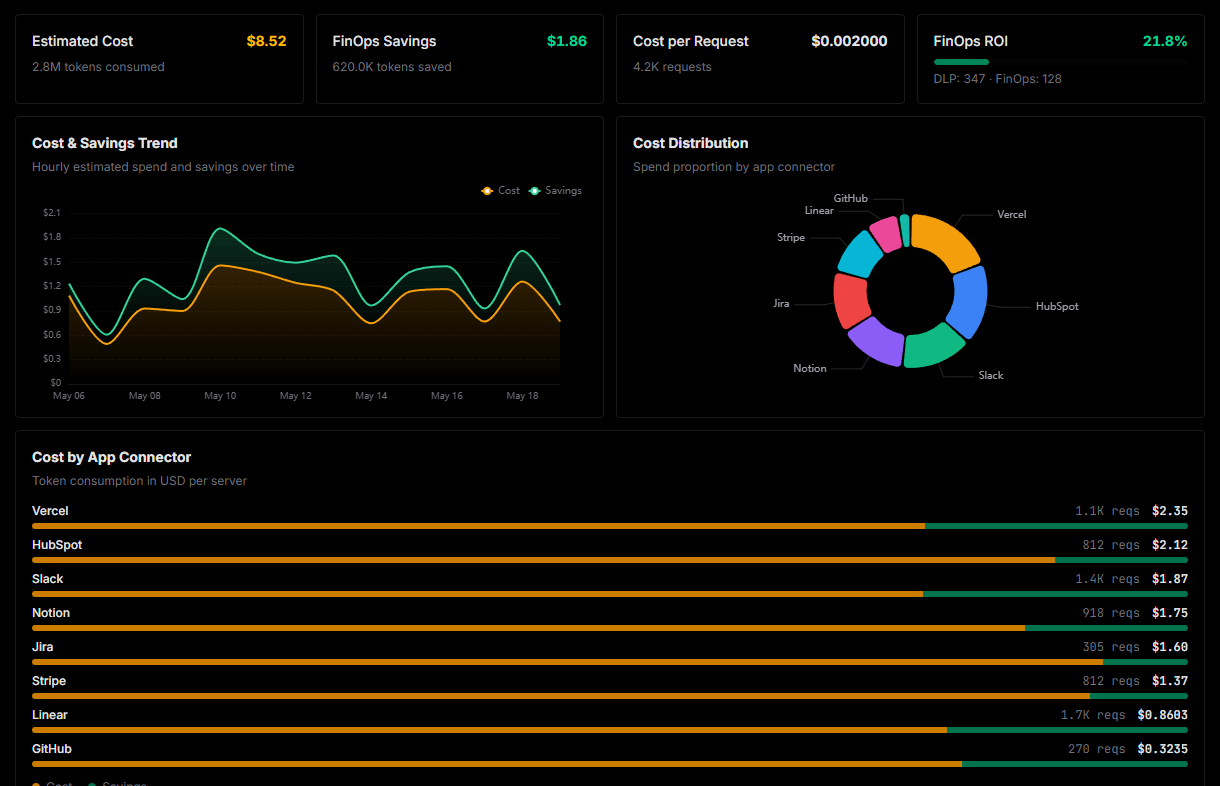
Optimize spending and track token ROI
Analyze real-time token consumption and cost metrics detailed by connection.
Explore our live AI Agents Analytics dashboard to see it all working
This dashboard is included when you connect Pulumi using Vinkius. You will never be left in the dark about what your AI agents are doing with your tools.
Pulumi and 4,000+ other AI tools. No hosting, no code, ready to use.
Professionals who connect Pulumi to AutoGen through Vinkius don't need to write code, manage servers, or worry about security. Everything is pre-configured, secure, and runs automatically in the background.
Raw MCP | Vinkius | |
|---|---|---|
| Ready-to-use MCPs | Find and configure each manually | 4,000+ MCPs ready to use |
| Connection Setup | Manual coding & server setup | 1-click instant connection |
| Server Hosting | You host it yourself (needs 24/7 uptime) | 100% hosted & managed by Vinkius |
| Security & Privacy | Stored in plaintext config files | Bank-grade encrypted vault |
| Activity Visibility | Blind execution (no logs or tracking) | Live dashboard with real-time logs |
| Cost Control | Runaway AI token spend risk | Automatic budget limits |
| Revoking Access | Must delete files or code to stop | 1-click disconnect button |
How Vinkius secures
Pulumi for AutoGen
Every request between AutoGen and Pulumi is protected by our secure gateway. We automatically keep your sensitive data private, prevent unauthorized access, and let you disconnect instantly at any time.
Frequently asked questions
How do I get a Pulumi Access Token?
Log in to the Pulumi Console, go to Account Settings > Access Tokens, click Create Token, give it a name and copy the token immediately — it starts with pul_ and won't be shown again.
What is a Pulumi stack?
A stack is an isolated, independently configurable instance of your Pulumi program. Stacks typically represent different environments like dev, staging and prod. Each stack has its own configuration, state, outputs and deployment history. Use list_stacks to discover all stacks in an organization.
Can I see the deployment history of a stack?
Yes! Use list_deployments with the org name, project name and stack name. It returns the update history showing version number, status (succeeded, failed, in-progress), start/end time and resource change counts. Use get_deployment with a specific version for detailed logs and error messages.
Can I view the outputs of a stack?
Yes! Use get_stack_outputs with the org name, project name and stack name. It returns all exported output values from the latest successful deployment, such as URLs, IP addresses, resource IDs and connection strings. This is useful for discovering endpoint addresses after infrastructure deployment.
How does AutoGen connect to MCP servers?
Create an MCP tool adapter and assign it to one or more agents in the group chat. AutoGen agents can then call Pulumi tools during their conversation turns.
Can different agents have different MCP tool access?
Yes. AutoGen's role-based architecture lets you assign specific MCP tools to specific agents, so a querying agent has different capabilities than a reviewing agent.
Does AutoGen support human approval for tool calls?
Yes. Configure human-in-the-loop mode so agents pause and request approval before executing sensitive MCP tool calls.
McpWorkbench not found
Install: pip install "autogen-ext[mcp]"
Explore More MCP Servers
View all →
Bynder
10 toolsEmpower your asset strategy via Bynder — list media banks, filter collections, and retrieve digital download links with your AI agent.

fal.ai 3D
12 toolsGenerate 3D models via fal.ai — convert images and text to 3D assets using Rodin, TripoSR, Trellis, and 9+ AI models from any AI agent.
TeamGantt
12 toolsPlan projects with intuitive Gantt charts that show deadlines, dependencies, and team workloads in one visual timeline.
Mariana Tek
10 toolsManage classes, instructors, members, reservations, and pricing for your boutique fitness studio powered by Mariana Tek through natural conversation.