
Bring Openapi
to CrewAI
Create your Vinkius account to connect SwaggerHub to CrewAI and start using all 10 AI tools in minutes. Fully managed, enterprise secure, and ready to use without writing a single line of code. No hosting, no server setup — just connect and start using.
 GDPR Free for Subscribers
Compatible with every major AI agent and IDE
 Gemini
What is the SwaggerHub MCP Server?
Integrate SwaggerHub, the enterprise platform for API design and documentation, directly into your conversational workflows with the intelligent MCP connector. Transform your LLM into an active technical architect, empowering it to securely index, validate, and retrieve full OpenAPI specifications directly from your organizational directories. Eradicate context-switching by verifying CI/CD integration pipelines, scanning centralized API definitions, and pulling structural component domains intuitively without having to hunt through graphical interfaces.
What you can do
- API Cataloging & Specs — Query an entire organizational API roster using
list_apisand pull exact OpenAPI JSON configurations cleanly callingget_api_version_spec. - Component Reusability Insights — Investigate generic shared definitions executing
list_domainsand fetch core parameters seamlessly viaget_domain_details. - Project & Lifecycle Control — Map team infrastructures inspecting groupings natively with
list_projectsand verify operational logic by callingget_project_details. - Ecosystem Verification — Audit backend dependencies natively invoking
list_api_integrationsto test GitHub, AWS, and GitLab sync parameters tied to your specs.
How it works
- Append the SwaggerHub MCP framework natively within your operational intelligence environment.
- Configure access safely by mapping your personal or organizational
SWAGGERHUB_KEYinto your credentials setup. - Instruct your AI directly: "Check the 'PaymentsAPI' definition owned by my organization, retrieve version '2.0.0', and list all shared domains it might depend on."
Who is this for?
- API Architects & Backend Engineers — Query exact spec configurations seamlessly and retrieve JSON OpenAPI schemas natively to structure robust code generation logic.
- DevOps & CI/CD Leads — Guarantee your pipelines match deployed definitions rapidly mapping integration synchronization via CLI conversational checks.
- Technical Writers — Examine Swagger endpoints efficiently drafting high-quality structured documentation parsing correct definitions smoothly.
Built-in capabilities (10)
Retrieves metadata for a SwaggerHub API definition
Retrieves a specific version of a SwaggerHub API definition (OpenAPI spec)
Retrieves metadata for a SwaggerHub domain
Retrieves details of a SwaggerHub project
Lists all CI/CD integrations configured for a SwaggerHub API
Lists all available API templates on SwaggerHub
List all API definitions owned by a SwaggerHub user or organization
Lists all shared domains (reusable components) owned by a user or org
Lists all projects in a SwaggerHub organization
Search all public APIs on SwaggerHub by keyword
Why CrewAI?
When paired with CrewAI, SwaggerHub becomes a first-class tool in your multi-agent workflows. Each agent in the crew can call SwaggerHub tools autonomously, one agent queries data, another analyzes results, a third compiles reports, all orchestrated through Vinkius with zero configuration overhead.
- —
Multi-agent collaboration lets you decompose complex workflows into specialized roles, one agent researches, another analyzes, a third generates reports, each with access to MCP tools
- —
CrewAI's native MCP integration requires zero adapter code: pass Vinkius Edge URL directly in the
mcpsparameter and agents auto-discover every available tool at runtime - —
Built-in task delegation and shared memory mean agents can pass context between steps without manual state management, enabling multi-hop reasoning across tool calls
- —
Sequential and hierarchical crew patterns map naturally to real-world workflows: enumerate subdomains → analyze DNS history → check WHOIS records → compile findings into actionable reports
SwaggerHub in CrewAI
Why run SwaggerHub with Vinkius?
The SwaggerHub connection runs on our fully managed, secure cloud infrastructure. We handle the hosting, maintenance, and security so you don't have to deal with servers or code. All 10 tools are ready to work instantly without any complex setup.
You stay in complete control of your data. Your AI only accesses the information you approve, keeping your sensitive passwords and private details completely safe. Plus, with automatic optimizations, your AI works faster and more efficiently.
* Every connection is hosted and maintained by Vinkius. We handle the security, updates, and infrastructure so you don't have to write code or manage servers. See our infrastructure
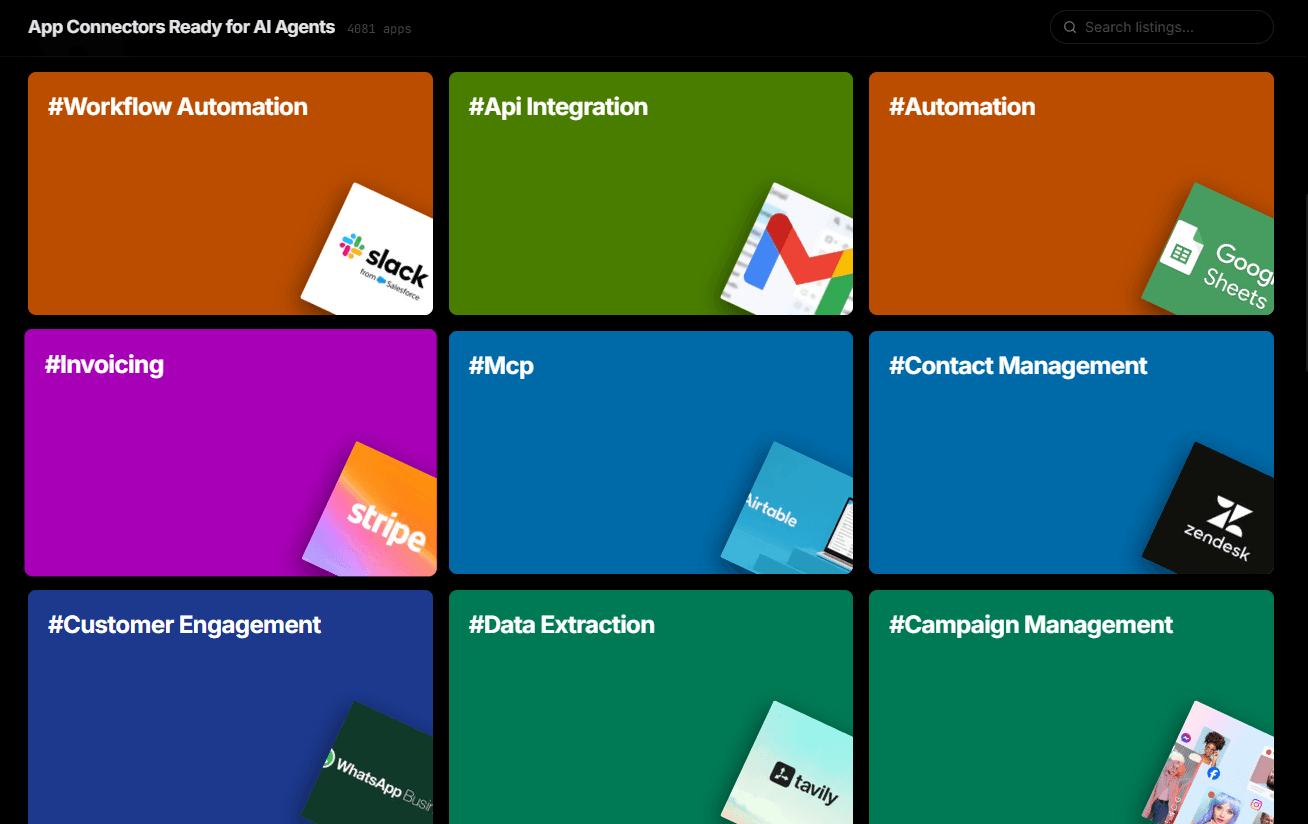
Over 4,000 integrations ready for AI agents
Explore a vast library of pre-built integrations, optimized and ready to deploy.
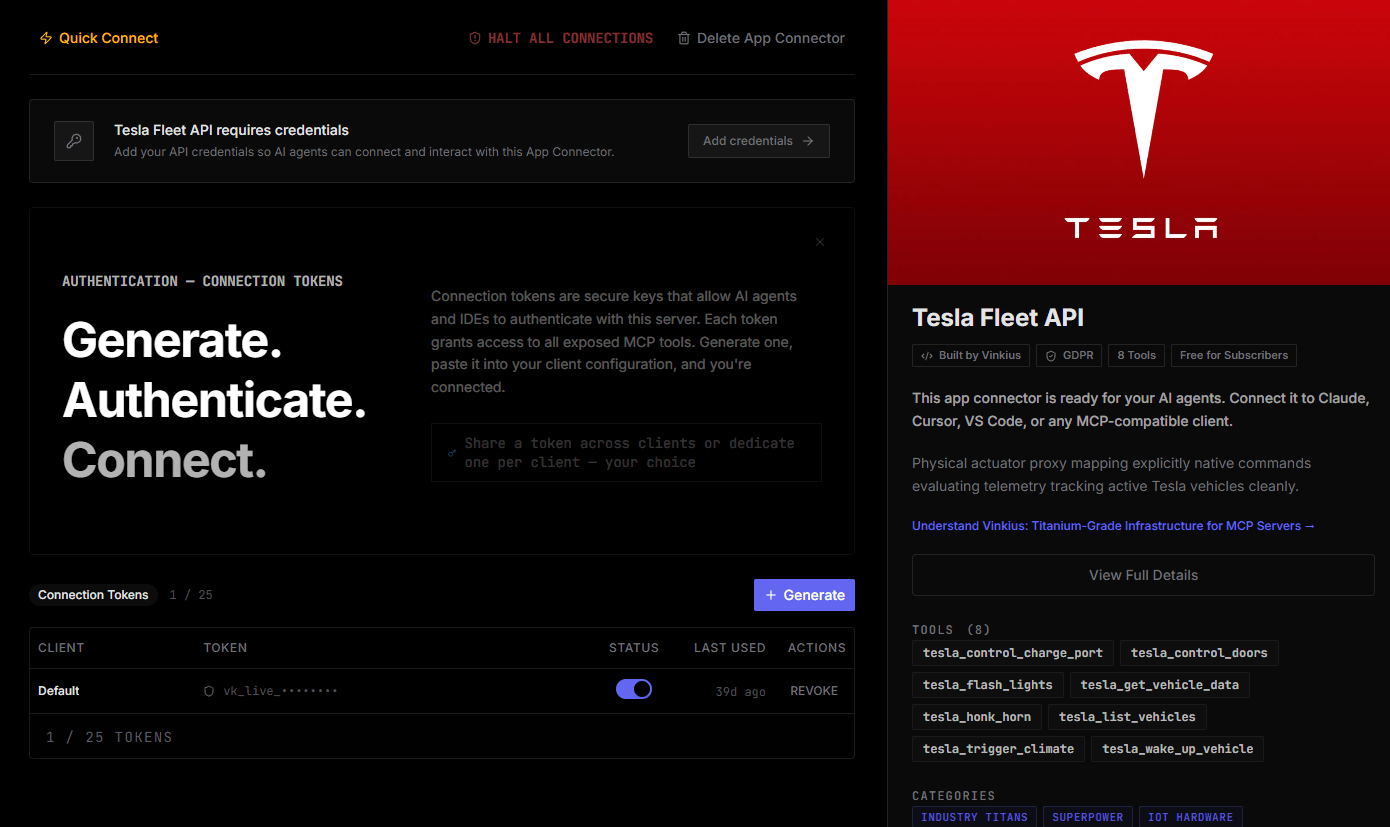
Connect securely in under 30 seconds
Generate tokens to authenticate and link external services in a single step.
Complete visibility into every agent action
Audit live requests, latency, success rates, and active security compliance policies.
Optimize spending and track token ROI
Analyze real-time token consumption and cost metrics detailed by connection.
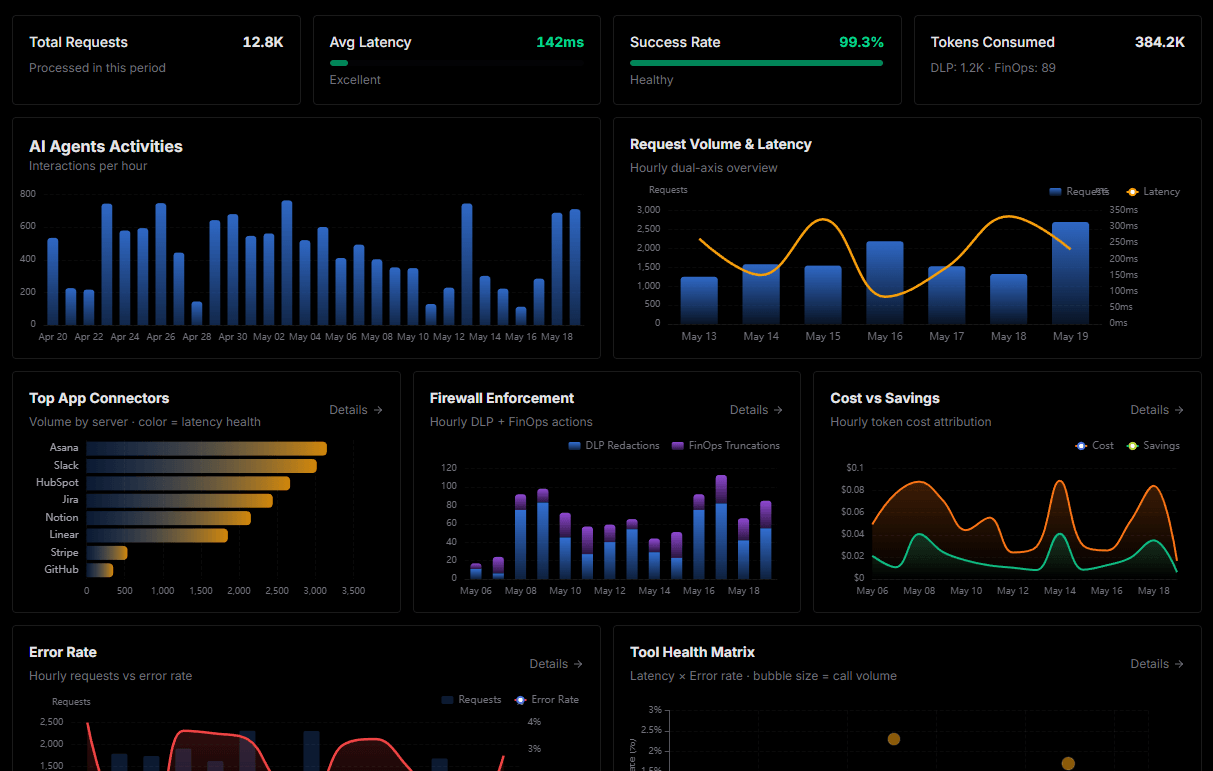
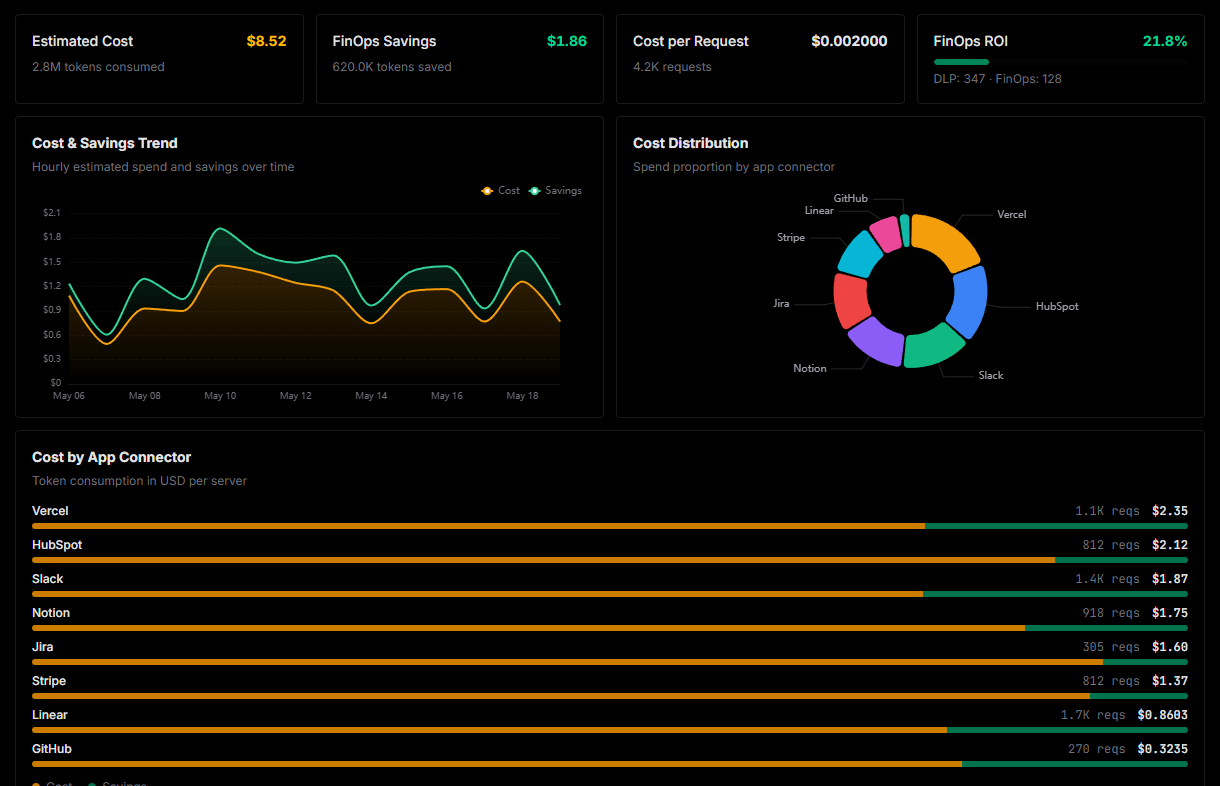
Explore our live AI Agents Analytics dashboard to see it all working
This dashboard is included when you connect SwaggerHub using Vinkius. You will never be left in the dark about what your AI agents are doing with your tools.
SwaggerHub and 4,000+ other AI tools. No hosting, no code, ready to use.
Professionals who connect SwaggerHub to CrewAI through Vinkius don't need to write code, manage servers, or worry about security. Everything is pre-configured, secure, and runs automatically in the background.
Raw MCP | Vinkius | |
|---|---|---|
| Ready-to-use MCPs | Find and configure each manually | 4,000+ MCPs ready to use |
| Connection Setup | Manual coding & server setup | 1-click instant connection |
| Server Hosting | You host it yourself (needs 24/7 uptime) | 100% hosted & managed by Vinkius |
| Security & Privacy | Stored in plaintext config files | Bank-grade encrypted vault |
| Activity Visibility | Blind execution (no logs or tracking) | Live dashboard with real-time logs |
| Cost Control | Runaway AI token spend risk | Automatic budget limits |
| Revoking Access | Must delete files or code to stop | 1-click disconnect button |
How Vinkius secures
SwaggerHub for CrewAI
Every request between CrewAI and SwaggerHub is protected by our secure gateway. We automatically keep your sensitive data private, prevent unauthorized access, and let you disconnect instantly at any time.
Frequently asked questions
Can the agent interact with public APIs outside my specific organizational ecosystem?
Yes. Beyond listing your own API configurations, the integration includes powerful global metadata tools like search_apis allowing you to query keyword structures discovering public interfaces readily.
How securely does the system parse potentially heavy or oversized API configurations locally?
Yes. The integration parses large JSON configurations securely and natively, ensuring large multi-megabyte API definitions are safely parsed without memory timeouts.
Can the AI modify or publish new API specifications?
The integration is primarily read-oriented — it retrieves specs, domains, projects, and integration configs. To publish or edit specs you would use the SwaggerHub editor or its write API endpoints separately.
How does CrewAI discover and connect to MCP tools?
CrewAI connects to MCP servers lazily. when the crew starts, each agent resolves its MCP URLs and fetches the tool catalog via the standard tools/list method. This means tools are always fresh and reflect the server's current capabilities. No tool schemas need to be hardcoded.
Can different agents in the same crew use different MCP servers?
Yes. Each agent has its own mcps list, so you can assign specific servers to specific roles. For example, a reconnaissance agent might use a domain intelligence server while an analysis agent uses a vulnerability database server.
What happens when an MCP tool call fails during a crew run?
CrewAI wraps tool failures as context for the agent. The LLM receives the error message and can decide to retry with different parameters, fall back to a different tool, or mark the task as partially complete. This resilience is critical for production workflows.
Can CrewAI agents call multiple MCP tools in parallel?
CrewAI agents execute tool calls sequentially within a single reasoning step. However, you can run multiple agents in parallel using process=Process.parallel, each calling different MCP tools concurrently. This is ideal for workflows where separate data sources need to be queried simultaneously.
Can I run CrewAI crews on a schedule (cron)?
Yes. CrewAI crews are standard Python scripts, so you can invoke them via cron, Airflow, Celery, or any task scheduler. The crew.kickoff() method runs synchronously by default, making it straightforward to integrate into existing pipelines.
MCP tools not discovered
Ensure the Edge URL is correct. CrewAI connects lazily when the crew starts. check console output.
Agent not using tools
Make the task description specific. Instead of "do something", say "Use the available tools to list contacts".
Timeout errors
CrewAI has a 10s connection timeout by default. Ensure your network can reach the Edge URL.
Rate limiting or 429 errors
Vinkius enforces per-token rate limits. Check your subscription tier and request quota in the dashboard. Upgrade if you need higher throughput.
Explore More MCP Servers
View all →
Curator.io
10 toolsEquip your AI agent to manage social media feeds, monitor posts, and audit sources directly via the Curator.io API.
Ship24
12 toolsTrack shipments from 1200+ carriers worldwide with a universal tracking API that gives real-time delivery status updates.

OneSignal
12 toolsSend push notifications, emails, and in-app messages to millions of users with segmentation and A/B testing built in.
Applitools
10 toolsBring AI-powered visual testing to your AI agent — inspect test batches, review UI diffs, and manage your visual baselines naturally.