
Bring Book Search
to Cursor
Create your Vinkius account to connect Google Books to Cursor and start using all 8 AI tools in minutes. Fully managed, enterprise secure, and ready to use without writing a single line of code. No hosting, no server setup — just connect and start using.
 GDPR Free for Subscribers
Compatible with every major AI agent and IDE
 Gemini
What is the Google Books MCP Server?
Connect to Google Books and explore the world's largest searchable book index through natural conversation.
What you can do
- Book Search — Search millions of books by title, author, publisher, ISBN, subject or keyword with advanced query operators
- Book Details — Get comprehensive info including authors, publisher, publication date, page count, categories, ratings and preview links
- Public Bookshelves — Browse curated reading lists and collections from other users
- My Library — Access your personal bookshelves (favorites, purchased, reviewed) with OAuth authentication
- Filtering — Filter by free ebooks, paid ebooks, language, newest first and print type
How it works
- Subscribe to this server
- Enter your Google Books API Key
- Start exploring millions of books from Claude, Cursor, or any MCP-compatible client
No more navigating the Google Books website to find book details or reading lists. Your AI acts as a dedicated literary research assistant.
Who is this for?
- Readers — quickly find books by title or author, check descriptions and ratings before purchasing
- Researchers — search academic books by subject, publisher or ISBN with precise query operators
- Book Clubs — browse public bookshelves for curated reading recommendations
- Students — find textbooks, check page counts and discover free ebook editions
Built-in capabilities (8)
Requires the Google Books volume ID (found from search results). Get detailed info for a specific book by volume ID
Returns the shelf title, description, volume count, accessibility and self-link. Shelf IDs are numeric (e.g. "0", "1", "2") or named (e.g. "favorites", "purchased"). Get a specific public bookshelf
Each volume includes title, authors, publisher, description and image links. Requires an OAuth 2.0 token. Optionally set maxResults (1-40). List books in the authenticated user's bookshelf
Each bookshelf includes its ID, title, volume count and accessibility. Requires an OAuth 2.0 token (the API key alone is not sufficient for private shelves). List the authenticated user's bookshelves
Returns the book details including title, authors, publisher, description, page count and image links. Useful for quickly finding a specific edition when you have the ISBN. This is equivalent to using search_books with the isbn: operator but returns a single result directly. Look up a book by its ISBN number
Each volume includes title, authors, publisher, description, page count, categories and image links. Useful for browsing curated reading lists. Optionally set maxResults (1-40). List books in a public bookshelf
Each bookshelf includes its ID, title, volume count, accessibility (public/private) and description. Useful for discovering reading lists and curated collections. List public bookshelves for a Google Books user
Supports powerful search operators: intitle: (search in title only), inauthor: (search by author), inpublisher:, subject:, isbn:, lccn:, oclc:. Use quotes for exact phrase matching ("the great gatsby") and - to exclude terms. Optionally set maxResults (1-40), startIndex for pagination, filter (free-ebooks, paid-ebooks), language restriction, order by (relevance, newest) and print type (books, magazines). Search for books on Google Books
Why Cursor?
Cursor's Agent mode turns Google Books into an in-editor superpower. Ask Cursor to generate code using live data from Google Books and it fetches, processes, and writes. all in a single agentic loop. 8 tools appear alongside file editing and terminal access, creating a unified development environment grounded in real-time information.
- —
Agent mode turns Cursor into an autonomous coding assistant that can read files, run commands, and call MCP tools without switching context
- —
Cursor's Composer feature can generate entire files using real-time data fetched through MCP. no copy-pasting from external dashboards
- —
MCP tools appear alongside built-in tools like file reading and terminal access, creating a unified agentic environment
- —
VS Code extension compatibility means your existing workflow, keybindings, and extensions all work alongside MCP tools
Google Books in Cursor
Why run Google Books with Vinkius?
The Google Books connection runs on our fully managed, secure cloud infrastructure. We handle the hosting, maintenance, and security so you don't have to deal with servers or code. All 8 tools are ready to work instantly without any complex setup.
You stay in complete control of your data. Your AI only accesses the information you approve, keeping your sensitive passwords and private details completely safe. Plus, with automatic optimizations, your AI works faster and more efficiently.
* Every connection is hosted and maintained by Vinkius. We handle the security, updates, and infrastructure so you don't have to write code or manage servers. See our infrastructure
Over 4,000 integrations ready for AI agents
Explore a vast library of pre-built integrations, optimized and ready to deploy.
Connect securely in under 30 seconds
Generate tokens to authenticate and link external services in a single step.
Complete visibility into every agent action
Audit live requests, latency, success rates, and active security compliance policies.
Optimize spending and track token ROI
Analyze real-time token consumption and cost metrics detailed by connection.
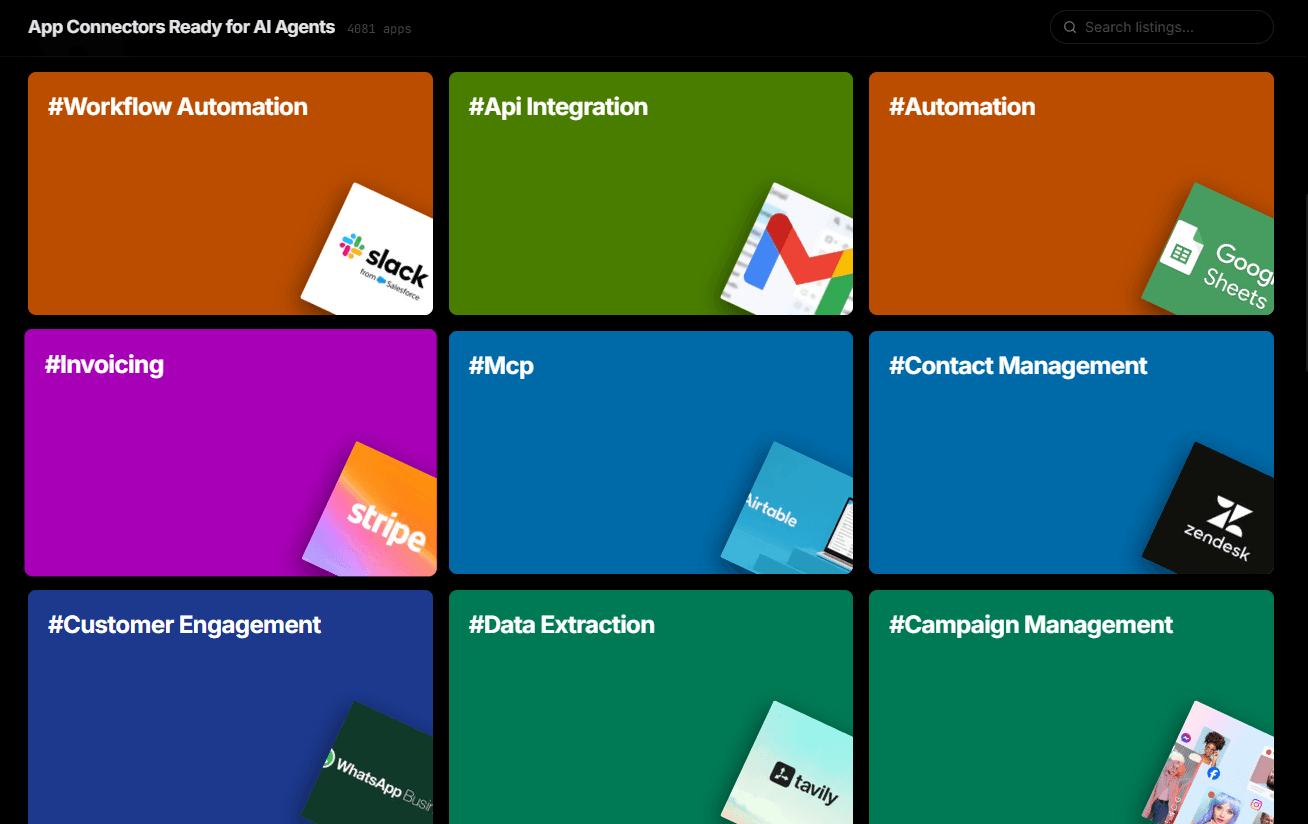
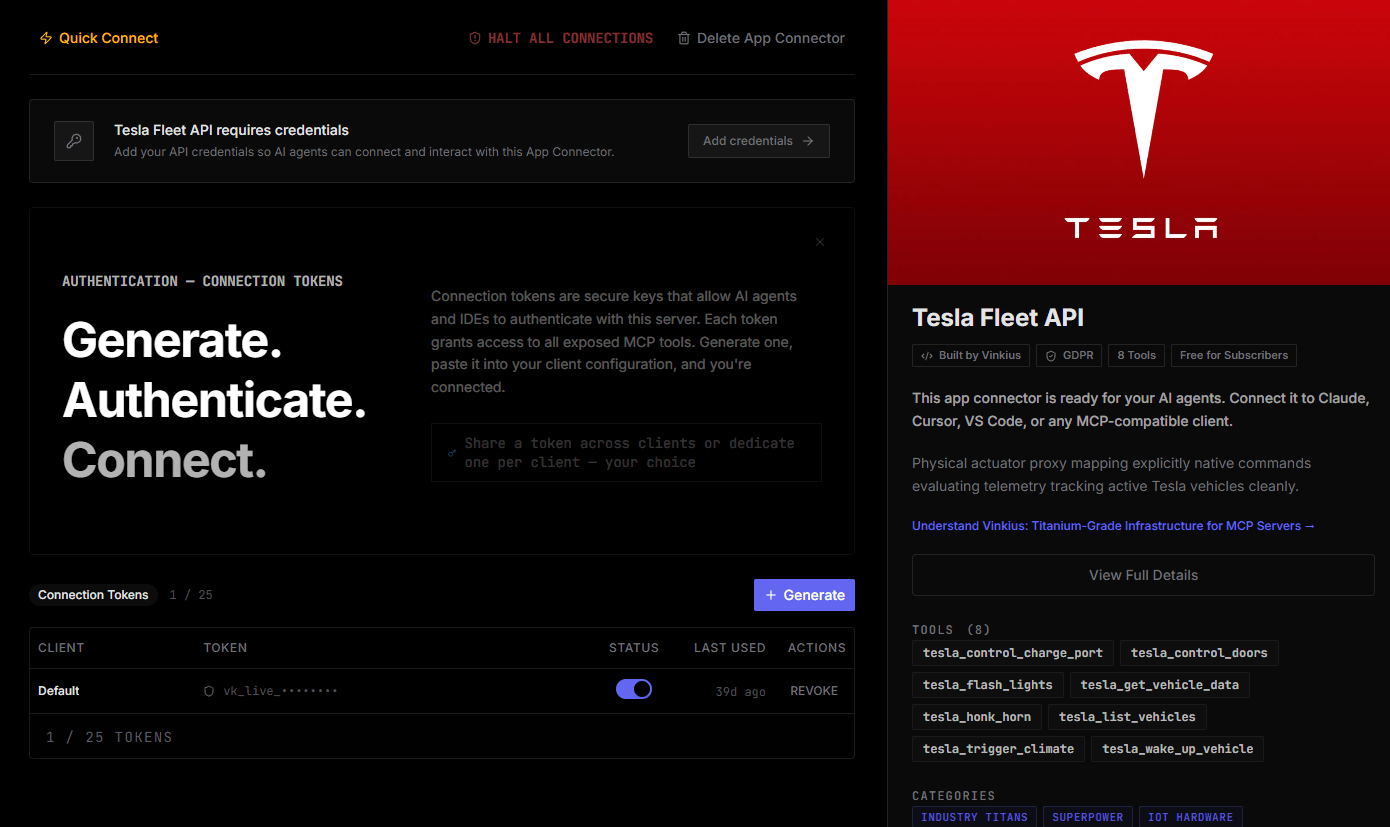
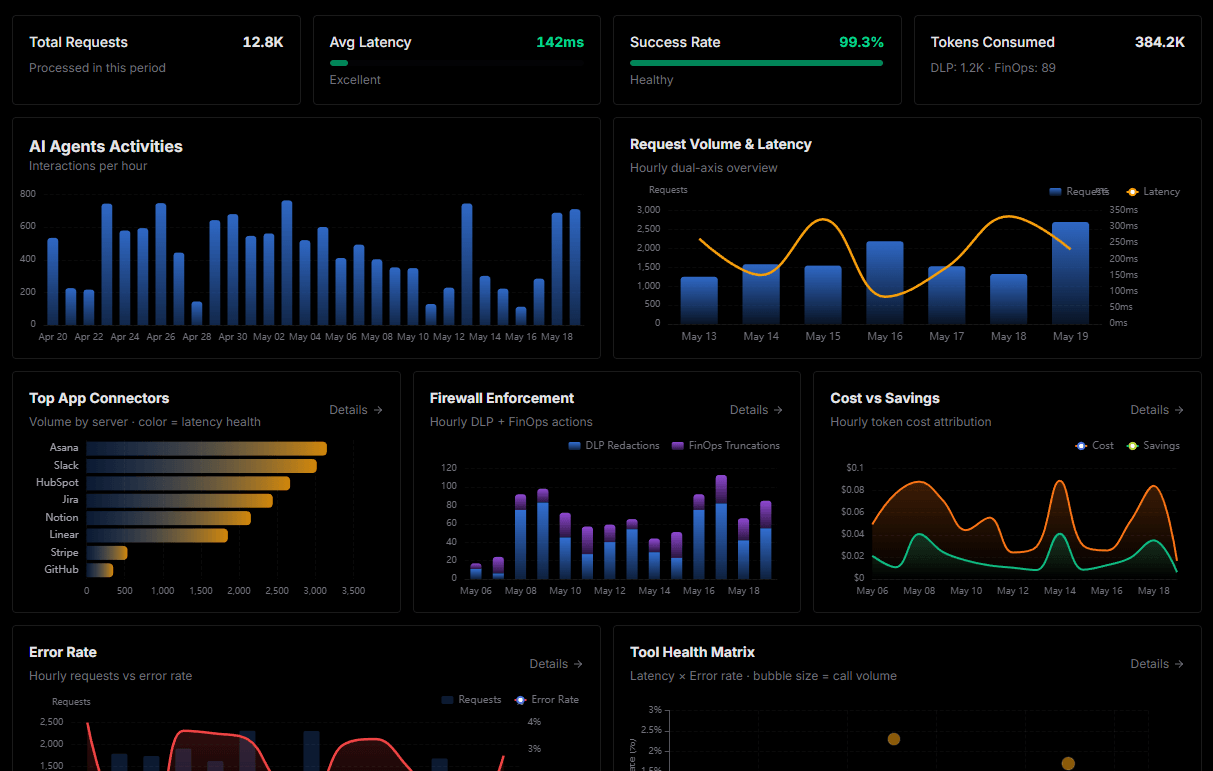
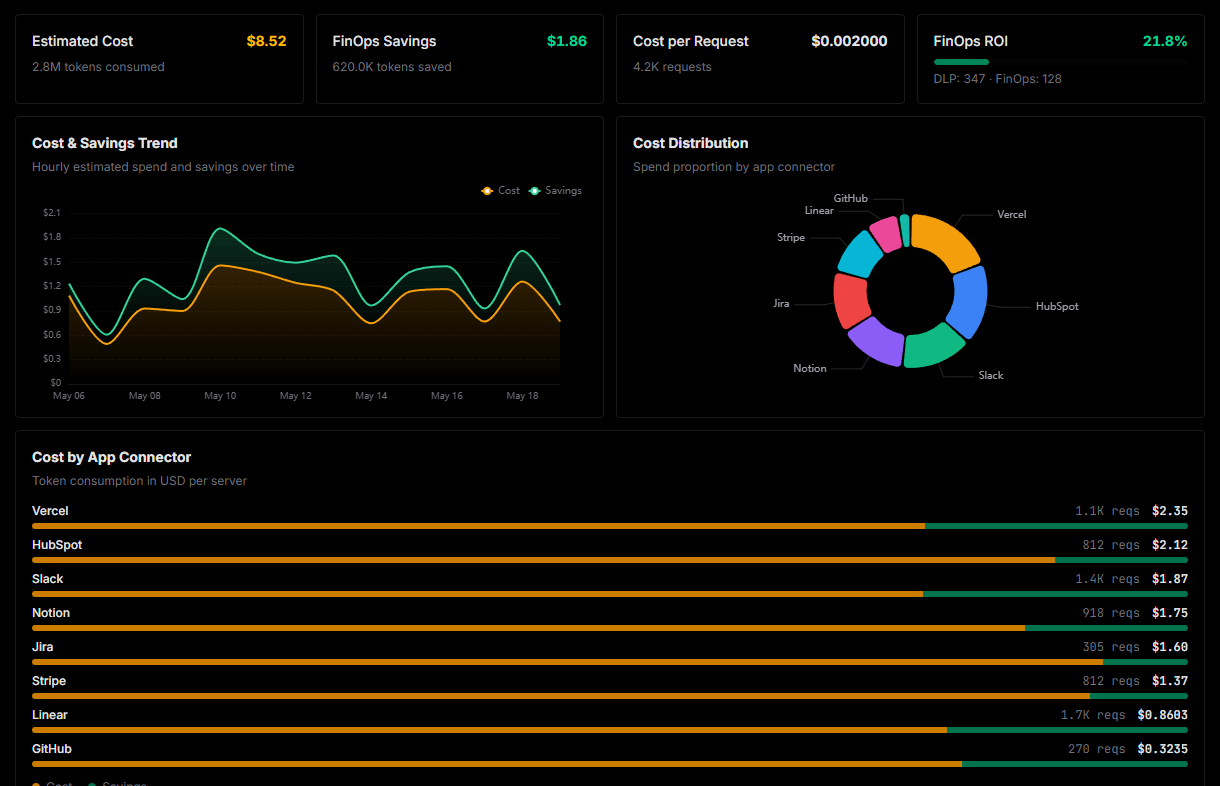
Explore our live AI Agents Analytics dashboard to see it all working
This dashboard is included when you connect Google Books using Vinkius. You will never be left in the dark about what your AI agents are doing with your tools.
Google Books and 4,000+ other AI tools. No hosting, no code, ready to use.
Professionals who connect Google Books to Cursor through Vinkius don't need to write code, manage servers, or worry about security. Everything is pre-configured, secure, and runs automatically in the background.
Raw MCP | Vinkius | |
|---|---|---|
| Ready-to-use MCPs | Find and configure each manually | 4,000+ MCPs ready to use |
| Connection Setup | Manual coding & server setup | 1-click instant connection |
| Server Hosting | You host it yourself (needs 24/7 uptime) | 100% hosted & managed by Vinkius |
| Security & Privacy | Stored in plaintext config files | Bank-grade encrypted vault |
| Activity Visibility | Blind execution (no logs or tracking) | Live dashboard with real-time logs |
| Cost Control | Runaway AI token spend risk | Automatic budget limits |
| Revoking Access | Must delete files or code to stop | 1-click disconnect button |
How Vinkius secures
Google Books for Cursor
Every request between Cursor and Google Books is protected by our secure gateway. We automatically keep your sensitive data private, prevent unauthorized access, and let you disconnect instantly at any time.
Frequently asked questions
How do I get a Google Books API key?
Go to Google Cloud Console, create or select a project, enable the Books API and create credentials (API key). Copy the key — it starts with AIzaSy.
What search operators are supported?
Google Books supports powerful operators: intitle: (search title only), inauthor: (search author), inpublisher:, subject:, isbn:, lccn:, oclc:. Use quotes for exact phrases ("the great gatsby") and - to exclude terms. Example: intitle:gatsby inauthor:fitzgerald.
Can I access free ebooks?
Yes! Use the filter parameter with free-ebooks to get only freely available books. Many public domain works are available as full text PDFs. You can also use the download parameter set to epub to find books available for download.
Can I browse my personal bookshelves?
Yes! Use get_my_bookshelves and get_my_bookshelf_volumes to access your personal reading lists. Note that these endpoints require OAuth 2.0 authentication, not just an API key. Shelf IDs 0-9 represent default shelves like favorites, purchased and reviewed.
What is Agent mode and why does it matter for MCP?
Agent mode is Cursor's autonomous execution mode where the AI can perform multi-step tasks: reading files, editing code, running terminal commands, and calling MCP tools. Without Agent mode, Cursor operates in a simpler ask-and-answer mode that doesn't support tool calling. Always ensure you're in Agent mode when working with MCP servers.
Where does Cursor store MCP configuration?
Cursor looks for MCP server configurations in a mcp.json file. You can configure servers at the project level (.cursor/mcp.json in your project root) or globally (~/.cursor/mcp.json). Project-level configs take precedence.
Can Cursor use MCP tools in inline edits?
No. MCP tools are only available in Agent mode through the chat panel. Inline completions and Tab suggestions do not trigger MCP tool calls. This is by design. tool calls require user visibility and approval.
How do I verify MCP tools are loaded?
Open Settings → Features → MCP and look for your server name. A green indicator means the server is connected. You can also check Agent mode's available tools by clicking the tools dropdown in the chat panel.
Tools not appearing in Cursor
Ensure you are in Agent mode (not Ask mode). MCP tools only work in Agent mode.
Server shows as disconnected
Check Settings → Features → MCP and verify the server status. Try clicking the refresh button.
Explore More MCP Servers
View all →
IBAMA Dados Abertos
9 toolsAccess Brazilian environmental open data — query datasets, inspect resources, and analyze environmental metrics directly from IBAMA's official portal.

DonorsChoose
10 toolsEquip your AI agent to search classroom projects, track funding needs, and monitor educational proposals via the DonorsChoose API.
Ambee Soil
5 toolsAccess real-time soil data via Ambee — monitor soil moisture, temperature, and properties globally for precision agriculture from any AI agent.
Malaysia Weather
3 toolsGet real-time tropical weather forecasts, severe weather warnings, and earthquake alerts for Malaysia and Southeast Asia from MET Malaysia.