
Bring Postgresql
to Cursor
Create your Vinkius account to connect Supabase to Cursor and start using all 10 AI tools in minutes. Fully managed, enterprise secure, and ready to use without writing a single line of code. No hosting, no server setup — just connect and start using.
 GDPR Free for Subscribers
Compatible with every major AI agent and IDE
 Gemini
What is the Supabase MCP Server?
Integrate the comprehensive backend infrastructure of Supabase straight into your conversational LLM workflows. By securely authenticating with your service_role key, your AI assistant bypasses row-level security constraints, operating as a fully-privileged database administrator. Query rows, invoke complex PL/pgSQL functions via RPC, evaluate the authenticated user roster, and audit your active storage buckets all through simple natural language commands, accelerating debugging and environment iterations without leaving the terminal.
What you can do
- Database Interactions — Actively query datasets using
db_select, seamlessly add new rows executingdb_insert, and modify existing data structures applyingdb_updateordb_delete. - Custom Functional Logic — Invoke pre-compiled database procedures and PL/pgSQL functions securely utilizing
db_rpcwith dynamic JSON arguments. - Authentication Tracking — Audit your userbase and confirm authentication statuses instantly fetching native rosters through
list_auth_users. - Storage Diagnostics — Inspect configured object storage containers mapping file architectures securely invoking
list_storage_buckets.
How it works
- Enable the Supabase MCP plugin as an active integration inside your configuration.
- In the parameter matrix, bind your exact
SUPABASE_URLand authenticate the AI utilizing your powerfulSUPABASE_SERVICE_ROLE_KEY. - Instruct your AI securely: "Retrieve the last 10 users from the 'subscribers' table where the status is 'active', and verify if our 'profiles' storage bucket is operational."
Who is this for?
- PostgreSQL Database Administrators — Run complex validation queries and invoke custom RPCs flawlessly parsing responses directly during analytical review workflows.
- Backend Developers — Iterate database structures, mock rapid insertions, and securely alter state without opening external platforms or writing repetitive query scripts.
- Full-Stack Engineers — Seamlessly query backend storage or resolve user authorization bugs directly tracking the root dependencies visually connected inside the IDE/CLI environment.
Built-in capabilities (10)
Useful for pagination and analytics. Count rows in a database table with optional filters
A match_query is mandatory. This action is irreversible. Delete rows from a database table
Provide the payload as a JSON string. Insert a new row into a database table
Provide the function name and optional JSON arguments. Execute a Supabase Postgres Function (RPC)
For filters, use match_query (e.g. "id=eq.1"). Defaults to 50 rows. Query records from any PostgreSQL database table using PostgREST syntax
A match_query is required to target specific rows (e.g. "id=eq.123"). Update existing rows in a database table
Get detailed information about a specific authenticated user
List authenticated users from Supabase Auth
List all available storage buckets
List files inside a storage bucket
Why Cursor?
Cursor's Agent mode turns Supabase into an in-editor superpower. Ask Cursor to generate code using live data from Supabase and it fetches, processes, and writes. all in a single agentic loop. 10 tools appear alongside file editing and terminal access, creating a unified development environment grounded in real-time information.
- —
Agent mode turns Cursor into an autonomous coding assistant that can read files, run commands, and call MCP tools without switching context
- —
Cursor's Composer feature can generate entire files using real-time data fetched through MCP. no copy-pasting from external dashboards
- —
MCP tools appear alongside built-in tools like file reading and terminal access, creating a unified agentic environment
- —
VS Code extension compatibility means your existing workflow, keybindings, and extensions all work alongside MCP tools
Supabase in Cursor
Why run Supabase with Vinkius?
The Supabase connection runs on our fully managed, secure cloud infrastructure. We handle the hosting, maintenance, and security so you don't have to deal with servers or code. All 10 tools are ready to work instantly without any complex setup.
You stay in complete control of your data. Your AI only accesses the information you approve, keeping your sensitive passwords and private details completely safe. Plus, with automatic optimizations, your AI works faster and more efficiently.
* Every connection is hosted and maintained by Vinkius. We handle the security, updates, and infrastructure so you don't have to write code or manage servers. See our infrastructure
Over 4,000 integrations ready for AI agents
Explore a vast library of pre-built integrations, optimized and ready to deploy.
Connect securely in under 30 seconds
Generate tokens to authenticate and link external services in a single step.
Complete visibility into every agent action
Audit live requests, latency, success rates, and active security compliance policies.
Optimize spending and track token ROI
Analyze real-time token consumption and cost metrics detailed by connection.
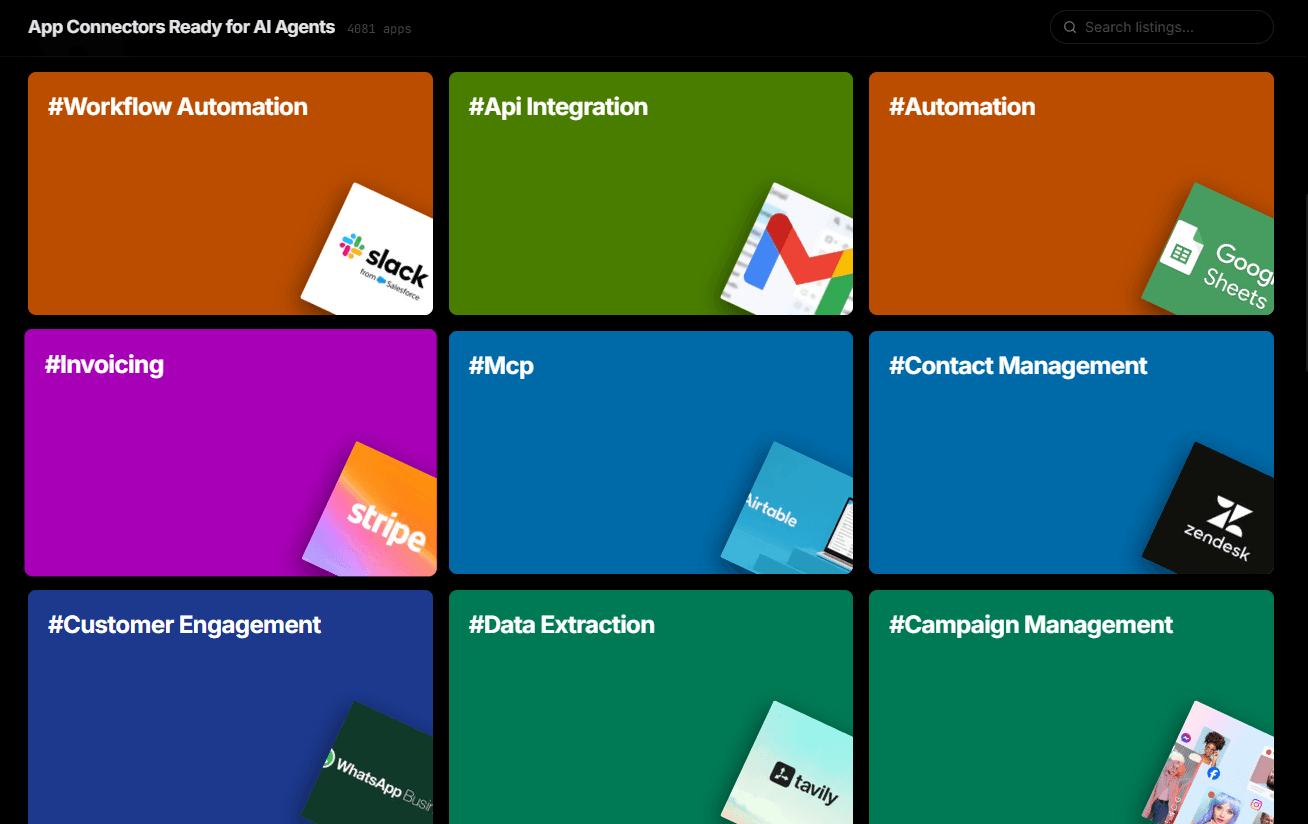
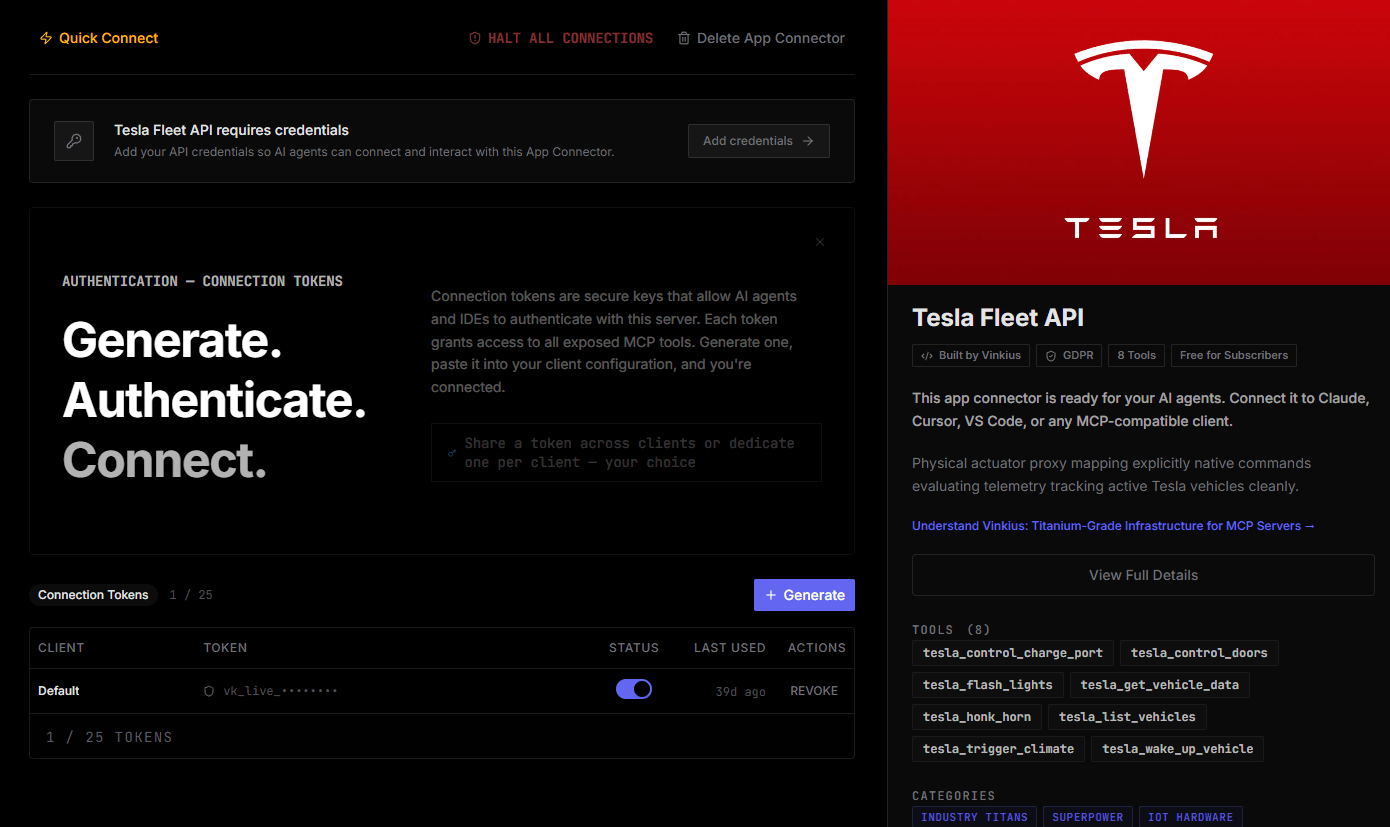
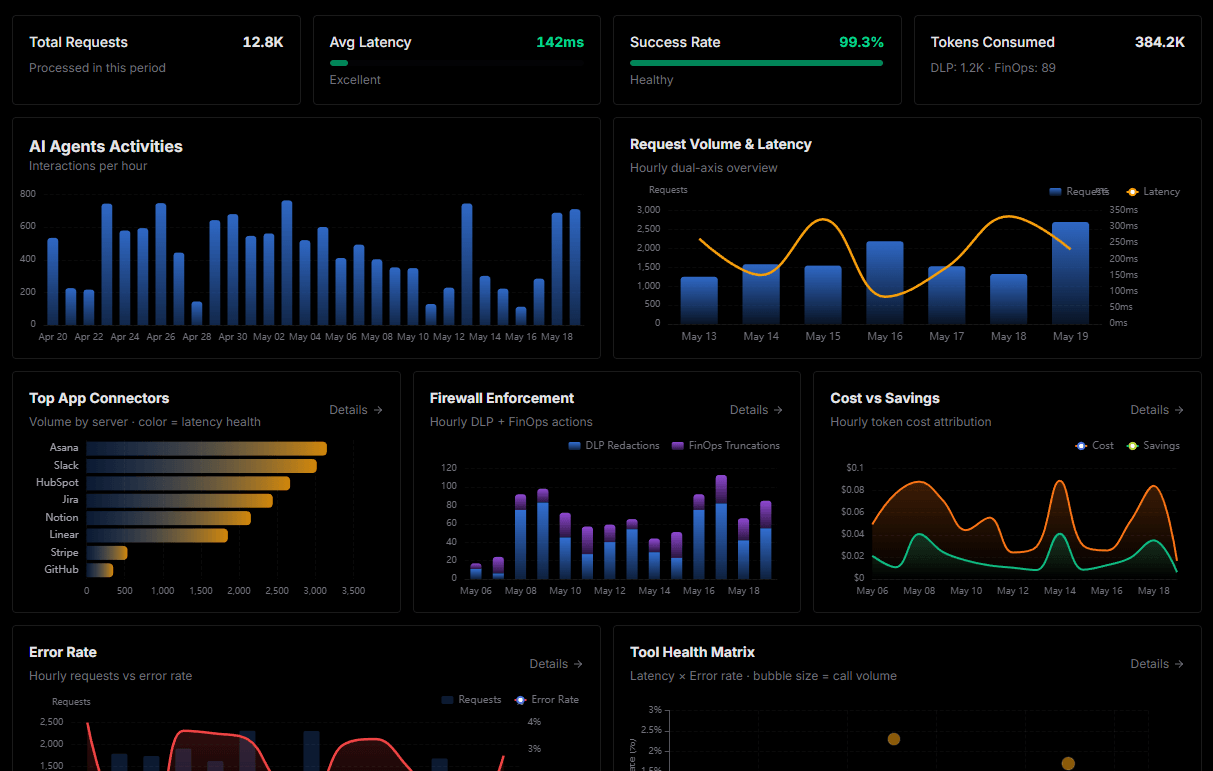
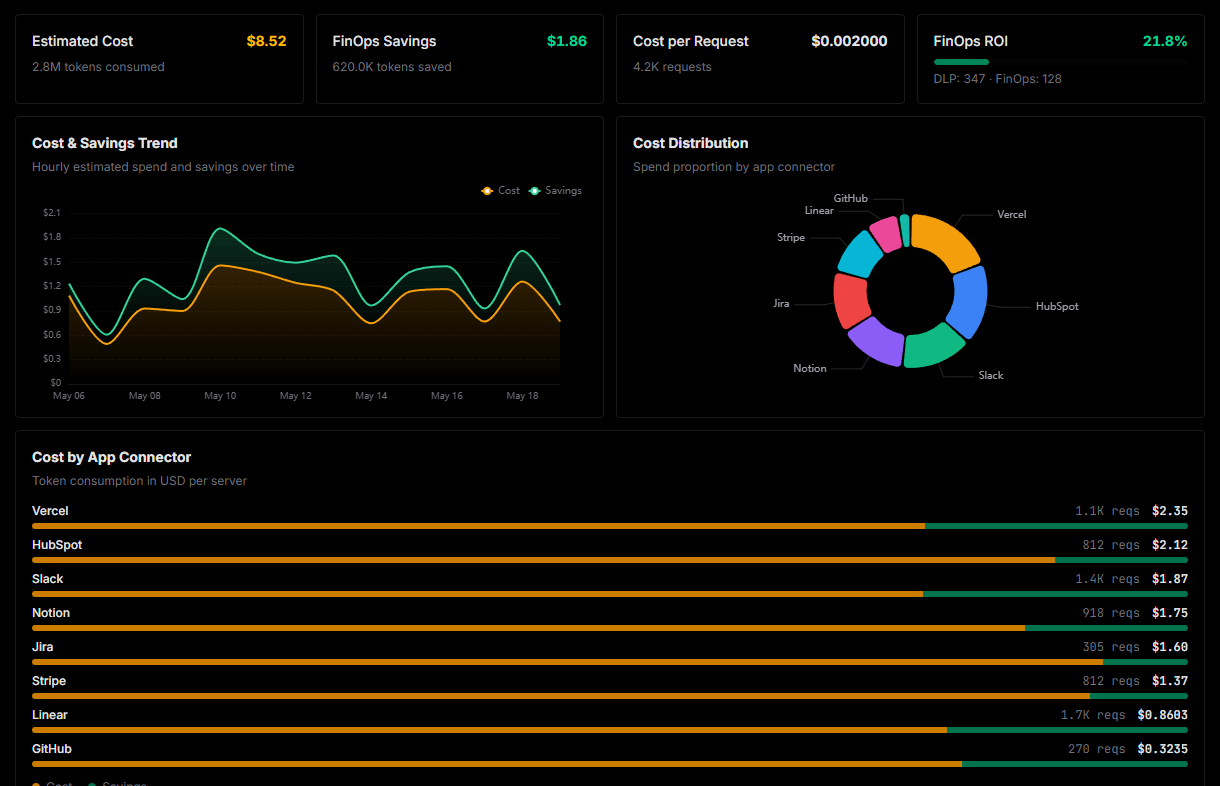
Explore our live AI Agents Analytics dashboard to see it all working
This dashboard is included when you connect Supabase using Vinkius. You will never be left in the dark about what your AI agents are doing with your tools.
Supabase and 4,000+ other AI tools. No hosting, no code, ready to use.
Professionals who connect Supabase to Cursor through Vinkius don't need to write code, manage servers, or worry about security. Everything is pre-configured, secure, and runs automatically in the background.
Raw MCP | Vinkius | |
|---|---|---|
| Ready-to-use MCPs | Find and configure each manually | 4,000+ MCPs ready to use |
| Connection Setup | Manual coding & server setup | 1-click instant connection |
| Server Hosting | You host it yourself (needs 24/7 uptime) | 100% hosted & managed by Vinkius |
| Security & Privacy | Stored in plaintext config files | Bank-grade encrypted vault |
| Activity Visibility | Blind execution (no logs or tracking) | Live dashboard with real-time logs |
| Cost Control | Runaway AI token spend risk | Automatic budget limits |
| Revoking Access | Must delete files or code to stop | 1-click disconnect button |
How Vinkius secures
Supabase for Cursor
Every request between Cursor and Supabase is protected by our secure gateway. We automatically keep your sensitive data private, prevent unauthorized access, and let you disconnect instantly at any time.
Frequently asked questions
Why do I need to use the service role key instead of the safe public anon key?
The MCP integration operates inherently as an administration module properly securely autonomously. Utilizing the service_role actively gracefully securely circumvents logical Row Level Security settings globally, empowering correct system manipulation properly dynamically successfully without error friction organically.
Is there a safety measure preventing unintended whole table destructive deletions?
Yes. Commands mutating or destroying rows, such as accurately calling db_delete, rigorously mandate explicit logical matching definitions (like exact ID tracking) seamlessly inherently systematically mitigating risk effectively fully locally organically efficiently properly.
Can the AI call custom PostgreSQL functions (RPC)?
Yes. Use db_rpc to invoke any server-side PL/pgSQL function by name, passing JSON arguments. This lets the AI trigger stored procedures, computed views, or custom business logic directly.
What is Agent mode and why does it matter for MCP?
Agent mode is Cursor's autonomous execution mode where the AI can perform multi-step tasks: reading files, editing code, running terminal commands, and calling MCP tools. Without Agent mode, Cursor operates in a simpler ask-and-answer mode that doesn't support tool calling. Always ensure you're in Agent mode when working with MCP servers.
Where does Cursor store MCP configuration?
Cursor looks for MCP server configurations in a mcp.json file. You can configure servers at the project level (.cursor/mcp.json in your project root) or globally (~/.cursor/mcp.json). Project-level configs take precedence.
Can Cursor use MCP tools in inline edits?
No. MCP tools are only available in Agent mode through the chat panel. Inline completions and Tab suggestions do not trigger MCP tool calls. This is by design. tool calls require user visibility and approval.
How do I verify MCP tools are loaded?
Open Settings → Features → MCP and look for your server name. A green indicator means the server is connected. You can also check Agent mode's available tools by clicking the tools dropdown in the chat panel.
Tools not appearing in Cursor
Ensure you are in Agent mode (not Ask mode). MCP tools only work in Agent mode.
Server shows as disconnected
Check Settings → Features → MCP and verify the server status. Try clicking the refresh button.
Explore More MCP Servers
View all →
GovInfo
8 toolsSearch and retrieve official US Government documents and publications via AI.

Travis CI
10 toolsManage CI/CD pipelines, trigger custom builds, and oversee repository testing health securely via your AI agent.

TheFork
10 toolsDiscover, book, and manage restaurant reservations across Europe — search by location, cuisine, and availability through natural AI conversation.

ARGUS Cloud
6 toolsManage commercial real estate assets and portfolios with ARGUS — track valuations and alerts via AI.