
Bring Spatial Analytics
to Google ADK
Create your Vinkius account to connect CARTO to Google ADK and start using all 10 AI tools in minutes. Fully managed, enterprise secure, and ready to use without writing a single line of code. No hosting, no server setup — just connect and start using.
 GDPR Free for Subscribers
Compatible with every major AI agent and IDE
 Gemini
What is the CARTO MCP Server?
Connect your CARTO platform to any AI agent and take full control of your cloud-native spatial analytics without touching the GIS interface.
What you can do
- Spatial SQL & Jobs — Command explicit SQL queries running directly against your BigQuery, Snowflake, or Redshift warehouse. Execute quick reads or spawn long-running, asynchronous batch transformations.
- Geocoding & Batching — Convert unstructured strings into precise lat/lon points. Bulk-process 100s of addresses using CARTO's native Location Data Services (LDS) gracefully.
- Isolines & Reachability — Calculate travel-time or distance polygons around origin points to instantly graph accessible zones via cars or walking.
- Routing — Generate optimal vector geometry paths connecting two points on the globe, measuring both physical distance and travel time securely.
- Data Management — Instruct your agent to list active mapping datasets or import massive external CSV/GeoJSON files directly via public URLs.
How it works
- Subscribe to this server
- Provide your active CARTO Organization and API Key
- Start mapping, slicing spatial boundaries, and scripting data operations using Claude, Cursor, or any compatible AI
Who is this for?
- GIS Analysts & Data Scientists — Execute testing queries natively and bulk-geocode customer coordinates from a conversational terminal.
- Retail & Logistics Strategists — Ask your AI to calculate 15-minute delivery isolines and cross-reference them with population layers using SQL.
- Data Engineers — Trigger raw data imports and handle heavy dataset syncs without opening the graphical workspace.
Built-in capabilities (10)
The range parameter is in seconds for time-based isolines. Returns a GeoJSON polygon representing the reachable area. Use for service area analysis, store catchment zones, and logistics planning. Generate travel-time or travel-distance isoline polygons from a center point using the CARTO LDS Isolines API, producing reachability contours showing areas accessible within a specified time or distance threshold
Returns the route as GeoJSON with total distance (meters) and duration (seconds). Consumes LDS routing credits. Calculate the optimal driving route between two points using the CARTO LDS Routing API, returning distance, duration, and route geometry suitable for visualization on CARTO maps
"}`. Returns a job_id that can be polled for completion status. Use for ETL operations, materialized view refreshes, and heavy geospatial computations. The job runs in your data warehouse and results are stored there. Submit a long-running SQL query as an asynchronous batch job via the CARTO SQL Job API, suitable for heavy spatial analytics, large table transformations, and complex multi-join operations that exceed the 60-second synchronous timeout
carto.com/api/v2/sql?q=`. The query runs synchronously with a 1-minute timeout. Use for quick analytical queries, spatial joins, and data exploration. For long-running queries exceeding 60 seconds, use the async job endpoint instead. Supports PostGIS/BigQuery spatial functions natively. Execute an arbitrary SQL query against your CARTO data warehouse connection using the SQL API v2, returning results as JSON rows directly from BigQuery, Snowflake, Redshift, or PostgreSQL
Returns latitude, longitude, and formatted address. Consumes LDS geocoding credits from your CARTO plan. Use sparingly for individual lookups; for bulk operations use the batch endpoint instead. Forward-geocode a single address string into geographic coordinates using the CARTO Location Data Services (LDS) geocoding endpoint, powered by TomTom or HERE depending on your CARTO plan configuration
Designed for bulk processing of customer lists, store locators, and CRM datasets. Consumes LDS credits per address. Returns an array of geocoded results with match quality indicators. Batch-geocode multiple addresses in a single request using the CARTO LDS batch geocoding API, efficiently converting large address lists into coordinates without making individual API calls per address
Poll periodically until state becomes "complete" or "failure". On success, the response includes the table_name of the newly created dataset in your warehouse. Check the status of a previously initiated CARTO data import job, returning progress percentage, current state (uploading, importing, complete, failure), and any error details if the import encountered issues
"}`. Supports CSV, GeoJSON, Shapefile (zipped), KML, GPX, and Excel files. Returns an import_id for status tracking. The file is downloaded, parsed, and loaded into your connected data warehouse. Import an external data file (CSV, GeoJSON, Shapefile, KML) into your CARTO data warehouse by providing a publicly accessible URL, creating a new managed table that can be used for spatial analysis and visualization
Returns an array of dataset/visualization objects. Use to discover available data layers, check dataset freshness, and audit organization assets. List all visualization datasets (maps and tables) available in your CARTO organization, returning metadata including creation dates, privacy settings, table names, and row counts
Poll periodically (every 5-10 seconds) until status changes to "done" or "failed". The response includes created_at, updated_at, and the original query for audit purposes. Check the execution status of a previously submitted CARTO async SQL job, returning the current state (pending, running, done, failed) and any error messages if the job encountered issues
Why Google ADK?
Google ADK natively supports CARTO as an MCP tool provider. declare Vinkius Edge URL and the framework handles discovery, validation, and execution automatically. Combine 10 tools with Gemini's long-context reasoning for complex multi-tool workflows, with production-ready session management and evaluation built in.
- —
Google ADK natively supports MCP tool servers. declare a tool provider and the framework handles discovery, validation, and execution
- —
Built on Gemini models, ADK provides long-context reasoning ideal for complex multi-tool workflows with CARTO
- —
Production-ready features like session management, evaluation, and deployment come built-in. not bolted on
- —
Seamless integration with Google Cloud services means you can combine CARTO tools with BigQuery, Vertex AI, and Cloud Functions
CARTO in Google ADK
Why run CARTO with Vinkius?
The CARTO connection runs on our fully managed, secure cloud infrastructure. We handle the hosting, maintenance, and security so you don't have to deal with servers or code. All 10 tools are ready to work instantly without any complex setup.
You stay in complete control of your data. Your AI only accesses the information you approve, keeping your sensitive passwords and private details completely safe. Plus, with automatic optimizations, your AI works faster and more efficiently.
* Every connection is hosted and maintained by Vinkius. We handle the security, updates, and infrastructure so you don't have to write code or manage servers. See our infrastructure
Over 4,000 integrations ready for AI agents
Explore a vast library of pre-built integrations, optimized and ready to deploy.
Connect securely in under 30 seconds
Generate tokens to authenticate and link external services in a single step.
Complete visibility into every agent action
Audit live requests, latency, success rates, and active security compliance policies.
Optimize spending and track token ROI
Analyze real-time token consumption and cost metrics detailed by connection.
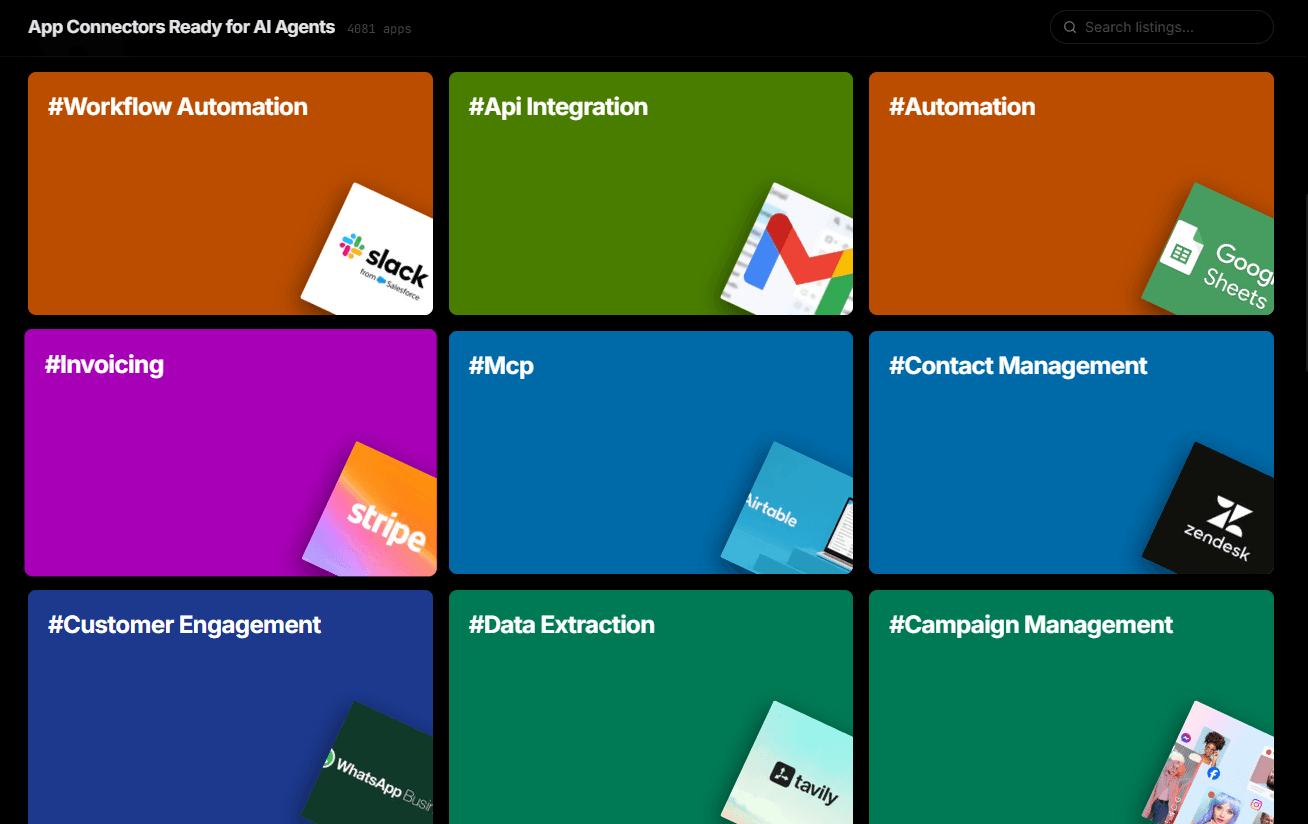
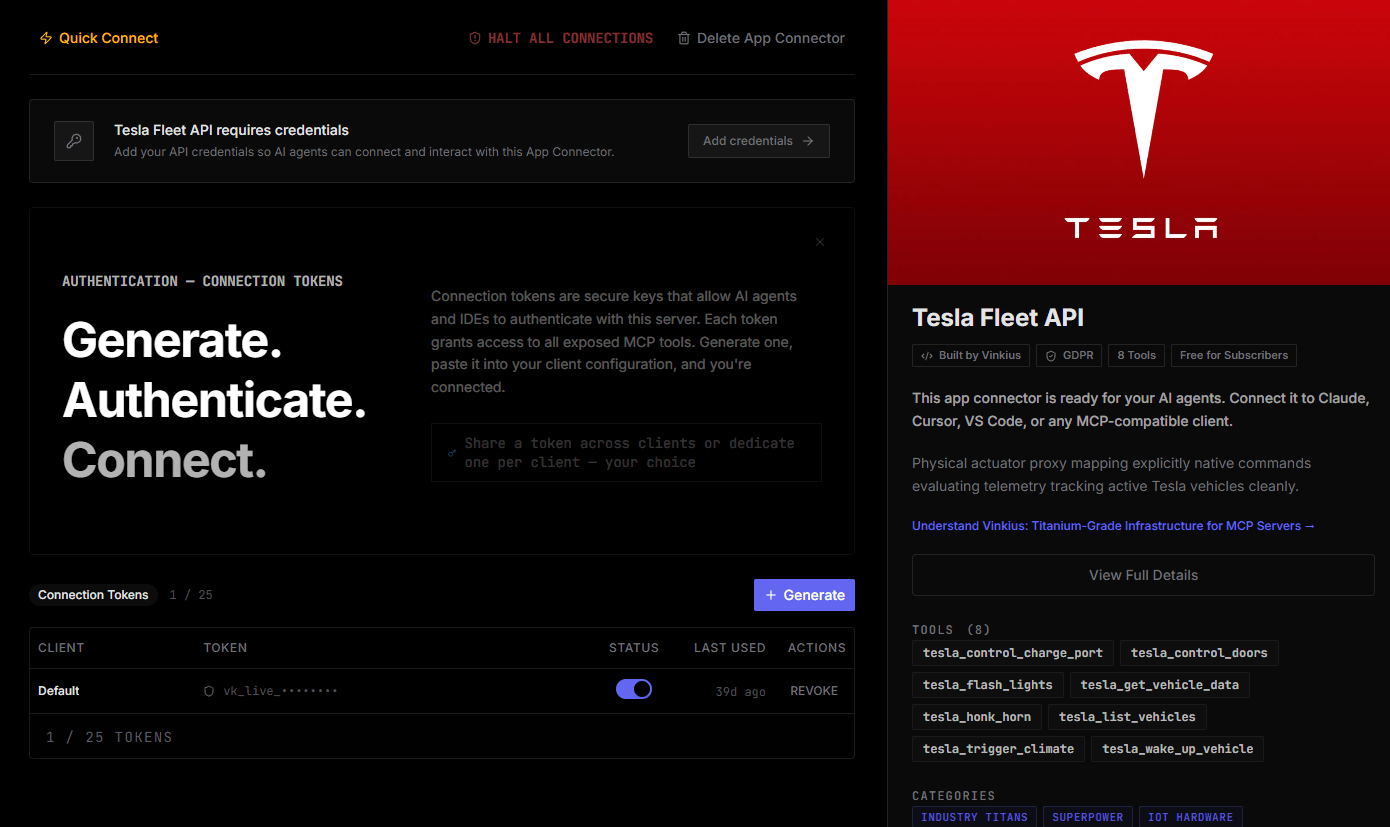
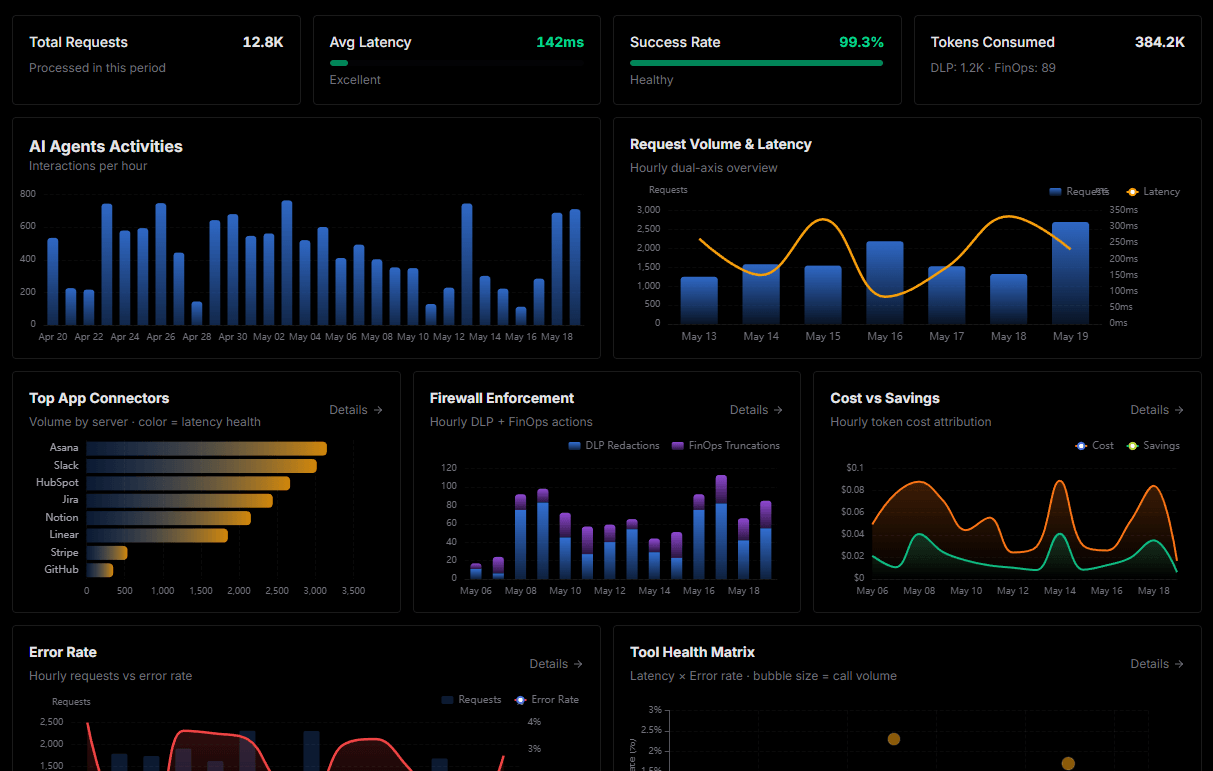
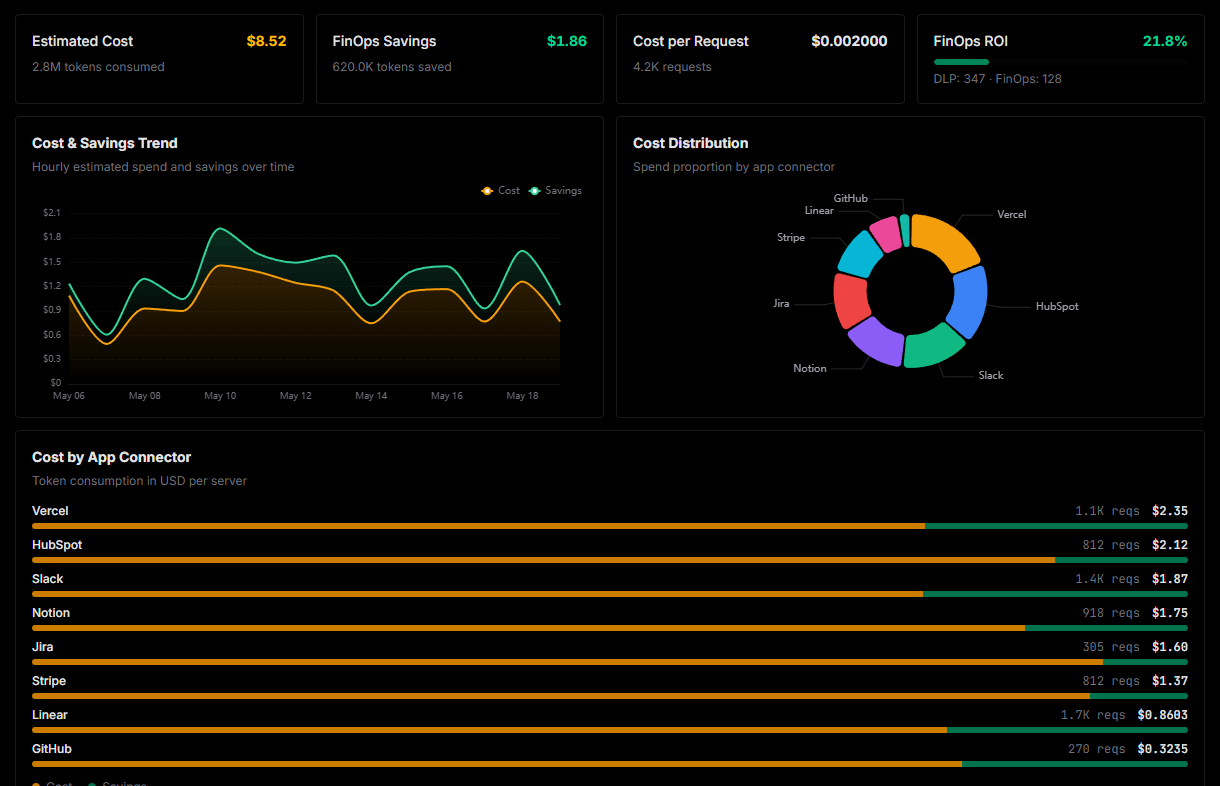
Explore our live AI Agents Analytics dashboard to see it all working
This dashboard is included when you connect CARTO using Vinkius. You will never be left in the dark about what your AI agents are doing with your tools.
CARTO and 4,000+ other AI tools. No hosting, no code, ready to use.
Professionals who connect CARTO to Google ADK through Vinkius don't need to write code, manage servers, or worry about security. Everything is pre-configured, secure, and runs automatically in the background.
Raw MCP | Vinkius | |
|---|---|---|
| Ready-to-use MCPs | Find and configure each manually | 4,000+ MCPs ready to use |
| Connection Setup | Manual coding & server setup | 1-click instant connection |
| Server Hosting | You host it yourself (needs 24/7 uptime) | 100% hosted & managed by Vinkius |
| Security & Privacy | Stored in plaintext config files | Bank-grade encrypted vault |
| Activity Visibility | Blind execution (no logs or tracking) | Live dashboard with real-time logs |
| Cost Control | Runaway AI token spend risk | Automatic budget limits |
| Revoking Access | Must delete files or code to stop | 1-click disconnect button |
How Vinkius secures
CARTO for Google ADK
Every request between Google ADK and CARTO is protected by our secure gateway. We automatically keep your sensitive data private, prevent unauthorized access, and let you disconnect instantly at any time.
Frequently asked questions
Can my AI agent orchestrate heavy spatial analytics on large datasets directly?
Yes. While small checks use the immediate SQL endpoint, your agent knows how to use the async Job API to submit massive postGIS or BigQuery geospatial operations on millions of rows. It automatically polls the remote status and notifies you once your heavy data transformation is structurally completed.
Am I able to geocode raw customer addresses in bulk through the agent?
Definitely. Give your agent a list of unstructured addresses and it will fire the bulk geocode_batch_addresses tool. CARTO’s native LDS engine (powered by TomTom/HERE) returns the validated geo-coordinates for each row, avoiding manual CSV matching.
Can the agent create travel-time polygons (Isolines)?
Absolutely. The agent uses the calculate_isoline tool passing the desired travel duration and coordinate center. It immediately receives a precise GeoJSON polygon defining the catchment zone or service area, without requiring you to use the map UI.
How does Google ADK connect to MCP servers?
Import the MCP toolset class and pass the server URL. ADK discovers and registers all tools automatically, making them available to your agent's tool-use loop.
Can ADK agents use multiple MCP servers?
Yes. Declare multiple MCP tool providers in your agent configuration. ADK merges all tool schemas and the agent can call tools from any server in a single turn.
Which Gemini models work best with MCP tools?
Gemini 2.0 Flash and Pro models both support function calling required for MCP tools. Flash is recommended for latency-sensitive use cases, Pro for complex reasoning.
McpToolset not found
Update: pip install --upgrade google-adk
Explore More MCP Servers
View all →
Pricefx
10 toolsEquip your AI with advanced enterprise CPQ capabilities — fetch products, manage customers, and generate automated pricing quotes directly via chat.
TestLink
10 toolsNavigate your self-hosted TestLink instance to inspect test plans, suites, cases, and builds natively via your AI agent.

Alai
12 toolsGenerate professional headshots and profile photos with AI that transforms selfies into studio-quality business portraits.

Every.org Charity
2 toolsUniversal charity intelligence — search non-profits, causes, and mission data via AI.