
Bring Music Database
to Google ADK
Create your Vinkius account to connect Discogs to Google ADK and start using all 13 AI tools in minutes. Fully managed, enterprise secure, and ready to use without writing a single line of code. No hosting, no server setup — just connect and start using.
 GDPR Free for Subscribers
Compatible with every major AI agent and IDE
 Gemini
What is the Discogs MCP Server?
Unlock the power of the Discogs music database — the most comprehensive catalog of music recordings, releases, and marketplace data. Connect Discogs to your AI agent to instantly search artists, explore complete discographies, examine release details, research labels, browse marketplace listings, and analyze collector statistics — all through natural conversation.
What you can do
- Database Search — Free-text search across artists, releases, labels, and tracks with filters for genre, style, year, country, and format.
- Artist Profiles — Retrieve complete artist information including biography, members, and full discography.
- Release Details — Get comprehensive metadata for any release including tracklists, formats, credits, and release history.
- Master Releases — Understand the canonical version of a release and explore all pressings and variants.
- Label Research — Explore record label catalogs, corporate structures, sublabels, and complete release histories.
- Marketplace Intelligence — Browse active listings, compare prices, check conditions, and find the best deals.
- Collector Statistics — Access community data on release popularity, wantlist counts, and sale price history.
- User Collections — View public collections and wantlists to understand what collectors value.
How it works
- Subscribe to this server
- Enter your Discogs User Token
- Start querying the music database through Claude, Cursor, or any MCP-compatible client
Who is this for?
- Music Collectors — research releases, compare pressings, and find fair market prices.
- DJs and Producers — explore discographies, research labels, and discover rare releases.
- Music Historians — access comprehensive metadata and release histories for academic research.
- Record Store Owners — price inventory, check demand, and source rare items.
Built-in capabilities (13)
Use the query parameter for free-text search across artists, releases, labels, and tracks. Refine results by type (artist, release, master, label, genre) and filters like genre, style, year, or country. Returns paginated results with basic metadata. Use this as the starting point for most queries. Type parameter accepts: artist, release, master, label, genre. Search the Discogs database for artists, releases, labels, and more
Returns the artist name, real name, profile/biography, members (for groups), URLs, and images. Use this after identifying an artist ID from search results. Get detailed information about a specific artist
Includes albums, singles, compilations, and credits on other releases. Results are sorted by year and include format, label, and track count. Use pagination to navigate large discographies. Returns a comprehensive overview of an artist's recorded output. Get the complete discography of an artist
Returns the label name, profile/description, parent label, sublabels, contact info, and associated releases. Use this to research label history, corporate structures, and catalog organization. Get information about a record label
Returns release titles, artists, formats, catalog numbers, and release dates. Useful for researching a label's catalog, identifying rare pressings, or exploring a label's musical output. Use pagination to navigate large catalogs. Get releases published by a specific label
Returns seller information, price, currency, condition (media and sleeve), comments, and shipping location. Useful for finding the best deals, comparing conditions, or understanding market value. Sort by price, condition, or country. Filter by minimum/maximum condition. Get marketplace listings for a specific release
A master release represents the "canonical" version of a release, grouping together all individual pressings and variants. Returns the main artist, title, year, genres, styles, tracklist, and notes. Use this to understand the core creative work independent of specific pressings. Get information about a master release
Each version represents a different pressing, reissue, or format of the same core release. Returns details including country, year, format, label, and catalog number for each version. Useful for collectors comparing different pressings or finding specific editions. Get all versions (pressings) of a master release
Returns the release title, artist, tracklist, formats, labels, catalog numbers, release date, country, genres, styles, credits, notes, and marketplace data. This is the most detailed view of a specific physical or digital release. Use this to get complete metadata for cataloging or research. Get detailed information about a specific release
Returns the lowest, median, and highest sale prices, as well as the number of active listings. Useful for understanding rarity, market demand, and fair pricing for collectors. Get community statistics and marketplace data for a release
Returns each release with basic metadata including artist, title, year, and format. Note: only the collection owner can see detailed information including condition, notes, and custom fields. Public collections show limited data. Use pagination to navigate large collections. Get a user's collection of releases
Returns the user's location, homepage, bio, member since date, number of contributions, and collection/wantlist counts. Use this to verify user identity or get an overview of a collector's activity on the platform. Get a Discogs user's public profile
Returns each release with basic metadata. Only the wantlist owner can see this data unless they've made it public. Useful for tracking what collectors are seeking. Get a user's wantlist of desired releases
Why Google ADK?
Google ADK natively supports Discogs as an MCP tool provider. declare Vinkius Edge URL and the framework handles discovery, validation, and execution automatically. Combine 13 tools with Gemini's long-context reasoning for complex multi-tool workflows, with production-ready session management and evaluation built in.
- —
Google ADK natively supports MCP tool servers. declare a tool provider and the framework handles discovery, validation, and execution
- —
Built on Gemini models, ADK provides long-context reasoning ideal for complex multi-tool workflows with Discogs
- —
Production-ready features like session management, evaluation, and deployment come built-in. not bolted on
- —
Seamless integration with Google Cloud services means you can combine Discogs tools with BigQuery, Vertex AI, and Cloud Functions
Discogs in Google ADK
Why run Discogs with Vinkius?
The Discogs connection runs on our fully managed, secure cloud infrastructure. We handle the hosting, maintenance, and security so you don't have to deal with servers or code. All 13 tools are ready to work instantly without any complex setup.
You stay in complete control of your data. Your AI only accesses the information you approve, keeping your sensitive passwords and private details completely safe. Plus, with automatic optimizations, your AI works faster and more efficiently.
* Every connection is hosted and maintained by Vinkius. We handle the security, updates, and infrastructure so you don't have to write code or manage servers. See our infrastructure
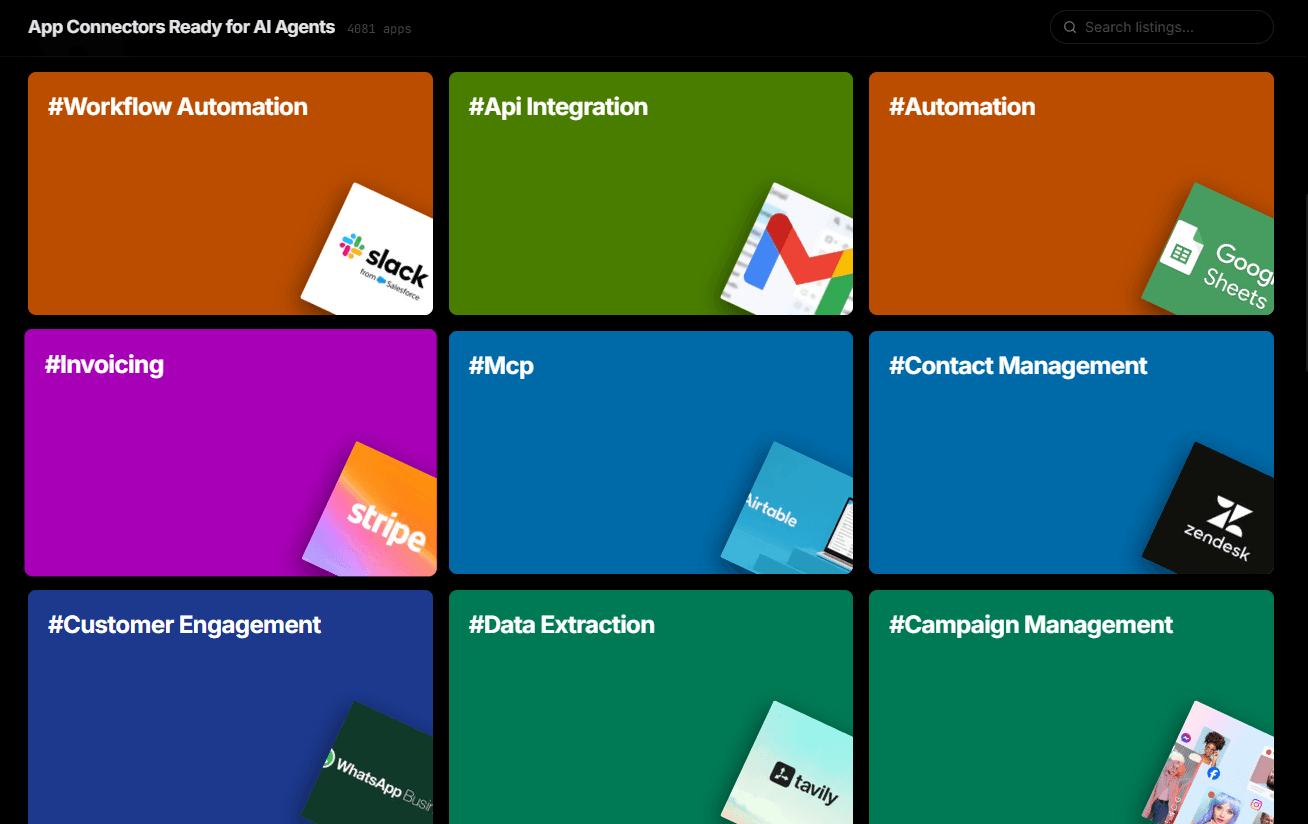
Over 4,000 integrations ready for AI agents
Explore a vast library of pre-built integrations, optimized and ready to deploy.
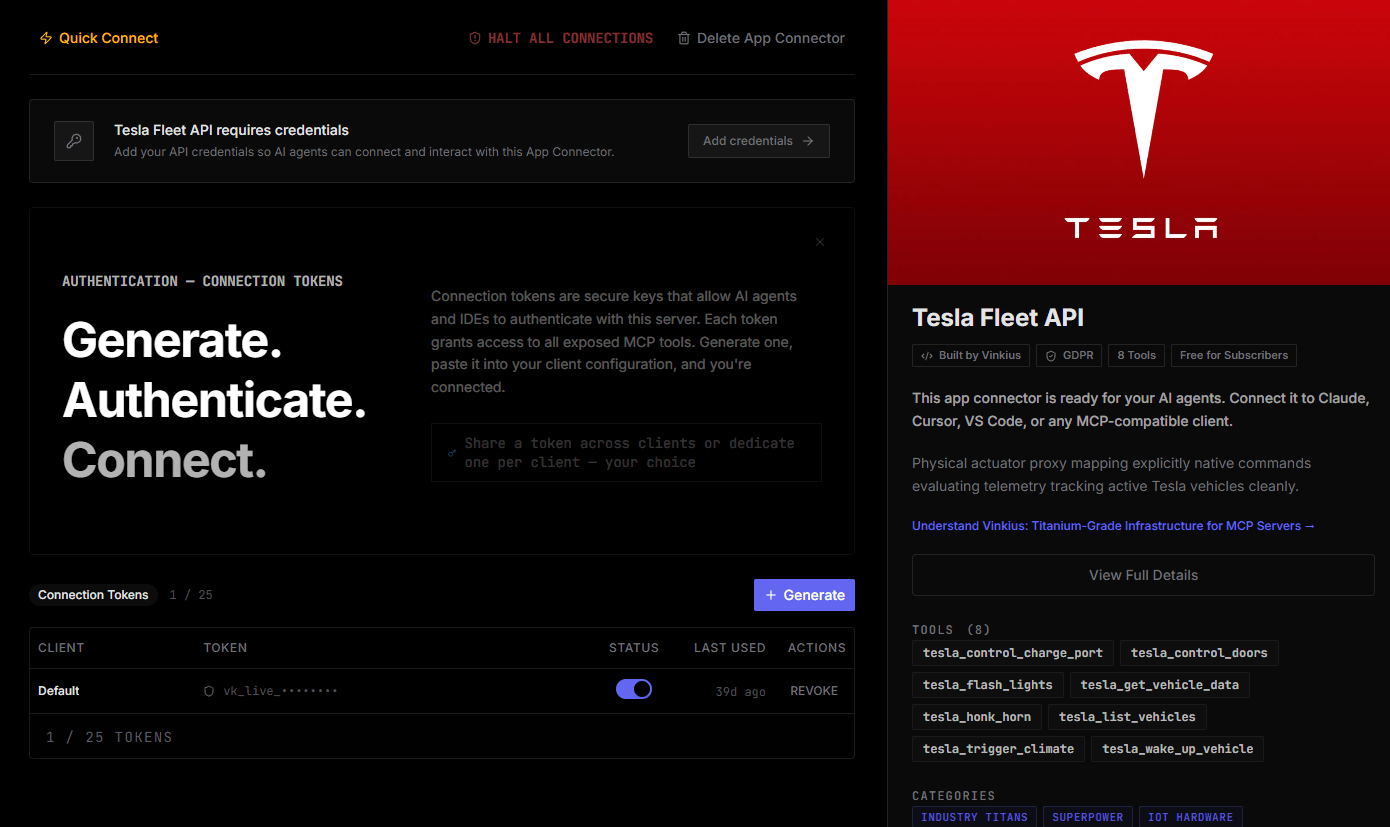
Connect securely in under 30 seconds
Generate tokens to authenticate and link external services in a single step.
Complete visibility into every agent action
Audit live requests, latency, success rates, and active security compliance policies.
Optimize spending and track token ROI
Analyze real-time token consumption and cost metrics detailed by connection.
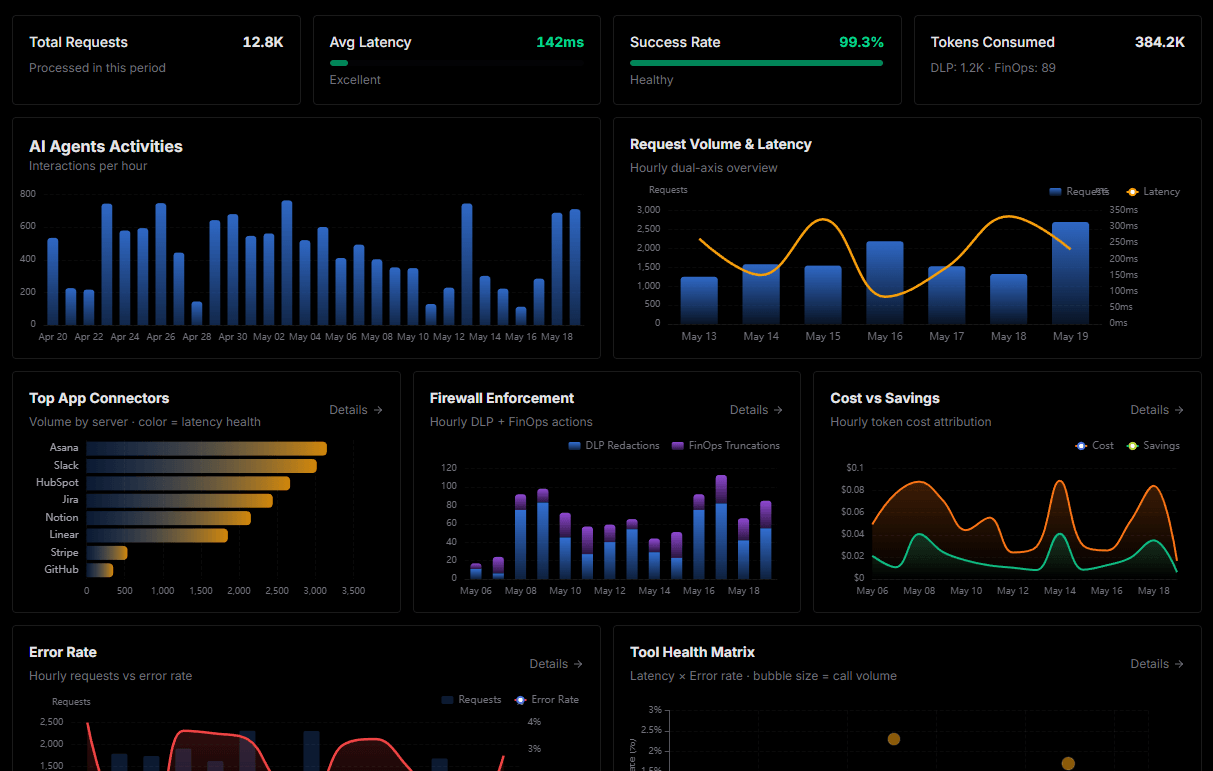
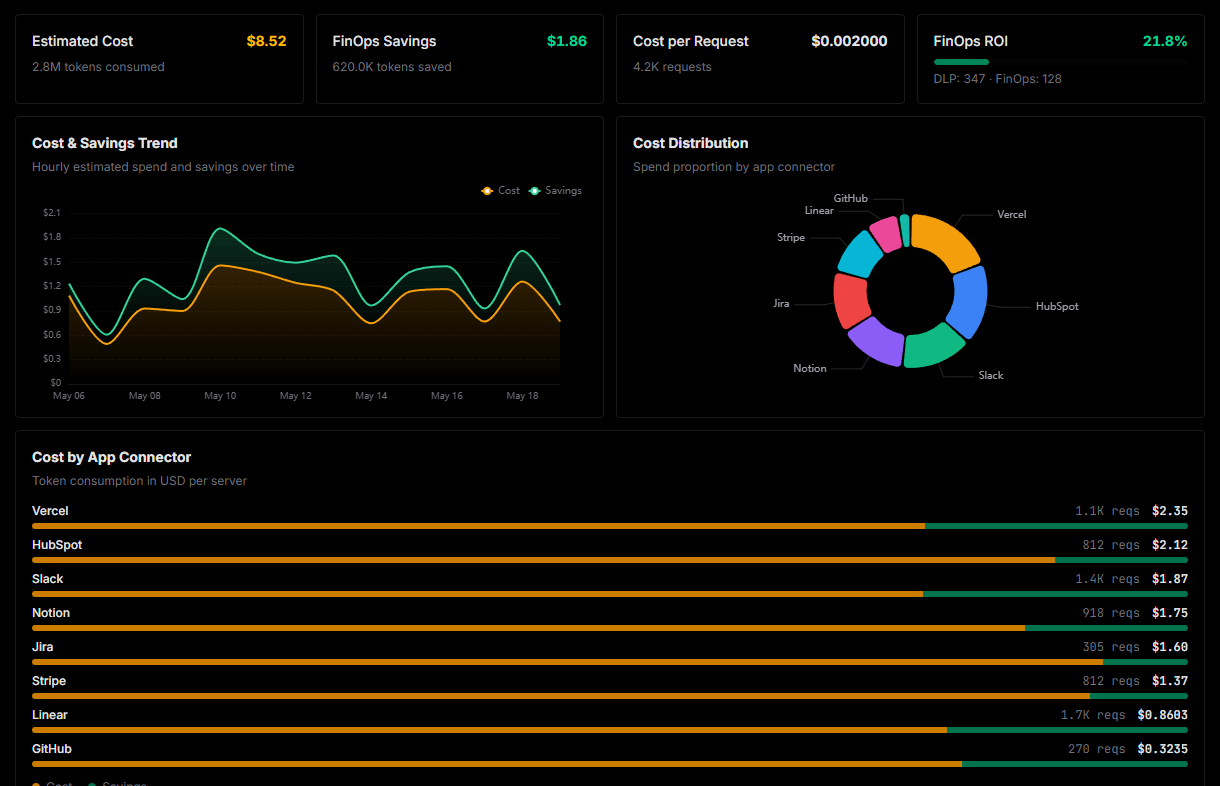
Explore our live AI Agents Analytics dashboard to see it all working
This dashboard is included when you connect Discogs using Vinkius. You will never be left in the dark about what your AI agents are doing with your tools.
Discogs and 4,000+ other AI tools. No hosting, no code, ready to use.
Professionals who connect Discogs to Google ADK through Vinkius don't need to write code, manage servers, or worry about security. Everything is pre-configured, secure, and runs automatically in the background.
Raw MCP | Vinkius | |
|---|---|---|
| Ready-to-use MCPs | Find and configure each manually | 4,000+ MCPs ready to use |
| Connection Setup | Manual coding & server setup | 1-click instant connection |
| Server Hosting | You host it yourself (needs 24/7 uptime) | 100% hosted & managed by Vinkius |
| Security & Privacy | Stored in plaintext config files | Bank-grade encrypted vault |
| Activity Visibility | Blind execution (no logs or tracking) | Live dashboard with real-time logs |
| Cost Control | Runaway AI token spend risk | Automatic budget limits |
| Revoking Access | Must delete files or code to stop | 1-click disconnect button |
How Vinkius secures
Discogs for Google ADK
Every request between Google ADK and Discogs is protected by our secure gateway. We automatically keep your sensitive data private, prevent unauthorized access, and let you disconnect instantly at any time.
Frequently asked questions
How do I search for a specific artist or album?
Use the database_search tool with the query parameter for free-text search. You can refine results with filters like type (artist, release, master, label), genre, style, year, country, or format. For example, to find a specific album, set type to 'release' and use the album name in query.
Can I check the market value of a vinyl record?
Yes. First search for the release to get its ID, then use get_release_stats to see community pricing data including lowest, median, and highest sale prices. You can also use get_marketplace_listings to see current active listings with prices and conditions.
How do I explore an artist's complete discography?
Search for the artist first to get their ID, then use get_artist for their profile and get_artist_releases for their complete discography. Results include albums, singles, compilations, and credits on other releases, sorted by year. Use pagination to navigate large discographies.
How does Google ADK connect to MCP servers?
Import the MCP toolset class and pass the server URL. ADK discovers and registers all tools automatically, making them available to your agent's tool-use loop.
Can ADK agents use multiple MCP servers?
Yes. Declare multiple MCP tool providers in your agent configuration. ADK merges all tool schemas and the agent can call tools from any server in a single turn.
Which Gemini models work best with MCP tools?
Gemini 2.0 Flash and Pro models both support function calling required for MCP tools. Flash is recommended for latency-sensitive use cases, Pro for complex reasoning.
McpToolset not found
Update: pip install --upgrade google-adk
Explore More MCP Servers
View all →
OpenFarm Agriculture
4 toolsAccess crowdsourced agricultural data — search for crops, growing guides, and planting instructions.

Transloadit
12 toolsVersatile file uploading and processing API.

Infracost
13 toolsCloud cost estimates for Terraform — manage cost guardrails, tagging policies, and custom enterprise price books directly through your AI agent.

Greenhouse
12 toolsHire the right people with structured interviewing, customizable pipelines, and data-driven recruiting that scales with your team.