
Bring Bi Directional Linking
to Google ADK
Create your Vinkius account to connect Logseq (Knowledge Management) to Google ADK and start using all 10 AI tools in minutes. Fully managed, enterprise secure, and ready to use without writing a single line of code. No hosting, no server setup — just connect and start using.
 GDPR Free for Subscribers
Compatible with every major AI agent and IDE
 Gemini
What is the Logseq (Knowledge Management) MCP Server?
Connect your Logseq instance to any AI agent and take full control of your privacy-first knowledge graph and personal documentation through natural conversation.
What you can do
- Graph Orchestration — List all pages and retrieve detailed hierarchical block trees representing your local outliner data directly from your agent
- Page Management — Create new organized pages or journal entries and manage their lifecycle including irreversible deletion of metadata loops securely
- Block Operations — Append, update, or delete individual outliner blocks, preserving precise UUID bounds and linking indices within your graph
- Deep Content Search — Execute local queries to extract explicitly bound text targets across your entire knowledge base, including titles and namespaces
- Hierarchical Inspection — Extract deeply nested outliner hierarchies to understand the complex structural relationships between your ideas and projects
- Environment Audit — Identify current active graph paths and local database directories to verify your agent is targeting the correct knowledge store
How it works
- Subscribe to this server
- Enable the HTTP API in your Logseq Settings
- Enter your Logseq API Token and Host URL (e.g., http://localhost:12315)
- Start managing your local graph from Claude, Cursor, or any MCP-compatible client
Who is this for?
- Knowledge Workers — organize research and meeting notes through natural conversation without manually navigating the Logseq outliner
- Software Developers — manage technical documentation and project logs directly from your IDE or workspace terminal
- PKM Enthusiasts — audit complex graph structures and perform bulk block updates to maintain a clean and optimized personal knowledge base
Built-in capabilities (10)
Editor.createPage` deploying new pages including native markdown contents inside the local map. Create explicitly a new organized page in the Logseq target Graph
Editor.removeBlock` erasing specific limit bounds dropping child dependencies explicitly. Delete an explicit active Block target removing explicit nodes safely
Editor.deletePage` removing content arrays destroying metadata loops. Delete an entire explicit active Logseq page irreversibly
Validate environment limits identifying explicit current graph arrays parsed natively
Retrieve metadata for a specific Logseq page by mapping name or UUID limits
Extract the hierarchical explicit native tree limit array block from a page map
Editor.insertBlock` natively adding outliner chunks executing explicit properties updating nodes immediately. Append an explicitly managed Block limit tracking inside the specific Logseq map
List all pages in the current Logseq graph
Execute local queries extracting explicitly bound text targets crossing Graph indices
Editor.updateBlock` safely preserving UUID bounds retaining linking indices natively. Modify raw properties explicitly bound inside a given Logseq tracked block
Why Google ADK?
Google ADK natively supports Logseq (Knowledge Management) as an MCP tool provider. declare Vinkius Edge URL and the framework handles discovery, validation, and execution automatically. Combine 10 tools with Gemini's long-context reasoning for complex multi-tool workflows, with production-ready session management and evaluation built in.
- —
Google ADK natively supports MCP tool servers. declare a tool provider and the framework handles discovery, validation, and execution
- —
Built on Gemini models, ADK provides long-context reasoning ideal for complex multi-tool workflows with Logseq (Knowledge Management)
- —
Production-ready features like session management, evaluation, and deployment come built-in. not bolted on
- —
Seamless integration with Google Cloud services means you can combine Logseq (Knowledge Management) tools with BigQuery, Vertex AI, and Cloud Functions
Logseq (Knowledge Management) in Google ADK
Why run Logseq (Knowledge Management) with Vinkius?
The Logseq (Knowledge Management) connection runs on our fully managed, secure cloud infrastructure. We handle the hosting, maintenance, and security so you don't have to deal with servers or code. All 10 tools are ready to work instantly without any complex setup.
You stay in complete control of your data. Your AI only accesses the information you approve, keeping your sensitive passwords and private details completely safe. Plus, with automatic optimizations, your AI works faster and more efficiently.
* Every connection is hosted and maintained by Vinkius. We handle the security, updates, and infrastructure so you don't have to write code or manage servers. See our infrastructure
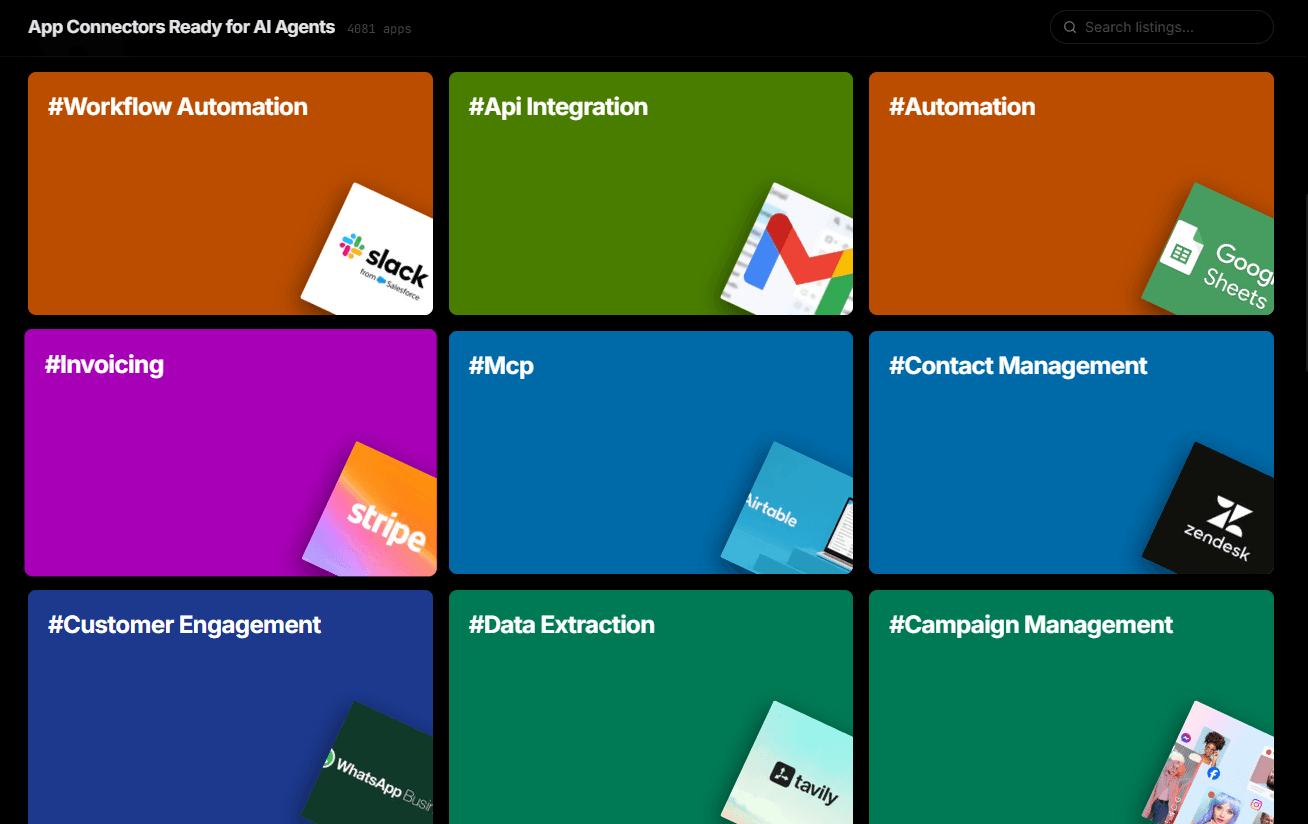
Over 4,000 integrations ready for AI agents
Explore a vast library of pre-built integrations, optimized and ready to deploy.
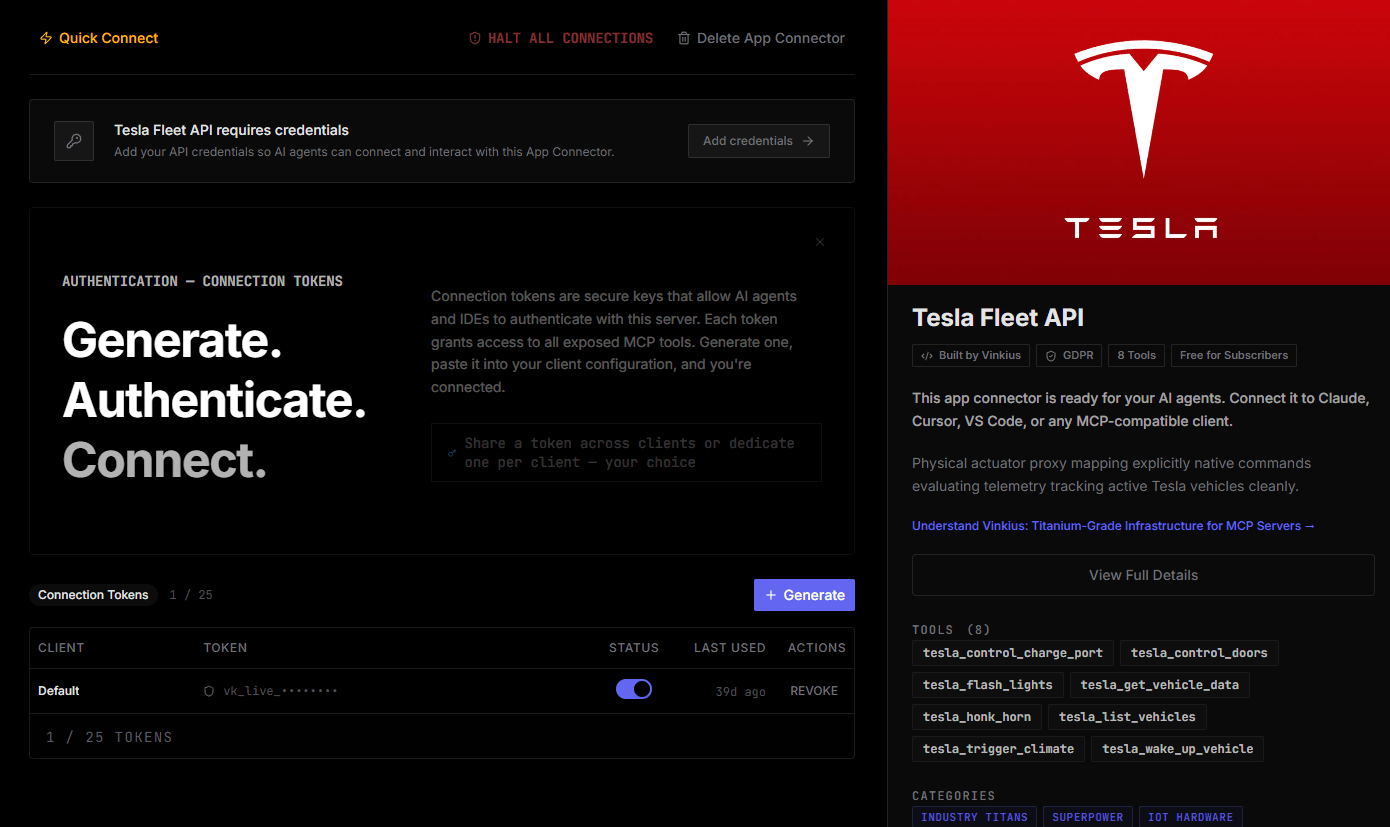
Connect securely in under 30 seconds
Generate tokens to authenticate and link external services in a single step.
Complete visibility into every agent action
Audit live requests, latency, success rates, and active security compliance policies.
Optimize spending and track token ROI
Analyze real-time token consumption and cost metrics detailed by connection.
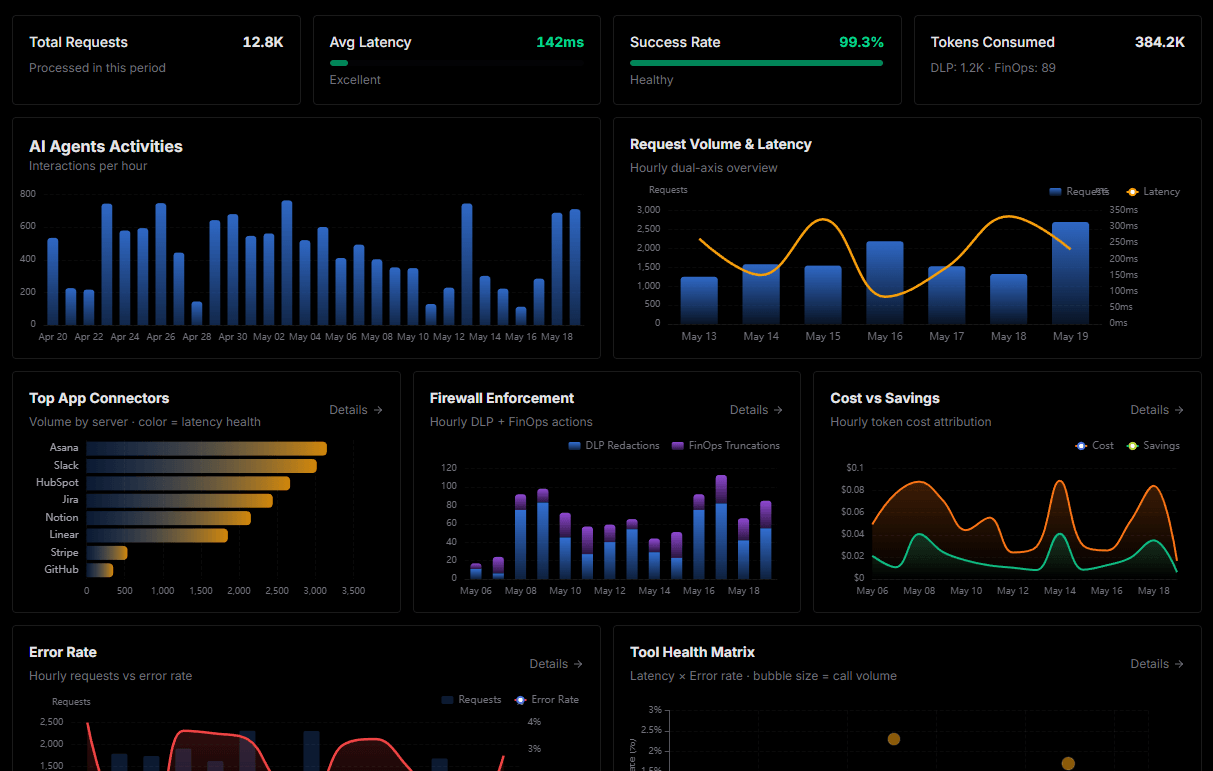
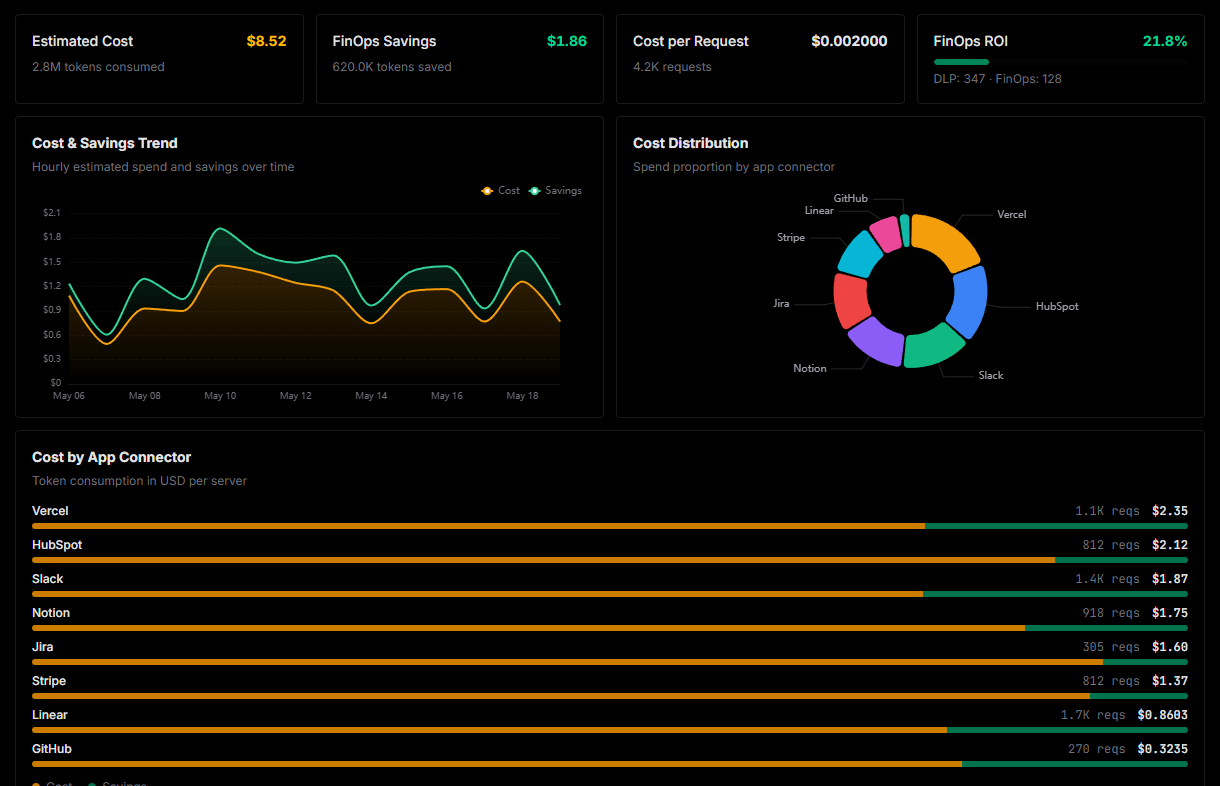
Explore our live AI Agents Analytics dashboard to see it all working
This dashboard is included when you connect Logseq (Knowledge Management) using Vinkius. You will never be left in the dark about what your AI agents are doing with your tools.
Logseq (Knowledge Management) and 4,000+ other AI tools. No hosting, no code, ready to use.
Professionals who connect Logseq (Knowledge Management) to Google ADK through Vinkius don't need to write code, manage servers, or worry about security. Everything is pre-configured, secure, and runs automatically in the background.
Raw MCP | Vinkius | |
|---|---|---|
| Ready-to-use MCPs | Find and configure each manually | 4,000+ MCPs ready to use |
| Connection Setup | Manual coding & server setup | 1-click instant connection |
| Server Hosting | You host it yourself (needs 24/7 uptime) | 100% hosted & managed by Vinkius |
| Security & Privacy | Stored in plaintext config files | Bank-grade encrypted vault |
| Activity Visibility | Blind execution (no logs or tracking) | Live dashboard with real-time logs |
| Cost Control | Runaway AI token spend risk | Automatic budget limits |
| Revoking Access | Must delete files or code to stop | 1-click disconnect button |
How Vinkius secures
Logseq (Knowledge Management) for Google ADK
Every request between Google ADK and Logseq (Knowledge Management) is protected by our secure gateway. We automatically keep your sensitive data private, prevent unauthorized access, and let you disconnect instantly at any time.
Frequently asked questions
Can I search across all my Logseq pages using my agent?
Yes. Use the search_content tool to execute deep property searches across your graph indices. Your agent will filter titles, namespaces, and block scopes to find the exact information you need.
How do I add a new note to a specific page?
Use the insert_block tool and provide the target Page name or ID. Your agent will drive the Logseq editor to add a new outliner chunk with your markdown content immediately.
Can my agent retrieve the hierarchical structure of a long page?
Absolutely. The get_page_blocks tool extracts the full hierarchical tree from a page map. Your agent will return the nested arrays of outliner blocks, ensuring you have the complete structural context of your data.
How does Google ADK connect to MCP servers?
Import the MCP toolset class and pass the server URL. ADK discovers and registers all tools automatically, making them available to your agent's tool-use loop.
Can ADK agents use multiple MCP servers?
Yes. Declare multiple MCP tool providers in your agent configuration. ADK merges all tool schemas and the agent can call tools from any server in a single turn.
Which Gemini models work best with MCP tools?
Gemini 2.0 Flash and Pro models both support function calling required for MCP tools. Flash is recommended for latency-sensitive use cases, Pro for complex reasoning.
McpToolset not found
Update: pip install --upgrade google-adk
Explore More MCP Servers
View all →
LEAP Legal
10 toolsManage legal matters, cards (contacts), and documents via the LEAP API.
Tencent Docs
10 toolsCollaborative office workspace by Tencent — manage documents, sheets, and slides via AI.
AI21 Labs
10 toolsAccess state-of-the-art language models for text generation, summarization, and semantic understanding at enterprise scale.
eSign (e签宝)
10 toolsLeading digital signature and contract platform in China — manage sign flows, templates, and documents via AI.