
Bring Knowledge Graph
to LlamaIndex
Learn how to connect Wikidata to LlamaIndex and start using 8 AI agent tools in minutes. Fully managed, enterprise secure, and ready to use without writing a single line of code.
 GDPR Free for Subscribers
Compatible with every major AI agent and IDE
 Gemini
What is the Wikidata MCP Server?
Connect to Wikidata, the central storage for structured data of Wikimedia projects. This MCP server allows your AI agent to tap into millions of items, properties, and statements using both traditional SPARQL queries and modern vector-based semantic search.
What you can do
- Entity Retrieval — Fetch full data and statements for any Wikidata Item (e.g., Q42) using the
get_itemandget_item_statementstools. - Advanced Querying — Execute complex SPARQL queries against the Wikidata Query Service (WDQS) with
execute_sparqlto find relationships and patterns across the entire graph. - Semantic Search — Use
search_items_vectorandsearch_properties_vectorto find entities and properties based on meaning rather than just exact keywords. - Data Contribution — Update the knowledge graph by creating statements or setting descriptions with
create_statementandset_item_description(requires OAuth). - Similarity Analysis — Compare text strings against specific entities to get semantic similarity scores using
get_similarity_score.
How it works
- Subscribe to this server
- Provide your User Agent (required by Wikimedia policy)
- Optionally provide an OAuth 2.0 Access Token for write operations
- Start exploring the world's knowledge from your favorite AI client
Who is this for?
- Researchers & Academics — instantly verify facts, dates, and relationships across history, science, and culture.
- Data Scientists — extract structured datasets for analysis or training without leaving the chat interface.
- Developers — find entity IDs and property schemas to integrate into applications or automate data enrichment.
Built-in capabilities (8)
Requires OAuth 2.0 Access Token. Create a new statement for an Item
Use hint:Query hint:optimizer "None" if queries timeout. Execute a SPARQL query
g., Q42) via the Wikibase REST API. Retrieve a specific Wikidata Item
Retrieve statements for a Wikidata Item
Compute similarity between text and an entity
Hybrid vector/keyword search for Items
Hybrid vector/keyword search for Properties
Requires OAuth 2.0 Access Token. Set an Item description
Why LlamaIndex?
LlamaIndex agents combine Wikidata tool responses with indexed documents for comprehensive, grounded answers. Connect 8 tools through Vinkius and query live data alongside vector stores and SQL databases in a single turn. ideal for hybrid search, data enrichment, and analytical workflows.
- —
Data-first architecture: LlamaIndex agents combine Wikidata tool responses with indexed documents for comprehensive, grounded answers
- —
Query pipeline framework lets you chain Wikidata tool calls with transformations, filters, and re-rankers in a typed pipeline
- —
Multi-source reasoning: agents can query Wikidata, a vector store, and a SQL database in a single turn and synthesize results
- —
Observability integrations show exactly what Wikidata tools were called, what data was returned, and how it influenced the final answer
Wikidata in LlamaIndex
Wikidata and 4,000+ other MCP servers. One platform. One governance layer.
Teams that connect Wikidata to LlamaIndex through Vinkius don't need to source, host, or maintain individual MCP servers. Every tool call runs inside a hardened runtime with credential isolation, DLP, and a signed audit chain.
Raw MCP | Vinkius | |
|---|---|---|
| Server catalog | Find and host yourself | 4,000+ managed |
| Infrastructure | Self-hosted | Sandboxed V8 isolates |
| Credential handling | Plaintext in config | Vault + runtime injection |
| Data loss prevention | None | Configurable DLP policies |
| Kill switch | None | Global instant shutdown |
| Financial circuit breakers | None | Per-server limits + alerts |
| Audit trail | None | Ed25519 signed logs |
| SIEM log streaming | None | Splunk, Datadog, Webhook |
| Honeytokens | None | Canary alerts on leak |
| Custom domains | Not applicable | DNS challenge verified |
| GDPR compliance | Manual effort | Automated purge + export |
Why teams choose Vinkius for Wikidata in LlamaIndex
The Wikidata MCP Server runs on Vinkius-managed infrastructure inside AWS — a purpose-built runtime with per-request V8 isolates, Ed25519 signed audit chains, and sub-40ms cold starts. All 8 tools execute in hardened sandboxes optimized for native MCP execution.
Your AI agents in LlamaIndex only access the data you authorize, with DLP that blocks sensitive information from ever reaching the model, kill switch for instant shutdown, and up to 60% token savings. Enterprise-grade infrastructure, zero maintenance.
* Every MCP server runs on Vinkius-managed infrastructure inside AWS - a purpose-built runtime with per-request V8 isolates, Ed25519 signed audit chains, and sub-40ms cold starts optimized for native MCP execution. See our infrastructure
How Vinkius secures
Wikidata for LlamaIndex
Every tool call from LlamaIndex to the Wikidata MCP Server is protected by DLP redaction, cryptographic audit chains, V8 sandbox isolation, kill switch, and financial circuit breakers.
Frequently asked questions
How can I find a Wikidata Item if I don't know its Q-ID?
You can use the search_items_vector tool. It performs a hybrid search using high-dimensional embeddings and keywords to find the most relevant entities based on your natural language description.
Is it possible to run complex queries like 'List all female scientists born in the 19th century'?
Yes, the execute_sparql tool allows you to run any valid SPARQL query against the Wikidata Query Service. This is the most powerful way to filter and aggregate data across the entire knowledge graph.
Can I use this server to update information on Wikidata?
Yes, if you provide an OAuth 2.0 Access Token, you can use create_statement to add new data or set_item_description to update descriptions in various languages.
How does LlamaIndex connect to MCP servers?
Use the MCP client adapter to create a connection. LlamaIndex discovers all tools and wraps them as query engine tools compatible with any LlamaIndex agent.
Can I combine MCP tools with vector stores?
Yes. LlamaIndex agents can query Wikidata tools and vector store indexes in the same turn, combining real-time and embedded data for grounded responses.
Does LlamaIndex support async MCP calls?
Yes. LlamaIndex's async agent framework supports concurrent MCP tool calls for high-throughput data processing pipelines.
BasicMCPClient not found
Install: pip install llama-index-tools-mcp
Explore More MCP Servers
View all →
Alipay Open Platform
10 toolsAutomate payment workflows via Alipay — create trades, process refunds, execute fund transfers, and reconcile billing ledgers natively from any AI agent.
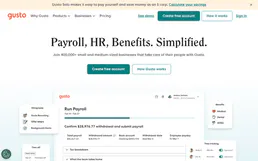
Gusto
10 toolsManage employees, run payroll, view benefits and time-off policies — HR automation for AI agents.

ArcXP
10 toolsAutomate newsroom publishing via ArcXP — manage, search, and update articles, photos, and videos directly from any AI agent.

WordPress Plugin Auditor
1 toolsThis MCP gives your AI agent the ability to securely list and audit all installed plugins on a WordPress site. Perfect for security sweeps, maintenance reports, and identifying outdated or inactive plugins.