
Bring Academic Research
to OpenAI Agents SDK
Create your Vinkius account to connect Semantic Scholar to OpenAI Agents SDK and start using all 4 AI tools in minutes. Fully managed, enterprise secure, and ready to use without writing a single line of code. No hosting, no server setup — just connect and start using.
 GDPR Free for Subscribers
Compatible with every major AI agent and IDE
 Gemini
What is the Semantic Scholar MCP Server?
Connect your AI agent to the world's most AI-enhanced academic knowledge graph, built and maintained by the Allen Institute for AI (AI2).
What you can do
- AI-Powered Search — Find papers across 200M+ works with AI-generated TLDR summaries that distill each paper into a single sentence of key insight
- Influential Citations — Beyond simple citation count, see how many influential citations a paper has received — those that meaningfully build upon the cited work
- Multi-Format Lookup — Access papers by Semantic Scholar ID, DOI, ArXiv ID (arXiv:2106.09685), or PubMed ID (PMID:12345)
- Citation Graph — Explore the full citation chain of any paper, with TLDR summaries for each citing work
- Researcher Profiles — Find academics by name with paper counts, total citations, and h-index metrics
How it works
- Subscribe to this server
- Start searching 200M+ papers immediately — no API key required for basic usage
Who is this for?
- AI/ML Researchers — find relevant papers in your field with instant TLDR summaries to quickly assess relevance before reading the full text
- Graduate Students — build comprehensive literature reviews using the citation graph to trace how ideas evolve across the academic landscape
- R&D Teams — evaluate researcher impact using influential citation counts and h-index metrics for talent scouting or collaboration decisions
Built-in capabilities (4)
Essential for literature reviews and impact analysis. Find papers that cite a specific work on Semantic Scholar
Accepts Semantic Scholar paper ID, DOI, ArXiv ID (e.g. arXiv:2106.09685), or PMID (e.g. PMID:12345). Get full paper details from Semantic Scholar by paper ID or DOI
Returns paper count, total citations, and h-index for each researcher. Find researchers and their publication metrics on Semantic Scholar
Returns papers with AI-generated TLDR summaries, citation counts, influential citation counts, and fields of study. Covers Computer Science, Medicine, Biology, Physics, and all STEM fields. Search 200M+ academic papers with AI-powered TLDR summaries and influence scores
Why OpenAI Agents SDK?
The OpenAI Agents SDK auto-discovers all 4 tools from Semantic Scholar through native MCP integration. Build agents with built-in guardrails, tracing, and handoff patterns. chain multiple agents where one queries Semantic Scholar, another analyzes results, and a third generates reports, all orchestrated through Vinkius.
- —
Native MCP integration via
MCPServerSse, pass the URL and the SDK auto-discovers all tools with full type safety - —
Built-in guardrails, tracing, and handoff patterns let you build production-grade agents without reinventing safety infrastructure
- —
Lightweight and composable: chain multiple agents and MCP servers in a single pipeline with minimal boilerplate
- —
First-party OpenAI support ensures optimal compatibility with GPT models for tool calling and structured output
Semantic Scholar in OpenAI Agents SDK
Why run Semantic Scholar with Vinkius?
The Semantic Scholar connection runs on our fully managed, secure cloud infrastructure. We handle the hosting, maintenance, and security so you don't have to deal with servers or code. All 4 tools are ready to work instantly without any complex setup.
You stay in complete control of your data. Your AI only accesses the information you approve, keeping your sensitive passwords and private details completely safe. Plus, with automatic optimizations, your AI works faster and more efficiently.
* Every connection is hosted and maintained by Vinkius. We handle the security, updates, and infrastructure so you don't have to write code or manage servers. See our infrastructure
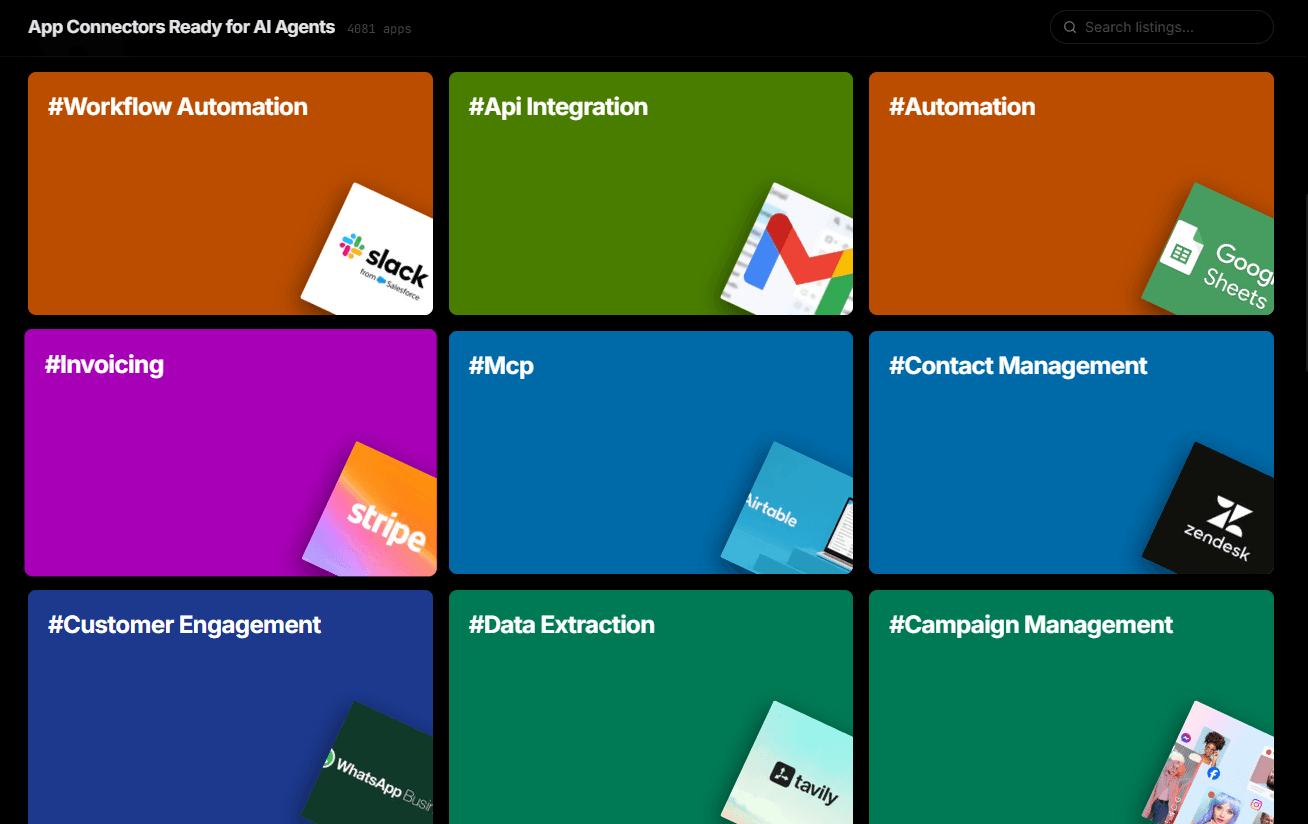
Over 4,000 integrations ready for AI agents
Explore a vast library of pre-built integrations, optimized and ready to deploy.
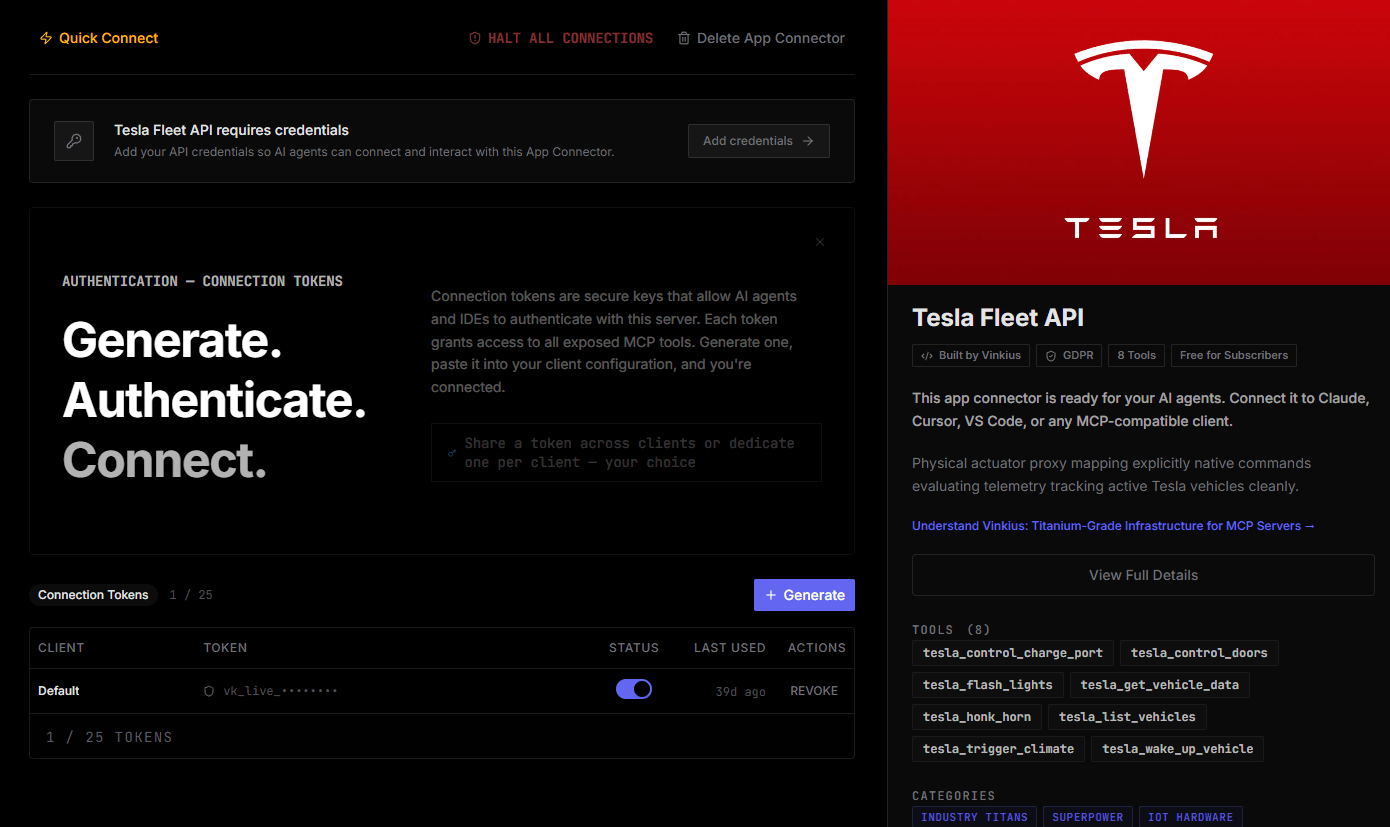
Connect securely in under 30 seconds
Generate tokens to authenticate and link external services in a single step.
Complete visibility into every agent action
Audit live requests, latency, success rates, and active security compliance policies.
Optimize spending and track token ROI
Analyze real-time token consumption and cost metrics detailed by connection.
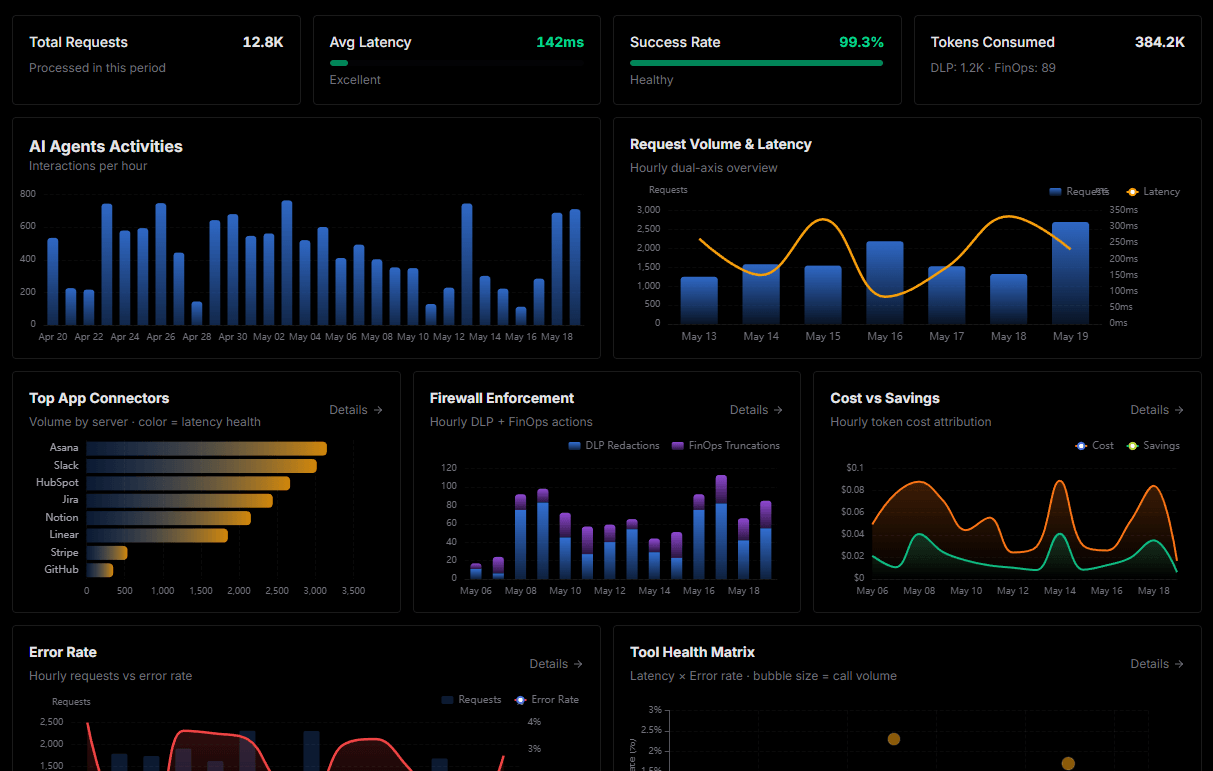
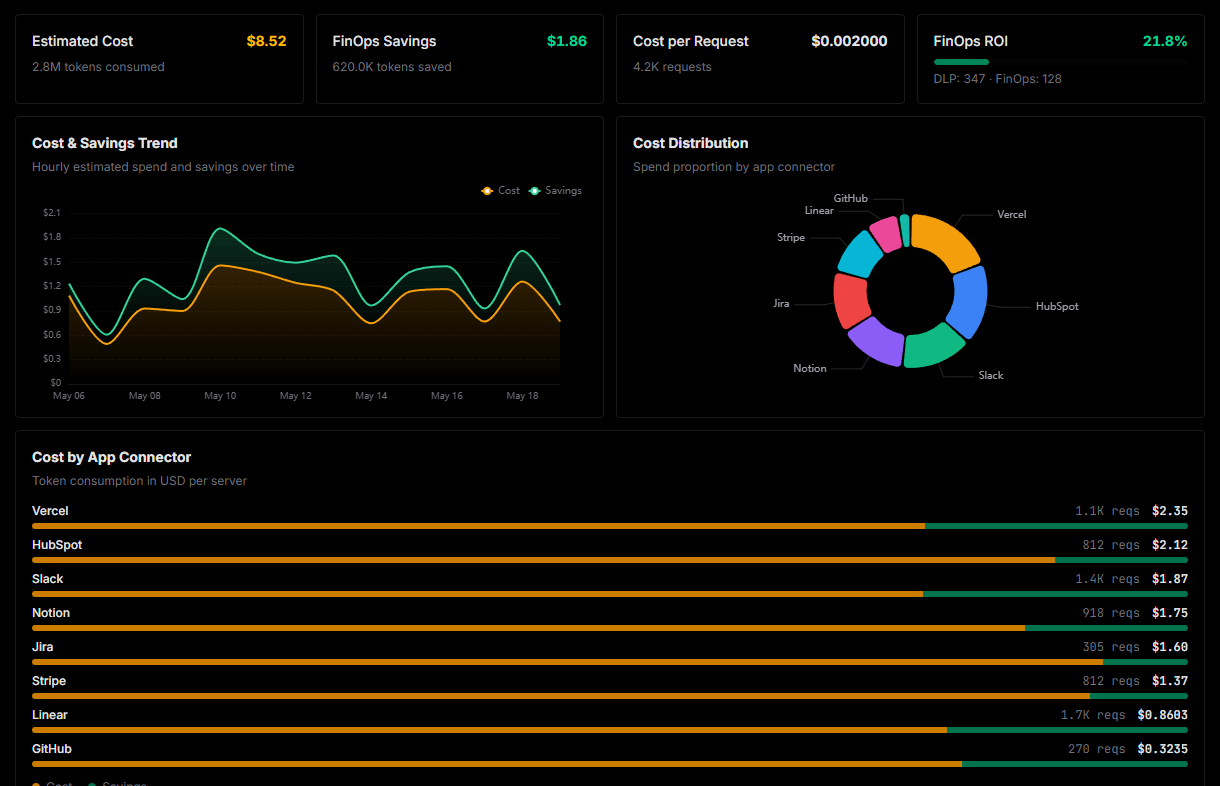
Explore our live AI Agents Analytics dashboard to see it all working
This dashboard is included when you connect Semantic Scholar using Vinkius. You will never be left in the dark about what your AI agents are doing with your tools.
Semantic Scholar and 4,000+ other AI tools. No hosting, no code, ready to use.
Professionals who connect Semantic Scholar to OpenAI Agents SDK through Vinkius don't need to write code, manage servers, or worry about security. Everything is pre-configured, secure, and runs automatically in the background.
Raw MCP | Vinkius | |
|---|---|---|
| Ready-to-use MCPs | Find and configure each manually | 4,000+ MCPs ready to use |
| Connection Setup | Manual coding & server setup | 1-click instant connection |
| Server Hosting | You host it yourself (needs 24/7 uptime) | 100% hosted & managed by Vinkius |
| Security & Privacy | Stored in plaintext config files | Bank-grade encrypted vault |
| Activity Visibility | Blind execution (no logs or tracking) | Live dashboard with real-time logs |
| Cost Control | Runaway AI token spend risk | Automatic budget limits |
| Revoking Access | Must delete files or code to stop | 1-click disconnect button |
How Vinkius secures
Semantic Scholar for OpenAI Agents SDK
Every request between OpenAI Agents SDK and Semantic Scholar is protected by our secure gateway. We automatically keep your sensitive data private, prevent unauthorized access, and let you disconnect instantly at any time.
Frequently asked questions
Do I need an API key to use Semantic Scholar?
No API key is required for basic usage. The public API provides 5,000 requests per 5 minutes shared among unauthenticated users. For higher throughput, academic and institutional users can request a free API key at semanticscholar.org, which grants dedicated rate limits of 1–10 requests per second depending on the endpoint.
What is the TLDR feature and how does it work?
TLDR (Too Long; Didn't Read) is an AI-generated one-sentence summary of each paper, powered by Allen AI's SciTLDR NLP model. It distills the key contribution or finding of a paper into a single, easily digestible sentence — ideal for quickly scanning relevance without reading an entire abstract or paper.
What is the difference between total citations and influential citations?
Total citations count every paper that references the work. Influential citations are a subset — papers where the cited work meaningfully contributes to the citing paper's research (not just a passing mention in the related work section). This metric is calculated by Semantic Scholar's AI models and provides a much more accurate measure of real scientific impact.
How does the OpenAI Agents SDK connect to MCP?
Use MCPServerSse(url=...) to create a server connection. The SDK auto-discovers all tools and makes them available to your agent with full type information.
Can I use multiple MCP servers in one agent?
Yes. Pass a list of MCPServerSse instances to the agent constructor. The agent can use tools from all connected servers within a single run.
Does the SDK support streaming responses?
Yes. The SDK supports SSE and Streamable HTTP transports, both of which work natively with Vinkius.
MCPServerStreamableHttp not found
Ensure you have the latest version: pip install --upgrade openai-agents
Agent not calling tools
Make sure your prompt explicitly references the task the tools can help with.
Explore More MCP Servers
View all →
Kisi
9 toolsManage cloud-based access control, locks, and users via the Kisi API.

Mistral AI
10 toolsBuild with European open-weight language models that deliver strong reasoning, multilingual capability, and efficient inference.
GitLab
12 toolsManage projects, track issues, and oversee CI/CD pipelines via AI agents with GitLab.
Audiomack Music
6 toolsExplore and discover music via Audiomack — search for songs, albums, and trending artists directly from any AI agent.