
Bring Infrastructure Monitoring
to Pydantic AI
Create your Vinkius account to connect Datadog to Pydantic AI and start using all 11 AI tools in minutes. Fully managed, enterprise secure, and ready to use without writing a single line of code. No hosting, no server setup — just connect and start using.
 GDPR Free for Subscribers
Compatible with every major AI agent and IDE
 Gemini
What is the Datadog MCP Server?
Connect your Datadog account to any AI agent and take full control of your infrastructure monitoring and log management through natural conversation.
What you can do
- Metric Auditing — Execute static queries targeting numeric telemetry datastores to resolve specific DDQL metrics objects generated dynamically
- Log Investigation — Perform structural extraction matching target string traces inside Datadog logs to evaluate status boundaries across your apps
- Monitor Management — Discover explicit system rule endpoints bounding configured triggers against alert metrics to verify health states
- Telemetry Extraction — Fetch timestamp arrays natively from numeric logged endpoints to analyze performance trends over specific time intervals
- Log Filtering — Apply ISO boundary mappings to compare logging payloads and identify exactly when errors or bottlenecks occurred
How it works
- Connect the Datadog integration to your AI assistant.
- Authorize using your Datadog API Key, APP Key, and Site.
- Monitor your entire cloud infrastructure using natural language.
Who is this for?
- DevOps Engineers — monitor system health and audit alerts without switching to the Datadog dashboard
- Software Developers — search through application logs and verify metric telemetry directly from the IDE or chat
- SREs — monitor active alerts and analyze performance trends during incident response
- System Admins — audit monitor configurations and verify system boundaries through natural language
Built-in capabilities (11)
Resolves all widget configurations, template variables, and layout structures for visualization rendering. Get dashboard details
Resolves notification settings, threshold values, and historical status changes for the given monitor ID. Get monitor details
Returns a list of dashboard identifiers, titles, layout types (timeboard/screenboard), and direct access URLs. List all dashboards
Returns scope tags, recurring schedules, and current status to identify planned maintenance periods. List scheduled downtimes
Returns a collection of events including titles, priority levels, and source identifiers (e.g., monitor alerts, deployment events). List events
Returns host metadata including agent version, active tags, and associated cloud provider attributes. List infrastructure hosts
Filters results by operational state (alert, warn, no data, ok) and returns monitor metadata including type, query, and current status. List monitors by state
Returns SLO definitions including target percentages, time windows, and current compliance status for monitor-based or metric-based objectives. List Service Level Objectives
Interacts with the alerting boundary to set temporary silence periods, optionally with an automatic expiration timestamp. Mute a monitor
Resolves time-series data within the specified UNIX timestamp range. Returns metric points, scope tags, and unit metadata for infrastructure and application monitoring. Query time-series metrics
Interacts with the log storage boundary to retrieve entries matching the query syntax, including timestamps, status levels, and structured attributes. Search application logs
Why Pydantic AI?
Pydantic AI validates every Datadog tool response against typed schemas, catching data inconsistencies at build time. Connect 11 tools through Vinkius and switch between OpenAI, Anthropic, or Gemini without changing your integration code. full type safety, structured output guarantees, and dependency injection for testable agents.
- —
Full type safety: every MCP tool response is validated against Pydantic models, catching data inconsistencies before they reach your application
- —
Model-agnostic architecture. switch between OpenAI, Anthropic, or Gemini without changing your Datadog integration code
- —
Structured output guarantee: Pydantic AI ensures tool results conform to defined schemas, eliminating runtime type errors
- —
Dependency injection system cleanly separates your Datadog connection logic from agent behavior for testable, maintainable code
Datadog in Pydantic AI
Why run Datadog with Vinkius?
The Datadog connection runs on our fully managed, secure cloud infrastructure. We handle the hosting, maintenance, and security so you don't have to deal with servers or code. All 11 tools are ready to work instantly without any complex setup.
You stay in complete control of your data. Your AI only accesses the information you approve, keeping your sensitive passwords and private details completely safe. Plus, with automatic optimizations, your AI works faster and more efficiently.
* Every connection is hosted and maintained by Vinkius. We handle the security, updates, and infrastructure so you don't have to write code or manage servers. See our infrastructure
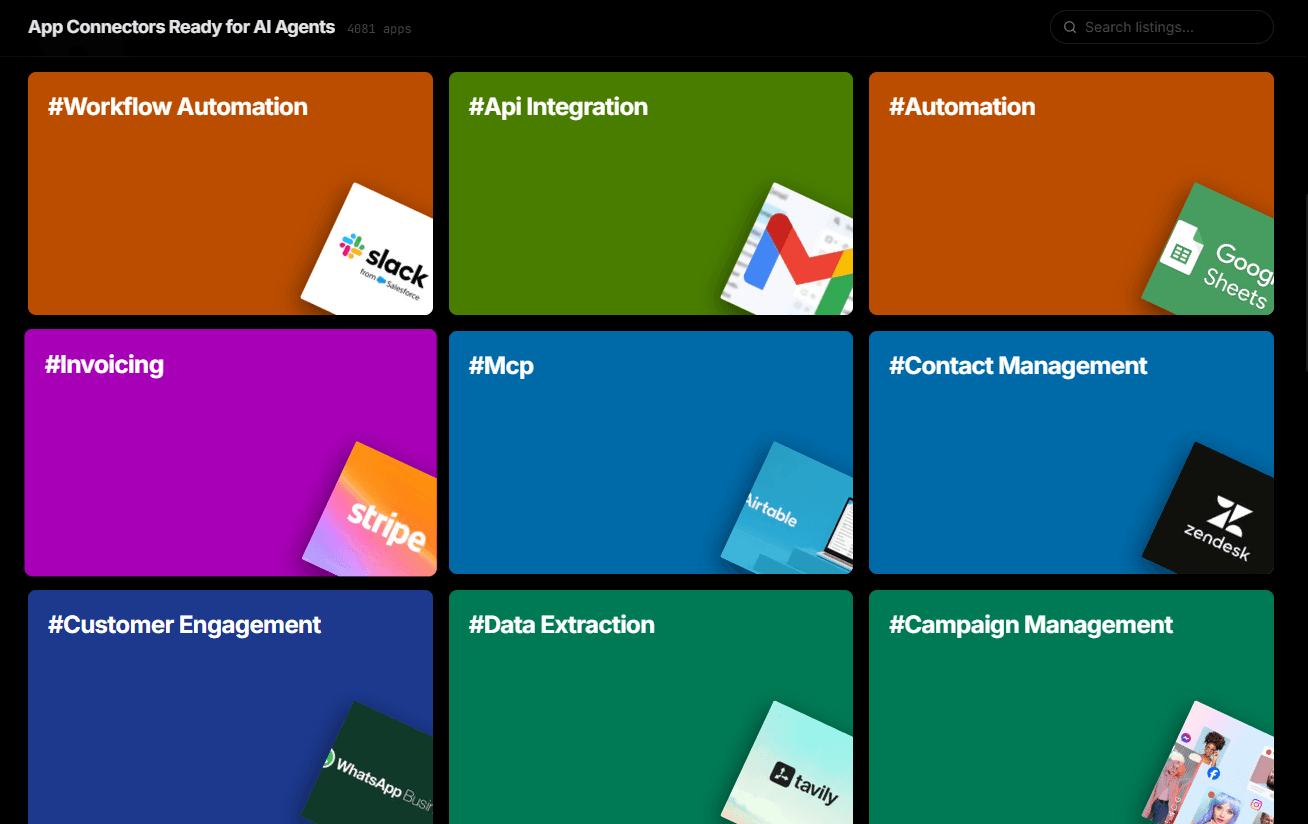
Over 4,000 integrations ready for AI agents
Explore a vast library of pre-built integrations, optimized and ready to deploy.
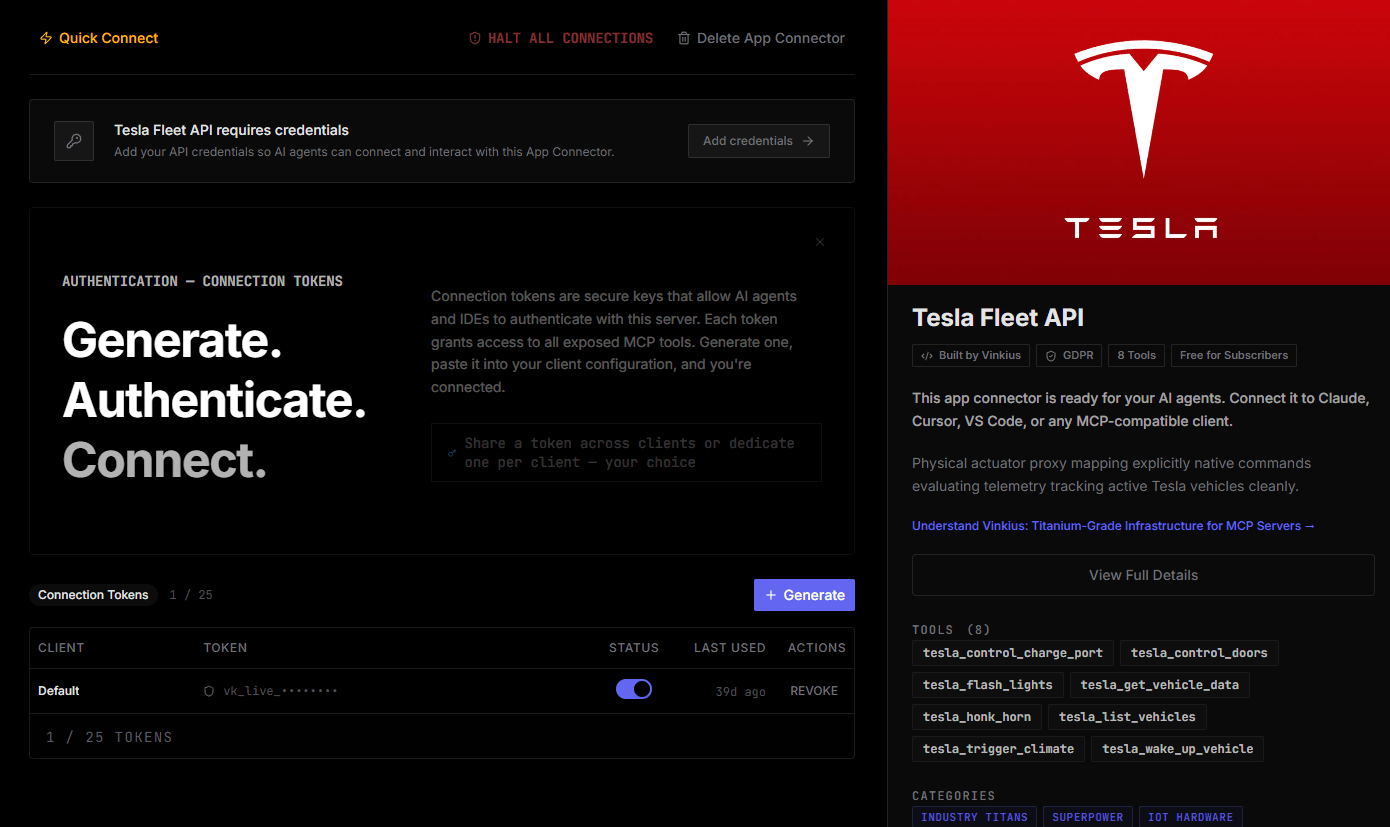
Connect securely in under 30 seconds
Generate tokens to authenticate and link external services in a single step.
Complete visibility into every agent action
Audit live requests, latency, success rates, and active security compliance policies.
Optimize spending and track token ROI
Analyze real-time token consumption and cost metrics detailed by connection.
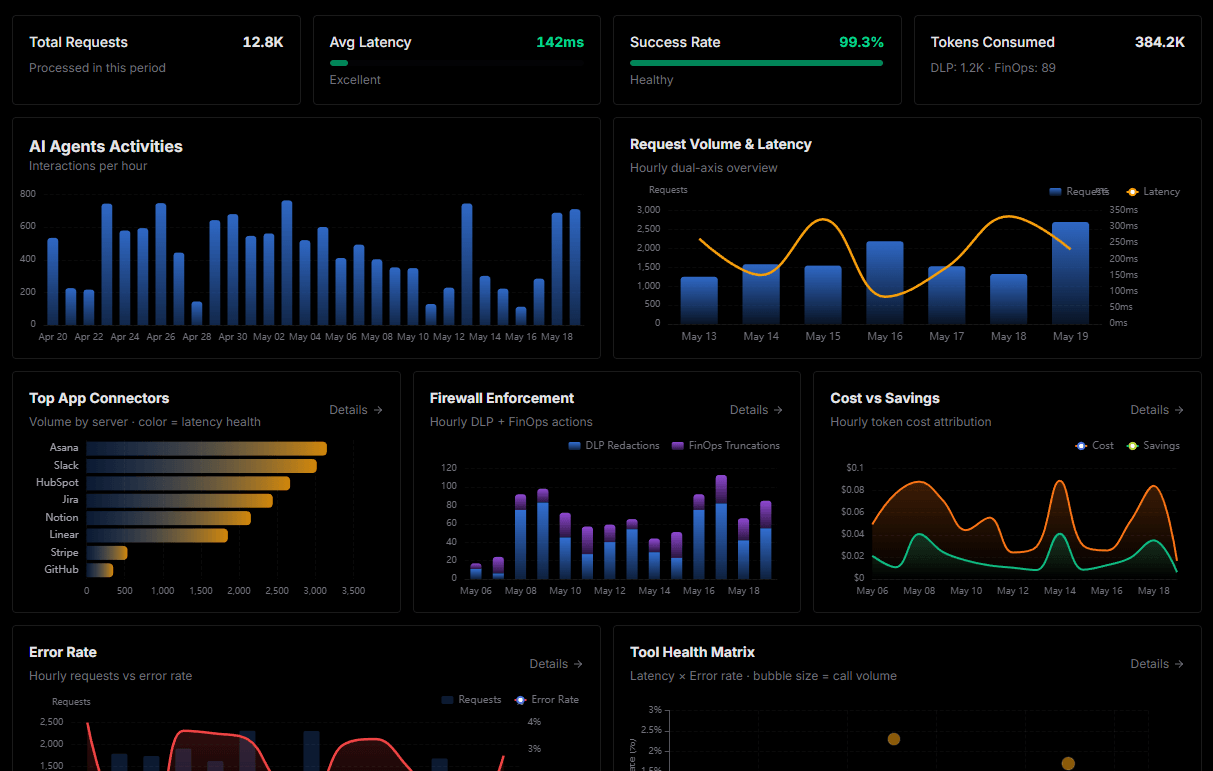
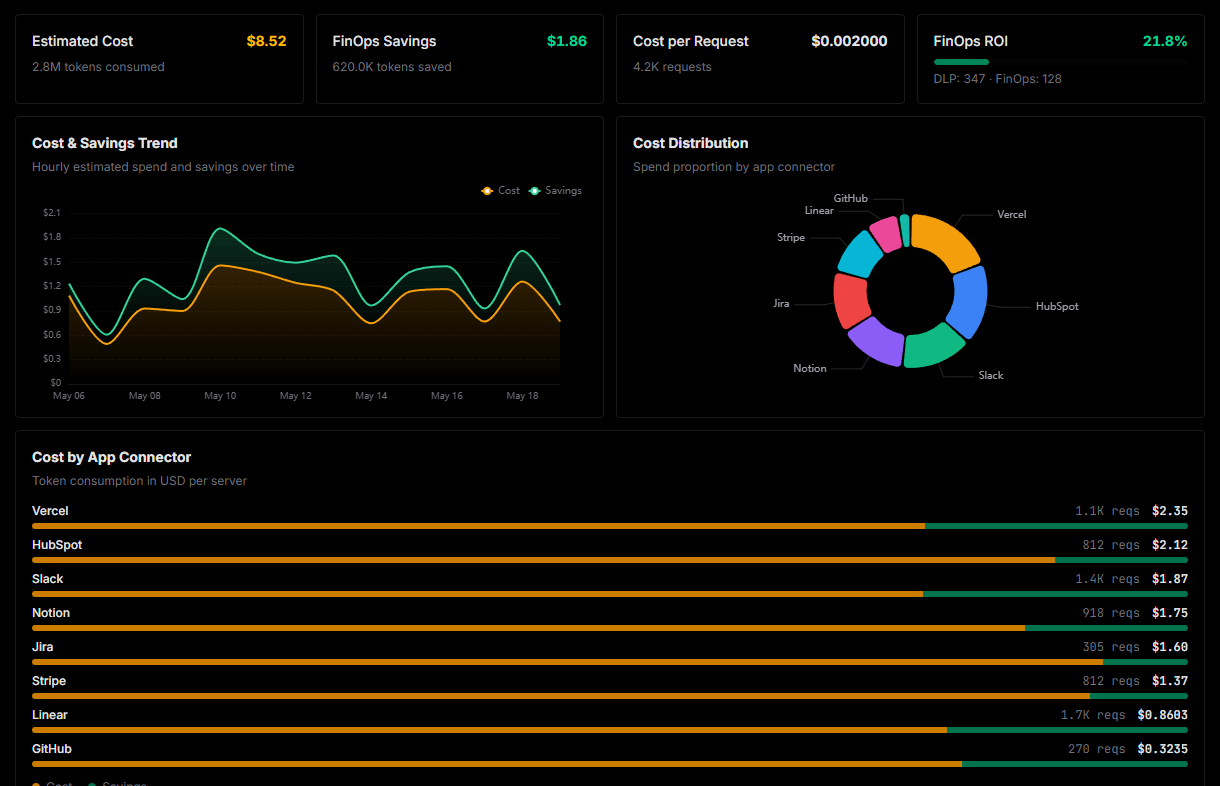
Explore our live AI Agents Analytics dashboard to see it all working
This dashboard is included when you connect Datadog using Vinkius. You will never be left in the dark about what your AI agents are doing with your tools.
Datadog and 4,000+ other AI tools. No hosting, no code, ready to use.
Professionals who connect Datadog to Pydantic AI through Vinkius don't need to write code, manage servers, or worry about security. Everything is pre-configured, secure, and runs automatically in the background.
Raw MCP | Vinkius | |
|---|---|---|
| Ready-to-use MCPs | Find and configure each manually | 4,000+ MCPs ready to use |
| Connection Setup | Manual coding & server setup | 1-click instant connection |
| Server Hosting | You host it yourself (needs 24/7 uptime) | 100% hosted & managed by Vinkius |
| Security & Privacy | Stored in plaintext config files | Bank-grade encrypted vault |
| Activity Visibility | Blind execution (no logs or tracking) | Live dashboard with real-time logs |
| Cost Control | Runaway AI token spend risk | Automatic budget limits |
| Revoking Access | Must delete files or code to stop | 1-click disconnect button |
How Vinkius secures
Datadog for Pydantic AI
Every request between Pydantic AI and Datadog is protected by our secure gateway. We automatically keep your sensitive data private, prevent unauthorized access, and let you disconnect instantly at any time.
Frequently asked questions
Can my agent query specific Datadog metrics using DDQL?
Yes. Use the 'query_metrics' tool. Provide your DDQL query string and the target time range. The agent will fetch the numeric timeseries data directly from Datadog's telemetry datastores.
How do I search for a specific error message across my application logs?
Use the 'search_logs' tool. Provide a query matching your error string and an ISO time boundary. The agent will retrieve the structural extraction of logs matching those parameters to help you identify failures.
Can I see which monitors are currently in an alert state?
Absolutely. The 'list_monitors' tool allows you to filter by group state (e.g., 'alert,warn'). The agent pulls the explicitly configured system triggers to show you which services are currently unhealthy.
How does Pydantic AI discover MCP tools?
Create an MCPServerHTTP instance with the server URL. Pydantic AI connects, discovers all tools, and generates typed Python interfaces automatically.
Does Pydantic AI validate MCP tool responses?
Yes. When you define result types as Pydantic models, every tool response is validated against the schema. Invalid data raises a clear error instead of silently corrupting your pipeline.
Can I switch LLM providers without changing MCP code?
Absolutely. Pydantic AI abstracts the model layer. your Datadog MCP integration works identically with OpenAI, Anthropic, Google, or any supported provider.
MCPServerHTTP not found
Update: pip install --upgrade pydantic-ai
Explore More MCP Servers
View all →
QuickNode
18 toolsManage blockchain infrastructure via QuickNode — create data streams, configure webhooks, and interact with RPC nodes directly from your AI agent.
Pagar.me
11 toolsCreate orders, manage subscriptions, and process Pix/Boleto payments via Pagar.me API.

Peerbie
16 toolsOrchestrate your entire team's workspace, from Kanban boards to calendar events, completely driven by AI.

Wazuh (SIEM)
21 toolsManage your Wazuh SIEM infrastructure—monitor agents, inspect security events, and manage manager configurations directly from your AI agent.