
Bring Energy Usage
to Pydantic AI
Create your Vinkius account to connect PG&E Data Portals to Pydantic AI and start using all 10 AI tools in minutes. Fully managed, enterprise secure, and ready to use without writing a single line of code. No hosting, no server setup — just connect and start using.
 GDPR Free for Subscribers
Compatible with every major AI agent and IDE
 Gemini
What is the PG&E Data Portals MCP Server?
Connect PG&E Data Portals to any AI agent and programmatically search, discover, and query PG&E's public energy datasets through natural conversation.
What you can do
- Dataset Search — Search the complete PG&E Data Portals catalog for energy-related datasets
- Energy Usage — Query electricity and gas consumption data by ZIP code and date range
- EV Adoption — Access electric vehicle registration and adoption trends by geographic area
- Solar Generation — Retrieve solar energy production and net energy metering (NEM) statistics
- Energy Efficiency — Analyze program participation, energy savings achieved, and cost-effectiveness
- Grid Infrastructure — Access distribution circuit, substation, and grid capacity data
- Date Range Queries — Filter any dataset by specific time periods for trend analysis
- Dataset Metadata — Get schema information and field descriptions for all datasets
How it works
- Subscribe to this server
- (Optional) Enter your PG&E Data Portals API Key for higher rate limits
- Start exploring PG&E energy data from Claude, Cursor, or any MCP-compatible client
Who is this for?
- Energy Analysts — analyze consumption trends, EV adoption patterns, and solar generation data
- Urban Planners — access grid infrastructure and regional energy consumption data
- Researchers — query time-series energy data for academic and policy studies
- Clean Tech Companies — identify high-potential markets for EV charging, solar, and efficiency products
Built-in capabilities (10)
Use this to understand what columns and data types are available before querying. The datasetId is obtained from search_datasets or list_all_datasets. Get the schema/metadata for a specific PG&E dataset
Each dataset includes name, description, ID, and metadata. Use this as a starting point to explore what data is available from PG&E — includes energy usage, EV adoption, solar generation, energy efficiency programs, and grid infrastructure datasets. List all available datasets in the PG&E Data Portals catalog
Specify the dataset ID and start/end dates to retrieve records within that time period. Use this for time-series analysis across any dataset type. Dataset ID from search_datasets. Dates in YYYY-MM-DD format. This is useful for year-over-year comparisons and trend analysis. Query any PG&E dataset filtered by a specific date range
Optional filters can be passed as key-value pairs to narrow results (e.g., zip_code, year, region). Use this to retrieve actual data records from any dataset in the PG&E Data Portals. Dataset IDs are obtained from search_datasets or list_all_datasets. Query a specific PG&E dataset with optional filters
), and investment amounts. Use this to analyze program effectiveness and ROI of energy efficiency initiatives. Optional programType filters by program category. Year is YYYY format. Query PG&E energy efficiency program data
Returns electricity usage aggregated by customer segment (residential, commercial, industrial, agricultural). Use this to analyze energy consumption patterns in specific geographic areas over time. ZIP code format: 5-digit (e.g., "94102"). Dates in YYYY-MM-DD format. Query PG&E energy consumption data by ZIP code and date range
Use this to analyze EV adoption trends, identify high-adoption areas, and correlate with charging infrastructure. ZIP code is 5-digit format. Year is YYYY format (e.g., "2024"). Query electric vehicle adoption data by ZIP code and year
Use this to understand grid capacity, identify areas needing upgrades, or analyze reliability metrics. Region filters by geographic area. dataType can filter by specific infrastructure type. Query PG&E grid infrastructure and distribution data
Use this to analyze solar adoption and production trends. Region can be a county name or service area identifier. Year is YYYY format. Query solar energy generation data by region and year
Use this to discover available datasets before querying specific data. Returns dataset names, descriptions, IDs, and metadata. Optional query parameter filters results by keyword. Search the PG&E Data Portals catalog for energy datasets
Why Pydantic AI?
Pydantic AI validates every PG&E Data Portals tool response against typed schemas, catching data inconsistencies at build time. Connect 10 tools through Vinkius and switch between OpenAI, Anthropic, or Gemini without changing your integration code. full type safety, structured output guarantees, and dependency injection for testable agents.
- —
Full type safety: every MCP tool response is validated against Pydantic models, catching data inconsistencies before they reach your application
- —
Model-agnostic architecture. switch between OpenAI, Anthropic, or Gemini without changing your PG&E Data Portals integration code
- —
Structured output guarantee: Pydantic AI ensures tool results conform to defined schemas, eliminating runtime type errors
- —
Dependency injection system cleanly separates your PG&E Data Portals connection logic from agent behavior for testable, maintainable code
PG&E Data Portals in Pydantic AI
Why run PG&E Data Portals with Vinkius?
The PG&E Data Portals connection runs on our fully managed, secure cloud infrastructure. We handle the hosting, maintenance, and security so you don't have to deal with servers or code. All 10 tools are ready to work instantly without any complex setup.
You stay in complete control of your data. Your AI only accesses the information you approve, keeping your sensitive passwords and private details completely safe. Plus, with automatic optimizations, your AI works faster and more efficiently.
* Every connection is hosted and maintained by Vinkius. We handle the security, updates, and infrastructure so you don't have to write code or manage servers. See our infrastructure
Over 4,000 integrations ready for AI agents
Explore a vast library of pre-built integrations, optimized and ready to deploy.
Connect securely in under 30 seconds
Generate tokens to authenticate and link external services in a single step.
Complete visibility into every agent action
Audit live requests, latency, success rates, and active security compliance policies.
Optimize spending and track token ROI
Analyze real-time token consumption and cost metrics detailed by connection.
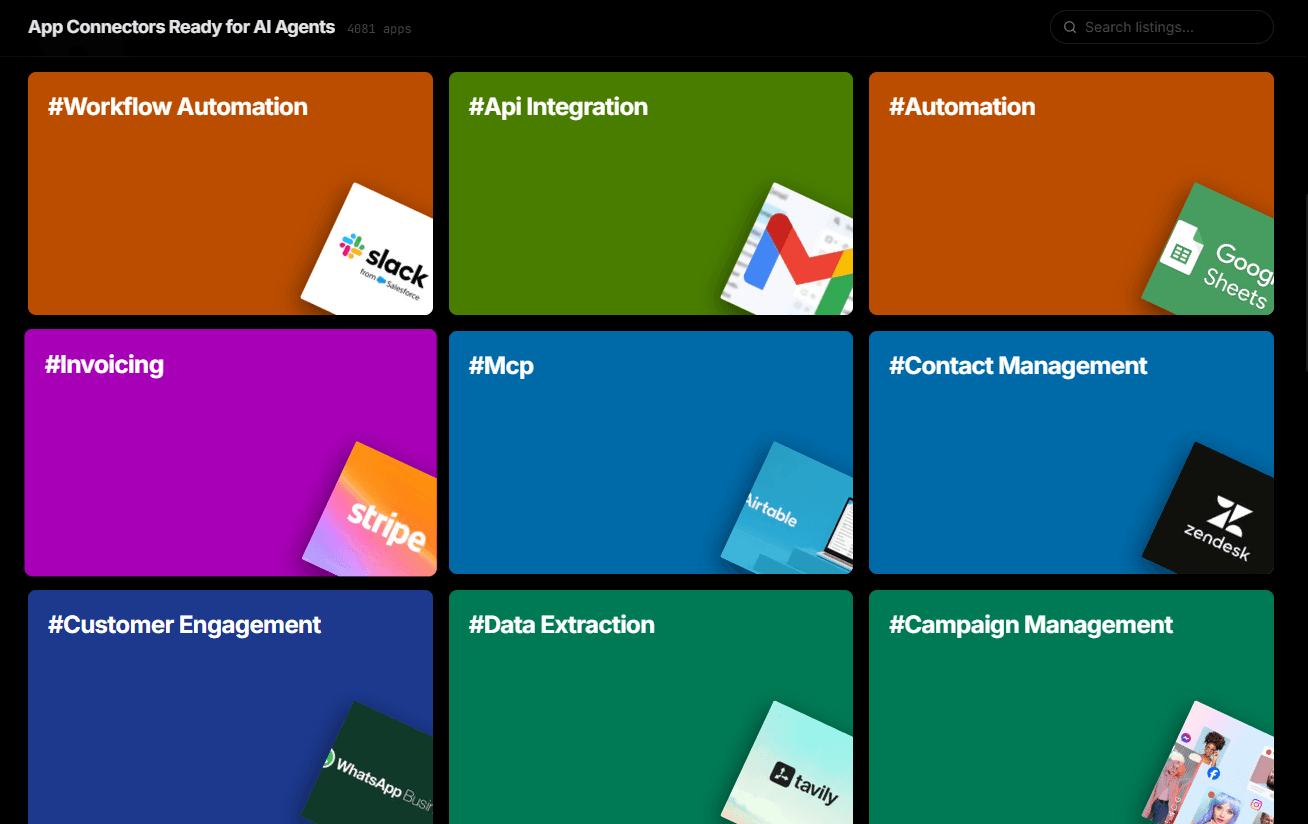
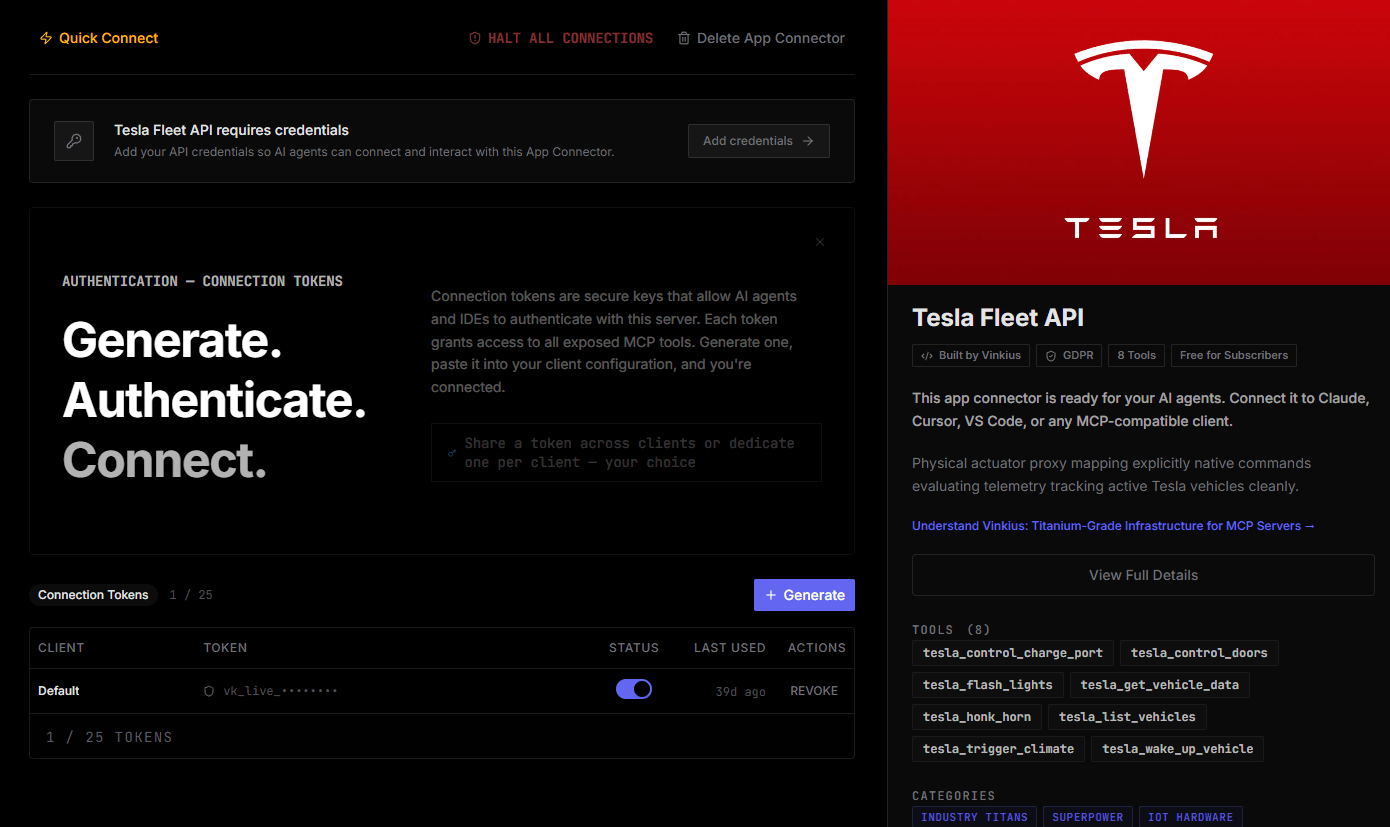
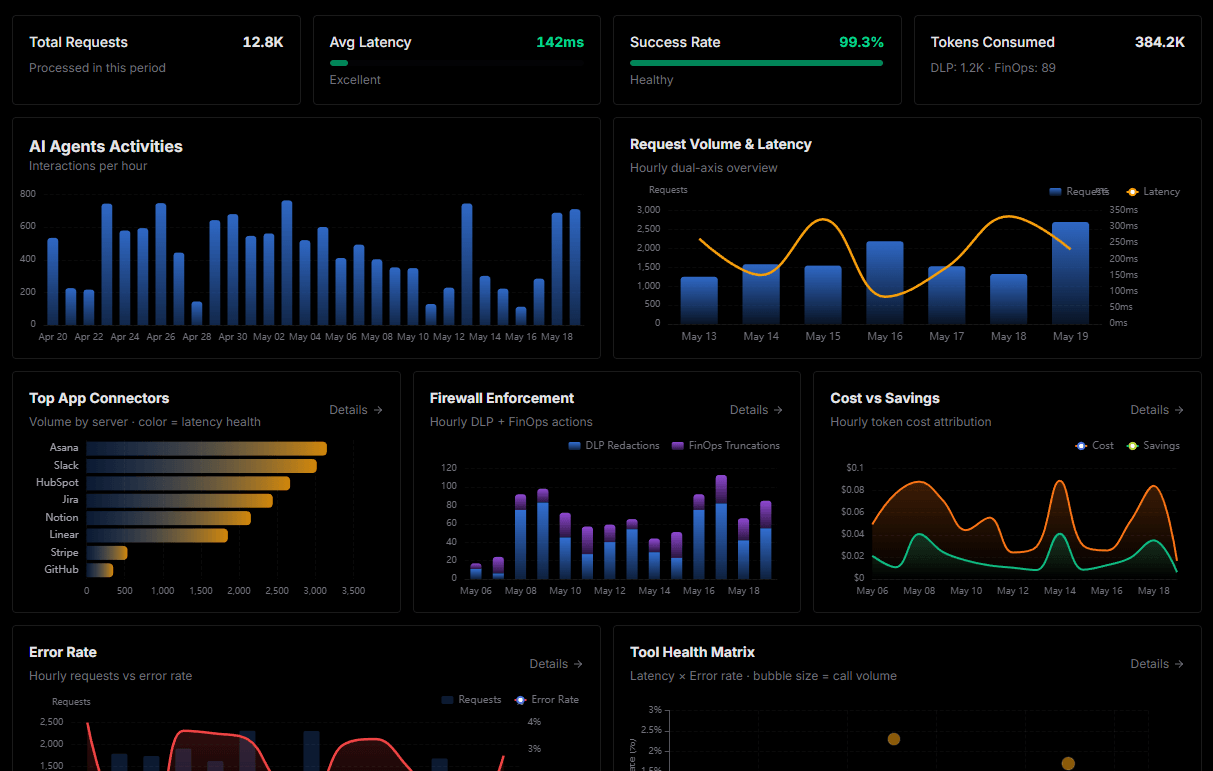
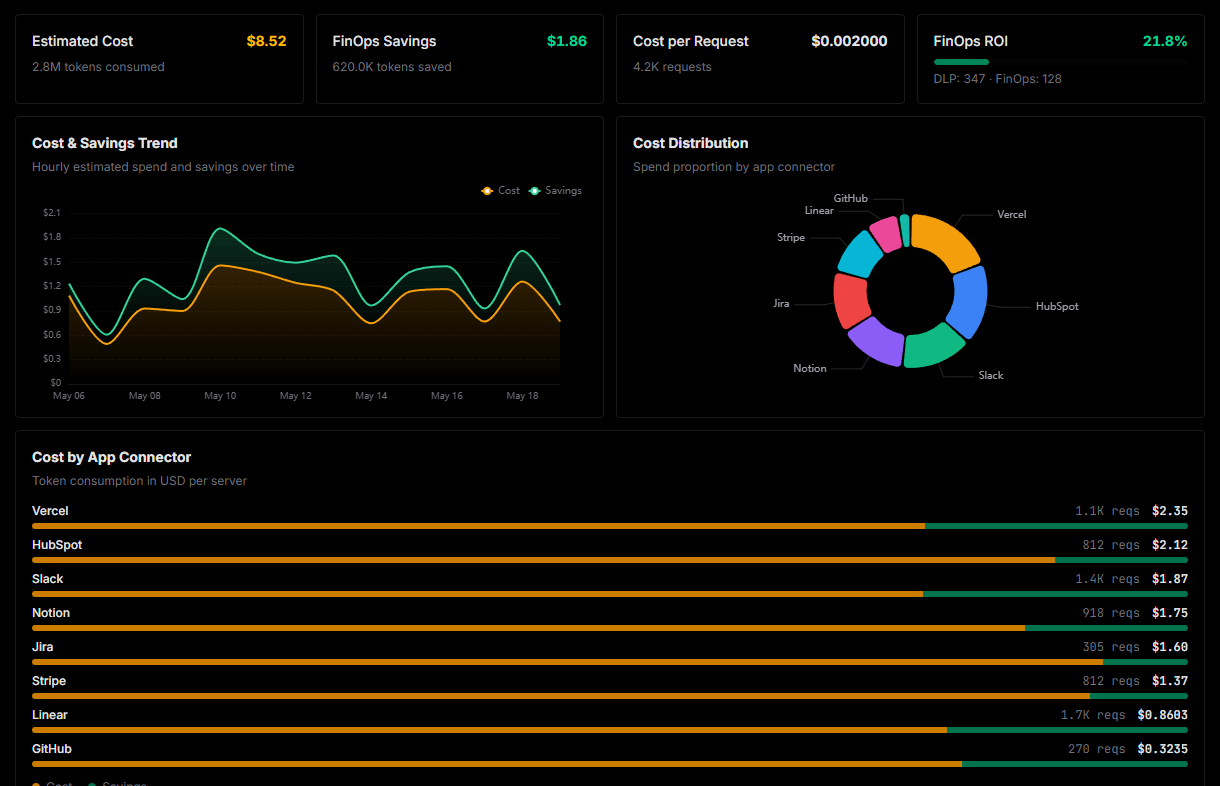
Explore our live AI Agents Analytics dashboard to see it all working
This dashboard is included when you connect PG&E Data Portals using Vinkius. You will never be left in the dark about what your AI agents are doing with your tools.
PG&E Data Portals and 4,000+ other AI tools. No hosting, no code, ready to use.
Professionals who connect PG&E Data Portals to Pydantic AI through Vinkius don't need to write code, manage servers, or worry about security. Everything is pre-configured, secure, and runs automatically in the background.
Raw MCP | Vinkius | |
|---|---|---|
| Ready-to-use MCPs | Find and configure each manually | 4,000+ MCPs ready to use |
| Connection Setup | Manual coding & server setup | 1-click instant connection |
| Server Hosting | You host it yourself (needs 24/7 uptime) | 100% hosted & managed by Vinkius |
| Security & Privacy | Stored in plaintext config files | Bank-grade encrypted vault |
| Activity Visibility | Blind execution (no logs or tracking) | Live dashboard with real-time logs |
| Cost Control | Runaway AI token spend risk | Automatic budget limits |
| Revoking Access | Must delete files or code to stop | 1-click disconnect button |
How Vinkius secures
PG&E Data Portals for Pydantic AI
Every request between Pydantic AI and PG&E Data Portals is protected by our secure gateway. We automatically keep your sensitive data private, prevent unauthorized access, and let you disconnect instantly at any time.
Frequently asked questions
What types of datasets are available?
PG&E Data Portals offers: energy usage (electricity and gas by ZIP code), EV adoption (vehicle registrations), solar generation (capacity and production), energy efficiency programs (participation and savings), and grid infrastructure (distribution circuits, substations). Use search_datasets to discover all available datasets.
Is authentication required?
No, the PG&E Data Portals API is publicly accessible without authentication. An API key is optional and only needed if you want higher rate limits for production use. Most queries work out of the box without any credentials.
Can I filter data by specific ZIP codes and date ranges?
Yes! Most tools support zip_code, start_date, and end_date parameters. For example, query_energy_usage accepts ZIP code and date range to return electricity consumption for that specific area and period. Use query_by_date_range for any dataset with custom date filtering.
How does Pydantic AI discover MCP tools?
Create an MCPServerHTTP instance with the server URL. Pydantic AI connects, discovers all tools, and generates typed Python interfaces automatically.
Does Pydantic AI validate MCP tool responses?
Yes. When you define result types as Pydantic models, every tool response is validated against the schema. Invalid data raises a clear error instead of silently corrupting your pipeline.
Can I switch LLM providers without changing MCP code?
Absolutely. Pydantic AI abstracts the model layer. your PG&E Data Portals MCP integration works identically with OpenAI, Anthropic, Google, or any supported provider.
MCPServerHTTP not found
Update: pip install --upgrade pydantic-ai
Explore More MCP Servers
View all →
FutureVault
12 toolsManage digital vaults, track documents, and oversee folder structures via AI agents with FutureVault.

SmartHR
8 toolsEmpower your AI to manage employee records, organizational structures, and payrolls directly from your SmartHR workspace.

Discord
10 toolsManage communities via Discord — list server channels and members, send and edit messages, and handle channel moderation directly from any AI agent.

MonkeyLearn
10 toolsAnalyze and extract data from text via MonkeyLearn — sentiment analysis and keyword extraction directly from your AI agent.