
Bring Error Tracking
to Pydantic AI
Create your Vinkius account to connect Sentry Alternative to Pydantic AI and start using all 15 AI tools in minutes. Fully managed, enterprise secure, and ready to use without writing a single line of code. No hosting, no server setup — just connect and start using.
 GDPR Free for Subscribers
Compatible with every major AI agent and IDE
 Gemini
What is the Sentry Alternative MCP Server?
Connect your Sentry account to any AI agent and gain real-time observability over your application errors through natural conversation.
What you can do
- Organization & Project Discovery — List all Sentry organizations, teams and projects with full configuration details
- Issue Management — Browse, inspect and update error issues. Change status (resolve, mute, delete) or assign issues to team members
- Event Inspection — Retrieve raw error events with complete stacktraces, breadcrumbs, HTTP context and user data to debug root causes
- Release Tracking — List all application releases, view deployment metadata and correlate issues to specific versions
- Alert Rules Auditing — Review configured alert rules (Slack, email, PagerDuty triggers) to understand your team's notification pipeline
- Tag Analysis — View all event tags (environment, release, transaction) for filtering and grouping errors
How it works
- Subscribe to this server
- Enter your Sentry Internal Integration Token
- Start monitoring your apps from Claude, Cursor, or any MCP-compatible client
Stop context-switching to the Sentry dashboard every time an alert fires. Your AI acts as a dedicated on-call engineer.
Who is this for?
- On-Call Engineers — instantly triage new errors, view stacktraces and check if issues are resolved without opening Sentry
- Engineering Managers — audit alert rules, monitor release health and review open issue counts across all projects
- Developers — search for specific errors, inspect event breadcrumbs and verify which release introduced a regression
Built-in capabilities (15)
Use this to verify your token is working correctly. Get authentication info for the current Sentry token
Use the event ID returned from list_events. Get full details for a specific Sentry event
Use the numeric issue ID. Get full details for a Sentry issue
Provide both the organization slug and project slug. Get details for a specific Sentry project
Use the organization slug and the exact release version string. Get details for a specific Sentry release
Each rule defines conditions (e.g. "issue created more than X times in 5 minutes"), actions (Slack, email, PagerDuty) and target channels/users. List alert rules in a Sentry organization
Events contain the error message, stacktrace snippets, platform, environment and timestamps. Useful for auditing what errors have been firing recently. List recent events for a Sentry project
Can list issues organization-wide or scoped to a specific project. Use the query parameter to filter by status, priority, first release, timestamp or text search. Example query: "is:unresolved priority:50". List issues in a Sentry organization or project
Each organization has a unique slug, name, access permissions and team/member information. Use the organization slug for subsequent API calls. List all Sentry organizations
Each project tracks errors for a specific application or service and has settings for alerts, environments and team ownership. Provide the organization slug. List projects in a Sentry organization
Use to track which versions have been deployed and correlate issues to specific releases. List releases for a Sentry organization or project
) used to categorize events. Tags are essential for filtering and grouping issues in Sentry. List tags for a Sentry organization or project
Each team has members, projects and access control settings. Provide the organization slug to list its teams. List teams in a Sentry organization
Uses the Sentry query syntax. Can be scoped to an entire organization or a specific project. Returns matching issues with count, priority, status and first/last seen timestamps. Search Sentry issues by text
Can also add/remove tags. Provide the numeric issue ID and the desired status. Update a Sentry issue status or assign it
Why Pydantic AI?
Pydantic AI validates every Sentry Alternative tool response against typed schemas, catching data inconsistencies at build time. Connect 15 tools through Vinkius and switch between OpenAI, Anthropic, or Gemini without changing your integration code. full type safety, structured output guarantees, and dependency injection for testable agents.
- —
Full type safety: every MCP tool response is validated against Pydantic models, catching data inconsistencies before they reach your application
- —
Model-agnostic architecture. switch between OpenAI, Anthropic, or Gemini without changing your Sentry Alternative integration code
- —
Structured output guarantee: Pydantic AI ensures tool results conform to defined schemas, eliminating runtime type errors
- —
Dependency injection system cleanly separates your Sentry Alternative connection logic from agent behavior for testable, maintainable code
Sentry Alternative in Pydantic AI
Why run Sentry Alternative with Vinkius?
The Sentry Alternative connection runs on our fully managed, secure cloud infrastructure. We handle the hosting, maintenance, and security so you don't have to deal with servers or code. All 15 tools are ready to work instantly without any complex setup.
You stay in complete control of your data. Your AI only accesses the information you approve, keeping your sensitive passwords and private details completely safe. Plus, with automatic optimizations, your AI works faster and more efficiently.
* Every connection is hosted and maintained by Vinkius. We handle the security, updates, and infrastructure so you don't have to write code or manage servers. See our infrastructure
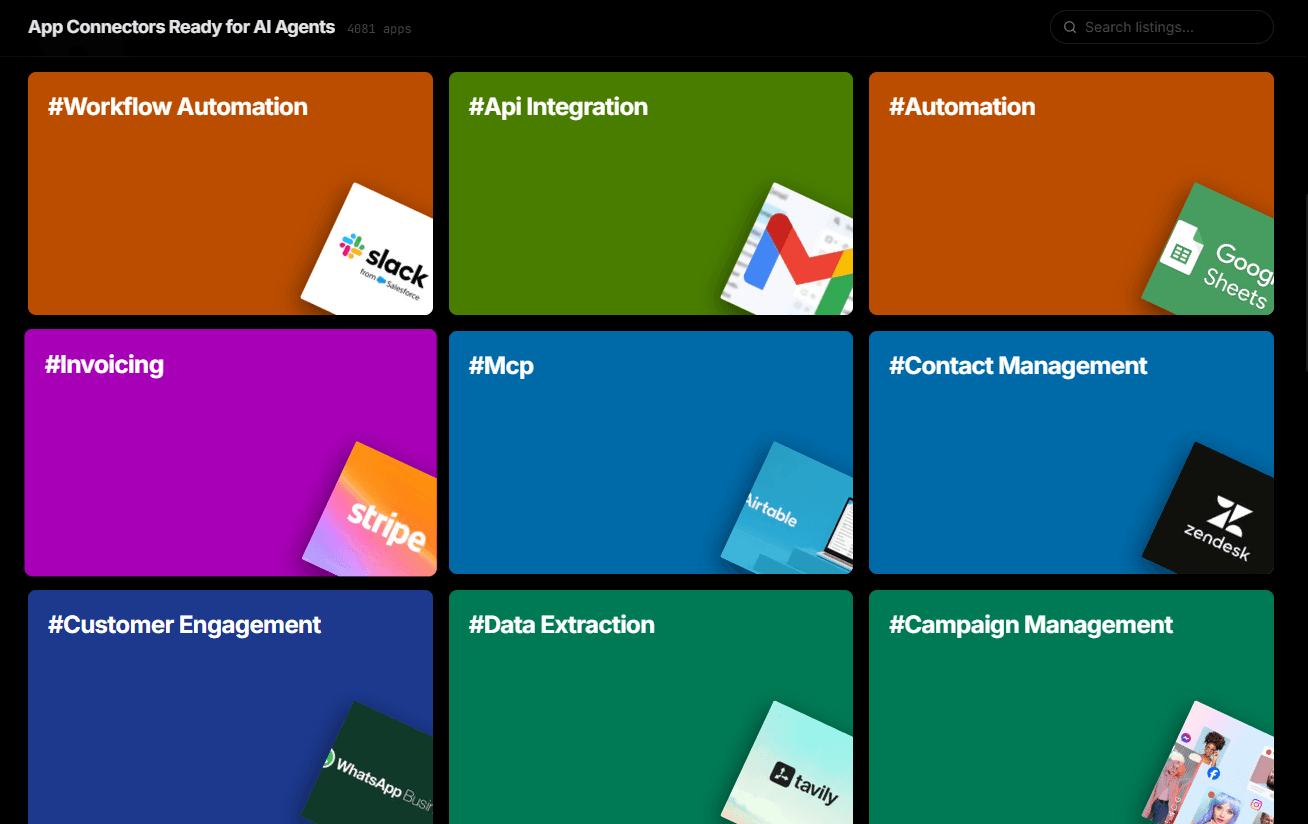
Over 4,000 integrations ready for AI agents
Explore a vast library of pre-built integrations, optimized and ready to deploy.
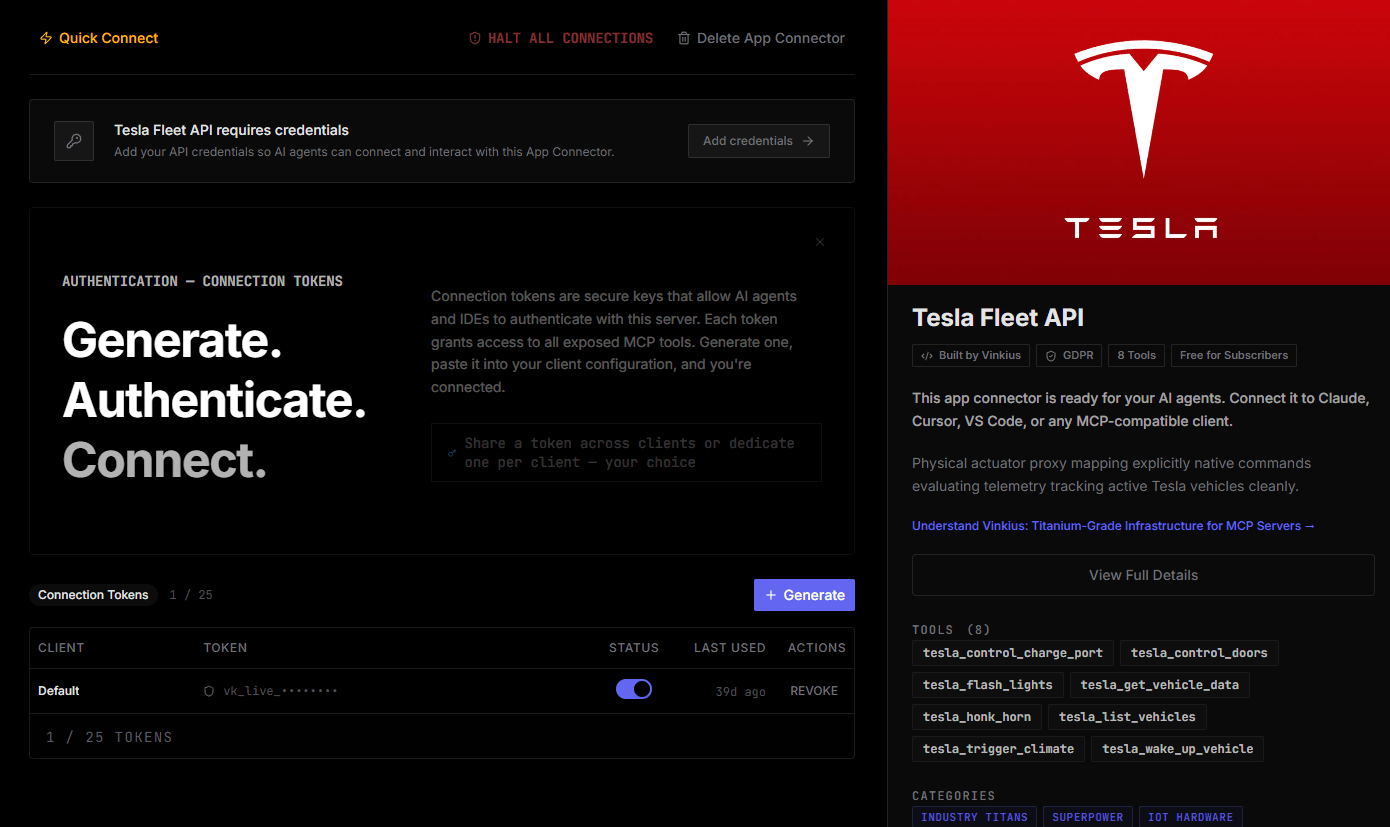
Connect securely in under 30 seconds
Generate tokens to authenticate and link external services in a single step.
Complete visibility into every agent action
Audit live requests, latency, success rates, and active security compliance policies.
Optimize spending and track token ROI
Analyze real-time token consumption and cost metrics detailed by connection.
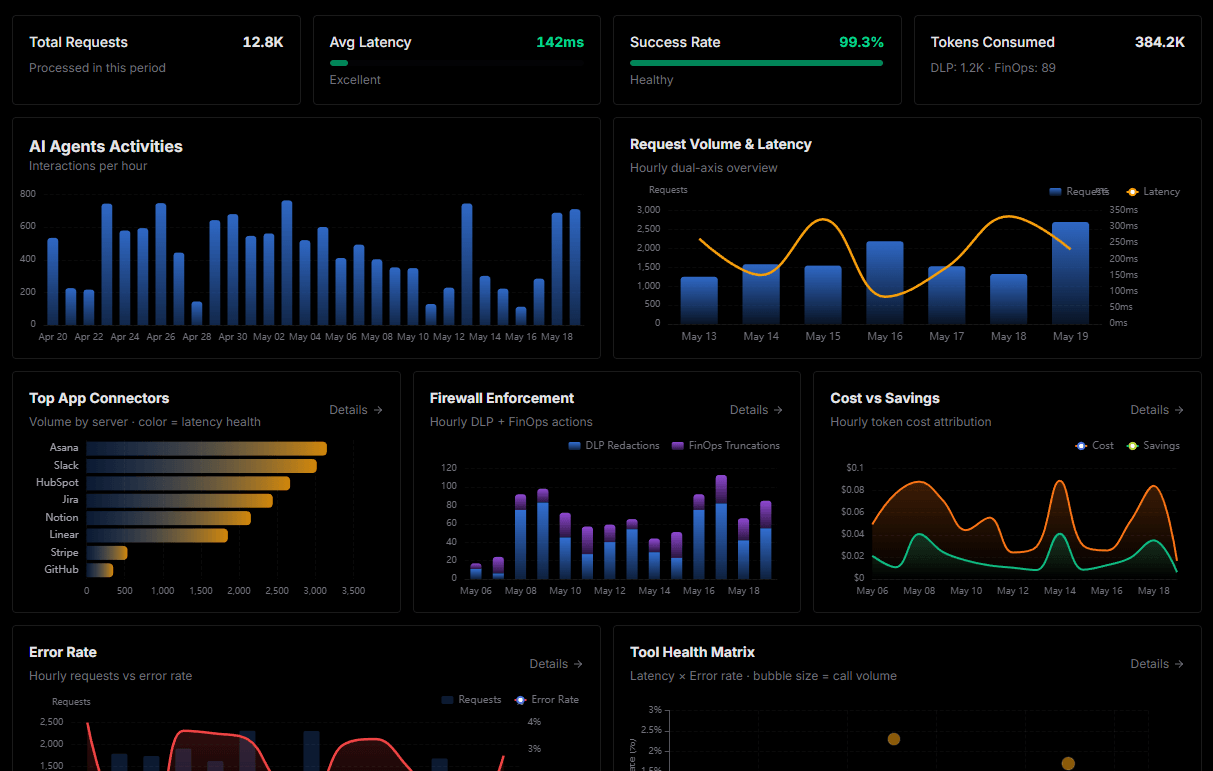
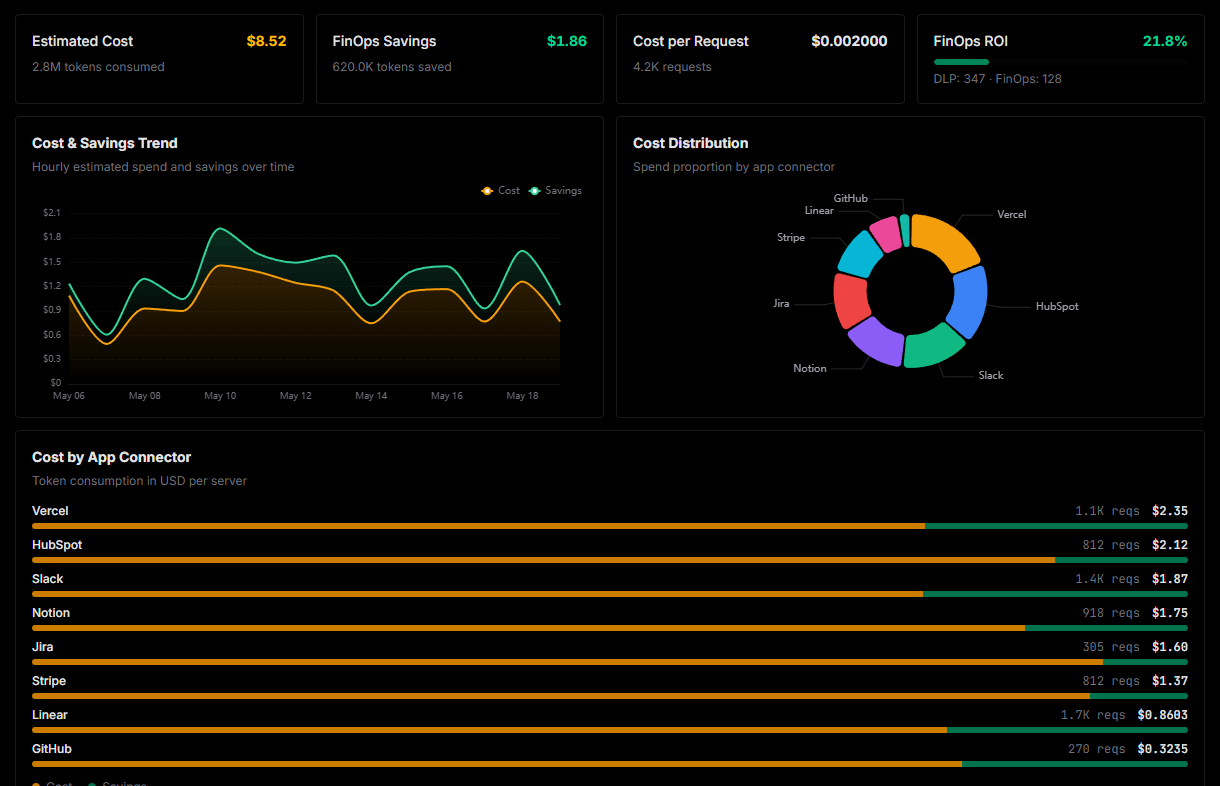
Explore our live AI Agents Analytics dashboard to see it all working
This dashboard is included when you connect Sentry Alternative using Vinkius. You will never be left in the dark about what your AI agents are doing with your tools.
Sentry Alternative and 4,000+ other AI tools. No hosting, no code, ready to use.
Professionals who connect Sentry Alternative to Pydantic AI through Vinkius don't need to write code, manage servers, or worry about security. Everything is pre-configured, secure, and runs automatically in the background.
Raw MCP | Vinkius | |
|---|---|---|
| Ready-to-use MCPs | Find and configure each manually | 4,000+ MCPs ready to use |
| Connection Setup | Manual coding & server setup | 1-click instant connection |
| Server Hosting | You host it yourself (needs 24/7 uptime) | 100% hosted & managed by Vinkius |
| Security & Privacy | Stored in plaintext config files | Bank-grade encrypted vault |
| Activity Visibility | Blind execution (no logs or tracking) | Live dashboard with real-time logs |
| Cost Control | Runaway AI token spend risk | Automatic budget limits |
| Revoking Access | Must delete files or code to stop | 1-click disconnect button |
How Vinkius secures
Sentry Alternative for Pydantic AI
Every request between Pydantic AI and Sentry Alternative is protected by our secure gateway. We automatically keep your sensitive data private, prevent unauthorized access, and let you disconnect instantly at any time.
Frequently asked questions
How do I create a Sentry Internal Integration Token?
Go to your Sentry Organization Settings, select API Keys > Create New Integration. Name it (e.g. 'Vinkius MCP'), select the scopes you need (recommended: org:read, project:read, event:read, team:read, release:read), and click Save. Copy the token immediately — it starts with sntrys_ and won't be shown again.
Can I resolve or mute an issue directly from the agent?
Yes! Use the update_issue action with the issue's numeric ID and set status to resolved (marks it fixed), muted (hides it from the inbox) or deleted (removes it permanently). You can also reassign issues using the assigned_to parameter.
What Sentry query syntax does the search support?
Sentry uses its own query syntax. Common filters include: is:unresolved (open issues), is:resolved (fixed issues), priority:[1-50] (priority levels), first_release:1.2.3 (issues introduced in a specific release), user.email:example@co.com (errors affecting a specific user). You can combine filters: is:unresolved priority:50.
How does Pydantic AI discover MCP tools?
Create an MCPServerHTTP instance with the server URL. Pydantic AI connects, discovers all tools, and generates typed Python interfaces automatically.
Does Pydantic AI validate MCP tool responses?
Yes. When you define result types as Pydantic models, every tool response is validated against the schema. Invalid data raises a clear error instead of silently corrupting your pipeline.
Can I switch LLM providers without changing MCP code?
Absolutely. Pydantic AI abstracts the model layer. your Sentry Alternative MCP integration works identically with OpenAI, Anthropic, Google, or any supported provider.
MCPServerHTTP not found
Update: pip install --upgrade pydantic-ai
Explore More MCP Servers
View all →
Regex High-Perf Parser
1 toolsStop LLM hallucination when extracting entities. Run pure Regex across massive text blocks and guarantee 100% accurate array extraction.
Pushbullet
12 toolsSend files, links, and notifications between your phone and computer instantly with universal copy-paste across all devices.

QuestDB (Time-Series)
4 toolsHigh-performance time-series database for fast SQL queries, data ingestion, and real-time analytics directly from your AI agent.

CORE (Open Access Research)
10 toolsAccess millions of open access research papers, journals, and repositories directly from your AI agent using the CORE API.