
Bring Air Quality
to VS Code Copilot
Create your Vinkius account to connect PurpleAir to VS Code Copilot and start using all 10 AI tools in minutes. Fully managed, enterprise secure, and ready to use without writing a single line of code. No hosting, no server setup — just connect and start using.
 GDPR Free for Subscribers
Compatible with every major AI agent and IDE
 Gemini
What is the PurpleAir MCP Server?
Access the world's largest hyperlocal air quality dataset through PurpleAir — a global network of over 50,000 low-cost air quality sensors measuring PM2.5, PM10.0, temperature, humidity, pressure, and more. Connect PurpleAir to your AI agent to monitor real-time air quality, track wildfire smoke, analyze pollution trends, and access historical data for any location — all through natural conversation.
What you can do
- Real-Time Air Quality — Get current PM2.5 readings from sensors near any address or coordinate.
- Historical Analysis — Retrieve time-series data for trend analysis, pollution events, and compliance reporting.
- Geographic Mapping — Find all sensors within a bounding box for city-wide or regional air quality mapping.
- Wildfire Smoke Tracking — Monitor PM2.5 spikes during wildfire events across affected areas.
- Indoor Air Quality — Access indoor sensor data for workplace health and HVAC optimization.
- CSV Export — Download historical data in CSV format for spreadsheet analysis.
- Location-Based Queries — Find the closest sensor to any GPS coordinate.
- Sensor Filtering — Filter sensors by type (indoor/outdoor), fields, and update recency.
How it works
- Subscribe to this server
- Enter your PurpleAir API Read Key
- Start querying air quality data through Claude, Cursor, or any MCP-compatible client
Who is this for?
- Environmental Scientists — track pollution trends and validate air quality models.
- Public Health Officials — issue health advisories during poor air quality events.
- Wildfire Response Teams — monitor smoke impacts in real-time across affected communities.
- Real Estate Professionals — assess air quality for property evaluations.
Built-in capabilities (10)
These sensors measure air quality inside buildings, homes, and enclosed spaces. Useful for indoor air quality assessments, HVAC monitoring, and workspace health studies. Get all indoor PurpleAir sensors
These are sensors measuring ambient outdoor air quality. Returns current PM2.5, temperature, humidity and other measurements for each sensor. Useful for regional air quality monitoring, wildfire smoke tracking, and urban pollution studies. Get all outdoor (outside) PurpleAir sensors
5 (fine particulate matter) measurements. PM2.5 is the most important air quality indicator — particles smaller than 2.5 micrometers that can penetrate deep into lungs and bloodstream. Returns current PM2.5 concentrations along with location data. Essential for health advisories, wildfire smoke tracking, and urban pollution monitoring. Get sensors with PM2.5 measurements
Returns PM2.5, PM1.0, PM10.0 particle concentrations, temperature, humidity, pressure, VOC levels, and other measurements depending on the sensor model. Use the fields parameter to specify which measurements to return. Essential for monitoring air quality at a specific location. Get real-time data from a specific PurpleAir sensor
Returns time-series data for the requested fields (PM2.5, temperature, humidity, etc.) at regular intervals. Use start_timestamp and end_timestamp (Unix timestamps) to define the time range. The average parameter controls data aggregation (e.g. 60 for 1-minute averages, 3600 for hourly). Essential for analyzing air quality trends, identifying pollution events, and compliance reporting. Get historical air quality data from a PurpleAir sensor
Same functionality as get_sensor_history but returns data as CSV instead of JSON. Use for offline analysis, charting, or compliance reporting. Requires start_timestamp and end_timestamp parameters. Get historical sensor data in CSV format for analysis
Provide the northwest (nwlat, nwlng) and southeast (selat, selng) corner coordinates. Perfect for mapping air quality across a city, neighborhood, or region. Returns all sensors in the area with current readings. Use with fields parameter to customize returned data. Get all sensors within a geographic bounding box
Provide comma-separated sensor indices in the show_only parameter. Useful when you already know the sensor indices from a previous query and want to get fresh readings without fetching all sensors. Get data for specific sensor(s) by their indices
Internally uses a bounding box around the point to find nearby sensors. Useful for identifying the closest PurpleAir monitor to any address or coordinate. Returns sensors sorted by proximity with current air quality readings. Find PurpleAir sensors near a specific location
Use the location_type parameter to filter by sensor type (outside=0, inside=1). Use the fields parameter to specify which data fields to return (e.g. name,latitude,longitude,pm2.5_atm,temperature,humidity). By default returns basic sensor info. Use show_only to filter by specific sensor indices (comma-separated). Use modified_since (Unix timestamp) to get only sensors updated after a specific time. Results include sensor metadata and real-time air quality measurements. List PurpleAir air quality sensors with optional filters
Why VS Code Copilot?
GitHub Copilot Agent mode brings PurpleAir data directly into your VS Code workflow. With a project-scoped config, the entire team shares access to 10 tools. Copilot queries live data, generates typed code, and writes tests from actual API responses, all without leaving the editor.
- —
VS Code is used by over 70% of developers. adding MCP tools to Copilot means your team can leverage external data without leaving their primary editor
- —
Project-scoped MCP configs (
.vscode/mcp.json) let you commit server configurations to your repository, ensuring the entire team shares the same tool access - —
Copilot's Agent mode integrates MCP tools seamlessly with file editing, terminal commands, and workspace search in a single agentic loop
- —
GitHub's enterprise compliance and audit features extend to MCP tool usage, providing visibility into how AI interacts with external services
PurpleAir in VS Code Copilot
Why run PurpleAir with Vinkius?
The PurpleAir connection runs on our fully managed, secure cloud infrastructure. We handle the hosting, maintenance, and security so you don't have to deal with servers or code. All 10 tools are ready to work instantly without any complex setup.
You stay in complete control of your data. Your AI only accesses the information you approve, keeping your sensitive passwords and private details completely safe. Plus, with automatic optimizations, your AI works faster and more efficiently.
* Every connection is hosted and maintained by Vinkius. We handle the security, updates, and infrastructure so you don't have to write code or manage servers. See our infrastructure
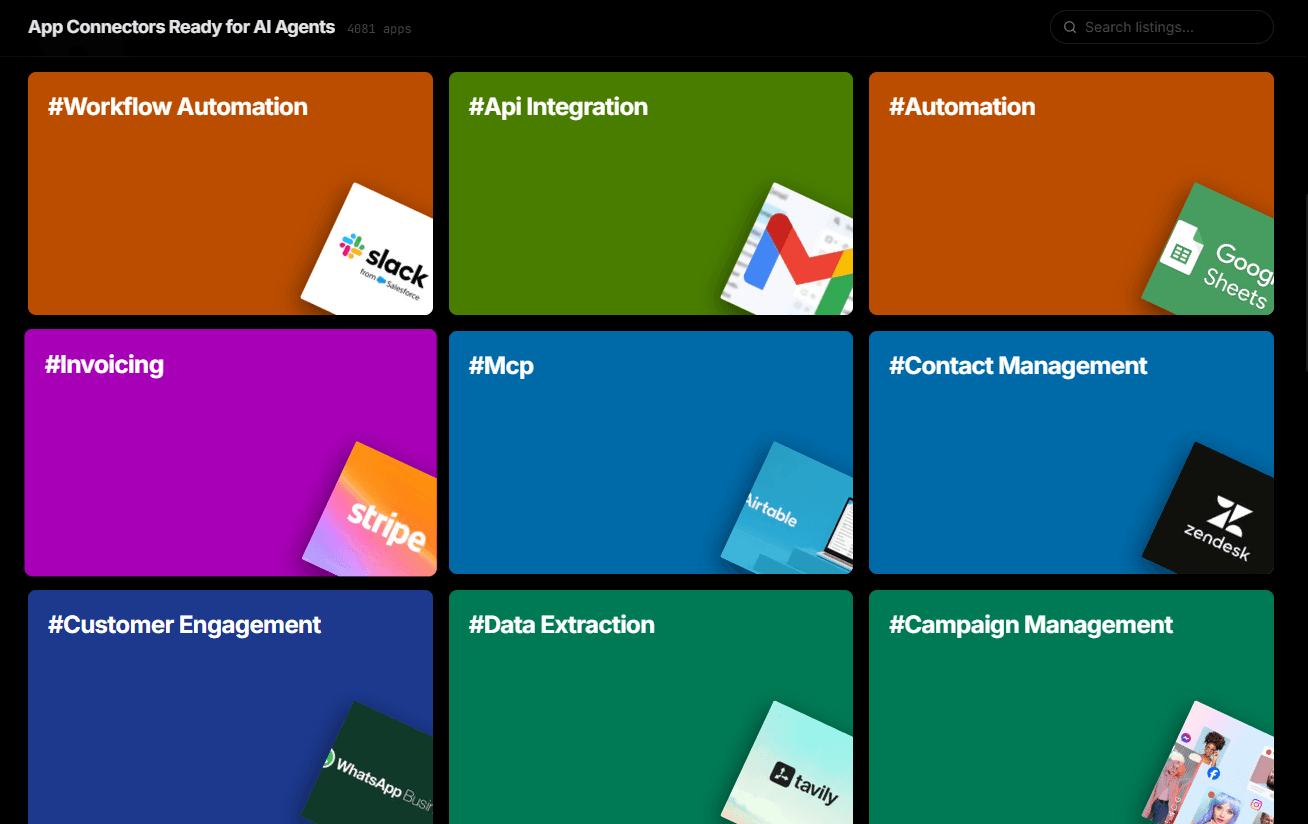
Over 4,000 integrations ready for AI agents
Explore a vast library of pre-built integrations, optimized and ready to deploy.
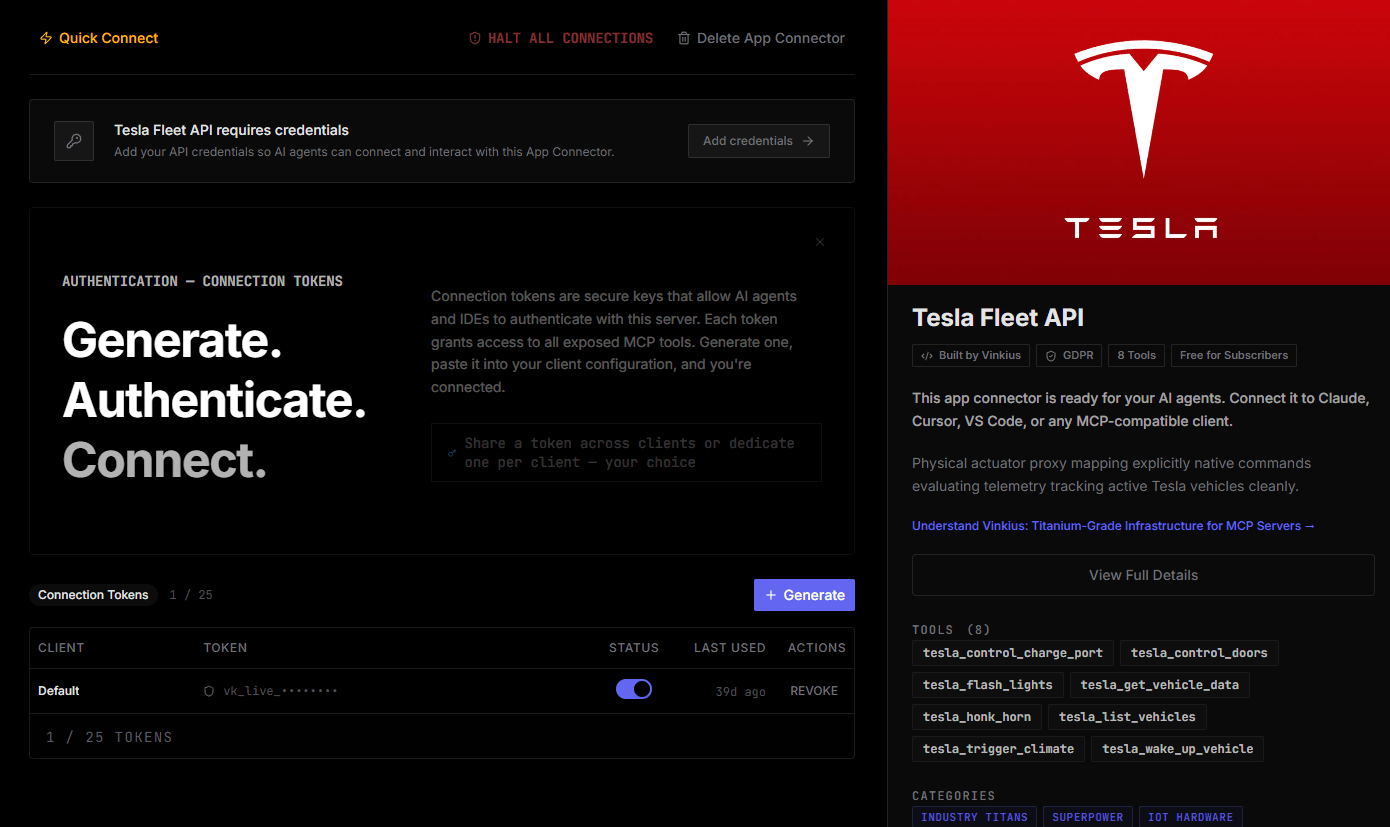
Connect securely in under 30 seconds
Generate tokens to authenticate and link external services in a single step.
Complete visibility into every agent action
Audit live requests, latency, success rates, and active security compliance policies.
Optimize spending and track token ROI
Analyze real-time token consumption and cost metrics detailed by connection.
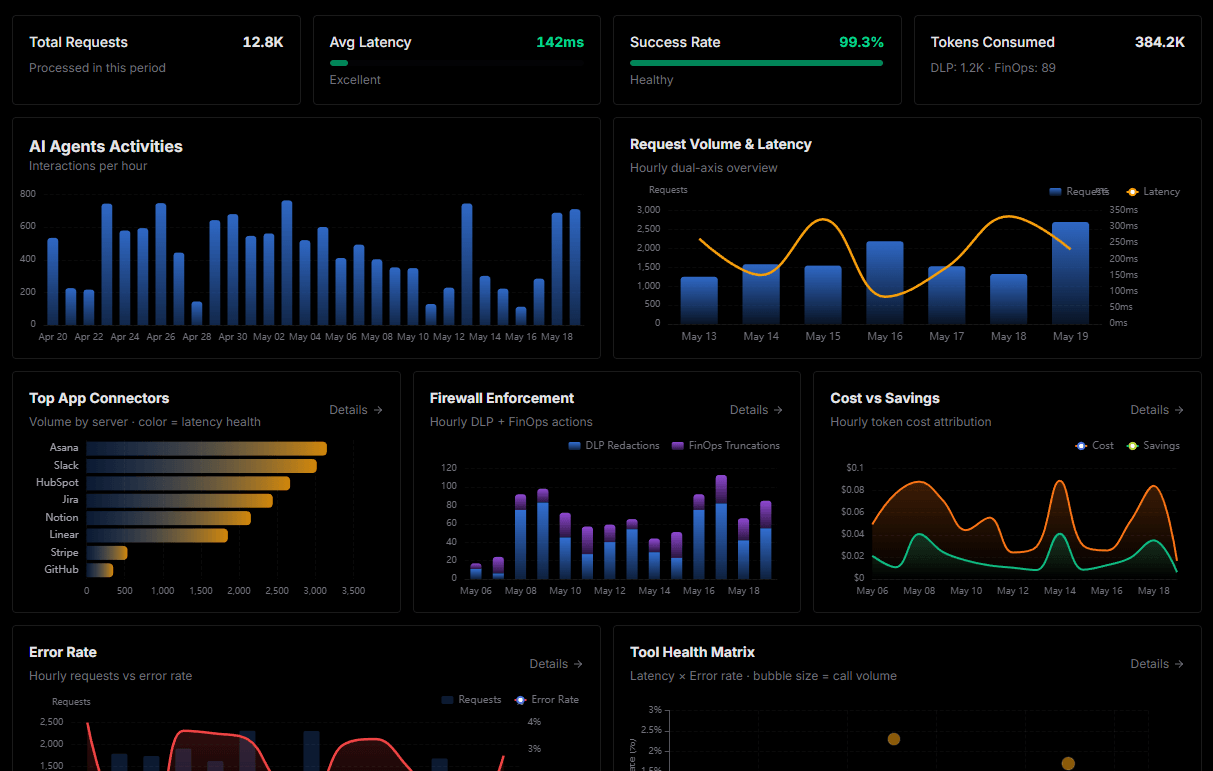
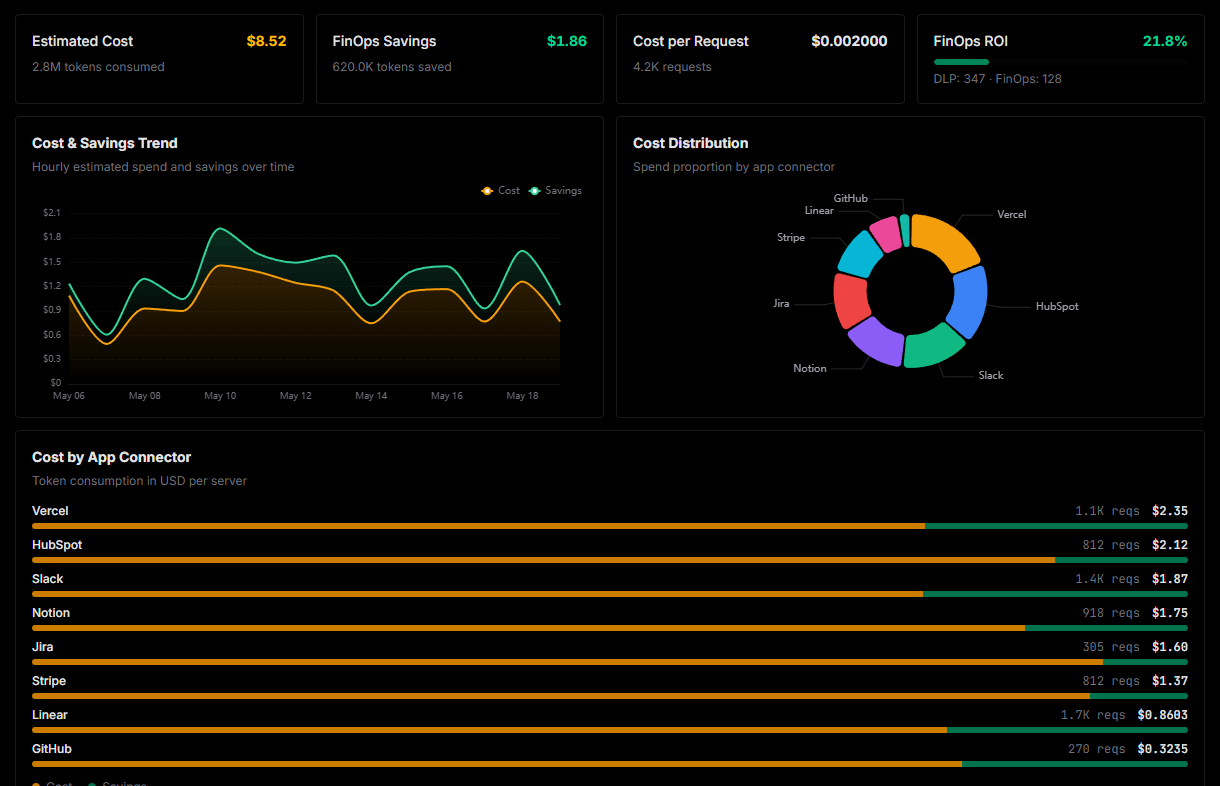
Explore our live AI Agents Analytics dashboard to see it all working
This dashboard is included when you connect PurpleAir using Vinkius. You will never be left in the dark about what your AI agents are doing with your tools.
PurpleAir and 4,000+ other AI tools. No hosting, no code, ready to use.
Professionals who connect PurpleAir to VS Code Copilot through Vinkius don't need to write code, manage servers, or worry about security. Everything is pre-configured, secure, and runs automatically in the background.
Raw MCP | Vinkius | |
|---|---|---|
| Ready-to-use MCPs | Find and configure each manually | 4,000+ MCPs ready to use |
| Connection Setup | Manual coding & server setup | 1-click instant connection |
| Server Hosting | You host it yourself (needs 24/7 uptime) | 100% hosted & managed by Vinkius |
| Security & Privacy | Stored in plaintext config files | Bank-grade encrypted vault |
| Activity Visibility | Blind execution (no logs or tracking) | Live dashboard with real-time logs |
| Cost Control | Runaway AI token spend risk | Automatic budget limits |
| Revoking Access | Must delete files or code to stop | 1-click disconnect button |
How Vinkius secures
PurpleAir for VS Code Copilot
Every request between VS Code Copilot and PurpleAir is protected by our secure gateway. We automatically keep your sensitive data private, prevent unauthorized access, and let you disconnect instantly at any time.
Frequently asked questions
How do I find air quality near my address?
Use the get_sensors_near_me tool with your latitude and longitude. Alternatively, search for sensors by bounding box using get_sensors_by_bounding_box with corner coordinates. The API will return nearby sensors with current PM2.5, temperature, and humidity readings.
Can I get historical air quality data?
Yes. Use get_sensor_history with a sensor index and time range (Unix timestamps). You can specify which fields to retrieve (PM2.5, temperature, humidity) and set an averaging interval (e.g. 3600 for hourly averages). For spreadsheet analysis, use get_sensor_history_csv to get data in CSV format.
What does PM2.5 mean and why is it important?
PM2.5 refers to fine particulate matter smaller than 2.5 micrometers — about 30 times smaller than a human hair. These particles can penetrate deep into lungs and enter the bloodstream, causing respiratory and cardiovascular health effects. The WHO guideline is 5 µg/m³ annual average. PurpleAir sensors measure PM2.5 in real-time, making them essential for health advisories and pollution monitoring.
Which VS Code version supports MCP?
MCP support requires VS Code 1.99 or later with the GitHub Copilot extension. Ensure both are updated to the latest version. Older versions of Copilot may not expose the Agent mode toggle.
How do I switch to Agent mode?
Open the Copilot Chat panel and look for two mode options: "Ask" and "Agent". Click "Agent" to enable autonomous tool calling. In Ask mode, Copilot provides conversational answers but cannot invoke MCP tools.
Can I restrict which MCP tools Copilot can access?
Yes. VS Code shows a tool consent dialog before any MCP tool is invoked for the first time. You can also configure tool access policies at the organization level through GitHub Copilot settings.
Does MCP work in VS Code Remote or Codespaces?
Yes. MCP servers configured via .vscode/mcp.json work in Remote SSH, WSL, and GitHub Codespaces environments. The MCP connection is established from the remote host, so ensure the server URL is accessible from that environment.
MCP tools not available
Ensure you are in Agent mode in Copilot Chat. MCP tools only appear in Agent mode.
Explore More MCP Servers
View all →
CallFire
10 toolsManage voice and SMS communications via CallFire — track calls, send texts, and monitor campaigns directly from any AI agent.

Aidbase
11 toolsDeploy AI-powered customer support chatbots, manage knowledge bases, and resolve tickets faster with intelligent automation.

Certifier
12 toolsIssue branded digital certificates and badges at scale for courses, events, and achievements that recipients can verify online.

Veraset
10 toolsEquip your agent to seamlessly query Veraset's mobility datasets. Run geospatial SQL, extract insights, and manage S3 buckets.